The shift towards electric commercial vehicles has created an unusual challenge for UK businesses. Electric van adoption is becoming an increasingly important consideration for commercial operators, particularly as businesses assess the practicalities of transitioning their fleets to electric vehicles.
While electric vans offer the potential for lower running costs and reduced emissions, their battery systems can add considerable weight, often reducing the amount of equipment, tools and cargo they can carry.
For businesses operating larger commercial vehicles, this creates a particular problem. A conventional diesel van with a gross vehicle weight of 3,500kg can offer a useful payload, but an electric equivalent may lose a significant proportion of that capacity once its battery pack is factored in. Understanding commercial van payload capacity is therefore essential when comparing electric and diesel vehicles, particularly for businesses carrying heavy equipment or specialist conversions.
One solution is the 4.25-tonne electric van concession.
Changes to UK driving licence legislation allow eligible drivers holding a standard Category B car licence to operate certain zero-emission vehicles with a Maximum Authorised Mass (MAM) of up to 4,250kg. This gives businesses access to heavier electric vans without automatically requiring every driver to hold a C1 or Category C licence.
However, there is more to the rules than simply increasing the permitted vehicle weight. Operator licensing, drivers’ hours, tachographs, vehicle testing and towing requirements all need to be considered.
There have also been important regulatory changes during 2025 and 2026, making it particularly important for fleet operators to understand which rules apply today.
This guide explains how the 4.25-tonne electric van concession works, who can use it and what businesses need to consider before introducing heavier electric vehicles into their fleets.
Why Do Electric Vans Need a 4.25-Tonne Weight Allowance?
The traditional 3,500kg weight limit has long been an important dividing line in the UK commercial vehicle market.
Most large diesel vans are designed to operate within this limit, allowing drivers with a standard Category B licence to use them without additional driving qualifications.
Electric vans face a different engineering challenge.
Their battery packs are considerably heavier than conventional diesel engines and fuel systems. Depending on the vehicle, battery capacity and specification, this additional weight can significantly reduce the available payload.
For example, consider a large commercial van with a maximum authorised mass of 3,500kg. If its electric powertrain adds several hundred kilograms compared with a comparable diesel model, that weight has to come from somewhere.
Without an increased gross vehicle weight allowance, businesses could find themselves unable to carry the same tools, equipment or goods as they would in a diesel equivalent.
Increasing the permitted weight to 4,250kg provides an additional 750kg of gross vehicle weight capacity.
This is particularly important for businesses considering electric van leasing, where payload requirements can be just as important as battery range, charging speeds and monthly rental costs.
It is worth remembering that the additional 750kg is not automatically available as extra payload. The vehicle’s actual payload depends on its unladen weight, battery configuration, body specification, conversions and fitted equipment.
Businesses should always check the manufacturer’s plated weights and individual axle limits before choosing a vehicle. When comparing different commercial vehicles, it is also worth considering which models offer the greatest carrying capacity. Our guide to medium vans with the highest payload explores how vehicle size, specification and weight affect the amount businesses can transport.
Can You Drive a 4.25-Tonne Electric Van on a Standard Car Licence?
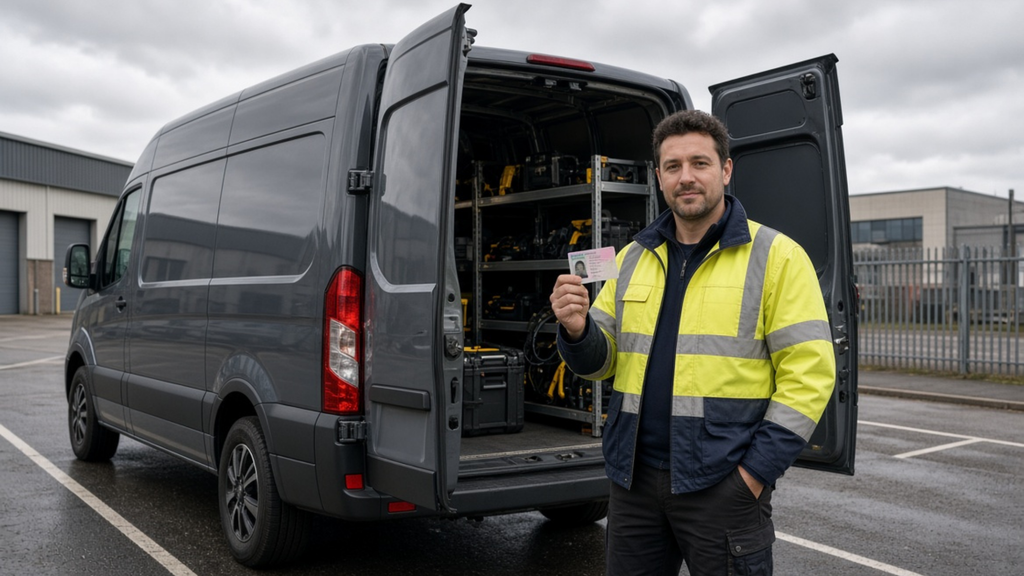
Yes. Drivers holding a relevant full Category B licence can drive qualifying zero-emission vans with a maximum authorised mass of up to 4,250kg in Great Britain, subject to the applicable conditions.
The rules were significantly simplified on 10 June 2025, when new legislation removed the previous five-hour additional training requirement.
Under the updated regulations, the concession applies to qualifying zero-emission vehicles that would otherwise fall within Category B, including vans, cars and certain other vehicle types.
For commercial van operators, the key requirements are:
- The vehicle must be fully zero-emission, such as a battery-electric or hydrogen-powered vehicle.
- Its Maximum Authorised Mass must not exceed 4,250kg.
- The driver must hold a relevant full Category B driving licence. Businesses should also make sure they have appropriate procedures for checking employee entitlements, using a consistent company vehicle licence-checking process
- The vehicle must be operated within Great Britain under this concession.
Importantly, the previous requirement to complete five hours of additional driver training has been removed.
The change also means the concession is no longer restricted to goods vans, and eligible vehicles can tow trailers subject to the relevant licence and vehicle weight restrictions.
What about hybrid vans?
This is an important distinction for fleet managers.
The updated concession applies to zero-emission vehicles, not all alternatively fuelled vehicles. Conventional hybrids, plug-in hybrids and mild-hybrid vehicles with petrol or diesel combustion engines do not qualify simply because they have an electric powertrain component.
A vehicle must meet the legal definition of a zero-emission vehicle.
Businesses can check the latest requirements in the government’s guidance on driving electric and hydrogen-powered vehicles.
For a wider overview of the rules and responsibilities involved in operating commercial vehicles, see our RHA Van Standard Compliance Guide.
What Changed in the 2025 Driving Licence Rules?
The original 4.25-tonne concession was introduced in 2018 to encourage the adoption of alternative-fuelled commercial vehicles.
However, it came with several restrictions that made it less attractive for some operators.
Drivers needed to complete at least five hours of additional training, vehicles had to be used for transporting goods, and towing a trailer was not permitted under the original concession.
The legislation introduced in June 2025 removed these restrictions and extended the flexibility to qualifying zero-emission vehicles.
The main differences are:
| Requirement | Previous rules | Rules from 10 June 2025 |
|---|---|---|
| Eligible powertrains | Certain alternative-fuelled vehicles | Zero-emission vehicles |
| Maximum vehicle weight | 4,250kg | 4,250kg |
| Additional driver training | Five hours required | No additional training requirement |
| Goods transport restriction | Applied | Removed |
| Trailer towing | Not permitted under concession | Permitted subject to applicable rules |
| Geographic scope | Great Britain | Great Britain |
For businesses, the practical benefit is straightforward: more drivers may be able to operate heavier electric vehicles without obtaining additional driving licence categories or completing the former training requirement.
The Hidden Compliance Rules: Operator Licensing, Drivers’ Hours and Tachographs
Being able to drive a 4.25-tonne electric van on a car licence does not mean it is exempt from every commercial vehicle regulation.
This is where the rules can become confusing.
The vehicle’s weight, powertrain, intended use and operating location can all affect which regulations apply.
There have also been further changes from 1 June 2026, particularly concerning tachographs, drivers’ hours and MOT testing.
1. Do 4.25-Tonne Electric Vans Need an Operator’s Licence?
Qualifying alternative-fuel goods vehicles can benefit from an exemption from goods vehicle operator licensing. Current GOV.UK guidance includes vehicles powered by electricity, hydrogen, natural gas or LPG with a maximum laden weight of up to 4,520kg, provided they are used only in England, Scotland and Wales. Specific conditions and exceptions apply, so operators should check that their vehicle and intended use meet the requirements.
However, the exemption has specific conditions.
The vehicle must:
- Be powered by an eligible alternative fuel, such as electricity, hydrogen, natural gas or LPG.
- Have a maximum laden weight not exceeding 4,520kg.
- Be used only in England, Scotland and Wales.
- Meet the relevant conditions and exclusions set out in the operator licensing regulations.
This is a separate exemption from the Category B driving licence concession. Businesses operating heavier commercial vehicles should also understand their wider fleet management and compliance responsibilities, particularly where vehicles are used by multiple employees or across different operating locations.
The distinction matters because the operator licensing exemption has its own eligibility requirements and should not be confused with the 100km radius rule associated with certain drivers’ hours exemptions.
Businesses should also be aware that taking a vehicle outside Great Britain can affect its operator licensing position.
The government’s goods vehicle operator licensing guidance provides further information.
2. Do 4.25-Tonne Electric Vans Need Tachographs?
This is one of the most important recent changes for electric van operators.
Previously, vehicles exceeding 3.5 tonnes could fall within the assimilated drivers’ hours and tachograph regulations, unless a specific exemption applied.
The 100km radius exemption was particularly relevant to certain alternative-fuel vehicles, including electric vans, operating within 100km of their operating base.
From 1 June 2026, qualifying zero-emission goods vehicles with a gross vehicle weight between 3,501kg and 4,250kg are exempt from the assimilated drivers’ hours and tachograph requirements when used by an undertaking to carry goods, provided the vehicle and any trailer do not exceed a combined permitted weight of 4,250kg.
This means an eligible 4.25-tonne electric van operating in Great Britain no longer needs a tachograph simply because its permitted weight exceeds 3.5 tonnes.
The important conditions include:
- The vehicle must be zero-emission.
- It must be used for carrying goods by an undertaking.
- The maximum permitted weight, including any trailer, must not exceed 4,250kg.
- The vehicle must operate within Great Britain.
The 100km exemption remains relevant to certain other alternative-fuel goods vehicles weighing up to 7.5 tonnes that do not qualify under the specific zero-emission exemption.
What happens if the vehicle travels to Northern Ireland?
The new national derogation applies within Great Britain: England, Scotland and Wales.
It does not automatically extend to Northern Ireland. Operators undertaking journeys between Great Britain and Northern Ireland need to check the applicable tachograph and drivers’ hours requirements before travelling.
It is also important to understand that exemption from assimilated drivers’ hours rules does not necessarily mean exemption from all drivers’ hours requirements. Employers should also make sure drivers understand their responsibilities when operating a leased vehicle, including the need to follow applicable road safety and vehicle-use requirements. GB domestic drivers’ hours rules and other working time obligations may still apply.
For further information, see the government’s drivers’ hours and tachograph guidance.
3. What Are the Speed Limits for a 4.25-Tonne Electric Van?
A 4.25-tonne electric van must follow the applicable speed limits for its vehicle classification.
For a goods vehicle with a maximum laden weight not exceeding 7.5 tonnes, the national speed limits are:
| Road Type | Maximum Speed |
|---|---|
| Built-up areas | 30mph (unless otherwise signed) |
| Single carriageways | 50mph |
| Dual carriageways | 60mph |
| Motorways | 70mph |
These limits are different from those applying to cars and certain car-derived vans.
For a fuller breakdown of vehicle classifications and the restrictions applying to different commercial vehicles, see our guide to UK van speed limits.
If the vehicle is towing a trailer, the applicable limits change:
| Road Type | Van and Trailer |
|---|---|
| Built-up areas | 30mph |
| Single carriageways | 50mph |
| Dual carriageways | 60mph |
| Motorways | 60mph |
Drivers should always follow signed restrictions and check the vehicle’s classification and plated weights.
For a more detailed explanation, see our guide to UK van speed limits.
4. What MOT Does a 4.25-Tonne Electric Van Need?
Another significant regulatory change took effect on 1 June 2026.
Previously, zero-emission goods vehicles weighing between 3,501kg and 4,250kg were subject to the heavy vehicle roadworthiness testing system.
However, these vehicles have now moved into the Class 7 MOT system.
Under the updated arrangements:
- Qualifying zero-emission goods vehicles with a design gross weight between 3,501kg and 4,250kg are subject to Class 7 MOT testing.
- The first test is due three years after the vehicle’s first registration.
- Subsequent tests are required annually.
- Regular vehicle inspections are also an important part of fleet safety. Our guide to daily van checks and business legal responsibilities explains what employers and drivers should consider when keeping commercial vehicles roadworthy.
This brings the testing arrangements more closely in line with those applying to conventional vans up to 3.5 tonnes.
It is important to distinguish this from heavier diesel commercial vehicles, which remain subject to their applicable HGV testing requirements.
The change makes operating a 4.25-tonne electric van considerably simpler from a vehicle testing perspective.
Further information is available in the DVSA’s MOT guidance for Class 7 vehicles.
Which Businesses Could Benefit from 4.25-Tonne Electric Vans?
The additional weight allowance is particularly useful for businesses that need to carry substantial equipment, materials or specialist conversions.
For some operators, a conventional 3.5-tonne electric van may simply not provide enough payload capacity to replace an existing diesel vehicle.
A heavier electric platform can help address this problem.
Electricians and Electrical Contractors
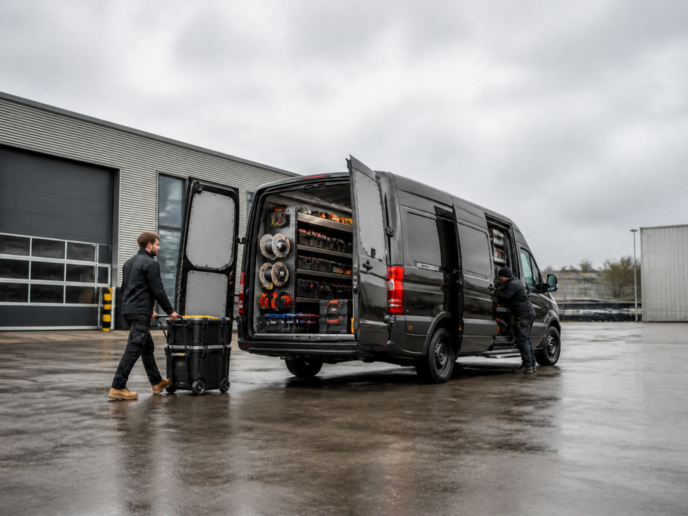
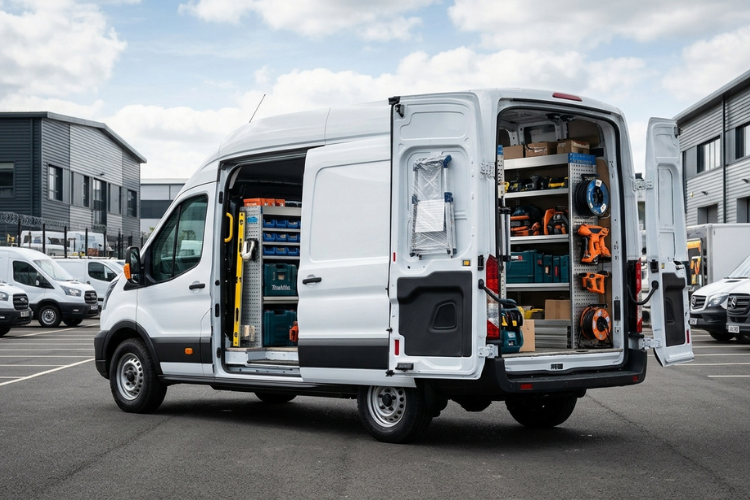
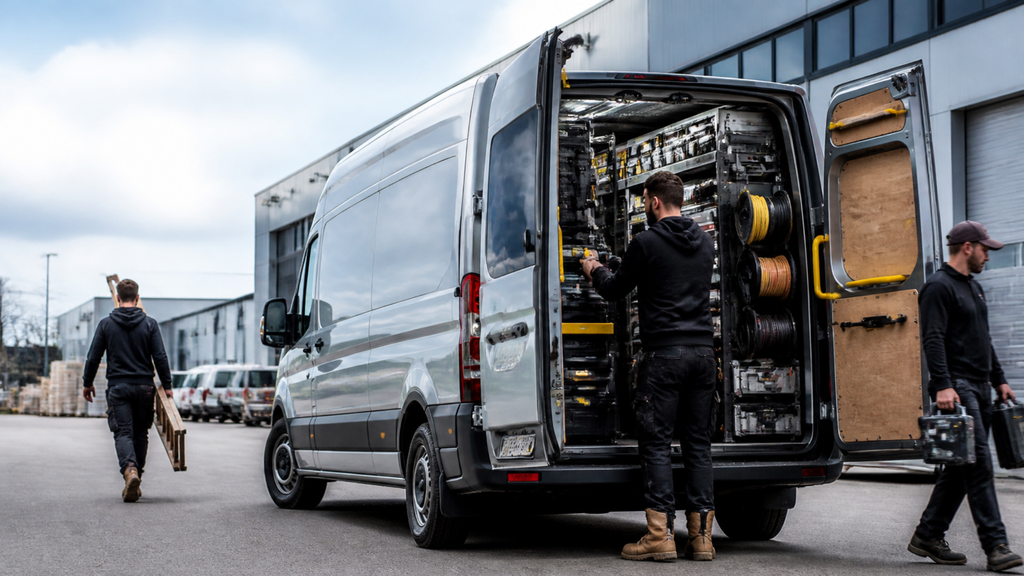
Electricians often need to carry extensive equipment, including cable drums, distribution boards, power tools, ladders and specialist testing equipment.
Adding internal racking, workbenches and storage systems can quickly reduce the available payload of a conventional electric van.
A 4.25-tonne model may provide additional flexibility for businesses looking to transition their working vehicles to electric power.
For further comparisons, see our guides to the best vans for electricians and the best vans for EV charging installers.
HVAC and Refrigeration Engineers
Heating, ventilation and air conditioning engineers frequently transport bulky equipment, replacement components, pipework and specialist machinery.
The additional weight capacity can be particularly valuable for operators carrying larger systems or installing permanent workshop-style conversions.
Businesses can also benefit from designing the vehicle around their working requirements rather than compromising on essential equipment to remain within a lower weight limit.
Our guides to the best vans for HVAC engineers and best vans for heating engineers explore the vehicle requirements of these specialist trades.
Furniture Delivery and Removal Businesses
Furniture delivery operators often transport heavy and awkwardly shaped items, making payload capacity an important consideration.
A heavier electric van can provide additional flexibility when carrying larger furniture, appliances and associated delivery equipment.
For companies running regional delivery operations, the ability to move towards zero-emission vehicles without sacrificing as much carrying capacity could be an important advantage.
See our guides to the best vans for furniture delivery and best vans for removal companies.
Logistics and Distribution Operators
Businesses involved in regional distribution, specialist deliveries and commercial logistics may also benefit from heavier electric vans.
However, vehicle range, charging availability, payload, delivery schedules and depot infrastructure all need to be considered before making the switch.
Our guides to the best vans for logistics companies and best vans for couriers explore the different requirements of commercial delivery operations.
What About Towing with a 4.25-Tonne Electric Van?
The 2025 legislation removed the previous restriction preventing eligible vehicles from towing under the Category B concession.
This is potentially important for businesses that need to transport equipment, machinery or additional materials using a trailer.
However, the removal of the restriction does not mean every 4.25-tonne electric van can tow a heavy trailer.
Drivers and fleet operators must consider:
- The vehicle’s manufacturer-approved towing capacity.
- The maximum authorised mass of the vehicle and trailer combination.
- The driver’s entitlement to tow.
- The vehicle’s gross train weight.
- The maximum permitted axle loads.
- The effect of towing on driving range and battery consumption.
Under the updated Category B concession, eligible drivers can operate a qualifying zero-emission vehicle with a maximum authorised mass of up to 4,250kg and tow a trailer, provided the combined maximum authorised mass does not exceed 7,000kg. The trailer itself must not exceed 3,500kg MAM, and the vehicle’s manufacturer-approved towing limits must also be respected.
The vehicle’s own towing limits must still be observed. Businesses planning to use trailers regularly should also consider the vehicle’s towing equipment and installation requirements. Our commercial vehicle towbar fitting service provides a useful starting point when considering additional towing equipment.
For businesses transporting particularly heavy equipment, this is an area where vehicle specification and operational requirements should be checked carefully before committing to a lease.
Choosing the Right 4.25-Tonne Electric Van for Your Business
Not every electric van offers a 4.25-tonne configuration, and choosing the right model involves more than simply looking at its maximum authorised mass.
The Renault Master MM40 E-Tech 104kW 87kWh Advance is one example of a heavier electric van that businesses may wish to consider. With an 87kWh battery, 104kW electric motor and a gross vehicle weight of 4,000kg, it offers a useful option for operators who need a larger electric commercial vehicle. Its published payload figures depend on the precise specification and equipment fitted, so businesses should confirm the plated payload before ordering.
Although this particular Renault Master has a gross vehicle weight of 4,000kg rather than the full 4,250kg allowance, it still falls within the weight limit covered by the zero-emission vehicle driving licence concession.
For a closer look at the wider model range, its electric driving range, payload capacity and suitability for business use, read our Renault Master E-Tech electric van guide.
Businesses should consider several important factors.
Payload Capacity
Check the manufacturer’s quoted payload and understand how optional equipment, internal racking, bulkheads, refrigeration systems and other conversions affect the available carrying capacity.
The 4.25-tonne allowance does not guarantee a particular payload. It is also important to account for any equipment fitted after the vehicle leaves the factory. Internal shelving, storage systems, workbenches, protective lining and specialist body conversions all contribute to the vehicle’s overall weight. Businesses should consider their requirements before ordering and explore the available commercial vehicle conversion options, particularly where specialist storage, racking or equipment installations are required.
Battery Range
Larger electric vans can have substantial batteries, but real-world range will depend on payload, driving conditions, weather, speed and driving style.
Businesses operating longer routes should assess whether the vehicle can complete its working day without disrupting delivery schedules. Businesses should also understand how charging availability affects their operating schedules. Our guide to how EV charging works for businesses explains the different charging considerations for commercial fleets.
Charging Infrastructure
Consider where vehicles will be charged, whether depot charging is available and how much time is needed to recharge between shifts.
For larger fleets, charging infrastructure and electricity capacity can be just as important as the vehicle itself. Businesses planning to electrify multiple vehicles should also consider how commercial EV charging infrastructure is developing across the UK, particularly when assessing depot charging capacity and future fleet requirements.
Businesses planning depot installations should also consider the wider UK electric vehicle charging network and the availability of suitable charging infrastructure for their vehicles.
Vehicle Conversion Requirements
Businesses requiring specialist storage, racking, refrigeration or workshop equipment should consider the additional weight before selecting a vehicle.
Depending on the type of work being undertaken, businesses may require purpose-designed van shelving and racking, commercial van storage systems or van ply lining to protect the interior and organise tools and equipment.
A professional conversion should account for payload distribution, axle weights and the vehicle’s intended use.
Leasing and Monthly Costs
The purchase price is only one part of the financial decision.
Businesses should compare rental costs, initial payments, mileage allowances, maintenance options, charging costs and the expected length of the vehicle’s working life.
Exploring business van leasing in the UK can help businesses compare suitable vehicles and funding arrangements. It is also worth assessing the total cost of ownership of business vehicles, alongside the cost of running a van, taking into account rental costs, electricity, maintenance, insurance and vehicle utilisation.
Leasing a 4.25-Tonne Electric Van
Businesses can compare the different commercial vehicle leasing and finance options available, depending on their budgets, vehicle requirements and preferred contract arrangements.
It allows businesses to spread the cost of vehicle use over an agreed contract period while retaining greater flexibility when reviewing fleet requirements.
For businesses considering the move to a heavier electric van, the Renault Master MM40 E-Tech 87kWh Advance is one model currently available through Commercial Vehicle Contracts.
Business Contract Hire
Business Contract Hire is a popular option for businesses looking to operate electric vans without taking ownership of the vehicle.
Typically, the business pays an initial rental followed by fixed monthly rentals over an agreed contract period.
At the end of the agreement, the vehicle is returned to the leasing provider, subject to the contract’s mileage, condition and return requirements.
This can help businesses plan vehicle expenditure and review their fleet as electric vehicle technology continues to develop. For a more detailed explanation of this funding method, see our guide to Business Contract Hire, including how initial rentals, monthly payments and contract periods work.
Finance Lease
A Finance Lease may be worth considering for businesses that require a different funding structure or intend to retain greater control over the vehicle’s operation and use.
It can be particularly relevant where vehicles require specialist conversions or bespoke equipment, although businesses should check the funder’s requirements and the treatment of any modifications before proceeding.
Businesses considering alternative funding arrangements can also read our complete Finance Lease guide and our comparison of Business Contract Hire versus Finance Lease to understand how the two funding options differ.
Businesses introducing several electric commercial vehicles may also benefit from a more structured approach to fleet planning. Our guides to fleet planning, leasing and fleet lifecycle management explain how businesses can manage vehicle selection, acquisition, operating costs, maintenance and replacement.
 Call our expert team on