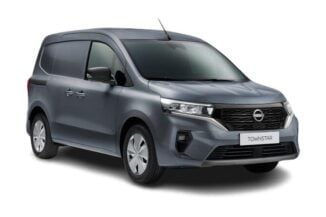
Buying a new van is a significant investment for any business. Whether you are a sole trader, small business or large fleet operator, paying for a vehicle outright is not always the most practical option.
Van finance and leasing allow businesses to spread the cost of a new commercial vehicle through regular payments, helping to make the cost of running a new van more manageable.
There are several different ways to finance or acquire a van, and choosing the right option depends on how you use your vehicle, your budget and whether you want to own the van at the end of the agreement.
At Commercial Vehicle Contracts, we offer a range of van finance and leasing options for UK businesses, including Contract Hire, Finance Lease, Hire Purchase, Lease Purchase and Outright Purchase.
For private customers, we also offer Personal Contract Hire, providing an alternative way to lease a vehicle without taking ownership.
Each finance product works differently, so it is important to understand what you are agreeing to before choosing a van and finance package.
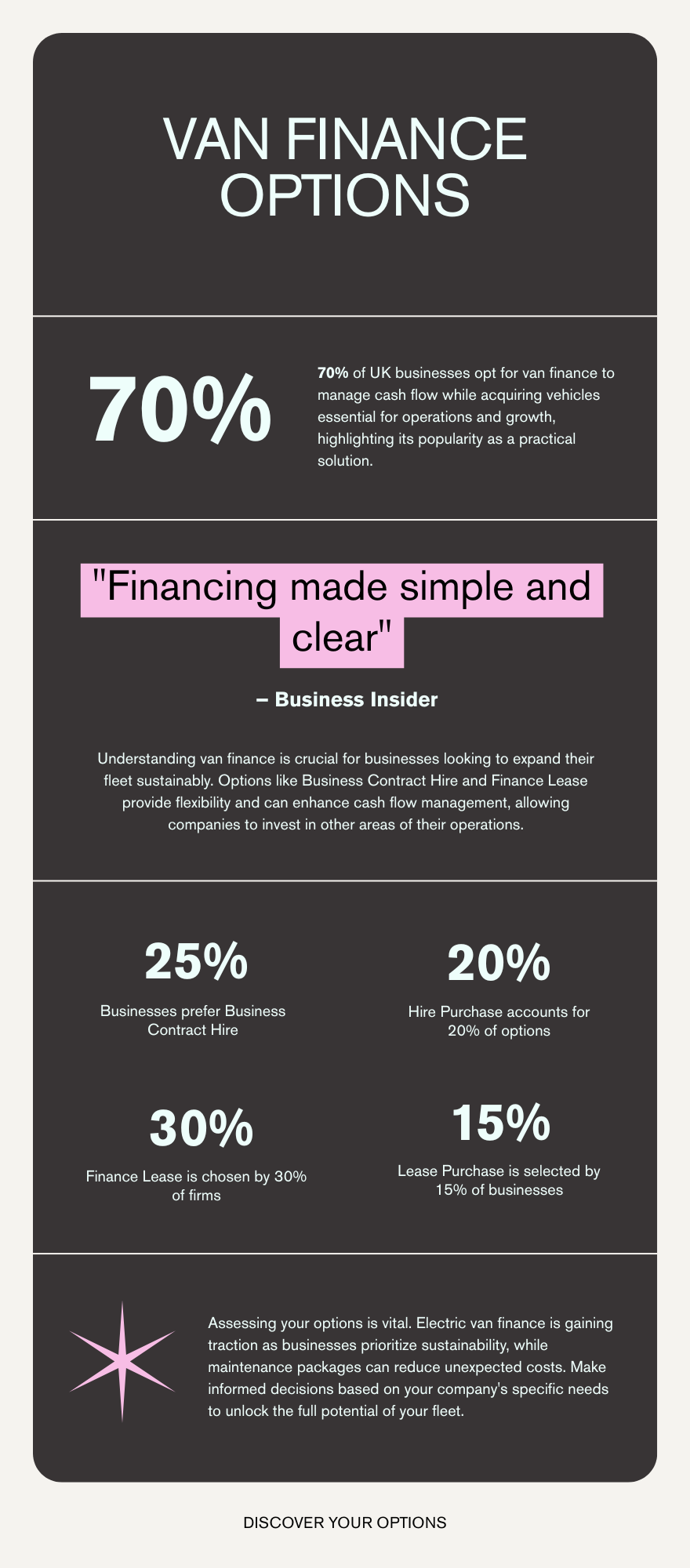
What Is Van Finance?
Van finance is a way of spreading the cost of a commercial vehicle over an agreed period rather than paying for it outright.
Depending on the type of finance agreement you choose, you will normally make an initial payment followed by regular monthly payments for an agreed term.
The main difference between the available finance options is what happens at the end of the agreement.
With some agreements, such as Contract Hire, you return the van to the finance provider.
With other options, such as Hire Purchase and Lease Purchase, the agreement is designed for you to ultimately own the vehicle.
Finance Lease works differently from both Contract Hire and ownership-based finance. The business uses the vehicle throughout the agreement, while the finance provider retains legal ownership, and different end-of-term arrangements can apply.
What Van Finance Options Are Available?
There are five main van finance options available to businesses through Commercial Vehicle Contracts:
Outright Purchase
Outright Purchase is the simplest way to buy a van for your business.
Instead of entering into a finance or leasing agreement, you pay the full purchase price of the vehicle upfront. Once the purchase has been completed, the vehicle belongs to your business.
Because you own the vehicle immediately, there are no monthly finance payments, no final balloon payment and no contractual mileage restrictions. You can also decide how long you want to keep the van and sell or replace it whenever you choose.
Outright Purchase can be particularly attractive if your business has sufficient capital available and you want complete ownership without taking out a finance agreement. However, it does require a larger initial investment, so businesses should consider the impact on cash flow before making a decision.
Read our full guide to Van Outright Purchase.
Business Contract Hire
Business Contract Hire (BCH) allows your business to use a new van for an agreed period and mileage.
You make an initial rental payment followed by fixed monthly payments. At the end of the agreement, the van is normally returned to the finance provider.
Contract Hire can be particularly attractive if you want to change your van regularly and prefer predictable monthly costs without taking responsibility for selling the vehicle at the end.
Read our full guide to Business Contract Hire.
Finance Lease
Finance Lease allows your business to spread the cost of a van through regular payments.
Depending on the agreement, a final payment or balloon rental may apply, which can reduce the regular monthly rentals. At the end of the agreement, you generally have options such as selling the vehicle to a third party or continuing to use it under an extension arrangement.
Finance Lease can provide greater flexibility than Contract Hire, but the business takes on more responsibility for the vehicle at the end of the agreement.
Read our full guide to Van Finance Lease.
Hire Purchase
Hire Purchase is designed for businesses that want to own their van.
You pay an initial deposit followed by regular monthly payments over an agreed term. Once all required payments have been made, ownership of the vehicle passes to your business, subject to the terms of the agreement.
One of the main advantages of Hire Purchase is that there are no contractual mileage restrictions or excess mileage charges.
Read our full guide to Van Hire Purchase.
Lease Purchase
Lease Purchase is another finance option for businesses intending to own their van.
It works in a similar way to Hire Purchase, but includes a final balloon payment. By deferring part of the cost until the end of the agreement, it can provide lower monthly payments than a comparable Hire Purchase agreement.
The final balloon payment must be settled in accordance with the agreement if you want to complete the purchase and take ownership of the vehicle.
Read our full guide to Van Lease Purchase.
| Feature | Lease Purchase | Hire Purchase |
|---|---|---|
| Monthly payments | Lower | Generally higher |
| Balloon | Yes | Normally no large balloon |
| Ownership | After final payment | After completion/final fee |
Personal Contract Hire For Private Drivers
Personal Contract Hire
Personal Contract Hire (PCH) allows private individuals to use a new van for an agreed period and mileage without taking ownership of the vehicle.
You normally make an initial rental payment followed by fixed monthly payments for the duration of the agreement. At the end of the contract, the van is normally returned to the finance provider, subject to the agreed mileage and fair wear and tear requirements.
Personal Contract Hire can be attractive if you want to use a new van without the responsibility of owning it or having to sell it when you want to change vehicles. It can also provide predictable monthly payments, making it easier to budget for your vehicle.
Unlike Hire Purchase or Lease Purchase, Personal Contract Hire does not provide a route to ownership. You are paying to use the vehicle for the agreed contract period and normally return it when the agreement ends.
Read our full guide to Personal Contract Hire.
Van Finance Vs Van Leasing
The terms van finance and van leasing are sometimes used interchangeably, but there are important differences between the different products.
Van leasing generally refers to arrangements where you pay to use a vehicle for an agreed period rather than purchasing it outright.
Contract Hire is one of the most common forms of business van leasing.
Other finance products, such as Hire Purchase and Lease Purchase, are designed for businesses that want to work towards ownership.
This means that the most suitable option depends on whether your priority is using a van for a fixed period, keeping monthly costs predictable, or ultimately owning the vehicle. If you are still deciding whether to buy or lease a van, our guide looks at the key considerations for UK businesses.
What Are The Benefits Of Van Finance?
Financing a van can provide several advantages compared with purchasing a vehicle outright.
Spread The Cost
Rather than paying the full price of a new van immediately, finance allows you to spread the cost over an agreed period.
This can help businesses manage cash flow and keep more working capital available for other expenses.
Manage Your Monthly Budget
Many van finance agreements use fixed monthly payments, making it easier to plan your vehicle expenditure.
Knowing how much you are paying each month can help businesses build vehicle costs into their regular budgets.
Access A Newer Van
Finance can make it easier to access a brand-new van without having to fund the entire purchase price upfront.
For businesses, a newer commercial vehicle can provide access to the latest safety technology, improved efficiency and the latest diesel, hybrid or electric powertrains.
Choose A Finance Option To Suit Your Business
Different businesses have different requirements.
A business that replaces its vans every few years may prefer Contract Hire, while a tradesperson intending to keep a van for many years may prefer Hire Purchase.
Having several finance options means you can choose an agreement based on how you actually use your vehicle.
Potentially Preserve Business Cash Flow
Using finance rather than purchasing a van outright can leave more cash available for other areas of the business.
This could be particularly important for smaller businesses where cash flow is closely linked to day-to-day operations.
What About VAT On Van Finance?
VAT treatment can vary depending on the type of finance agreement and your business circumstances. Our guide to reclaiming VAT on a business van lease explains the key considerations for UK businesses.
What Should I Consider When Choosing Van Finance?
There are several factors to consider before deciding which finance agreement is right for you.
How Long Do You Want To Keep The Van?
Think about how long you realistically intend to use the vehicle.
If you like to replace your van every few years, Contract Hire could be suitable.
If you intend to keep the vehicle for the long term, a purchase-based option such as Hire Purchase may be more appropriate.
Do You Want To Own The Van?
This is one of the most important questions to ask.
If you want to return the van at the end of the agreement, Contract Hire may be suitable.
If you want to work towards ownership, Hire Purchase or Lease Purchase may be more appropriate.
Finance Lease provides another option where the finance provider retains legal ownership during the agreement, with different end-of-term arrangements depending on the finance structure.
How Many Miles Will You Drive?
Your expected mileage is particularly important when considering Contract Hire.
You will agree on an annual mileage allowance at the start of the contract, and exceeding this allowance can result in excess mileage charges.
Hire Purchase and Lease Purchase do not have contractual mileage restrictions in the same way.
What Can You Afford Each Month?
Don’t focus solely on the advertised monthly payment. Our guide to the 5 mistakes people make when leasing a vehicle explains some of the common pitfalls to consider before entering into an agreement.
Consider the initial payment, monthly rentals, contract length, final payment where applicable and the overall cost of the agreement.
A finance agreement with a lower monthly payment may have a larger final payment, so you should always look at the complete agreement before making a decision.
What Will Happen At The End?
Always understand what happens when the finance agreement ends.
With Contract Hire, you normally return the vehicle, subject to the agreed mileage and fair wear and tear requirements.
With Finance Lease, there are end-of-contract options that can include selling the vehicle to a third party or extending the agreement.
With Hire Purchase and Lease Purchase, the agreements are designed around eventual ownership, subject to completion of the required payments and terms.
Finance approval is another important consideration when applying for van finance. Our guide to what credit score you need to lease a commercial vehicle explains how credit history and finance applications can affect your options.
Van Finance Options Compared
The table below provides a simple overview of the main differences. For a more detailed comparison, see our Contract Hire vs Finance Lease guide.
| Finance Option | Designed For Ownership? | Mileage Restrictions | What Happens At The End? |
|---|---|---|---|
| Outright Purchase | Yes | No | Ownership passes to the business when the vehicle is purchased and paid for in full. |
| Contract Hire | No | Yes | The van is normally returned. |
| Finance Lease | No | No traditional excess mileage charge | Vehicle can be sold to a third party, or the agreement can be extended, subject to the terms of the agreement. |
| Hire Purchase | Yes | No | Ownership passes after completion of the agreement. |
| Lease Purchase | Yes | No | The final balloon payment is settled, and ownership passes, subject to the terms of the agreement. |
This is only a general comparison. The exact terms and conditions can vary between finance agreements, so it is important to understand the specific contract before committing.
Can I Finance An Electric Van?
Yes. Businesses can finance electric vans in much the same way as conventional diesel vans.
The increasing availability of electric commercial vehicles means businesses now have more choice when looking for a van that suits their operation.
Electric vans can be particularly attractive for businesses carrying out regular urban or regional journeys, where their running characteristics and zero-tailpipe-emission operation can provide advantages.
However, choosing an electric van requires careful consideration of factors such as:
- Daily mileage
- Driving range
- Payload
- Load volume
- Charging availability
- Depot charging
- Public charging
- Typical journey patterns
The finance agreement should also be considered alongside the vehicle itself to make sure the overall package works for your business.
Can I Add Maintenance To My Van Finance?
Depending on the finance agreement, you may be able to add a maintenance package to your van leasing agreement.
A maintenance package can help businesses manage the cost of servicing and other covered maintenance requirements through an agreed monthly payment. It is also worth understanding the difference between maintenance and warranty cover before choosing a package.
This can provide greater cost predictability and reduce the need to budget separately for routine maintenance.
Whether maintenance is available and what is included will depend on the finance product and agreement, so you should check the specific terms before proceeding.
Is Van Finance Suitable For Small Businesses?
Van finance isn’t just for large companies and fleet operators.
It can be suitable for sole traders, partnerships, limited companies and small businesses that need a commercial vehicle but don’t want to pay the entire cost upfront.
For a small business, keeping money available for stock, equipment, employees and other operating costs can be important.
Spreading the cost of a van can therefore provide greater flexibility than purchasing the vehicle outright.
However, the right finance product will depend on your individual circumstances and how the van will be used.
If you are starting a new business, our guide explains how to lease a van as a new business how to lease a van as a new business.
Which Van Finance Option Is Right For Me?
There isn’t one finance option that is right for every business.
As a general guide:
Contract Hire could be suitable if you want to use a new van for a fixed period and return it at the end.
Finance Lease could be suitable if you want flexible finance arrangements and are comfortable with the responsibilities associated with the vehicle at the end of the agreement.
Hire Purchase could be suitable if you want to own your van and intend to keep it for the long term.
Lease Purchase could be suitable if you want to work towards ownership but would prefer to defer part of the cost through a final balloon payment.
Outright Purchase could be suitable if you have sufficient capital available, want immediate ownership and prefer not to enter into a finance agreement.
The important thing is to look beyond the monthly payment and consider the complete finance agreement.
Finance is subject to status and approval. Terms and conditions apply. Tax treatment and VAT treatment will depend on individual circumstances and current HMRC rules. Independent professional advice should be sought where appropriate.
Why Choose Commercial Vehicle Contracts?
At Commercial Vehicle Contracts, we understand that choosing a van is only part of the decision.
The finance agreement needs to work for your business too.
We have more than 25 years of experience helping UK businesses find commercial vehicles and competitive finance solutions, from individual vans for sole traders through to larger business fleets.
We can help you compare a wide range of commercial vehicles, including:
- Small vans
- Medium vans
- Large vans
- Electric vans
- Pick-up trucks
- Crew vans
- Dropside vans
- Tippers
- Luton vans
- Minibuses
- Specialist commercial vehicles
As an independent vehicle leasing broker, we can help you understand the differences between the available finance options and find a vehicle and agreement that fits your requirements.
We are FCA authorised and regulated and a BVRLA member, providing businesses with additional confidence when arranging vehicle finance.
Van Finance FAQs
Van finance allows you to spread the cost of a new van through an agreed payment plan rather than paying for the vehicle outright. Depending on the finance product, you may return the van at the end of the agreement or have the option to own it.
The main van finance options available to businesses are Outright Purchase, Business Contract Hire, Finance Lease, Hire Purchase and Lease Purchase. Each option works differently, particularly when it comes to upfront costs, monthly payments, ownership, mileage and what happens at the end of the agreement.
Van leasing generally involves paying to use a van for an agreed period, while some finance agreements are designed to help you ultimately own the vehicle. Contract Hire is a form of van leasing, whereas Hire Purchase and Lease Purchase are designed around eventual ownership.
There is no single finance option that is best for every business. Contract Hire may suit businesses that want to change their vans regularly, while Hire Purchase or Lease Purchase may be more appropriate if you want to own the vehicle. Finance Lease provides another flexible option for businesses that do not want to purchase the van outright.
Yes. Limited companies can apply for a range of business van finance options, subject to the relevant lender’s eligibility requirements and credit approval.
Yes. Sole traders can also apply for business van finance, subject to lender criteria and approval. The most suitable finance option will depend on your individual circumstances and how you use the vehicle.
The initial payment required depends on the finance product and specific agreement. Some van finance agreements can be arranged with different initial rental or deposit options, allowing businesses to consider how much they want to pay upfront against their monthly payments.
The finance term depends on the product, vehicle and lender. Van finance agreements are typically arranged over several years, with the term affecting the size of your regular payments and, in some cases, the overall cost of the agreement.
It depends on the finance product. Contract Hire normally includes an agreed annual mileage allowance, while Hire Purchase and Lease Purchase do not have contractual mileage restrictions in the same way. Finance Lease also works differently from Contract Hire when it comes to mileage.
Van finance availability depends on the finance provider, vehicle and agreement. Commercial Vehicle Contracts primarily specialises in new commercial vehicles, although finance options can vary depending on the vehicle being considered.
Yes. Electric vans can be financed through a range of finance and leasing options, subject to the vehicle and lender. When considering an electric van, you should also assess its range, payload, charging requirements and suitability for your daily journeys.
Depending on the finance product, a maintenance package may be available. This can help businesses manage servicing and other covered maintenance costs through an agreed payment rather than paying for them separately.
What happens depends on the finance product. With Contract Hire, the van is normally returned. Finance Lease can provide options such as selling the vehicle to a third party or extending the agreement, subject to the contract. Hire Purchase and Lease Purchase are designed around eventual ownership once the required payments have been completed.
Yes, but this depends on the finance product. Hire Purchase and Lease Purchase are designed for businesses that want to ultimately own the vehicle. Contract Hire does not provide ownership in the same way, while Finance Lease has different end-of-contract arrangements.
Some Finance Lease agreements include a final payment, sometimes referred to as a balloon or balloon rental. This is agreed at the beginning of the finance agreement and can reduce the regular monthly payments by deferring part of the cost until the end of the main finance period.
Not necessarily. Van finance spreads the cost and can help with cash flow, but interest and finance charges can mean the overall amount paid is higher than the vehicle’s cash price. The benefit is that you do not need to fund the entire purchase price upfront.
Finance approval depends on the lender’s criteria and your individual circumstances. Having a less-than-perfect credit history does not necessarily mean finance is impossible, but the options available and terms offered may be different.
You can also read our guide to what credit score you need to lease a commercial vehicle
The information required varies depending on the finance provider and your circumstances. You may need to provide details about your business, financial circumstances, address history and identification, with a credit check normally forming part of the application process.
This depends on the finance agreement, the business structure and how the vehicle is being used. If you intend to use a business-financed van for private journeys, you should make sure the proposed use is permitted under the agreement and that your insurance arrangements are appropriate.
The first step is to choose a van that meets your business requirements and discuss the available finance options. Commercial Vehicle Contracts can help you compare the different finance products and arrange a suitable quotation, subject to finance approval.
Yes. Our team can explain the differences between Outright Purchase, Business Contract Hire, Finance Lease, Hire Purchase and Lease Purchase and help you consider which option is most appropriate for your business, budget and intended use.
 Call our expert team on