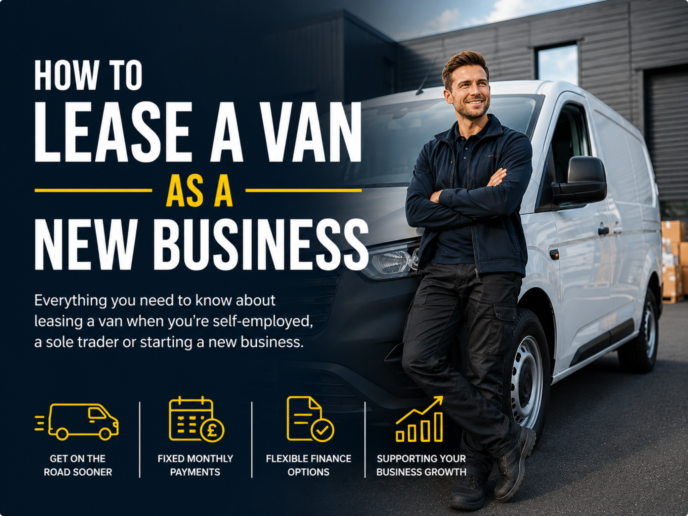
Starting a new business comes with plenty of costs, and for many tradespeople, delivery firms, couriers, and mobile service providers, having the right van is essential from day one.
The good news is that you do not necessarily need years of trading history to secure a van lease. Many lenders now offer solutions for start-ups, sole traders, partnerships, and newly established businesses — even if you have only recently started trading.
In this guide, we explain how van leasing works for new businesses, what finance companies look for, and how to improve your chances of approval.

Can a New Business Lease a Van?
Yes.
New businesses can absolutely lease a van, although the process is sometimes slightly different compared to an established company with several years of accounts.
Lenders understand that every business has to start somewhere. Whether you are:
- A sole trader
- A partnership
- A start-up
- Self-employed
- A newly formed business
- A growing side business
…there are often finance options available.
Approval will usually depend on:
- Personal credit history
- Proof of income
- Affordability
- Time trading
- Deposit amount
- The type of vehicle being leased
Why Leasing Can Be Ideal for Start-Up Businesses
For many new businesses, preserving cash flow is one of the biggest priorities. Leasing allows you to spread the cost of a van over fixed monthly payments instead of making a large upfront purchase.
Benefits can include:
- Lower initial costs
- Predictable monthly budgeting
- Access to newer, more reliable vans
- Reduced maintenance worries
- Potential tax efficiencies
- No need to tie up working capital
This can be especially helpful for businesses investing in tools, staff, marketing, or equipment during their first year.
What Documents Will You Need?
Requirements vary between lenders, but most finance providers will ask for some combination of:
Proof of Identity
Typically:
- Driving licence
- Passport
Proof of Address
Usually:
- Utility bill
- Bank statement
Business Information
Depending on your setup:
- UTR number
- VAT number (if registered)
- Company registration details
- Business bank statements
Proof of Income
This may include:
- Personal bank statements
- Payslips
- Tax returns
- Existing contracts or invoices
For sole traders and self-employed applicants, lenders often assess personal affordability alongside business income.
Can Sole Traders Lease a Van?
Yes, many van leases are arranged for sole traders.
In fact, sole trader applications are extremely common within the commercial vehicle market.
Because there is no separate legal entity involved, lenders will typically assess:
- Your personal credit profile
- Your income
- Your financial commitments
- Your ability to maintain monthly payments
If you are newly self-employed but have previously worked in the same industry, that can sometimes strengthen an application.
Do You Need a Deposit?
Not always.
Some van lease deals are available with low initial rentals or even no deposit options, although putting down a larger upfront payment can:
- Reduce monthly costs
- Improve approval chances
- Lower lender risk
For newer businesses with limited trading history, a higher initial payment may sometimes help secure finance.


What Credit Score Do You Need?
There is no universal minimum credit score for van leasing.
Different lenders have different criteria, but generally:
- Strong personal credit improves approval odds
- Missed payments or defaults may limit options
- CCJs or poor credit do not always mean automatic rejection
Many lenders understand that newer businesses may not yet have established business credit profiles, so personal credit history often plays a major role.
Read our article: What Credit Score Do You Need To Lease A Commercial Vehicle?
Can You Lease a Van With Bad Credit?
Possibly.
Some finance providers specialise in helping applicants with:
- Adverse credit
- Low credit scores
- Previous defaults
- Limited credit history
However, you may find:
- Higher monthly payments
- Larger upfront costs
- Fewer vehicle options
Being upfront about your situation usually helps finance brokers identify suitable lenders more quickly.
Choosing the Right Van for Your Business
Before applying, think carefully about:
- Payload requirements
- Fuel economy
- Daily mileage
- Urban driving restrictions
- ULEZ compliance
- Storage space
- Towing needs
For example:
- Couriers may prioritise fuel efficiency
- Builders may need higher payloads
- City-based businesses may benefit from electric vans
Choosing the right specification from the start can prevent expensive changes later.
From small, medium, or large panel vans to pickups, dropsides, tippers, or bespoke van conversions, we offer a comprehensive range of makes and models — including electric and hybrid options — to meet the diverse needs of your business.

Is Leasing Better Than Buying for a New Business?
That depends on your circumstances.
Leasing may suit businesses that:
- Want lower upfront costs
- Prefer fixed monthly budgeting
- Like driving newer vehicles
- Want to avoid depreciation concerns
Buying may suit businesses planning to keep a van long term or those wanting eventual ownership.
Many start-ups prefer leasing because it keeps more capital available for growing the business.
Read our article: Should You Buy or Lease a Van for Your Business?
Tips to Improve Your Chances of Approval
If you are a new business applying for a van lease, these steps can help:
Keep Personal Finances Healthy
- Lenders often review personal credit for new businesses.
Use a Business Bank Account
- This helps demonstrate professionalism and trading activity.
Avoid Multiple Credit Applications
- Too many finance checks in a short period can affect approval chances.
Consider a Guarantor or Higher Initial Payment
- This can sometimes strengthen an application.
Be Realistic With Budget
- Applying for an affordable vehicle improves lender confidence.
If you’re new to leasing or want to understand each stage in detail, our simple van leasing process guide walks you through everything step by step.
You can explore our full range of services and offerings, including everything from tailored business van leasing solutions and flexible finance options to bespoke vehicle conversions, maintenance packages, and support for electric and hybrid vehicles. Our services are designed to help your business operate efficiently, reduce costs, and stay ahead with the latest commercial vehicle solutions.
For a clear breakdown of how van leasing works and the advantages for your business, visit our comprehensive UK van leasing explained guide.
How to find the best van leasing deal?
Selecting the right van can feel overwhelming, especially for new businesses. Our van leasing specialists provide tailored advice to help you choose the perfect vehicle.
As part of your lease deal, we can arrange a host of van leasing services, including:
- Tail lifts for effortless loading
- Shelving systems for perfect organisation
- Refrigerated vans for temperature-sensitive cargo
- Ply lining to protect your panel van
- Tow bars for additional hauling capability
- Chapter 8 chevrons for full compliance
- Specialist glass racks for glazing professionals
- Cherry picker platforms for elevated access
- Toolboxes & storage add secure lockers for valuable equipment
- Lashing points & headboards enhance cargo security
…and virtually any other modification your business requires
The key advantage is that all modifications are completed professionally before your vehicle is delivered, ensuring your new vehicle is fully equipped and ready to work from day one.
We streamline the entire process, saving you the time and hassle of coordinating with multiple suppliers.
 Call our expert team on