For heating engineers, a van is much more than a way of getting from one customer to another. It is a mobile workshop, secure storage facility and essential part of the working day. From boilers and radiators to pipework, tools, spare parts and specialist testing equipment, heating engineers need a commercial vehicle that can carry everything required to complete jobs efficiently.
Choosing the right van is therefore an important decision for any heating business.
A vehicle that is too small can quickly become difficult to organise, while choosing a van that is unnecessarily large can increase running costs and make everyday driving more difficult.
Heating engineers also have different requirements depending on the type of work they undertake. A domestic heating engineer carrying tools and replacement parts may need a very different vehicle from a business regularly installing boilers, cylinders, heat pumps and larger heating systems.
In this guide, we look at the best vans for heating engineers in 2026, including compact, medium and large panel vans, as well as electric commercial vehicles.
We also look at van storage, shelving, pipe carriers, payload, security, specialist conversions and the benefits of leasing a van for your heating business.
What Should Heating Engineers Look For In A Van?
The right van will depend on the type of heating work you carry out and the equipment you regularly transport.
However, there are several important factors heating engineers should consider before choosing their next commercial vehicle.
Load Space
Heating engineers can carry a surprisingly large amount of equipment.
A typical van may need to accommodate:
- Boilers
- Radiators
- Cylinders
- Expansion vessels
- Pumps
- Pipework
- Copper tubing
- Fittings
- Valves
- Heating controls
- Thermostats
- Power tools
- Hand tools
- Testing equipment
- Replacement parts
- Ladders
- Personal protective equipment
If you regularly install boilers or heating systems, a larger load area may be preferable.
For engineers primarily carrying tools and replacement components, a compact or medium van could provide sufficient space.
Payload Capacity
Payload is another important consideration.
It is not simply the physical size of the load area that matters. Your van must also be capable of safely carrying the combined weight of your equipment, materials and passengers.
Boilers, cylinders, radiators, tools and pipework can quickly add weight.
Choosing the correct payload capacity can help ensure the van remains suitable for the work it is being used for.
Storage And Organisation
A disorganised van can cost a heating engineer valuable time.
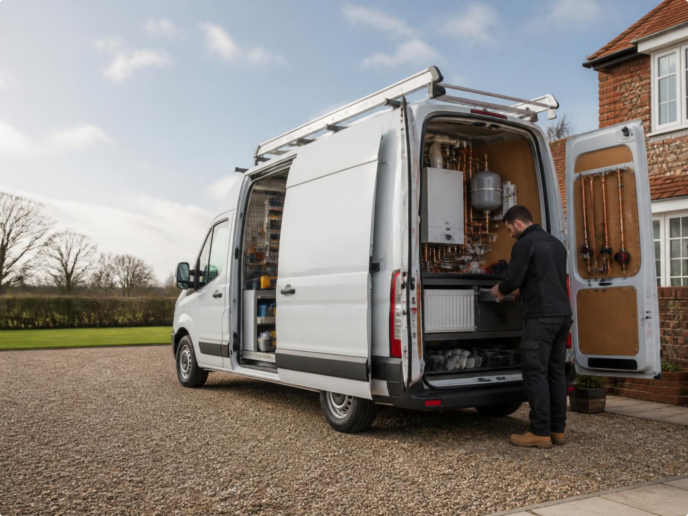
Shelving, drawers, racking and secure storage systems can help create a more efficient mobile workshop.
Instead of having tools, fittings and replacement parts loose in the load area, a professional storage system can give everything its own designated location.
This can make it easier to find equipment when arriving at a customer’s property and reduce the amount of time spent searching through the van.
Security
Heating engineers often carry expensive tools and equipment.
A suitable van should therefore provide good security, particularly if tools are left inside overnight.
Useful security upgrades can include:
- Additional deadlocks
- Alarm systems
- Internal security boxes
- Lockable drawers
- Secure shelving
- Vehicle tracking
- Bulkheads
- Protective window solutions
Security should be considered alongside the value of the equipment being transported.
Comfort And Driving Position
Heating engineers can spend significant amounts of time travelling between jobs.
A comfortable driving position, good visibility, modern safety technology and an easy-to-use cabin can make a significant difference over the course of a working week.
For businesses covering large areas, driver comfort becomes even more important.
Best Small Vans For Heating Engineers
Not every heating engineer needs a large commercial vehicle.
If your business mainly involves servicing boilers, carrying replacement parts and completing routine heating repairs, a small van may provide everything you need.
Compact vans can also be particularly useful for engineers working in towns and cities where parking and manoeuvrability are important.
Volkswagen Caddy
The Volkswagen Caddy is a strong choice for heating engineers who need a compact but professional work van.
It provides a useful balance between passenger-car-like driving characteristics and commercial vehicle practicality.
The Caddy can be particularly suitable for heating engineers who primarily carry tools, spare parts and smaller components rather than large quantities of installation equipment.
Why it works well:
- Compact dimensions
- Comfortable driving environment
- Practical load area
- Good storage potential
- Professional appearance
- Suitable for urban work
The Volkswagen Caddy is particularly appealing for independent heating engineers who spend much of their time travelling between domestic customers.
Ford Transit Courier
The Ford Transit Courier is another compact option for heating businesses.
Its smaller footprint makes it easy to manoeuvre through urban areas and park at residential properties.
It is particularly suitable for engineers who mainly carry tools and smaller replacement components.
Why it works well:
- Compact exterior dimensions
- Easy manoeuvrability
- Practical load area
- Low running costs
- Comfortable cabin
- Suitable for local servicing work
For businesses that do not regularly transport boilers, cylinders or bulky heating equipment, the Transit Courier can provide a practical solution.
Peugeot Partner
The Peugeot Partner offers a useful combination of practicality, load capacity and compact dimensions.
It can be particularly well suited to heating engineers who need more carrying capability than a very small van provides but do not require a medium panel van.
Why it works well:
- Practical load area
- Good payload options
- Sliding side doors
- Comfortable cabin
- Electric version available
- Suitable for service engineers
Citroën Berlingo
The Citroën Berlingo is another established option for tradespeople.
Its practical load area and compact dimensions make it suitable for heating engineers carrying tools, controls, fittings and replacement parts.
Why it works well:
- Good everyday practicality
- Efficient use of load space
- Comfortable driving position
- Electric version available
- Easy to manoeuvre
Vauxhall Combo
The Vauxhall Combo provides another compact commercial vehicle option for heating businesses.
It is particularly suitable for engineers who want a van that is easy to drive while still providing enough space for tools and everyday equipment.
Why it works well:
- Practical load area
- Good payload capability
- Compact dimensions
- Comfortable cabin
- Electric option available
Best Medium Vans For Heating Engineers
For many heating engineers, a medium van is likely to provide the best overall balance between load space, payload, running costs and everyday usability.
Medium vans provide considerably more room than compact vans without becoming as large and cumbersome as a full-size panel van.
They are particularly suitable for businesses that regularly carry boilers, radiators, pipework and larger quantities of tools and equipment.
Ford Transit Custom
The Ford Transit Custom is one of the strongest all-round options for heating engineers.
It offers a practical load area, strong commercial credentials and a wide choice of powertrains.
The Transit Custom can also be fitted with professional shelving, drawer systems, pipe storage and roof equipment to create a highly organised mobile workshop.
Why it works well:
- Excellent load space
- Strong payload options
- Wide range of configurations
- Comfortable driving environment
- Excellent storage potential
- Diesel, plug-in hybrid and electric versions available
For many heating businesses, the Transit Custom provides an excellent balance between carrying capability and everyday practicality.
Volkswagen Transporter
The Volkswagen Transporter remains a popular choice for businesses looking for a professional and premium-feeling medium van.
It provides a comfortable driving environment while offering the load space required for many heating applications.
Why it works well:
- Comfortable interior
- Professional appearance
- Practical load area
- Good storage potential
- Suitable for specialist conversions
It can be particularly appealing to heating businesses where the vehicle also forms part of the company’s professional image.
Mercedes-Benz Vito
The Mercedes-Benz Vito provides another premium option for heating engineers.
It combines a comfortable cabin with practical commercial vehicle capability.
Why it works well:
- Comfortable driving position
- Professional appearance
- Strong payload options
- Practical load area
- Suitable for shelving and racking
- Electric version available
The Vito is particularly suitable for heating engineers who cover significant mileage and spend long periods travelling between customers.
Renault Trafic
The Renault Trafic is a practical medium van offering generous load space and strong everyday usability.
It can be a particularly good option for heating businesses that need to transport a mixture of tools, materials and replacement equipment.
Why it works well:
- Generous load space
- Practical dimensions
- Comfortable cabin
- Good payload capability
- Suitable for professional storage systems
Peugeot Expert
The Peugeot Expert provides another practical option in the medium van sector.
It offers useful load capacity without the size of a large panel van.
Why it works well:
- Practical load area
- Comfortable cabin
- Efficient operation
- Electric version available
- Suitable for trade conversions
Vauxhall Vivaro
The Vauxhall Vivaro is another popular medium van for UK businesses.
Its combination of practicality, load space and available electric power makes it suitable for a wide range of heating businesses.
Why it works well:
- Useful load capacity
- Comfortable driving environment
- Electric version available
- Suitable for shelving and racking
- Good all-round commercial vehicle
Toyota Proace
The Toyota Proace is another strong option for heating engineers, particularly businesses that place importance on reliability and everyday operating costs.
Why it works well:
- Practical load area
- Comfortable cabin
- Electric version available
- Suitable for high-mileage businesses
- Good storage potential
Best Large Vans For Heating Engineers
A large panel van may be the better choice for heating businesses involved in larger installations.
If you regularly transport boilers, cylinders, radiators, heat pumps, extensive pipework and large quantities of equipment, the additional load volume can make a significant difference.
Ford Transit
The Ford Transit is one of the most established large commercial vehicles in the UK.
It provides substantial load space and is available in multiple configurations.
Why it works well:
- Large load area
- Strong payload capability
- Multiple body configurations
- Excellent conversion potential
- Suitable for larger heating businesses
The Transit can be particularly useful when the van is effectively being used as a mobile warehouse or workshop.
Mercedes-Benz Sprinter
The Mercedes-Benz Sprinter offers excellent load capacity and flexibility.
It can be configured for businesses that require significant carrying capability and extensive storage.
Why it works well:
- Large load volume
- Strong payload options
- Multiple body configurations
- Excellent conversion potential
- Electric version available
Volkswagen Crafter
The Volkswagen Crafter is another strong choice for heating businesses requiring a large commercial vehicle.
It provides plenty of room for equipment while offering a comfortable driving environment.
Why it works well:
- Generous load space
- Strong payload
- Comfortable cabin
- Professional appearance
- Suitable for specialist conversions
Best Electric Vans For Heating Engineers
Electric vans are becoming increasingly relevant for trade businesses.
For heating engineers who primarily operate within towns, cities or relatively predictable local areas, an electric van could provide an opportunity to reduce fuel and maintenance costs.
Potential benefits include:
- Lower day-to-day running costs
- Reduced servicing requirements
- Zero tailpipe emissions
- Quiet operation
- Potential suitability for clean air zones
- Strong environmental credentials
However, heating businesses should consider their daily mileage, load requirements and access to charging before making the switch.
Ford E-Transit Custom
The Ford E-Transit Custom combines the familiar dimensions and practicality of the Transit Custom with electric power.
It can be particularly attractive to heating engineers carrying tools and equipment on local and regional jobs.
Why it works well:
- Practical medium-van dimensions
- Electric operation
- Good storage potential
- Comfortable cabin
- Suitable for urban and regional work
Mercedes-Benz eVito
The Mercedes-Benz eVito offers heating businesses a premium electric medium van option.
It combines electric operation with the practicality required for professional engineering work.
Why it works well:
- Zero tailpipe emissions
- Comfortable cabin
- Professional appearance
- Practical load area
- Suitable for local service businesses
Peugeot e-Partner
The Peugeot e-Partner provides a compact electric option for heating engineers.
It can be particularly suitable for engineers who primarily carry tools, controls, fittings and smaller replacement parts.
Why it works well:
- Compact dimensions
- Electric operation
- Practical load area
- Suitable for urban work
- Low day-to-day running costs
Vauxhall Vivaro Electric
For businesses needing more space than a compact electric van provides, the Vauxhall Vivaro Electric is worth considering.
Why it works well:
- Medium van practicality
- Zero tailpipe emissions
- Useful load capacity
- Suitable for trade storage systems
- Good option for local heating businesses
Volkswagen ID. Buzz Cargo
The Volkswagen ID. Buzz Cargo provides another electric option for heating businesses.
Its distinctive design, comfortable cabin and electric powertrain make it particularly interesting for businesses operating mainly in urban and suburban environments.
Why it works well:
- Electric power
- Comfortable driving environment
- Professional appearance
- Suitable for local service work
- Practical load area
The Best Van Setup For Heating Engineers
Choosing the right van is only part of the process.
The way the load area is configured can have just as much impact on productivity.
A professionally converted van can effectively become a mobile workshop.
Van Shelving Systems
Shelving is one of the most useful upgrades for heating engineers.
It can be used to organise:
- Fittings
- Valves
- Controls
- Pumps
- Hand tools
- Power tools
- Replacement components
- Consumables
A well-designed shelving system can make it much easier to find equipment when working at a customer’s property.
Drawer And Tool Storage
Drawers provide secure, organised storage for smaller components and expensive tools.
Heating engineers can use drawers for items such as:
- Thermostats
- Electrical components
- Hand tools
- Test equipment
- Fixings
- Valves
- Spare parts
Lockable drawers can also provide additional security.
Pipe Carriers
Pipe carriers are particularly useful for heating engineers who regularly transport lengths of copper or plastic pipe.
Roof-mounted storage can free up valuable internal load space while keeping long materials secure.
Roof Racks And Ladder Racks
Heating engineers may need to carry ladders and other long equipment.
A suitable roof rack or ladder system can allow this equipment to be transported safely without compromising internal storage capacity.
Bulkheads
A bulkhead separates the cab from the load area.
This can improve driver protection by preventing tools and equipment from moving into the passenger compartment during heavy braking.
It can also help improve temperature control and reduce noise from the load area.
Ply Lining
Ply lining can help protect the inside of the van from damage caused by tools, equipment and materials.
For heating engineers who regularly load heavy equipment, a properly protected load area can help maintain the condition of the vehicle.
Payload: Why It Matters For Heating Engineers
Heating engineers should not choose a van based purely on load volume.
Payload is equally important.
Consider everything you regularly carry, including:
- Tools
- Boilers
- Radiators
- Cylinders
- Pipework
- Fittings
- Spare parts
- Ladders
- Shelving
- Racking
- Passengers
A van may have enough physical space for your equipment but still be unsuitable if the combined weight exceeds its available payload.
It is therefore important to consider your typical working load when choosing the vehicle.
Van Security For Heating Engineers
A heating engineer’s van can contain thousands of pounds worth of tools and equipment.
Security should therefore be considered when choosing both the vehicle and its conversion.
Potential security upgrades include:
- Additional locks
- Deadlocks
- Alarm systems
- Secure tool storage
- Lockable drawers
- Internal security boxes
- Vehicle tracking
- Security bulkheads
Keeping valuable equipment secure can help reduce disruption if a vehicle is targeted by thieves.
Should Heating Engineers Choose A Small, Medium Or Large Van?
The answer depends on the type of work you undertake.
Small Vans
Best suited to:
- Boiler servicing
- Routine maintenance
- Domestic repairs
- Engineers carrying mainly tools and spare parts
- Urban businesses
Medium Vans
Best suited to:
- Boiler installation
- Heating-system repairs
- Domestic heating contractors
- Engineers carrying larger quantities of equipment
- Businesses requiring shelving and pipe storage
Large Vans
Best suited to:
- Larger heating installations
- Commercial heating businesses
- Businesses carrying cylinders and bulky equipment
- Engineers transporting larger quantities of pipework and materials
- Companies operating as mobile workshops
For many heating businesses, a medium van is likely to offer the best overall compromise.
Van Leasing For Heating Engineers
Leasing can provide heating businesses with access to a modern commercial vehicle without purchasing the van outright.
Business van leasing can provide several potential advantages, including:
- Fixed monthly payments
- Easier budgeting
- Reduced initial expenditure
- Access to newer commercial vehicles
- The ability to specify a vehicle around your business requirements
- Potential opportunities to include specialist conversions
For a growing heating business, leasing can also make it easier to upgrade to a larger or more capable vehicle as the business develops.
Specialist Van Conversions For Heating Engineers
A heating engineer’s van can be tailored around the equipment they use every day.
AAt Commercial Vehicle Contracts, we can arrange a wide range of van leasing services and specialist vehicle modifications, including:
- Tail lifts for effortless loading
- Ladder Racks, Roof Bars and Commercial Van Roof Storage Systems to maximise carrying capacity and free up internal load space
- Shelving systems for perfect organisation
- Security Gates for added security
- Ply lining to protect your panel van
- Tow bars for additional hauling capability
- Chapter 8 chevrons to improve vehicle visibility
- Cherry picker platforms for elevated access
- Roller tops, shutters, hard-top canopies & more – add secure lockers for valuable equipment.
The key advantage is that all modifications are completed professionally before your vehicle is delivered, ensuring your new vehicle is fully equipped and ready to work from day one.
We manage the entire process, saving you the time and hassle of coordinating with multiple suppliers.
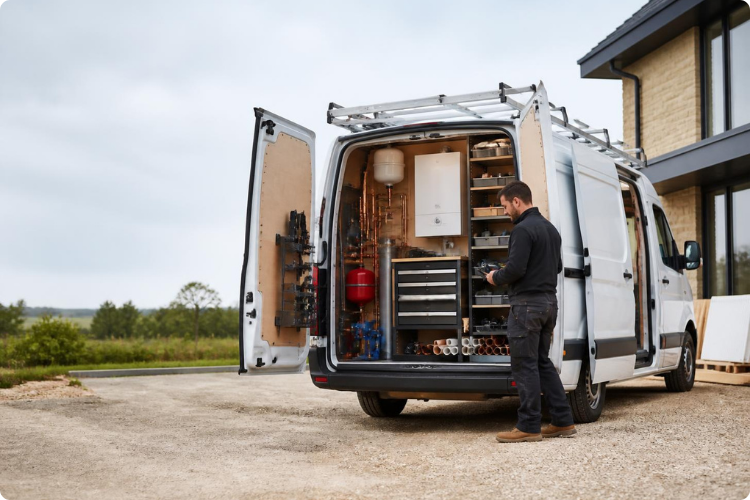
Why A Professional Van Setup Can Save Heating Engineers Time
A heating engineer may visit several customers in a single day.
Every minute spent looking for tools, moving equipment around the load area or returning to a supplier for forgotten parts can affect productivity.
A properly organised van can make it easier to:
- Find tools quickly
- Keep replacement parts organised
- Protect expensive equipment
- Load and unload efficiently
- Maintain a professional appearance
- Reduce unnecessary trips to suppliers
For a busy heating business, these small improvements can add up over the course of a working week.
Choosing The Best Van For Your Heating Business
The best van for a heating engineer ultimately depends on the type of work being carried out.
A small van such as the Volkswagen Caddy, Ford Transit Courier or Peugeot Partner can be ideal for engineers who mainly provide servicing and maintenance.
Medium vans such as the Ford Transit Custom, Volkswagen Transporter and Mercedes-Benz Vito provide a stronger balance between load space and everyday usability and are likely to suit many heating businesses.
For larger installation businesses, vehicles such as the Ford Transit, Mercedes-Benz Sprinter and Volkswagen Crafter provide significantly more room for bulky equipment and specialist storage.
Electric vans are also becoming a more realistic option, particularly for heating engineers operating mainly on local and regional routes.
The important thing is to choose a vehicle based on your actual daily workload, equipment, payload requirements and mileage, rather than simply choosing the largest van available.
Quick Comparison: Best Vans For Heating Engineers
| Van | Best For | Electric Available |
|---|---|---|
| Volkswagen Caddy | Servicing and maintenance | Yes |
| Ford Transit Courier | Compact urban heating businesses | Yes |
| Peugeot Partner | Service engineers | Yes |
| Ford Transit Custom | All-round heating businesses | Yes |
| Volkswagen Transporter | Professional heating contractors | Yes |
| Mercedes-Benz Vito | High-mileage heating engineers | Yes |
| Renault Trafic | General heating businesses | No |
| Ford Transit | Larger installations | Yes |
| Mercedes-Benz Sprinter | Large heating businesses | Yes |
| Volkswagen Crafter | Bulky equipment and mobile workshops | Yes |
Finding The Right Van For Your Heating Business
The best van for a heating engineer depends on the type of work you undertake, the equipment you transport and the amount of storage you require.
Smaller vans can be ideal for boiler servicing, maintenance and repair work where you primarily need to carry tools, spare parts and heating controls. Medium and large panel vans provide additional flexibility for carrying boilers, radiators, cylinders, pipework and larger quantities of equipment.
Whether you need a compact service van or a fully converted mobile workshop, selecting the right commercial vehicle can improve organisation, efficiency and the way your business operates from one job to the next.
If you’re still unsure whether leasing a van for business purposes is the right choice, or you’d like to learn more about the advantages and disadvantages of leasing, we recommend reading our blog post, “Should You Buy Or Lease A Van For Your Business?“
At Commercial Vehicle Contracts, we help heating businesses find the right commercial vehicle, including bespoke van conversions, shelving systems, secure storage solutions and tailored modifications designed around the needs of heating engineers.
 Call our expert team on