Any business that allows employees to drive for work needs to make sure they hold the correct driving licence for the vehicles they use. This applies whether employees drive company cars, leased vans, pickups or their own vehicles for business journeys.
However, checking a driving licence when someone first joins the business is not enough. Driving entitlements can change, penalty points can accumulate, and employees can become disqualified from driving. A member of staff who was previously authorised to drive a company vehicle may no longer be legally entitled to do so.
For businesses operating a fleet, regular driving licence checks should form part of a wider approach to driver management, workplace health and safety and fleet risk management.
This guide explains how UK employers can check employee driving licences, what information to look for, how frequently checks should take place and what to do if a driver no longer meets the required standards.
Why Do Employers Need To Check Company Vehicle Driving Licences?
Employers must make sure that anyone they employ to drive a vehicle has the correct driving licence and qualifications for the work they are carrying out.
This is not simply an administrative exercise. Allowing someone to drive a vehicle without the appropriate entitlement can create legal, safety and insurance risks for the business.
For example, an employee might have a full car driving licence but not hold the entitlement required for a particular commercial vehicle, depending on its weight, configuration and the date their licence was issued. Another employee may have accumulated penalty points or received a driving disqualification since their licence was last checked.
Businesses should therefore have a clear process for confirming that every employee is legally entitled to drive the vehicle assigned to them.
This should cover:
- Employees driving company-owned or leased vehicles.
- Employees using company vehicles temporarily or as pool vehicles.
- Employees driving their own vehicles for business purposes.
- Agency workers and other individuals engaged to drive on the business’s behalf, where applicable.
- Employees who regularly change between different vehicle types.
Driving licence checks should also form part of the wider responsibilities associated with operating a leased vehicle, including making sure employees understand their obligations. Read our guide to leased vehicle driver responsibilities.
The Health and Safety Executive (HSE) makes clear that employers must manage risks associated with driving for work. Its guidance applies to both company vehicles and grey fleet vehicles.
Businesses developing their approach should also consider their wider fleet risk assessment responsibilities, including how driver suitability is assessed and monitored.
How To Check An Employee’s Driving Licence
Employers can check a driver’s licence online using the DVLA’s driving licence checking service.
The process allows businesses to see relevant information about an individual’s driving record, including the vehicles they are entitled to drive and any penalty points or disqualifications recorded against their licence.
To complete an online check, the employer needs:
- The last eight characters of the employee’s driving licence number.
- A driving licence check code provided by the employee.
The employee can generate this code through the Government’s View or share your driving licence information service.
Once the employee has supplied the code, the employer can use the DVLA’s online driving licence checking service to view the relevant information.
There are several important points to understand:
- The check code is valid for 21 days.
- Each code can only be used once.
- A new code is needed for each subsequent check.
- The employer must also have the last eight characters of the driver’s licence number.
- The employee must give permission for the business to access their driving information.
Obtaining someone else’s personal driving information without their permission is a criminal offence. Businesses should therefore make consent part of their formal driver authorisation process.
The online service is free to use and is available 24 hours a day.
Can Businesses Check Driving Licences Without A Check Code?
The employee can also authorise a check through the DVLA’s postal service using form D888/1.
The company and driver must complete the relevant sections of the form, with the driver providing their signed permission. The postal service currently carries a £5 fee.
For businesses checking multiple employees, the DVLA also offers an Access Driver Data service. Companies must apply, pass accreditation checks and enter into a contract with the DVLA. The published enquiry fee is 60p per driver record.
Further information is available through the Government’s guidance on employing people to drive.
What Should Employers Look For During A Licence Check?
Checking that an employee has a driving licence is only the starting point. Businesses need to establish whether the individual is entitled to drive the particular vehicle they have been assigned.
A proper check should consider several areas.
1. Driving Licence Categories
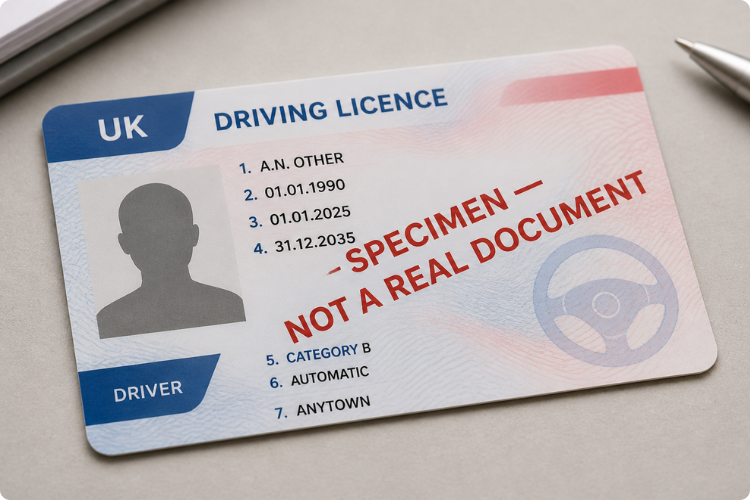
The vehicle category shown on a driving licence determines which types of vehicles an individual is entitled to drive.
For businesses operating cars, vans and pickups, it is important to check that the driver’s entitlement matches the vehicle’s specifications.
For example, most standard car licences include category B entitlement, which generally covers vehicles with a maximum authorised mass of up to 3,500kg, subject to the relevant licence conditions and restrictions.
However, businesses should not assume that every van or commercial vehicle can automatically be driven by anyone holding a standard car licence.
Vehicle weight, towing arrangements, licence issue dates and individual entitlements can all affect what someone is legally permitted to drive.
Our guide to whether you can drive a van on a car licence explains the relevant distinctions in more detail.
Where employees drive specialist or heavier vehicles, businesses should check the relevant entitlement rather than relying on the vehicle’s model name or appearance.
2. Penalty Points And Driving Convictions
Penalty points can affect an employee’s suitability to drive for work, particularly where their role involves regular journeys, customer visits or transporting equipment.
Employers should review the endorsements recorded against a driver’s licence and consider whether they indicate an increased road safety risk. Businesses operating commercial vehicles should also make sure drivers understand the different speed limits that can apply to vans, as these can differ from the limits for cars. Our guide to UK speed limit rules for vans explains the key differences.
The presence of penalty points does not automatically mean an employee cannot drive a company vehicle. However, the business should consider the nature of the offence, the number of points and any implications for its driving policy or insurance arrangements.
For example, a driver who has accumulated several speeding endorsements may need additional assessment or training before continuing to drive as part of their role.
Businesses should establish clear rules about employees reporting new driving convictions, penalty points and changes to their licence status.
3. Disqualifications And Restrictions
A driving disqualification means an individual is not legally permitted to drive during the period of their ban.
Employers should have a process for identifying any disqualifications and ensuring that affected employees do not continue driving for work.
It is also important to check for restrictions or other relevant information recorded on the driving licence.
Where a driver’s entitlement changes, the business should reassess whether they can continue using their allocated vehicle or whether alternative arrangements are required.
4. Driving Licence Validity
Employers should also check that the driving licence is valid and that any relevant restrictions or renewal requirements are understood.
Photocard licences generally need to be renewed every 10 years to update the photograph. However, some licences have different renewal requirements, including those issued for medical reasons or for certain professional vehicle categories.
A licence that has expired, been revoked or no longer provides the required entitlement should not be treated as valid authorisation to drive.
How Often Should Employers Check Driving Licences?
There is no single fixed legal interval requiring every UK employer to check every employee’s driving licence at the same frequency.
However, employers should carry out checks regularly and make sure their arrangements are appropriate for the level of risk associated with their business and its drivers.
A business employing someone who drives occasionally may have different monitoring requirements from an organisation operating a large fleet of commercial vehicles with employees covering substantial annual mileage.
A practical approach is to introduce a documented checking schedule based on driver risk.
For example:
| Driver circumstances | Suggested monitoring approach |
|---|---|
| New employees who will drive for work | Check before they are authorised to drive |
| Employees with a clean record and occasional business journeys | Include in a regular scheduled review |
| Employees who drive frequently or cover high annual mileage | Consider more frequent checks |
| Drivers with penalty points or previous driving convictions | Apply closer monitoring based on risk |
| Drivers who operate different vehicle categories | Check entitlement whenever their vehicle responsibilities change |
| Agency or temporary drivers | Verify entitlement before they are authorised to drive |
These are suggested management arrangements, not statutory checking intervals.
Businesses should also require employees to report changes to their driving entitlement immediately, rather than waiting for the next scheduled review.
A licence checking policy should explain how often checks take place, who is responsible for carrying them out and what happens when a driver fails to meet the required standards.
The Government’s guidance for businesses employing people to drive also explains the available checking services and employer responsibilities.
What Happens If An Employee Loses Their Driving Entitlement?
If a licence check identifies that an employee is no longer legally entitled to drive the vehicle assigned to them, the business needs to act promptly.
The employee should not continue driving that vehicle until the situation has been properly resolved and their legal entitlement has been confirmed.
Depending on the circumstances, the employer may need to:
- Remove the employee’s authorisation to drive company vehicles.
- Establish whether the issue relates to a disqualification, expired entitlement or incorrect vehicle category.
- Review any insurance implications and notify the relevant parties where necessary.
- Consider whether alternative duties or transport arrangements are available.
- Record the decision and any action taken.
- Only reinstate driving permission once the employee’s entitlement has been verified.
Businesses should avoid relying on verbal assurances that a driving ban has ended or that a licence issue has been resolved. The relevant driving entitlement should be checked before the employee returns to driving duties.
A clear process can help prevent uncertainty for managers and ensure that employees understand their responsibilities.
Businesses should also have clear procedures for managing incidents involving company vehicles. Our guide to company vehicle accident procedures explains what employers should consider following a collision.
Do Employers Need To Check Grey Fleet Drivers’ Licences?
Yes. Businesses should include employees who use their own vehicles for work-related journeys in their driving licence checking arrangements.
A grey fleet refers to privately owned vehicles used by employees for business purposes. This can include employees who receive mileage payments or use their own cars under a cash allowance arrangement.
Although the vehicle is not owned or leased by the employer, the business still has health and safety responsibilities for work-related driving.
The HSE’s guidance on driving for work applies to both company vehicles and grey fleet vehicles.
Employers should therefore establish that grey fleet drivers:
- Hold a valid driving licence for the vehicle they are using.
- Have the appropriate insurance cover for business use.
- Use a vehicle that is taxed, MOT’d where required and roadworthy.
- Maintain their vehicle appropriately.
- Report changes to their driving entitlement.
- Follow the organisation’s driving for work policy.
Licence checks should not be treated differently simply because an employee owns the vehicle.
Businesses can read more about their responsibilities in our Grey Fleet Management Guide.
What Records Should Businesses Keep?
A consistent record-keeping process helps businesses demonstrate that they have considered driver suitability and are monitoring their fleet responsibly.
For each authorised driver, businesses should consider retaining:
- Employee name and identification details.
- Driving licence number, where necessary for the checking process.
- Date the licence was checked.
- The driving entitlement and vehicle categories verified.
- Relevant penalty points, endorsements or disqualifications.
- The outcome of the check.
- Any restrictions or additional requirements identified.
- The date of the next scheduled review.
- Details of any follow-up action, training or changes to driving authorisation.
Businesses should also retain evidence that the driver gave permission for their information to be checked.
Driving licence information is personal data. Employers should only collect and retain information that is necessary for their purposes, restrict access to authorised personnel and follow appropriate data protection and retention arrangements.
It is worth remembering that keeping a photocopy of a driving licence does not provide ongoing confirmation that the employee remains entitled to drive. The business needs a process for checking current information and recording the outcome.
Licence records should also be considered as part of wider fleet administration and compliance processes. Our guide to fleet audits for UK businesses explains how reviewing fleet information can help identify gaps and improve oversight.
How Should Driving Licence Checks Fit Into A Company Vehicle Policy?
A company vehicle policy should explain the conditions employees must meet before they are allowed to drive a vehicle for business purposes.
Driving licence checks should be included alongside other driver responsibilities, rather than being managed as a separate administrative task.
A policy should set out:
- The requirement to hold the correct and valid driving entitlement.
- The employee’s obligation to provide permission for DVLA checks.
- How frequently the business intends to carry out checks.
- The requirement to report penalty points, convictions and disqualifications.
- The procedure for reporting changes to driving entitlement.
- The consequences of driving without the appropriate authorisation.
- The responsibilities of employees using their own vehicles for business journeys.
It should also explain that permission to drive a company vehicle can be withdrawn if an employee no longer meets the business’s requirements.
Businesses that do not currently have a formal policy should consider developing one. Our Company Vehicle Policy UK Business Guide provides a useful starting point.
The policy should be communicated to all relevant employees, with confirmation that they have read and understood the requirements.
Managing Driver Checks Across A Business Fleet
For businesses operating several vehicles, managing driving licence checks manually can become increasingly difficult.
Driver licence checks are only one part of fleet compliance. Businesses must also make sure vehicles remain safe and roadworthy, including monitoring essential components such as brakes and tyres. Read our guide to fleet compliance and faulty brakes and tyres.
Employees may change roles, vehicles may be reassigned, and new drivers may join the organisation throughout the year. Without a central record, it can become harder to identify when checks are due or whether a particular employee remains authorised to drive.
A structured approach should include:
- Centralised driver records: Maintain an up-to-date list of everyone authorised to drive for business purposes, including employees using their own vehicles.
- Scheduled reviews: Set reminders for repeat licence checks and make sure outstanding checks are followed up.
- Clear responsibility: Allocate responsibility for checking licences to an appropriate manager or fleet administrator.
- Consistent procedures: Apply the same core standards to company vehicle drivers, grey fleet drivers and temporary drivers where relevant.
- Documented decisions: Record the outcome of checks and any action taken when an issue is identified.
For organisations with larger numbers of drivers, the DVLA’s Access Driver Data service may also be worth considering.
Effective driver management should sit alongside vehicle allocation, maintenance, servicing and replacement planning. Businesses looking to improve their wider processes can read our Fleet Management Guide and find out more about our fleet administration and account support services.
Frequently Asked Questions About Company Vehicle Licence Checks
There is no single fixed checking interval for every business. Employers should establish a risk-based schedule, taking account of driving duties, mileage, previous convictions and other relevant factors.
Employers should check that employees are legally entitled to drive the vehicles they use for work. This forms part of managing work-related road risks and ensuring drivers are suitable for their duties.
Yes. With the employee’s permission, an employer can use the DVLA’s online service and a check code provided by the driver to view relevant driving licence information.
Yes. Businesses should also check the driving entitlement of employees who use their own vehicles for work-related journeys.
If an employee is no longer legally entitled to drive, the business must ensure they do not continue driving for work. Alternative arrangements may be needed while the situation is resolved.
With the employee’s permission, employers can use the DVLA driving licence checking service to view relevant information, including penalty points and disqualifications.
 Call our expert team on