Driving a van is often easier than many people expect, but one of the most common questions asked by businesses and first-time van drivers is:
Can I drive a van on a standard car licence?
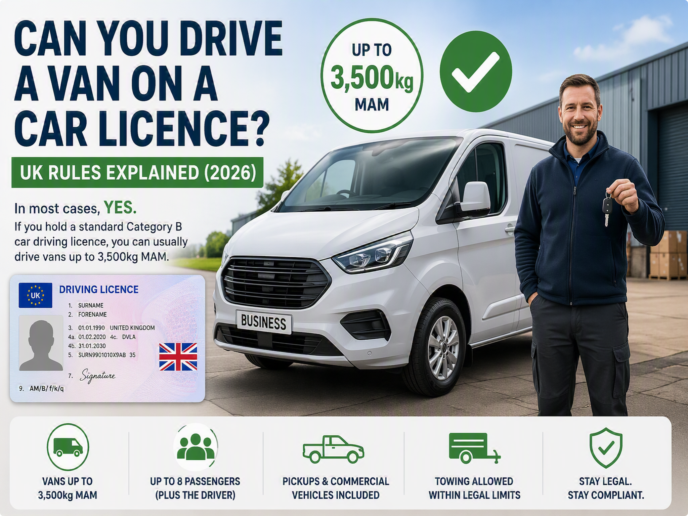
In most cases, yes.
However, there are important rules surrounding vehicle weight, towing, licence categories and business use that every driver should understand before getting behind the wheel.
Whether you’re leasing your first commercial vehicle, expanding your business fleet or replacing a company car with a van, this guide explains everything you need to know about driving a van legally in the UK.
The Short Answer
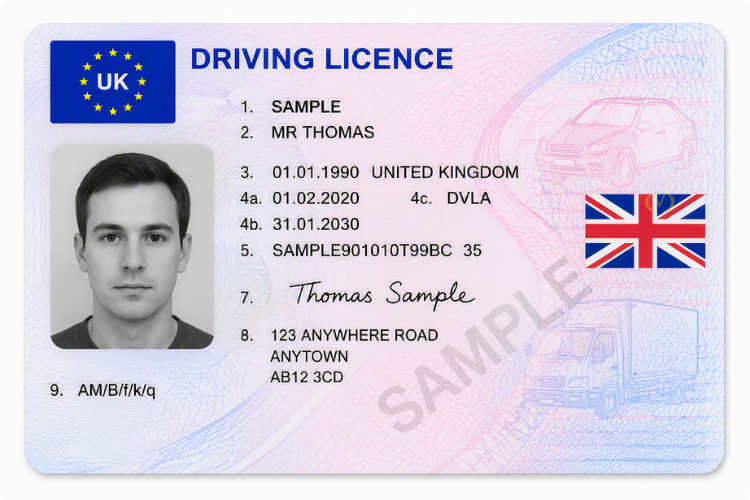
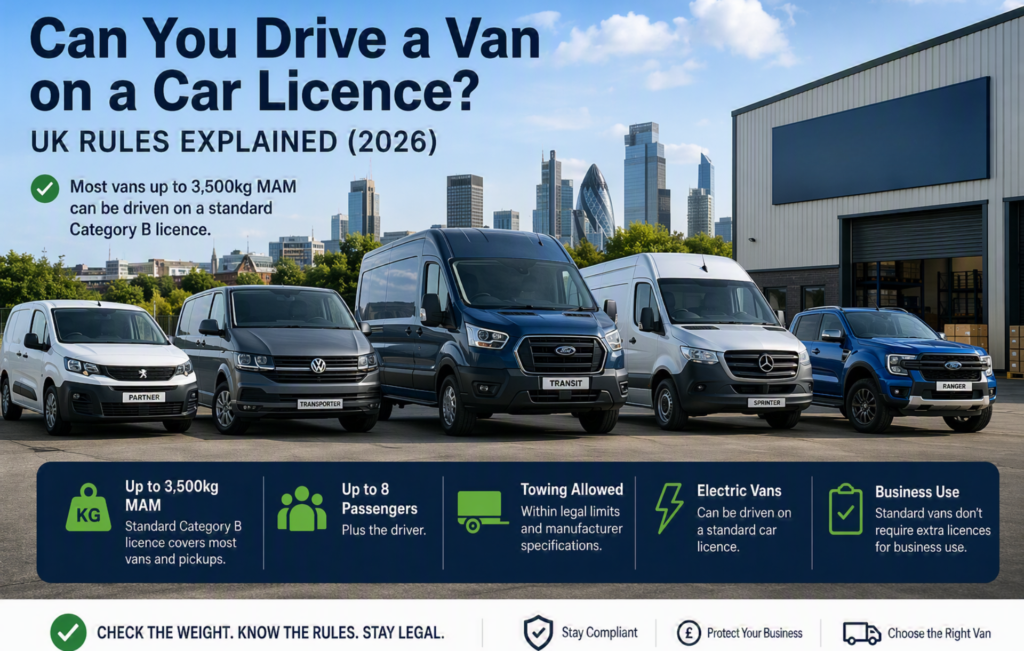
If you hold a standard Category B car driving licence, you can usually drive:
- Vans with a Maximum Authorised Mass (MAM) of up to 3,500kg
- Vehicles carrying up to 8 passengers (plus the driver)
- Small pickups and commercial vehicles within the same weight limit
This covers the vast majority of vans used by UK businesses.
Examples include:
- Ford Transit Custom
- Volkswagen Transporter
- Renault Trafic
- Vauxhall Vivaro
- Mercedes-Benz Vito
- Peugeot Expert
- Citroën Dispatch
- Toyota Proace
- Nissan Primastar
Even many large panel vans are available with a gross vehicle weight below 3.5 tonnes.
What Is Maximum Authorised Mass (MAM)?
Maximum Authorised Mass (sometimes called Gross Vehicle Weight (GVW)) is the maximum legal weight of a vehicle when fully loaded.
This includes:
- The vehicle itself
- The driver
- Passengers
- Fuel
- Tools
- Equipment
- Cargo
It does not simply refer to how much the van can carry.
For example:
| Vehicle | Typical MAM |
|---|---|
| Ford Transit Custom | 2,800–3,225kg |
| Volkswagen Transporter | Up to 3,200kg |
| Mercedes Sprinter | Up to 5,500kg (depending on model) |
A standard Category B licence only allows you to drive vehicles up to 3,500kg MAM, unless additional entitlements apply.
Which Vans Can You Drive on a Car Licence?
Most popular business vans fall below the 3.5-tonne limit, including:
Small Vans
- Ford Transit Courier
- Volkswagen Caddy
- Renault Kangoo
- Peugeot Partner
- Citroën Berlingo
- Mercedes-Benz Citan
Ideal for:
- Electricians
- Plumbers
- Couriers
- Service engineers
Medium Vans
- Ford Transit Custom
- Volkswagen Transporter
- Renault Trafic
- Vauxhall Vivaro
- Peugeot Expert
- Toyota Proace
These are among the UK’s most popular commercial vehicles and can all normally be driven on a standard licence.
Large Vans
Many larger vans are still available under 3.5 tonnes, including versions of:
- Ford Transit
- Mercedes-Benz Sprinter
- Volkswagen Crafter
- Renault Master
- Peugeot Boxer
- Citroën Relay
- Vauxhall Movano
Always check the specific model’s gross vehicle weight before driving.
Can You Drive a Pickup on a Car Licence?
Yes.
Most double-cab pickups sold in the UK have a maximum authorised mass below 3,500kg.
Popular examples include:
Although pickups can tow heavy trailers, the vehicle itself normally falls within Category B licence rules.
What If the Van Weighs More Than 3.5 Tonnes?
Once a vehicle exceeds 3,500kg MAM, different licence categories usually apply.
These vehicles may include:
- Heavy box vans
- Large luton vans
- Recovery trucks
- Specialist conversions
- Some electric commercial vehicles
In many cases you’ll need a Category C1 or Category C licence.
Businesses operating heavier vehicles may also need to comply with additional operator licensing, tachograph and driver hours regulations.
Can You Tow a Trailer?
Towing rules changed in recent years, making life easier for many drivers.
Most Category B licence holders can now tow trailers without taking an additional towing test.
However, you must always ensure:
- The combined vehicle and trailer weight remains within legal limits.
- You never exceed the manufacturer’s towing capacity.
- The trailer is correctly loaded.
- Appropriate braking requirements are met.
If your business regularly tows plant equipment, machinery or caravans, it’s worth checking the vehicle handbook and manufacturer specifications before setting off.
Can You Drive an Electric Van on a Car Licence?
Yes.
Most electric vans sold today can be driven on a standard car licence.
Examples include:
- Ford E-Transit Custom
- Volkswagen ID. Buzz Cargo
- Renault Kangoo E-Tech
- Mercedes-Benz eVito
- Peugeot e-Expert
- Citroën ë-Dispatch
- Vauxhall Vivaro Electric
- Toyota Proace Electric
Electric vans are becoming increasingly popular thanks to lower running costs, reduced emissions and improved driving ranges.
Are There Any Age Restrictions?
Most drivers can drive a van from age 17 once they have passed their Category B driving test.
However, many leasing companies and insurers require drivers to be older, often:
- 21+
- 25+
- With a minimum period of licence holding
These are insurance requirements rather than driving licence rules.
Do Business Drivers Need Extra Qualifications?
Usually not.
For standard vans under 3.5 tonnes, no additional licence is required beyond Category B.
However, depending on how the vehicle is used, businesses may need to consider:
- Operator licensing
- Driver CPC requirements (for certain commercial operations)
- Tachograph regulations
- Driver hours legislation
These rules generally apply to larger commercial operations rather than typical tradespeople or service businesses.
Common Misunderstandings
“You need an HGV licence to drive a Transit.”
False.
Almost every Ford Transit and Transit Custom used by UK businesses can be driven on a standard car licence.
“Large vans require a different licence.”
Not necessarily.
It’s the maximum authorised mass, not the physical size, that determines the licence category.
“Electric vans need a different licence.”
False.
Most electric vans fall within the same licensing rules as diesel or petrol equivalents.
“Using a van for business changes your licence.”
No.
Whether you use a van privately or for work does not usually affect which driving licence you need.
Tips Before Leasing a Van
Before ordering a commercial vehicle, check:
- Maximum authorised mass
- Payload
- Towing capacity
- Licence requirements
- Insurance conditions
- Driver eligibility
Choosing the right specification ensures your vehicle remains compliant while meeting your business needs.
Frequently Asked Questions
Yes, provided the model has a maximum authorised mass of no more than 3,500kg.
Many Luton vans can be driven on a Category B licence, but some heavier models require a Category C1 licence.
Yes. Most UK pickups fall below the 3.5-tonne limit.
Yes. Most electric vans available today can be driven with a Category B licence.
No. Business use does not normally change your licence requirements, although other regulations may apply depending on the type of operation.
 Call our expert team on