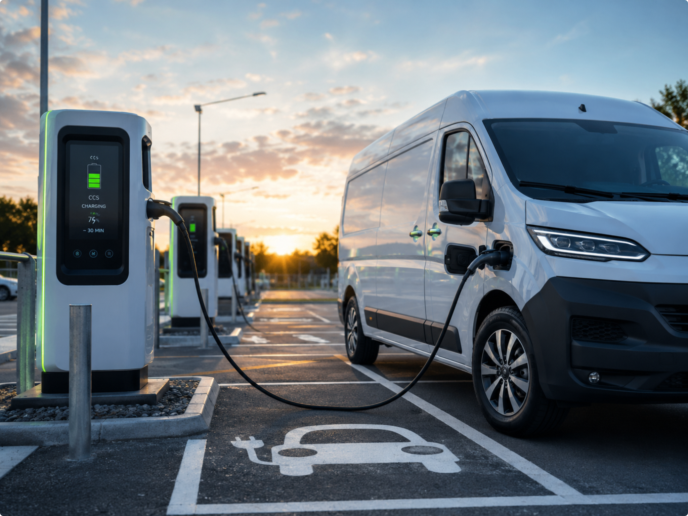
The expansion of electric vehicle charging infrastructure is now outpacing EV sales growth across much of Europe, helping to address one of the biggest concerns for drivers and businesses considering the switch to electric.
Research from sustainable transport organisation Transport & Environment (T&E) has found that most European countries are currently installing public charging capacity faster than new electric vehicles are being added to their roads.
The findings suggest that investment in charging networks is keeping pace with the growth of electric mobility, giving businesses and fleet operators greater confidence when transitioning towards zero-emission vehicles.
Charging Infrastructure Keeping Pace With EV Adoption
A key part of the research focused on the European Union’s Alternative Fuels Infrastructure Regulation (AFIR), which sets minimum requirements for public charging availability across member states.
Under the regulation, countries must provide at least 1.3kW of public charging capacity for every battery electric vehicle registered within their fleet.
According to T&E’s analysis, by the end of March 2026, almost every EU country had already achieved this target, with Malta the only exception.
Across the European Union as a whole, charging capacity was found to exceed the combined requirement by around 180%, showing the rapid expansion of public charging infrastructure.
For businesses operating electric vans and cars, this continued investment should help improve confidence around vehicle range, charging access and day-to-day usability.
Faster Chargers Expanding Across Major Roads
Alongside overall charging capacity targets, AFIR also includes requirements for high-powered rapid chargers to be installed along key European routes.
The legislation requires DC charging stations with a minimum output of 150kW to be available every 60km on the EU’s main road network.
T&E found that around 79% of these requirements had already been achieved, with remaining gaps mainly affecting some eastern European countries and Spain.
However, the organisation highlighted that some of the fastest-growing charging networks are being developed in areas where infrastructure expansion is accelerating.
Improving Charging Experience Remains Important
While charging availability continues to improve, T&E said there are still challenges that need to be addressed before electric vehicles become easier for every driver to use.
Lucien Mathieu, Cars Director at T&E, said that charging targets were “working as intended” by supporting the growth of the EV market, but highlighted that issues such as inconsistent pricing and ease of use still need attention.
These challenges are particularly important for drivers who cannot charge at home, including many people living in apartments or urban areas who depend on public charging networks.
What Does This Mean for UK Businesses?
For companies considering electric cars or vans, charging infrastructure remains a major factor when planning a fleet transition.
While public charging networks continue to expand, many businesses are also looking at workplace charging, depot charging and home charging solutions to make EV operation easier for drivers.
For commercial vehicle operators, the ability to charge vehicles reliably can have a major impact on productivity, operating costs and driver confidence.
As more manufacturers introduce electric vans with improved range and faster charging capabilities, the continued growth of charging infrastructure will help make electric fleets a more practical option for businesses across the UK.
The Future of Electric Fleets
The growth of charging networks across Europe shows that infrastructure investment is moving quickly alongside the adoption of electric vehicles.
For businesses considering their next fleet vehicles, the decision is becoming less about whether charging will be available and more about choosing the right vehicles, charging strategy and fleet management approach.
With electric vans and cars continuing to improve, businesses that plan ahead can take advantage of lower running costs, reduced emissions and the growing availability of charging infrastructure.
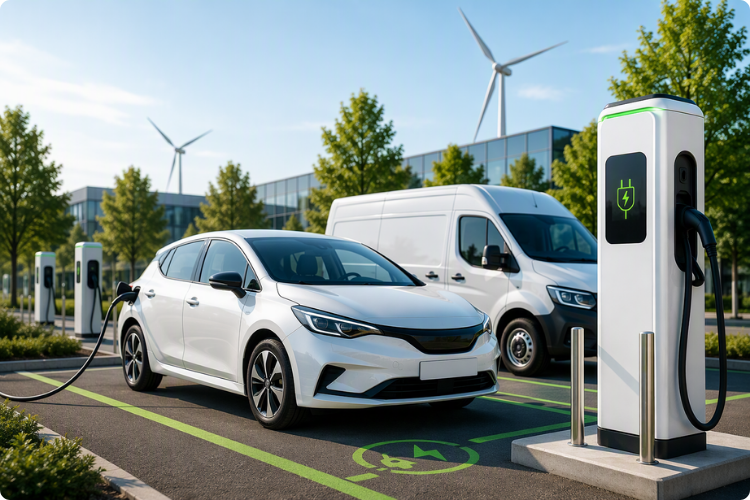
For businesses considering the switch to electric vehicles, access to reliable and convenient charging remains a key factor when planning the transition to an electrified fleet.
Leasing providers can help simplify the process by advising on suitable vehicles, charging infrastructure and long-term fleet strategies, enabling businesses to make informed decisions based on their operational needs.
For commercial operators, keeping vehicles on the road is essential. Minimising downtime while maintaining efficiency and reliability is critical to supporting day-to-day business activities.
As charging technology continues to advance, faster charging times could make electric vans, cars and commercial vehicles an even more practical choice. This is especially beneficial for businesses with high-mileage drivers, multiple operating sites or time-sensitive delivery schedules, where reducing time spent charging can have a direct impact on productivity.
Concerned about rising fuel costs? Discover why more UK businesses are turning to electric vehicle leasing to reduce running costs and protect themselves from unpredictable fuel prices in our guide: “Why Now Is the Perfect Time to Lease an Electric Vehicle.” Read the full article
Looking to install EV charging at your business? Find out how the UK Government is supporting the transition to electric vehicles with increased funding for home and workplace charging installations in our latest guide.
Still have questions about owning an electric vehicle? Find out what happens if an electric vehicle runs out of charge or breaks down, and how roadside assistance providers help get drivers back on the road.
 Call our expert team on