Why EV Fire Risk is Still Misunderstood in 2026
Electric vehicle (EV) fire risk remains one of the most widely discussed — and frequently misunderstood — aspects of vehicle safety.
While electric vehicles have become mainstream across the UK and Europe, public concern about battery fires continues to generate headlines. Dramatic footage of burning EVs often circulates rapidly online, reinforcing the perception that electric cars are inherently dangerous.
However, accident investigators, fire services, insurers, and transport safety agencies consistently report a different reality.
The latest evidence shows that electric vehicles remain significantly less likely to catch fire than petrol or diesel vehicles. The confusion often arises because EV fires behave differently, attract greater media attention, and are frequently confused with unrelated lithium-ion battery incidents involving e-bikes, scooters, and consumer electronics.
Understanding the difference between frequency and severity is critical.
The question is not simply:
“Can EVs catch fire?”
The answer is yes.
The more important question is:
“How often do they catch fire compared to petrol and diesel vehicles?”
And on that measure, the data remains remarkably consistent.
Although methodologies vary between studies and regions, research consistently finds that electric vehicles experience fewer fire incidents per vehicle than petrol and diesel vehicles.
Key findings from industry research and transport safety analyses show:
- EV fires remain rare relative to the size of the global EV fleet.
- Petrol and diesel vehicles account for the majority of vehicle fire incidents worldwide.
- Most EV fires occur following severe collision damage, battery compromise, or exceptionally rare manufacturing defects.
- Modern battery management systems significantly reduce the likelihood of uncontrolled thermal events.
- Fire services worldwide continue to adapt and improve specialist response procedures for battery-related incidents.
The overall trend remains clear: EVs are generally less likely to catch fire than conventional internal combustion vehicles.
EV Fire Risk vs Petrol and Diesel: The Numbers Behind the Headlines
When comparing vehicle fire risk, researchers typically measure incidents relative to the total number of vehicles on the road.
This avoids misleading conclusions caused by differences in fleet size.
Across studies from North America, Europe, and Asia, a common trend emerges:
- Petrol and diesel vehicles account for the overwhelming majority of vehicle fires.
- EV fire incidents remain comparatively rare.
- As EV ownership grows, the fire rate per vehicle remains low.
- Hybrid vehicles often occupy the middle ground due to their combination of fuel systems and battery technology.
One important factor often overlooked is vehicle age.
Many petrol and diesel vehicles involved in fires are more than 10 years old. Age-related deterioration increases the likelihood of:
- Fuel system failures
- Oil leaks
- Wiring faults
- Engine overheating
By contrast, much of the current EV fleet is relatively new and benefits from modern safety engineering.
Even when researchers adjust for vehicle age, electric vehicles continue to show lower fire incidence rates than conventional vehicles.
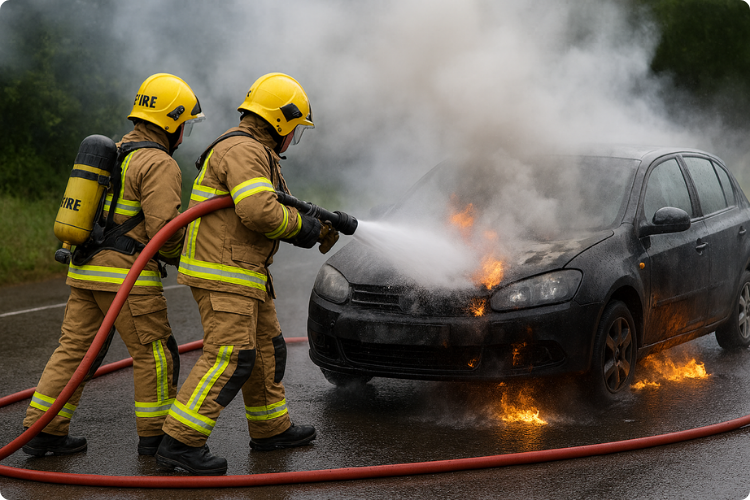
Why EV Fires Receive Disproportionate Media Attention
Human psychology plays a major role in risk perception.
Researchers refer to this as the availability heuristic—people estimate risk based on how easily examples come to mind.
An EV fire can generate:
- Dense smoke plumes
- Intense thermal imagery
- Road closures
- Extensive media coverage
- Millions of social media views
A petrol vehicle fire, despite being far more common, may receive little attention outside local reporting.
This imbalance creates the impression that EV fires occur frequently even when the underlying statistics suggest otherwise.
In practical terms:
One highly publicised EV fire can receive more media coverage than hundreds of conventional vehicle fires occurring during the same period.
Understanding Thermal Runaway
The term “thermal runaway” is often used in discussions about EV safety, but it is rarely explained properly.
Thermal runaway occurs when:
- A battery cell becomes damaged or overheated.
- Internal temperatures rise rapidly.
- The heat spreads to adjacent cells.
- A chain reaction develops throughout part of the battery pack.
Modern battery packs are specifically engineered to prevent this sequence.
Current EVs employ:
- Cell isolation barriers
- Fire-resistant pack materials
- Liquid cooling systems
- Advanced battery management software
- Continuous temperature monitoring
These measures significantly reduce the likelihood of thermal runaway developing into a major fire event.
What Causes Electric Vehicle Fires?
Contrary to popular belief, modern EVs do not simply burst into flames without cause.
Investigations consistently identify specific initiating events.
1. Severe Collision Damage
Major impacts can deform battery structures and damage cells.
Most serious EV fires occur after significant crashes rather than during normal operation.
2. Battery Manufacturing Defects
Defective cells can occasionally create internal short circuits.
While rare, manufacturing defects have historically been responsible for several high-profile recalls across the automotive industry.
3. Charging System Failures
Modern charging systems incorporate multiple layers of protection.
Failures still occur but represent a very small proportion of incidents.
4. Flooding and Environmental Damage
Vehicles exposed to severe flood conditions can experience delayed battery failures if water intrusion damages electrical systems.
This remains uncommon but has become an increasing area of research.
How Vehicle Fire Investigators Determine the Cause
When a vehicle fire occurs, investigators do not simply classify it as an EV fire or a petrol vehicle fire.
Specialist investigators examine a wide range of factors, including:
- The point of origin of the fire
- Electrical system condition
- Fuel system integrity
- Battery pack condition
- Collision damage
- Charging equipment
- Environmental factors
This process is important because initial reports can sometimes incorrectly identify the source of a fire before a full investigation has been completed.
In some cases, incidents initially described as battery fires are later found to have originated elsewhere within the vehicle or as a result of crash damage.
This highlights the importance of relying on verified investigation findings rather than early media reports when assessing vehicle fire risk.
Petrol and Diesel Fire Risks: The Hidden Everyday Hazard
Internal combustion vehicles carry combustible liquids at all times.
Petrol vapour is highly flammable and can ignite from relatively small ignition sources.
Common causes of ICE vehicle fires include:
Fuel System Leaks
Damaged fuel lines, seals, or injectors can release flammable fuel.
Oil Leaks
Engine oil contacting hot exhaust components can ignite.
Electrical Faults
Aged wiring remains one of the leading causes of vehicle fires worldwide.
Overheating Engines
Cooling system failures can create conditions for ignition.
Collision-Induced Fuel Release
Serious accidents may rupture fuel tanks or fuel lines.
Unlike battery-related incidents, these risks exist continuously throughout the life of the vehicle.
Why E-Bike and E-Scooter Fires Distort EV Statistics
One of the largest sources of confusion is the use of the term “electric vehicle.”
Many media reports combine:
- Electric cars
- Electric vans
- E-bikes
- E-scooters
- Hoverboards
- Portable battery packs
into a single category.
This is misleading.
Electric cars use:
- Automotive-grade battery cells
- Sophisticated cooling systems
- Crash-tested battery enclosures
- Continuous electronic monitoring
Many e-bike and scooter incidents involve:
- Aftermarket batteries
- Modified charging systems
- Counterfeit chargers
- Poor storage practices
As a result, the risk profiles are entirely different.
Treating them as a single category can dramatically exaggerate perceived EV fire risk.
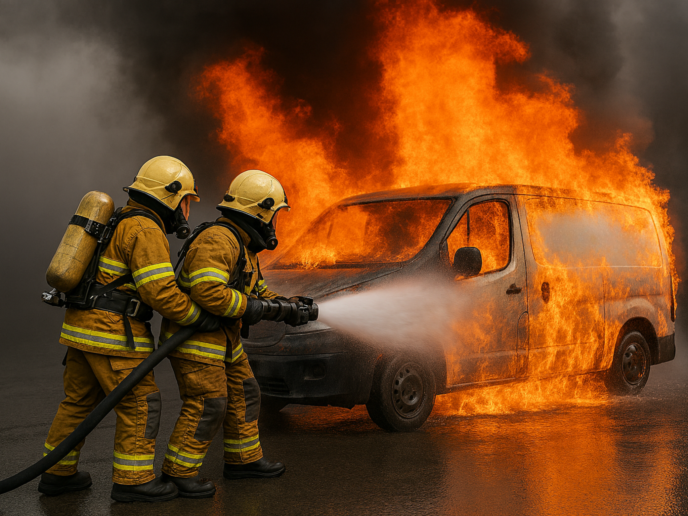
Are EV Fires Harder to Extinguish?
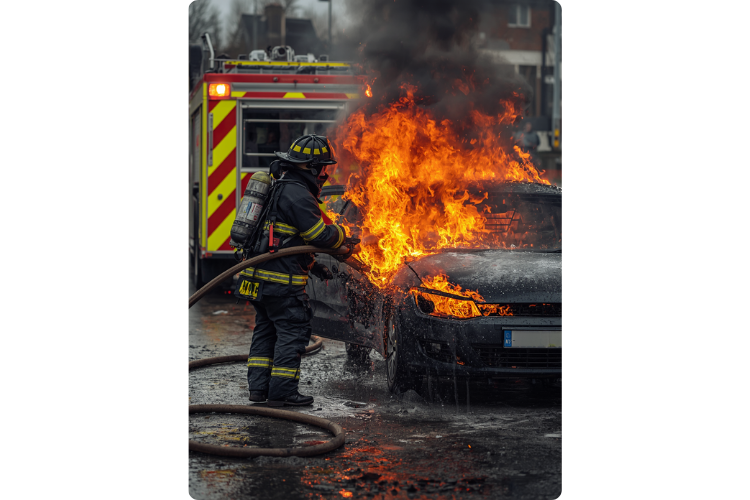
Yes—but that does not mean they are more common.
Fire services around the world have adapted their procedures to address battery fires.
Challenges include:
- Deep-seated battery pack heating
- Potential re-ignition
- Extended cooling requirements
- Difficult access to damaged cells
Modern response techniques now include:
- Battery cooling systems
- Immersion containers
- Thermal imaging cameras
- Specialised recovery procedures
Many fire services have developed dedicated EV response protocols that significantly improve incident management.
What Insurers Say About EV Fire Risk
Insurance companies analyse millions of vehicle claims every year and therefore provide valuable real-world insight.
While insurers continue to monitor battery-related risks, they generally do not identify EV fires as a major contributor to overall vehicle losses.
In fact, collision repair costs, battery replacement expenses, and parts availability often have a greater impact on EV insurance pricing than fire risk itself.
This distinction is important because insurance markets are highly sensitive to risk trends.
If EV fires were occurring at significantly higher rates than conventional vehicle fires, insurers would likely respond through substantial premium increases across the sector.
That has not occurred.
The Future of EV Fire Safety
Battery technology continues to evolve rapidly.
Several developments expected to further reduce fire risk include:
Solid-State Batteries
These batteries use less flammable materials and may significantly improve thermal stability.
Improved Cell Chemistry
New battery formulations prioritise safety alongside energy density.
Enhanced AI-Based Monitoring
Future battery management systems will increasingly predict failures before they occur.
Stronger Structural Protection
Manufacturers continue improving battery pack crash resistance and isolation systems.
These developments suggest that EV fire rates could decline even further over the next decade.
Public Perception vs Reality
Despite growing amounts of data and research, misconceptions about EV fires remain widespread. Much of the confusion stems from the difference between public perception and real-world evidence. The table below highlights some of the most common beliefs about electric vehicle fire risk and how they compare with current research findings.
| Public Perception | What the Evidence Shows |
|---|---|
| EVs catch fire more often than petrol cars | Current evidence suggests petrol and diesel vehicles experience more fires overall |
| EV batteries spontaneously explode | Most incidents involve identifiable causes such as collision damage or battery failure |
| Charging an EV is inherently dangerous | Modern charging systems incorporate multiple layers of safety protection |
| Every lithium battery fire is an EV fire | Many incidents involve e-bikes, e-scooters, power banks, or consumer electronics |
| EV adoption is creating a major fire problem | EV fire rates remain low relative to the growing number of vehicles on the road |
Understanding these distinctions is essential when evaluating vehicle safety in the real world.
Expert Insight: Frequency vs Severity
When discussing vehicle fire safety, it is important to distinguish between how often fires occur and how they behave when they occur.
Electric vehicle fires can be more technically challenging to extinguish due to the characteristics of lithium-ion battery systems. However, this does not mean they occur more frequently.
Current evidence consistently indicates that petrol and diesel vehicles experience a higher overall rate of fire incidents, while EV fires remain comparatively uncommon across the global vehicle fleet.
Continue Reading: EV Fire Safety & Electric Vehicle Research
Want to learn more about electric vehicle safety, battery technology, and vehicle fire risks? Explore our latest guides below:
- Are Electric Cars Safer Than Petrol Cars in 2026? – A closer look at crash safety, vehicle design, driver assistance technology, and real-world safety performance.
- EV vs Hybrid vs Petrol Fire Risk Comparison – Compare fire risks across different vehicle types and understand how modern safety systems influence outcomes.
- EV Battery Safety Improvements (2020–2026): How Modern EVs Became Safer – Explore the technological advances that have helped improve battery protection and thermal management.
- Why EV Fires Go Viral Online: Media Bias, Social Media and Risk Perception – Learn why electric vehicle fires often attract disproportionate attention despite their relatively low frequency.
- What Actually Causes Lithium-Ion Battery Fires? The Real Risks Explained – This guide explains thermal runaway, battery damage, charging failures, manufacturing defects, and the safety systems designed to reduce fire risk
- Do Electric Cars Catch Fire While Charging? – The Truth About EV Charging Safety – This guide explores how EV charging systems work, what can cause rare charging-related incidents, the safety protections built into modern electric vehicles, and why charging an EV is generally considered one of the safest aspects of EV ownership.
- Are EV Fires Harder to Extinguish Than Petrol Vehicle Fires? (2026 Guide) – This guide explains why lithium-ion battery fires behave differently from conventional vehicle fires, how thermal runaway can affect firefighting efforts, the specialist techniques used by fire services, and what the latest evidence reveals about EV fire risk and emergency response.
Whether you’re researching electric vehicle safety, battery technology, or the facts behind EV fire statistics, these guides provide evidence-based insights into one of the most discussed topics in modern motoring.
Most EV fires are linked to severe collision damage, battery cell failure, or, in rare cases, manufacturing defects. Modern electric vehicles are designed with multiple safety systems that help prevent battery-related incidents during normal operation.
Yes. Available research consistently suggests that petrol and diesel vehicles experience more fire incidents overall than electric vehicles. This is largely due to the presence of flammable fuels, hot engine components, and ageing mechanical systems.
Thermal runaway is a chain reaction that can occur when a damaged or overheated battery cell transfers heat to neighbouring cells. Modern battery packs include cooling systems, monitoring technology, and protective barriers specifically designed to minimise this risk.
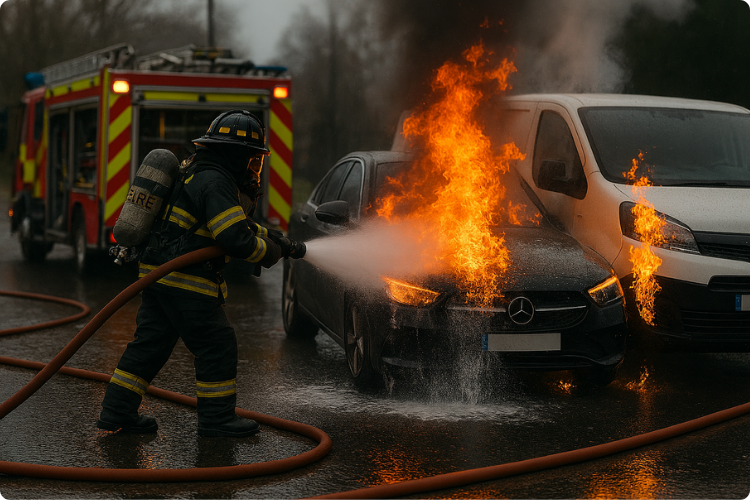
In some cases, yes. Damaged lithium-ion batteries can retain heat and may reignite after the initial fire has been extinguished. This is one reason why EV fires often require specialist recovery and monitoring procedures.
Hybrid vehicles contain both a conventional fuel system and a high-voltage battery system. Because they combine elements of both technologies, fire investigations can be more complex, and some studies suggest hybrids may have different risk profiles compared with fully electric vehicles.
EV fires are relatively uncommon but often generate significant media coverage because they are visually dramatic and still considered unusual. Conventional vehicle fires occur more frequently but rarely attract the same level of national attention.
Battery fires can generate extremely high temperatures and may burn differently from conventional fuel fires. However, higher heat output does not mean EV fires occur more often than petrol or diesel vehicle fires.
Advancements in battery chemistry, thermal management systems, crash protection, and battery monitoring technology continue to improve EV safety. As battery technology evolves, manufacturers are working to reduce the likelihood of fire incidents even further.
For most drivers, no. While no vehicle is completely risk-free, current evidence indicates that electric vehicles remain a safe form of transport and are generally less likely to catch fire than petrol or diesel vehicles.
No. E-bikes, e-scooters, and consumer battery devices often use different battery systems, charging equipment, and safety standards than electric cars. Combining these incidents can create a misleading picture of overall EV fire risk.
 Call our expert team on