The transition to electric commercial vehicles is gathering pace, but for businesses operating larger vans, making the switch requires more consideration than simply choosing an electric alternative. Payload, load capacity, driving range, charging facilities and everyday practicality all need to work together.
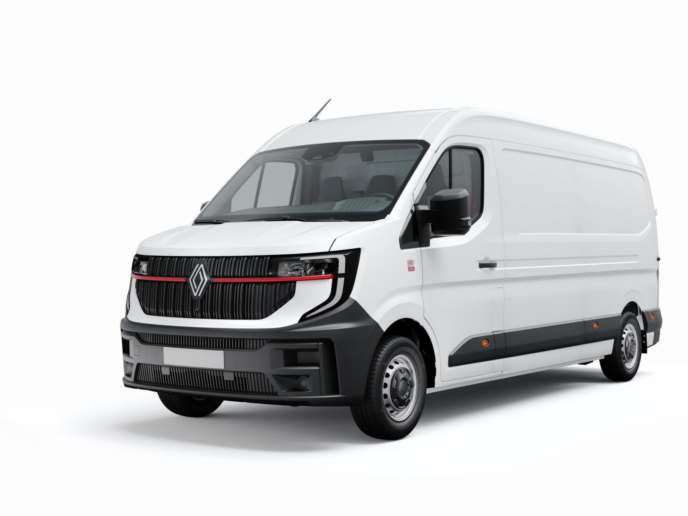
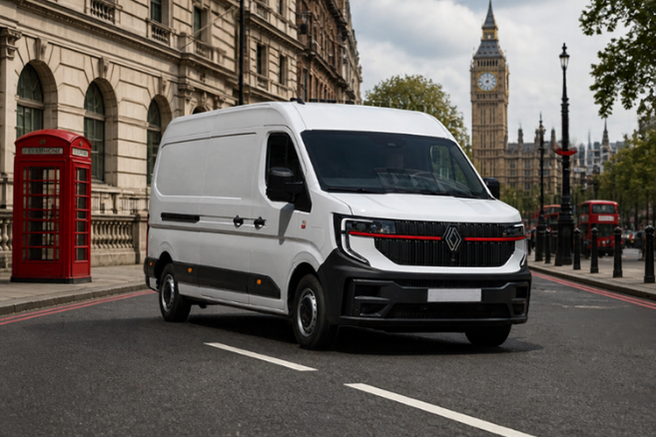
The Renault Master E-Tech 100% Electric is designed to address these demands, bringing zero-tailpipe-emission driving to one of the UK’s best-known large van ranges.
With an 87kWh battery, up to 285 miles of WLTP driving range and a spacious load area, the Renault Master offers businesses an opportunity to rethink how they operate their commercial vehicles without necessarily compromising on the space and capability they depend on.
One particularly interesting option is the Renault Master MM40 Van E-Tech 104kW 87kWh Advance. Combining a 4,000kg gross vehicle weight with a substantial battery and practical load-carrying capacity, it provides a compelling proposition for businesses looking to introduce larger electric vans into their fleets.
Introducing The Renault Master E-Tech
The Renault Master has built its reputation around practicality, versatility and the ability to support demanding working environments. The latest E-Tech electric version takes that familiar commercial vehicle formula in a new direction.
Instead of a conventional diesel powertrain, the Master E-Tech uses an electric motor and an 87kWh battery to deliver smooth, responsive performance without producing tailpipe emissions.
This makes it particularly relevant for businesses operating in urban environments, making regular deliveries, visiting customer premises or working in areas where emissions restrictions are becoming an increasingly important consideration.
Importantly, choosing an electric Master does not mean stepping down to a smaller vehicle. It retains the large van format, substantial load area and working practicality expected from this category.
With electric van adoption continuing to develop across the UK commercial vehicle market, businesses are increasingly assessing which roles within their fleets could move away from diesel.
Our guide to electric van leasing for businesses explores the opportunities and considerations involved in making that transition.
Renault Master MM40 E-Tech 104kW 87kWh Advance: The Featured Model
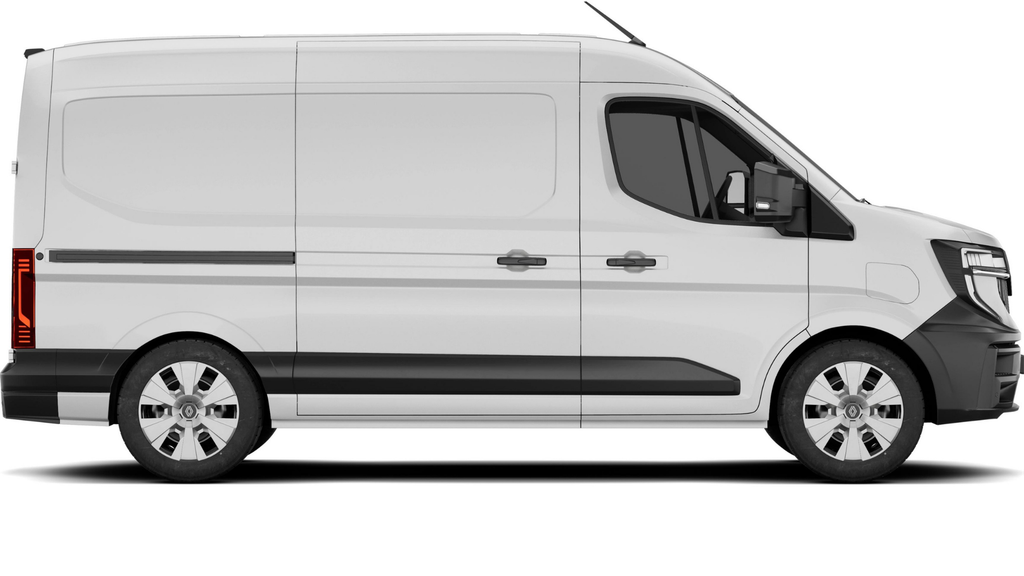
The Renault Master MM40 Van E-Tech 104kW 87kWh Advance is an especially interesting option for businesses that need a sizeable working vehicle with the benefits of electric driving.
Its 87kWh battery provides a quoted WLTP range of up to 285 miles, while the 4,000kg gross vehicle weight gives the model additional weight capacity to accommodate its electric powertrain and business-related loads.
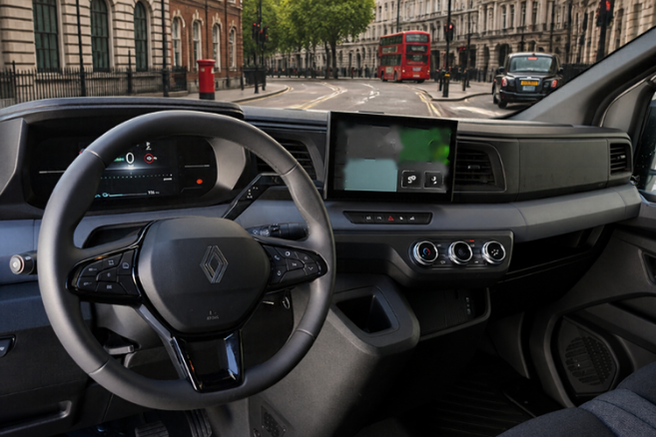
The Advance specification provides a practical foundation for everyday commercial use, with a useful selection of equipment and driver-focused technology.
Key Renault Master MM40 E-Tech Specifications
| Specification | Details |
|---|---|
| Model | Renault Master MM40 E-Tech Advance |
| Power | 104kW (approximately 140hp) |
| Battery capacity | 87kWh |
| Transmission | Automatic |
| Driving range | Up to 285 miles WLTP |
| Gross vehicle weight | 4,000kg |
| Payload | Up to 1,579kg |
| Load volume | 10.8m³ |
| Load length | 3,225mm |
| Load height | 1,885mm |
| Width between wheel arches | 1,380mm |
| CO₂ emissions | 0g/km at the tailpipe |
For businesses transporting equipment, tools, materials or deliveries, these figures demonstrate why the Master E-Tech should not be overlooked as a serious working van.
The combination of a substantial battery, useful payload and generous load area makes it an interesting option for operators who need a larger vehicle but want to explore electric alternatives.
Up To 285 Miles Of Electric Driving Range
Range is understandably one of the biggest considerations when businesses evaluate electric vans.
The Renault Master E-Tech addresses this with its 87kWh battery, offering a quoted WLTP driving range of up to 285 miles in the relevant configuration.
For businesses with predictable daily routes, this could provide considerable flexibility. Regular deliveries, scheduled service visits, local distribution and journeys between business premises may all be suitable applications, depending on the distances involved.
Of course, the official WLTP figure should be treated as a comparison rather than a guarantee of real-world range. Actual mileage will depend on factors including vehicle loading, driving style, road conditions, temperature and the use of heating or air conditioning.
Businesses should therefore consider their typical daily mileage and build an appropriate charging allowance into their operating schedules.
The benefit of an electric van is not simply how far it can travel on a single charge, but how effectively its range fits into the working day.
For businesses comparing powertrains, our electric van versus diesel van guide looks at the differences between the two options, including their respective operating considerations.
Charging That Fits Around Your Business
A practical charging arrangement is essential when introducing electric vans into a working fleet.
The Renault Master E-Tech supports charging at business premises and using public charging infrastructure. This gives operators flexibility when deciding how and where vehicles should be recharged.
The 87kWh version supports AC charging at up to 22kW and DC rapid charging at up to 130kW, subject to the charging equipment and conditions.
For businesses with access to depot parking, overnight charging can be particularly useful. Vehicles can be plugged in when drivers finish work, helping ensure they are ready for their next scheduled journeys.
Public charging can provide additional flexibility for drivers who need to travel further or cannot return to their normal base during the working day.
However, businesses should assess their available electrical supply, installation requirements, parking arrangements and typical vehicle usage before committing to an electric fleet.
Our guide to EV charging infrastructure growth looks at how the UK’s charging network is developing and what this means for electric vehicle operators.
Businesses without dedicated off-street parking may also need to consider alternative charging arrangements. Our article on EV charging without a driveway explores the options available. If you are still weighing up the practicalities of running an electric commercial vehicle, our electric van FAQs cover some of the common questions businesses have before making the switch.
For fleet operators, charging costs and reimbursement arrangements are another important consideration, particularly where drivers charge vehicles at home. Our guide to home EV charging reimbursement for fleets covers this area in more detail.
A Large Load Area Without The Diesel Powertrain
One of the most important considerations when choosing a commercial van is whether it can accommodate the equipment, materials or goods a business needs to transport.
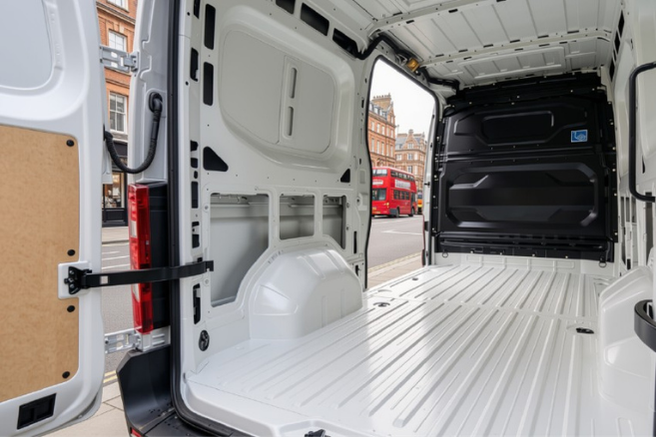
The Renault Master MM40 E-Tech offers a 10.8m³ load volume, with a load length of 3,225mm and an internal load height of 1,885mm.
The 1,380mm width between the wheel arches is another useful consideration when transporting larger items.
Its specified payload of up to 1,579kg also gives businesses a meaningful amount of carrying capacity.
However, operators should always check the plated vehicle weights and account for passengers, equipment, accessories and any additional conversions when calculating their usable payload.
For tradespeople, contractors, delivery businesses and mobile service operators, this combination of load space and electric power could make the Master a practical alternative to a conventional diesel large van.
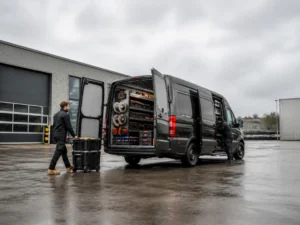
It is also worth considering how the van will be configured. Shelving, racking, tool storage and specialist equipment can all affect the final available payload. Businesses using the Renault Master for trade or engineering work may also want to consider suitable internal storage. CVC can help with commercial van shelving and racking to create a more organised working environment.
Van ply lining is another consideration for businesses wanting to protect the load compartment against everyday wear and damage.
Our van payload guide explains how payload is calculated and why it matters when choosing a commercial vehicle.
Businesses requiring additional equipment or a bespoke working environment can also explore our commercial vehicle conversions guide to understand the options available.
The Benefits Of Electric Driving For Commercial Fleets
Switching to an electric van is about more than replacing diesel with electricity. It can change how a business approaches vehicle operation, energy costs and fleet planning.
There are several potential advantages to consider.
Zero Tailpipe Emissions
The Renault Master E-Tech produces no tailpipe CO₂ emissions while driving. This can be particularly relevant for businesses operating in urban areas and locations with emissions-related restrictions.
For operators regularly travelling into cities, our UK ULEZ and Clean Air Zones guide explains the restrictions and considerations that can affect commercial vehicle operators.
Potentially Lower Energy Costs
Electricity can offer an opportunity to reduce energy costs compared with diesel, particularly where businesses can charge vehicles at their premises and benefit from suitable electricity tariffs.
However, the actual savings will depend on electricity prices, charging methods, vehicle efficiency and annual mileage.
Reduced Routine Powertrain Maintenance
Electric vehicles have fewer moving powertrain components than conventional diesel vehicles. There is no engine oil to replace and no conventional exhaust or diesel after-treatment system to maintain.
Tyres, brakes, suspension, steering and other vehicle components still require regular inspection and maintenance.
A More Comfortable Driving Experience
The automatic electric powertrain provides smooth acceleration and responsive performance. The absence of conventional gear changes can also make frequent stop-start journeys more comfortable for drivers.
These considerations make electric van leasing worth exploring for businesses looking to modernise their fleets.
Could The Renault Master E-Tech Work For Your Business?
The Master E-Tech is not necessarily the right choice for every operator. Businesses need to look beyond the headline range and assess how an electric large van would fit into their actual working requirements.
Businesses comparing different commercial vehicles for trade use may also find our guide to the best vans for tradespeople useful when deciding which size and specification best suits their work.
Businesses comparing electric Renault vans may also want to consider the new Renault Trafic E-Tech Electric. As a medium-sized alternative to the larger Master, it offers a different balance of load capacity, range and manoeuvrability, making it worth considering for businesses with different vehicle requirements.
It could be particularly worth considering for:
- Delivery and distribution businesses: Companies completing scheduled routes with predictable daily mileage.
- Construction and trade businesses: Operators requiring a substantial load area for tools, equipment and materials.
- Facilities management companies: Businesses carrying equipment between customer sites and operational premises.
- Maintenance contractors: Mobile teams that regularly travel between locations and need a practical working vehicle.
- Fleet operators: Companies looking to introduce zero-emission vehicles as part of a longer-term fleet transition.
For businesses operating several vehicles, it can be useful to assess which routes and vehicle roles are best suited to electric power first.
Our electric van fleet transition guide explores the practical considerations involved in making this change, from vehicle suitability to charging arrangements and operational planning.
What About The 4,000kg Gross Vehicle Weight?
One important feature of the Renault Master MM40 is its 4,000kg gross vehicle weight.
This is particularly relevant because the additional weight associated with electric batteries can affect the payload available on commercial vehicles.
The 4,000kg configuration provides additional gross vehicle weight capacity compared with a conventional 3,500kg van, helping accommodate the demands of an electric powertrain while retaining useful carrying capability.
There is also an important licensing consideration for UK businesses.
Under current Great Britain rules, certain zero-emission goods vehicles with a maximum authorised mass of up to 4,250kg can be driven by holders of a Category B licence, subject to the applicable conditions and requirements.
Businesses should not assume that every driver can automatically operate a 4,000kg electric van. Individual licence entitlements, vehicle eligibility and the rules applicable to the operation must be checked before putting the vehicle into service.
For a more detailed explanation of the rules applying to heavier electric vans, including the 4.25-tonne driving licence concession, operator licensing, tachographs and MOT requirements, read our guide to 4.25-tonne electric van licence rules.
Why Consider Leasing Your Next Renault Master?
Moving to an electric commercial vehicle represents an important business decision. Alongside choosing the right specification, operators need to consider how they want to fund and manage their vehicles.
Business van leasing offers an alternative to purchasing outright, allowing companies to use a vehicle over an agreed contract period in return for regular rental payments.
Different funding arrangements are available, depending on the business, its financial circumstances and how it intends to use the vehicle.
Our guide to business vehicle leasing and finance explains the options available, while our total cost of ownership guide looks at the wider costs businesses should consider when choosing their next fleet vehicles.
At Commercial Vehicle Contracts, we help businesses compare commercial vehicle leasing options and find vehicles that suit their operational requirements.
Our approach includes:
- Access to a wide range of cars, vans and pickups.
- Competitive business leasing options.
- A dedicated account manager.
- Free mainland UK delivery.
- Road tax included during the agreement, subject to contract terms.
- Optional maintenance packages.
- Our Price Promise.
Businesses comparing leasing quotations can also benefit from our Price Match Promise, giving them additional confidence when considering their next commercial vehicle. For businesses operating multiple vehicles, keeping track of contracts and vehicle information is also important. Our Vehicle Lease Management Portal provides additional support for managing leased vehicles and keeping important fleet information accessible.
We are an independent vehicle leasing broker with more than 25 years of experience and are authorised and regulated by the Financial Conduct Authority. Find out more about Commercial Vehicle Contracts and how we support businesses with their vehicle leasing requirements.
Businesses considering the Renault Master can explore our business van leasing options and van leasing locations across the UK.
If you are new to commercial vehicle leasing, our vehicle leasing process guide explains the main stages involved, from choosing a vehicle through to arranging delivery.
Lease The Renault Master MM40 E-Tech 87kWh Advance With CVC
For businesses considering the move to an electric large van, the Renault Master MM40 E-Tech 104kW 87kWh Advance Medium Roof Van is available to lease through Commercial Vehicle Contracts.
Combining a substantial 87kWh battery with a practical 10.8m³ load compartment, this automatic electric van offers a useful combination of load capacity and zero-emission driving for businesses looking to modernise their commercial vehicle fleet.
Whether you need a van for deliveries, trade work, local operations or general business use, the Renault Master E-Tech is worth considering as an alternative to a conventional diesel large van.
View the Renault Master MM40 E-Tech 87kWh Advance and check the latest leasing offer:
Renault Master MM40 E-Tech 104kW 87kWh Advance
Commercial Vehicle Contracts can help businesses compare leasing options and find a vehicle arrangement suited to their operational requirements, with support from a dedicated account manager.
For a closer look at the wider Renault Master E-Tech range, including its electric driving range, payload capacity, charging considerations and business leasing options, read our Renault Master E-Tech electric van guide.
Making The Switch To Electric Van Leasing
The Renault Master MM40 E-Tech offers businesses an opportunity to consider a different approach to large van operation.
Its 87kWh battery, 285-mile WLTP range, 10.8m³ load volume and 4,000kg gross vehicle weight bring together several important characteristics for commercial operators.
However, the most suitable vehicle will always depend on how it is expected to perform in everyday working conditions.
Businesses should consider typical daily mileage, charging availability, payload requirements, driver licensing and the overall cost of operating the vehicle.
Taking the time to assess these factors can help fleet managers make a more informed decision about whether an electric large van is suitable for their business.
Current Offer: Renault Master MM40 Van E-Tech 104kW 87kWh Advance – as of 05/11/2026
Finance Type: Finance Lease
Monthly Payment: £322.60 PCM
Initial Payment: £3,871.20
Final Payment: £9,697.13
Agreement Length: 48 Months
Annual Mileage: 5,000 Miles
 Call our expert team on