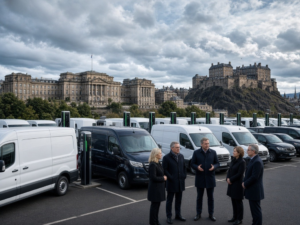
The UK could be offered a route into the European Union’s proposed ‘Made in Europe’ legislation without having to adopt the bloc’s wider trade policies, following a compromise proposal put forward by Ireland.
The development could prove important for British vehicle manufacturers, many of which depend on established trading relationships and closely connected supply chains across the UK and Europe.
The proposals are intended to strengthen European manufacturing, protect domestic industries from overseas competition and reduce reliance on imported products. However, excluding the UK could create additional complications for manufacturers operating on both sides of the Channel.
The latest suggestion could provide a way to protect these established relationships while allowing Britain to retain greater independence over its own international trade policies.
Irish Proposal Offers Potential Compromise for UK Manufacturers
Ireland, which currently holds the rotating presidency of the European Council, has proposed a compromise that could give the UK, Switzerland and countries within the European Economic Area (EEA) partner status for vehicle assembly under the new arrangements.
The proposal is intended to address concerns about excluding important European trading partners without requiring them to adopt the EU’s wider tariff policies.
The legislation, formally known as the Industrial Accelerator Act (IAA), is designed to strengthen European supply chains and protect manufacturing industries from increasing competition from cheaper imports, particularly those originating in China.
The proposal is expected to be considered by EU ministers in December.
The UK automotive industry has been particularly concerned about the potential consequences of being excluded. Vehicle manufacturing relies heavily on international supply chains, with components, materials and finished vehicles frequently moving between British and European facilities.
The Society of Motor Manufacturers and Traders (SMMT) has previously warned that the proposed legislation could put UK vehicle production at a disadvantage if British manufacturers are not given equivalent access to the arrangements.
The organisation believes the relationship between the UK and EU automotive industries is too important to be disrupted by additional trade barriers.
The UK and EU currently have an automotive trading relationship worth approximately €80 billion annually, making continued cooperation important for manufacturers on both sides.
SMMT chief executive Mike Hawes has called for the final arrangements to recognise the established relationship between the two markets and avoid creating further obstacles for shared supply chains.
Further background can be found in our coverage of the proposed EU Made in Europe rules and their impact on UK-built vehicles.
The scale of the domestic manufacturing sector is also important. Recent investment in the UK commercial vehicle industry demonstrates the importance of maintaining the conditions needed to attract production and support jobs.
Investment in electric vehicle production is another significant consideration. The UK’s electric vehicle battery manufacturing sector has attracted more than £7 billion in investment, highlighting the importance of a competitive domestic supply chain as manufacturers move towards electrification.
Further Government support is also being directed towards automotive innovation, with £47 million allocated to projects covering battery technology, electrification and advanced vehicle manufacturing.
Disagreement Over Chinese Vehicle Import Tariffs
One of the main obstacles to securing UK involvement has been disagreement over how Chinese vehicle imports should be treated.
France had previously opposed including Britain in the proposed arrangements unless the UK agreed to align with European tariffs on Chinese vehicles.
However, the UK Government has resisted calls to introduce equivalent import tariffs, with business secretary Jonathan Reynolds ruling out the move in October.
This creates a potential conflict between maintaining access to European manufacturing arrangements and retaining an independent approach to international vehicle imports.
The issue is particularly relevant as Chinese manufacturers continue to expand their presence in the UK market, increasing competition for established vehicle brands.
Chinese brands accounted for 15% of the UK new car market during the first half of 2026, illustrating the speed at which the competitive landscape is changing. Our coverage of Chinese car brands’ growing UK market share looks at this development in more detail.
The wider challenge extends beyond the UK. Chinese manufacturers are becoming increasingly influential internationally, with the potential to reshape the global automotive industry by 2035.
The debate over whether Britain should introduce additional import duties has already attracted considerable attention. We have previously examined the UK Government’s resistance to tariffs on Chinese electric cars, alongside the wider discussion surrounding potential Chinese EV tariffs and their implications for fleets.
The Irish proposal could offer a way forward without requiring the UK to change its existing position, although the final conditions attached to partner status will be important.
SMMT Identifies Three Major Barriers to UK Automotive Investment
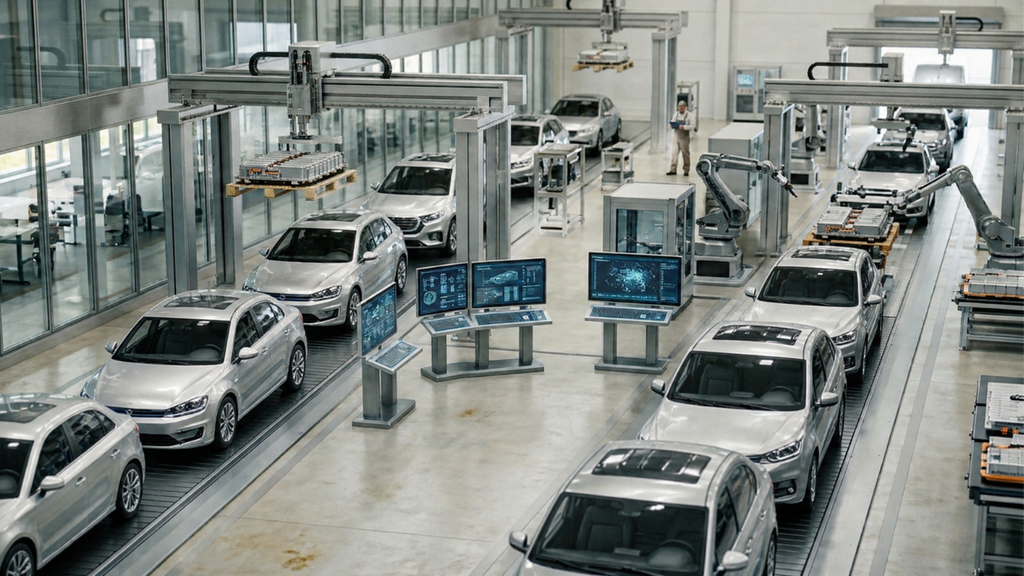
Alongside the international trade debate, the SMMT has highlighted growing concerns about the conditions facing manufacturers in the UK.
It believes three key factors need to be addressed if Britain is to remain an attractive destination for vehicle manufacturing investment:
- A strong domestic market: Manufacturers need sufficient demand for new vehicles to justify investment in production facilities and future models.
- Reliable export opportunities: Continued access to international markets is essential for businesses that manufacture vehicles in the UK.
- Competitive manufacturing costs: Energy, production and regulatory costs must remain manageable to encourage investment and protect employment.
The organisation argues that all three areas are facing increasing pressure.
In particular, the financial demands associated with the transition to electric vehicles (EVs) are creating additional challenges for manufacturers.
The SMMT estimates that manufacturers spent more than £10 billion on electric vehicle discounts during 2024 and 2025 alone to stimulate consumer demand.
This expenditure has been in addition to low-interest finance offers, deposit contributions, charging incentives and Government support through the Electric Car Grant.
Although these measures have helped encourage electric vehicle purchases, the industry believes the costs of stimulating demand are becoming increasingly difficult to sustain.
The Government’s £650 million Electric Car Grant scheme is one example of the financial support being used to encourage the transition.
The wider picture is explored in our guide to the UK electric vehicle market, including prices, charging and adoption trends.
There are signs of growing demand, too. UK electric vehicle sales have reached record levels, while the global EV market has continued to expand, with Europe recording strong growth.
However, the SMMT argues that incentives alone cannot resolve the underlying difference between regulatory requirements and actual consumer demand.
ZEV Mandate Targets Continue to Concern Manufacturers
The UK’s Zero Emission Vehicle (ZEV) mandate requires manufacturers to increase the proportion of new cars and vans they sell that produce no tailpipe emissions.
However, the SMMT believes the current targets are progressing faster than the market’s ability to absorb electric vehicles.
This is creating additional financial pressure for manufacturers, who may need to increase discounting or make other adjustments to meet their regulatory obligations.
The consequences could extend beyond new vehicle sales, potentially affecting used electric vehicle values, depreciation and the cost of consumer finance.
The figures highlighted by the SMMT demonstrate the scale of the challenge.
By 2028, the mandate requires zero-emission cars to account for 52% of the new car market. However, anticipated consumer uptake is estimated at just 37.5%.
The situation is even more challenging for electric vans, where expected demand is forecast to reach less than half the required target.
These concerns are not new. We have previously reported on manufacturers struggling to meet the UK’s ZEV mandate targets, as well as wider calls from the fleet industry for more realistic electric vehicle targets.
Ford has also called for a review of the current arrangements, highlighting the challenges facing manufacturers as businesses and consumers move towards electric vehicles. Read more about Ford’s call for a ZEV mandate review.
There are differing views across the industry, however. The Government has also faced warnings against weakening the ZEV mandate, demonstrating the competing pressures between maintaining emissions targets and supporting manufacturers through the transition.
The commercial vehicle sector faces its own difficulties. The Association of Fleet Professionals has called for a 40% electric van target by 2030, while arguing that the existing 2030 electric car target should be retained. More detail is available in our coverage of the AFP’s proposed electric van target.
Despite increasing registrations, electric vans continue to fall short of the required levels. Our report on record electric van registrations and the gap against ZEV targets examines the issue.
The SMMT maintains that the automotive industry remains committed to electrification, but argues that manufacturers cannot indefinitely absorb the financial difference between the vehicles they are required to sell and those customers are willing to purchase.
Industry Warns That Regulation Could Undermine Investment
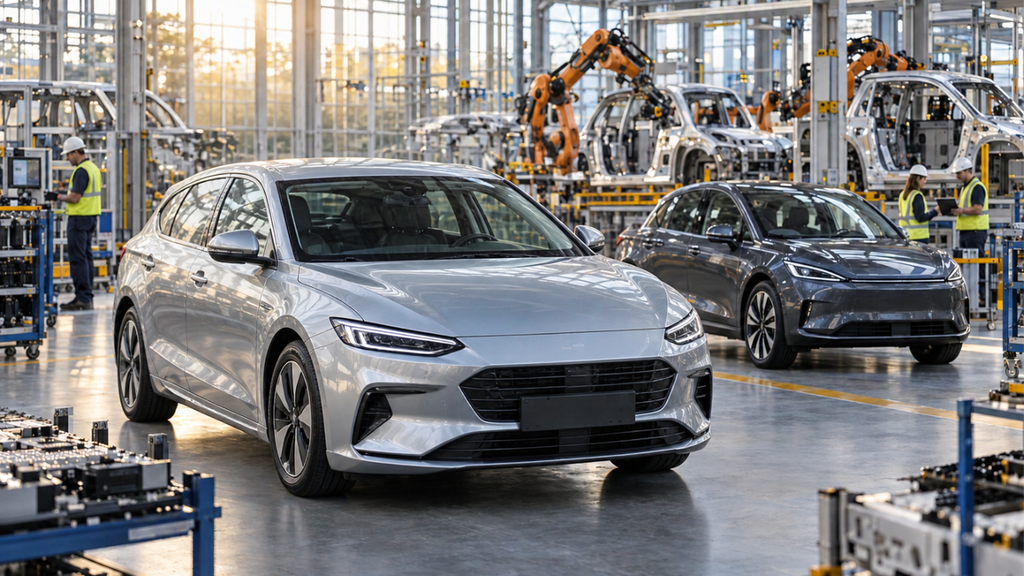
Speaking at the SMMT’s 109th Annual Dinner in London, its president Paul Philpott, who is also president and chief executive of Kia UK, raised concerns about the cumulative pressure facing the industry.
He argued that the UK currently operates one of the world’s most demanding regulatory environments for vehicle manufacturers.
The financial cost of meeting increasingly ambitious electrification requirements, combined with potential European trade restrictions, could make the UK a less attractive location for future investment.
Philpott also warned that the proposed Made in Europe arrangements could create additional difficulties if British manufacturers are excluded from European manufacturing opportunities.
The SMMT believes the Government needs to act to protect the competitiveness of UK production and ensure manufacturers have sufficient confidence to invest in new models, factories and employment.
Mike Hawes has also questioned whether regulatory requirements can successfully drive the transition without corresponding consumer demand.
The organisation argues that money being spent on meeting regulatory obligations and discounting electric vehicles is money that could otherwise be directed towards future manufacturing investment.
Its position is that a more comprehensive review is needed, rather than making small adjustments to existing policies.
The ZEV mandate, energy costs and European trade restrictions are all identified as areas requiring attention.
EU Introduces Temporary Quotas for Hybrid Vehicle Imports
Alongside negotiations over the Made in Europe legislation, the European Union is introducing separate measures to restrict the number of hybrid vehicles imported from several countries.
From 1 December 2026, temporary quotas will apply to imports of plug-in and battery-powered hybrid vehicles from China, Japan, Turkey, South Korea and the UK.
The measures are being introduced under World Trade Organization (WTO) rules and will initially operate for 200 days while the European Commission investigates the potential impact of these imports on European manufacturers.
The Commission believes increasing hybrid imports could threaten an important part of the European automotive industry, particularly in relation to manufacturing, employment and technological development.
The proposed annual tariff-free import allowances are:
| Country | Proposed annual quota |
|---|---|
| China | 350,000 vehicles |
| Japan | 310,000 vehicles |
| Turkey | 230,000 vehicles |
| UK | 190,000 vehicles |
| South Korea | 105,000 vehicles |
For the initial 200-day period, the Chinese allowance will be approximately 191,000 vehicles.
The UK exported around 166,000 hybrid vehicles to the EU during the previous year, meaning its proposed allowance would be above that recorded export volume.
Although the restrictions are temporary, they introduce another consideration for manufacturers relying on European export markets.
The measures also demonstrate the wider trade tensions surrounding vehicle imports, particularly as governments attempt to protect domestic manufacturing while maintaining international trading relationships. The UK’s decision not to introduce equivalent tariffs on Chinese-built electric cars has helped maintain a different approach to international vehicle imports, although this could create further differences between British and European automotive policies.
Our article on EU restrictions affecting Chinese hybrid vehicle imports looks at the potential consequences of these developments for the wider automotive market.
There are also separate questions around the trading arrangements for electric vehicles between the UK and EU. Our coverage of potential UK electric vehicle tariffs from 2027 explains another set of rules that could affect cross-border vehicle costs. These arrangements are separate from the proposed Made in Europe legislation and the temporary hybrid quotas.
What the Developments Mean for the UK Vehicle Industry
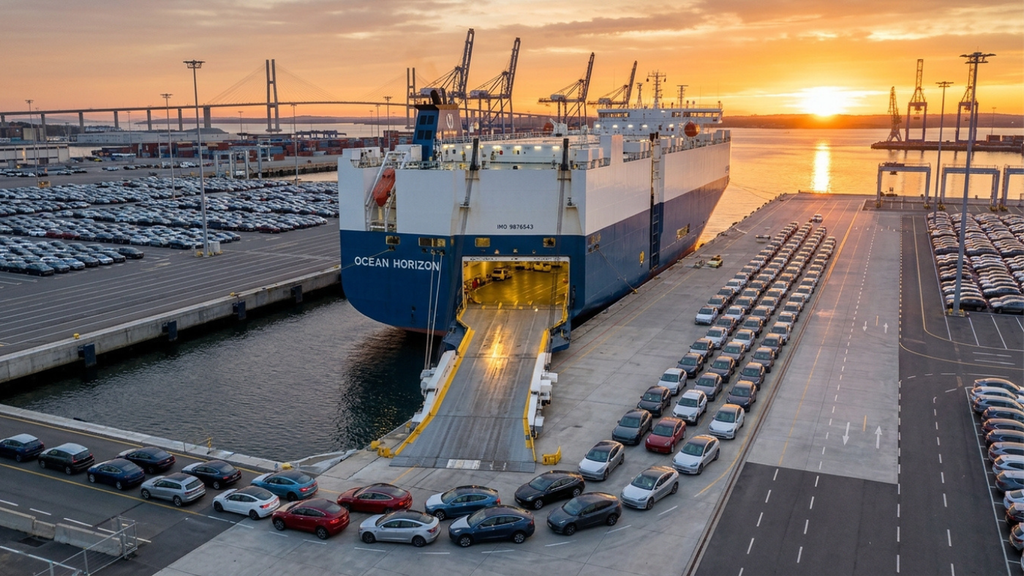
The outcome of the EU negotiations could have important implications for the future of British vehicle manufacturing.
Maintaining access to European markets is particularly important for UK manufacturers that depend on cross-border supply chains for components, materials and finished vehicles.
Exclusion from the proposed Made in Europe arrangements could introduce additional complications, potentially affecting production costs, investment decisions and the competitiveness of British-built vehicles. This is particularly significant for manufacturers exporting vehicles into European markets, where rules of origin, component sourcing and existing UK-EU trading arrangements can all influence the cost of doing business.
The Irish compromise could help avoid some of these difficulties, although the final wording and conditions will determine how much protection it offers.
At the same time, the challenges surrounding electric vehicle targets, manufacturing costs and consumer demand remain unresolved.
For the wider automotive industry, the coming months could therefore prove important in determining the direction of future investment and the UK’s position within the European vehicle manufacturing sector.

 Call our expert team on