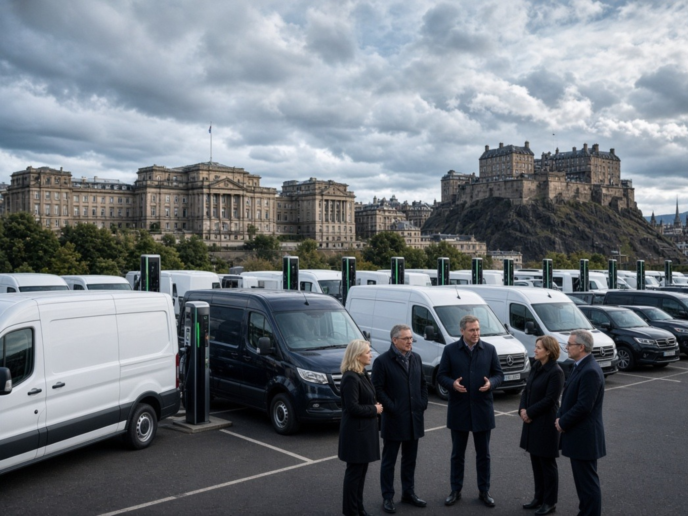
The Scottish Government has warned that any attempt to weaken the UK’s Zero Emission Vehicle (ZEV) Mandate could undermine climate commitments, restrict electric vehicle choice and create further uncertainty for businesses investing in the transition to cleaner transport.
Scotland’s Cabinet Secretary for Economy, Tourism and Transport, Stephen Flynn, has strongly opposed the possibility of reducing the targets, arguing that changes to the framework must involve the devolved administrations rather than being decided by Westminster alone.
His intervention comes as the UK Government considers the future of the ZEV Mandate following a consultation examining potential changes to the rules from 2027. The review has attracted considerable attention from vehicle manufacturers, fleet operators and environmental organisations, with concerns about the cost and pace of the transition to electric vehicles.
The Scottish Government believes that lowering the current ambitions could make it harder to achieve emissions reductions while potentially affecting the availability and affordability of electric vehicles for motorists and businesses.
Scotland Insists Devolved Governments Must Be Involved
Flynn has questioned the approach taken by Westminster, arguing that the ZEV Mandate relies on legislation involving all four UK nations.
The Department for Transport’s consultation, launched in August 2026, was divided into five sections. The first four were developed jointly with the Scottish Government, Welsh Government and Northern Ireland’s Department for Infrastructure, reflecting the devolved nature of much of the legislation.
The fifth section, which considers arrangements surrounding the 2030 phase-out of new cars powered solely by internal combustion engines, falls within the responsibility of the UK Government.
Flynn believes that any attempt to weaken the wider framework without proper agreement would undermine cooperation between the four administrations.
Scottish ministers have also warned that reducing the targets could make it more difficult to deliver the country’s own emissions commitments.
Scotland has a legally established ambition to achieve net zero emissions across its economy by 2045, five years ahead of the UK’s equivalent 2050 target.
The potential implications are particularly significant for Scottish businesses operating commercial vehicles, as the transition to electric vans and cars increasingly influences fleet replacement decisions.
Businesses looking at the practical considerations of operating vehicles north of the border can also refer to CVC’s guide to commercial vehicles in Scotland, alongside its van leasing options in Scotland for companies considering their next fleet replacement.
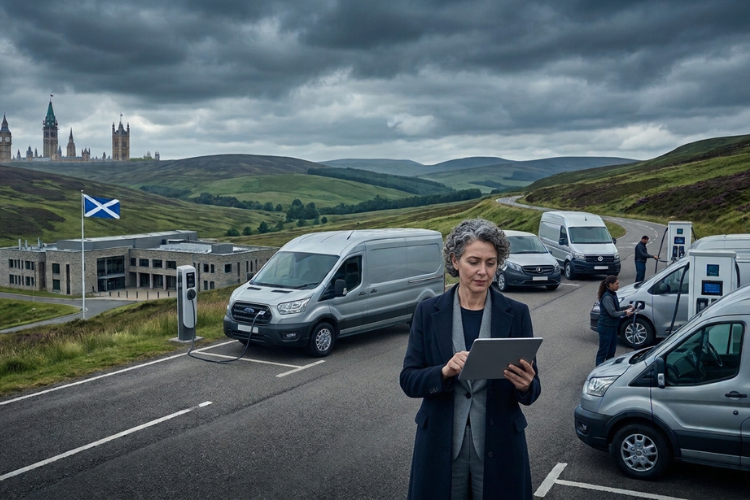
Potential Rollback Could Increase Scotland’s Carbon Emissions
Analysis from the Energy and Climate Intelligence Unit (ECIU) suggests that weakening the ZEV Mandate could have a substantial impact on Scotland’s longer-term emissions.
ECIU modelling suggests that a plausible worst-case scenario, in which the final requirement for new cars to be zero emission is delayed until 2040, could result in an additional 7.5 million tonnes of greenhouse gas emissions in Scotland by 2050.
The concern is that reducing manufacturers’ obligations could weaken the incentive to introduce more affordable electric models, potentially slowing adoption among private motorists and business customers. Electric vehicle adoption among businesses is already an important part of the transition, with electric van adoption across UK business fleets highlighting how companies are increasingly incorporating zero-emission vehicles into their operations.
Laura Anderson, senior associate at the ECIU, has highlighted the potential consequences for consumers, competition and the wider charging industry.
She argues that reducing the targets could limit competition between manufacturers, restrict the choice of affordable electric vehicles and reduce the number of used electric cars entering the market in future years.
The second-hand market is an important consideration because not every driver or business can afford a brand-new electric vehicle. A steady supply of used models could help make the technology accessible to a wider range of buyers, particularly as businesses consider the total cost of ownership of their vehicles rather than simply the initial acquisition cost.
There are also potential implications for companies investing in charging infrastructure. If expectations around future electric vehicle demand become less certain, charging operators could face greater difficulty planning investment and expansion. For businesses, understanding the practical requirements is equally important, particularly when assessing how electric vehicle charging works for businesses and the infrastructure needed to support company vehicles.
The ECIU’s analysis therefore raises questions beyond the immediate impact on vehicle manufacturers, particularly for businesses and organisations that have already committed resources to electrification.
Climate Change Committee Backs Existing ZEV Ambitions
Opposition to weakening the mandate has also come from the Climate Change Committee (CCC), the UK’s independent statutory climate adviser.
In a letter published on 18 November 2026, CCC Chair Nigel Topping warned that reducing the ambition of the ZEV Mandate would put the UK’s legally binding climate commitments at risk.
The Committee also highlighted the potential financial consequences for motorists and the country’s exposure to international oil markets.
Its analysis suggests that reducing the headline targets could increase UK oil consumption by approximately 15 million barrels annually by 2030, potentially adding more than £1 billion to the country’s annual oil bill at current prices.
The CCC has also pointed out that electric car sales are currently growing ahead of the level required to meet the mandate’s existing ambition through to 2030.
Rather than reducing the targets, the Committee has called for improvements to the framework, including addressing barriers to electric van adoption and reducing the cost of public charging.
Its position provides further support for those arguing that the existing trajectory should be maintained while practical challenges facing the industry are addressed.
What Could Happen To The 2030 Electric Vehicle Targets?
The UK Government launched its ZEV Mandate review in August 2026, inviting manufacturers, suppliers, dealers, charging operators, consumers and other interested parties to comment on the existing arrangements.
The consultation closed on 23 October, with ministers expected to publish their response by the end of 2026. Any resulting changes could take effect from the 2027 compliance year.
Under the current framework, manufacturers face progressively increasing requirements for the proportion of new vehicles they sell that must be zero emission.
The existing target for new cars reaches 80% in 2030, increasing to 100% by 2035. Separate requirements apply to new vans.
Reports have suggested that ministers could consider reducing the 2030 car target from 80% to 60%, alongside extending the compliance flexibilities available to manufacturers.
However, this remains speculation rather than confirmed government policy. No final decision has been announced.
A reduction in the 2030 target could also create a more demanding progression towards the 100% requirement in 2035, potentially leaving manufacturers facing further pressure to renegotiate the timetable in subsequent years.
The review is therefore important not only for vehicle manufacturers but also for leasing providers, fleet operators and businesses making longer-term decisions about their vehicle requirements. Businesses assessing how changing vehicle requirements could affect their replacement strategies may also benefit from CVC’s guide to fleet planning and leasing.
Leasing can also give businesses a structured way to introduce electric vehicles into their fleets without purchasing vehicles outright. CVC’s guide to Business Contract Hire explains how businesses can arrange vehicles over an agreed contract period and mileage allowance.
CVC has previously examined the UK Government’s review of electric vehicle sales targets and the wider debate surrounding the future of the UK ZEV Mandate.

Fleet Operators And Industry Groups Add To Pressure
The Scottish Government’s intervention comes amid growing opposition to any significant reduction in the existing targets.
Fleet operators have previously called on ministers to maintain the framework, while industry organisations have raised concerns about the consequences of changing the rules before businesses have had sufficient time to prepare.
One of the main challenges is the difference in adoption rates between electric cars and commercial vehicles.
Tax treatment can also influence decisions about providing company vans to employees. Fully electric vans currently benefit from a zero Van Benefit Charge, subject to the relevant HMRC rules. Businesses can use CVC’s van BIK calculator to estimate the tax implications of providing company vans for private use.
Company car tax can also influence decisions about electric vehicle adoption, particularly for businesses providing cars to employees. As the tax treatment varies according to vehicle emissions and powertrain, businesses comparing different options can use CVC’s company car tax calculator to estimate potential Benefit-in-Kind liabilities.
Electric van uptake has continued to develop, but the sector faces additional practical considerations, including vehicle purchase costs, payload requirements, driving distances, charging availability and the suitability of electric models for different business operations. Charging times also need to be considered when planning daily vehicle use, with CVC’s EV charging time calculator helping businesses estimate how long different charging sessions could take.
CVC’s guide to the electric van fleet transition examines some of the considerations businesses need to address when moving from diesel-powered vehicles to electric alternatives.
Businesses assessing whether to replace existing petrol or diesel vehicles with electric alternatives should compare their current fuel expenditure with projected electricity costs. CVC’s fuel cost calculator can help estimate conventional vehicle fuel costs, while its electric vehicle running cost calculator can help estimate the cost of charging an electric vehicle.
These issues have contributed to calls for a more realistic approach to the transition, particularly from businesses that depend on commercial vehicles for their daily operations.
Businesses comparing the cost of individual journeys can also use CVC’s EV journey cost calculator to estimate the cost of travelling in an electric vehicle.
Businesses also need to consider how employees are reimbursed when using electric company vehicles for work journeys, particularly where charging takes place at home. CVC’s AER reimbursement calculator allows employers and drivers to estimate electricity costs and compare them with the applicable HMRC Advisory Electricity Rate.
CVC has also covered the industry’s concerns in its report on electric vans falling behind ZEV targets as fleets call for a more realistic transition.
The debate is therefore not simply about whether manufacturers should sell more electric vehicles. It also concerns whether the infrastructure, vehicle availability and financial conditions are developing quickly enough to support the targets.
For leasing companies and fleet decision-makers, policy certainty is particularly important when planning vehicle replacement cycles and making investment decisions that can extend several years into the future.
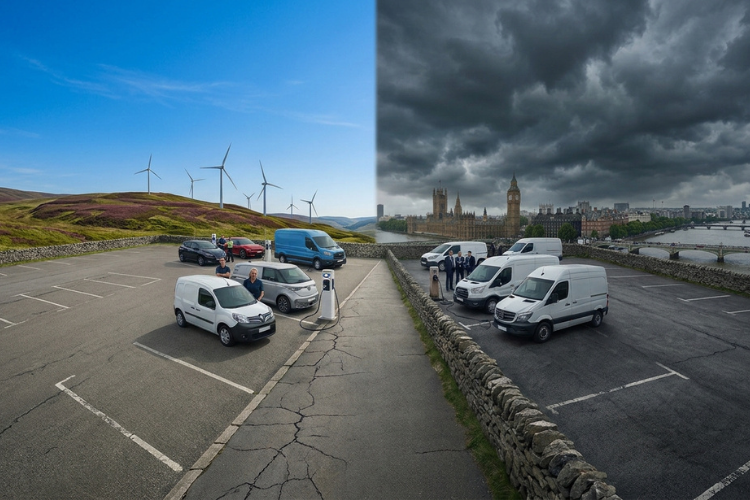
Government Decision Could Shape The UK’s EV Transition
The UK Government continues to state its commitment to ending sales of new cars relying solely on internal combustion engines by 2030 and ensuring all new cars and vans are zero emission by 2035.
However, the ZEV Mandate review could influence how manufacturers are expected to achieve those objectives.
The Scottish Government’s opposition adds another dimension to the debate, highlighting the potential difficulties of changing a framework that involves devolved responsibilities and long-term climate commitments.
With the consultation now closed, attention turns to the Government’s response and whether ministers decide to retain the existing targets, introduce additional flexibilities or pursue changes to the annual requirements.
For vehicle manufacturers, fleet operators and businesses considering electrification, the outcome will be an important factor in determining how the UK transition develops over the remainder of the decade. Businesses planning longer-term vehicle replacement strategies can also explore CVC’s fleet lifecycle management guide, which examines how vehicle acquisition, operation and replacement fit into wider fleet planning.

 Call our expert team on