The future of the UK’s transition to zero-emission vehicles remains a subject of considerable debate, with fleet leasing, rental and logistics organisations calling for government policy to better reflect the commercial and operational challenges facing businesses.
The debate comes amid continued changes to the UK ZEV Mandate and electric vehicle targets and growing questions about how quickly businesses can realistically transition their fleets.
Industry representatives have used their responses to the Government’s consultation on the Zero Emission Vehicle (ZEV) Mandate to highlight concerns over electric vehicle demand, financial pressures, charging infrastructure and the pace at which commercial fleets can move away from petrol and diesel vehicles.
While businesses across the sector continue to support the longer-term move towards electrification, there are growing calls for a framework that encourages investment without placing unrealistic expectations on operators.
Leasing And Rental Businesses Highlight Different Challenges
The British Vehicle Rental and Leasing Association (BVRLA) has submitted a response based on feedback gathered from its members through industry discussions, workshops and surveys.
Its findings suggest that rental and leasing businesses are experiencing different pressures as the electric vehicle transition progresses.
Rental operators are particularly concerned about weaker-than-expected customer demand, difficulties integrating electric vehicles into their operations and the financial risks associated with falling residual values.
These factors have raised questions about whether the rental sector can realistically achieve the current 2030 targets. Representatives of a significant proportion of the rental car fleet believe the existing trajectory is unachievable, with reducing the 2030 requirement identified as a priority.
Leasing companies, meanwhile, are concerned about maintaining business confidence in electric vehicles. They want to avoid sudden changes in government policy that could undermine investment decisions, while also dealing with uncertainty around used electric vehicle values.
For businesses considering their next vehicle replacement, understanding the UK vehicle leasing market and the factors influencing leasing costs is becoming increasingly important. Changes in vehicle values can influence leasing costs, contract terms and the financial considerations involved in choosing between electric and conventional vehicles.
For both sectors, the challenge is finding a sustainable route towards electrification without creating additional financial uncertainty for businesses.
Commercial Van Operators Face Additional Electrification Barriers
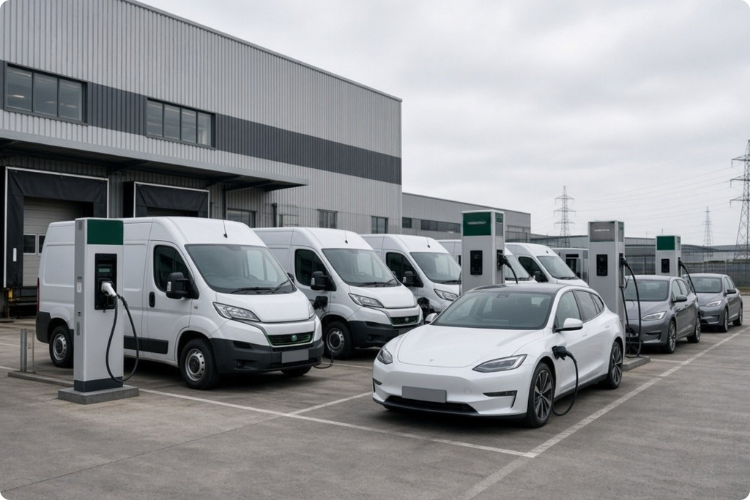
The situation is particularly complicated in the light commercial vehicle (LCV) market. Unlike passenger cars, vans are working assets, and businesses need to consider factors such as payload, driving range, charging availability and vehicle utilisation when deciding whether an electric alternative is suitable.
The suitability of an electric van depends on more than its advertised driving range. Businesses also need to consider daily mileage, charging arrangements and the type of work undertaken. Our guide to electric van adoption among UK business fleets examines some of the practical considerations influencing the transition.
For operators carrying tools, materials or specialist equipment, understanding van payload capacities is particularly important when comparing electric and diesel alternatives.
These practical considerations mean that the transition for commercial vehicles cannot necessarily follow the same timetable as the passenger car market.
Government Considers Changes To 2030 Electric Vehicle Targets
The Government’s ZEV Mandate consultation examined several possible changes to the regulations from 2027 onwards.
Under the existing framework, manufacturers are expected to ensure that 80% of new cars and 70% of new vans sold in 2030 are zero-emission vehicles.
However, the consultation considered reducing these requirements to 50% for cars and 40% for vans, reflecting concerns about the pace of market adoption.
Other proposals included retaining the headline sales targets while introducing greater flexibility around how manufacturers meet their obligations. Changes to credit banking arrangements, penalties for non-compliance and the calculations used to determine plug-in hybrid vehicle contributions were also considered.
The consultation follows previous concerns from manufacturers about their ability to meet the required sales quotas. Our coverage of electric van sales in the UK examines how the commercial vehicle market is progressing, while our report on electric vans remaining behind ZEV targets explores the gap between regulatory expectations and actual market demand.
The Society of Motor Manufacturers and Traders (SMMT) has also called for a more realistic approach, arguing that current targets are placing pressure on manufacturers’ profitability and diverting resources away from investment.
The organisation believes the revised mandate should support both the UK’s decarbonisation objectives and its ambitions for economic growth and domestic automotive manufacturing.
Logistics Operators Want Charging Infrastructure To Catch Up
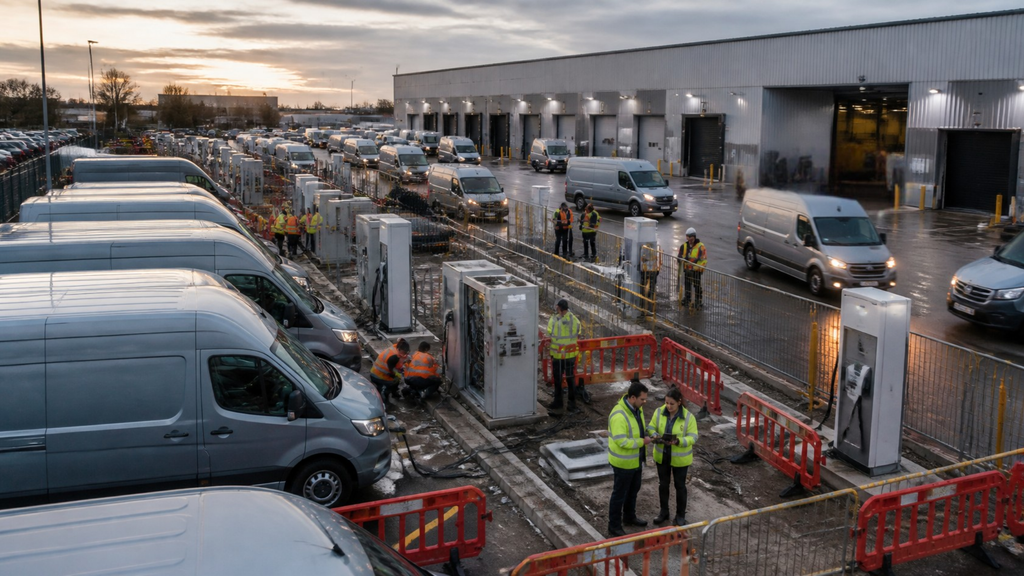
The practical requirements of commercial fleets have also been highlighted by Logistics UK, which has called on ministers to ensure that the infrastructure and financial support needed for electrification are in place.
The organisation’s consultation response reinforces its support for decarbonisation but warns that setting ambitious targets will achieve little unless businesses have the means to meet them.
Logistics UK chief executive Ben Fletcher said businesses were already investing in electric vehicles and charging facilities, but government policy needed to reflect the realities of operating commercial fleets.
He highlighted the importance of making the transition commercially achievable, giving businesses the confidence to invest without damaging their competitiveness.
Among the organisation’s key priorities are:
- Faster and more affordable electricity grid connections for logistics depots and business premises.
- Continued multi-year financial support for zero-emission van purchases.
- Greater accountability for distribution network operators (DNOs).
- More high-powered charging facilities suitable for commercial vehicles.
- Action to address the UK’s comparatively high electricity costs.
The cost of electricity is another significant consideration. UK industrial electricity prices have been the highest in the G7 since 2020, adding to the financial challenges facing businesses considering electrification.
Charging availability will be particularly important for businesses operating vehicles across multiple locations. Our guide to how EV charging works for businesses explains the different charging arrangements available to commercial operators, while our coverage of UK electric vehicle charging infrastructure examines the development of the wider charging network.
Businesses considering installing their own charging facilities should also understand the financial implications of workplace charging, including the differences between home and public charging arrangements. Our guide to EV charging VAT for home and public charging explores some of the tax considerations.
Logistics operations also have requirements that differ considerably from private car use. Vehicles may cover substantial daily distances, carry heavy loads and operate to demanding delivery schedules.
For some operators, particularly those running larger vans or working in rural locations, electric alternatives may not yet provide a commercially viable replacement for existing vehicles.
The choice between electric and diesel power will therefore remain an important consideration for many commercial operators. Our electric van versus diesel van comparison looks at the differences businesses should consider, including running costs, vehicle suitability and everyday practicality.
For businesses exploring available models, our guide to the best small electric vans provides another useful starting point.
Fletcher also stressed that the issue was not a lack of willingness within the industry to reduce emissions, but the practical limitations created by insufficient charging infrastructure, restricted grid capacity and electricity costs.
He argued that businesses required greater certainty over electricity access and infrastructure investment if the Government expected them to accelerate the adoption of zero-emission vehicles.
Environmental And Infrastructure Organisations Warn Against Reducing Targets
Calls for a more flexible ZEV Mandate have not been universally supported. Environmental organisations, health campaigners and businesses involved in electric vehicle infrastructure have warned that reducing the targets could have significant consequences.
The Energy and Climate Intelligence Unit (ECIU) has examined the potential emissions impact of changing the 2030 requirements.
Its analysis suggests that reducing the car target from 80% to 70% could result in additional carbon emissions comparable to burning all the gas contained in the Jackdaw field.
A more substantial reduction to 50% could generate an estimated additional 147 million tonnes of carbon emissions, equivalent to more than half the lifetime emissions associated with the Rosebank oil field.
Despite the debate surrounding the mandate, electric vehicle adoption continues to develop across the UK and international markets. Our coverage of UK electric vehicle market growth looks at the wider changes influencing the automotive sector.
A separate coalition of 30 environmental, transport and health organisations, including WWF, Greenpeace and the Clean Air Fund, has also opposed any weakening of the mandate.
The organisations argue that changing direction could undermine investment in the UK’s green economy, increase transport-related costs and create additional pressure on public health services.
Their concerns include estimates that weakening the targets could result in up to £882 million in avoidable NHS healthcare costs, alongside thousands of lost life-years.
The potential consequences for the charging industry have also been raised by BEAMA, the trade association representing the electrical and electrotechnical sector.
It estimates that reducing the 2030 zero-emission target to 50% could lead to 1.7 million fewer home charging point sales by 2034. This could remove approximately £1.6 billion in manufacturing revenue and reduce the electricity grid’s potential smart-charging capacity by 12GW.
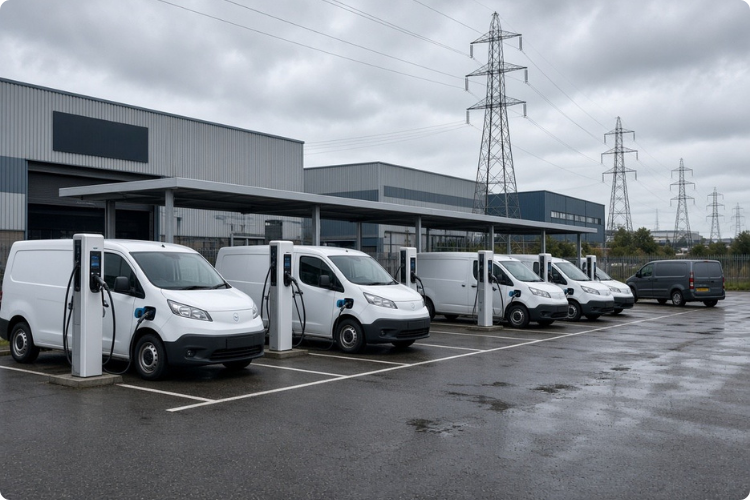
The expansion of charging facilities will be essential if businesses are expected to increase their reliance on electric vehicles. We have also examined the Government’s plans for EV infrastructure support across England, including measures intended to support the development of charging facilities.
Electric vehicle charging provider Zest has raised concerns about the impact of changing government policy on investor confidence.
Its chief executive, Robin Heap, warned that reducing the expected pace of market growth could make the UK less attractive to international investors, potentially directing funding towards European markets where the long-term policy environment is considered more predictable.
For charging infrastructure providers, investment decisions often involve lengthy planning processes, site acquisitions and significant upfront expenditure. Greater uncertainty over future electric vehicle demand could therefore affect the development of charging networks.
 Call our expert team on