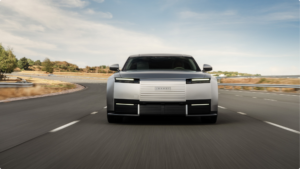
The UK Government is reportedly considering higher tariffs on Chinese-built electric vehicles, potentially creating a new challenge for manufacturers that have rapidly increased their presence in the UK market, particularly as Chinese EV brands continue to gain ground in the UK fleet market.
No new tariff has been introduced, and the Government has not confirmed that one will be implemented. However, the possibility comes at a significant point for the UK automotive industry, with Chinese brands continuing to gain market share while demand for electric vehicles reaches record levels.
For businesses and fleet operators, the issue could be particularly important.
Chinese manufacturers have brought a growing selection of competitively priced electric and electrified vehicles to the UK, increasing choice for businesses considering switching to an electric vehicle at a time when manufacturers are under pressure to reduce emissions and meet the requirements of the UK’s Zero Emission Vehicle Mandate.
Any increase in import costs could therefore affect not only vehicle prices, but potentially the affordability of electric vehicles for businesses and company car drivers.

Why Is The UK Considering Tariffs On Chinese Vehicles?
Chinese-built cars currently face the UK’s standard 10% import duty, rather than the additional tariffs applied by the European Union to Chinese electric vehicles.
The EU introduced additional duties following an investigation into subsidies supporting Chinese EV production. The additional rate varies between manufacturers, meaning the overall duty can be considerably higher than the UK’s current position.
The UK is now under pressure to reconsider its approach as it looks to strengthen its relationship with the European automotive sector.
The European Union is developing its proposed ‘Made in Europe‘ approach, which is intended to support European manufacturing and reduce dependence on overseas supply chains.
For Britain, gaining access to that framework could be important because of the close relationship between the UK and European automotive industries.
However, introducing tariffs on Chinese vehicles would not be without consequences.
Higher import duties could increase prices for British motorists and businesses, while potentially making the UK a less attractive destination for Chinese automotive investment.
There is also the possibility of retaliatory measures from China against British exporters.
That leaves the Government facing a difficult balancing act between protecting the UK’s automotive industry, maintaining access to European markets and keeping vehicle prices competitive.
Chinese Car Brands Are No Longer A Niche Presence
The debate comes as Chinese manufacturers have established themselves as a significant force in the UK new car market.
Brands including BYD, Chery, Jaecoo, Omoda and Leapmotor have expanded rapidly, while MG continues to have a substantial presence under Chinese ownership.
The scale of that growth has changed the competitive landscape considerably.
Chinese brands accounted for more than 15% of UK new car registrations during the first eight months of 2026, according to industry figures, while their combined presence continued to grow during September.
September provided an especially striking example, with the UK new car market passing one million fleet registrations as September sales grew.
The Jaecoo 7 became the UK’s best-selling new car for the month, recording 10,813 registrations, while the wider Omoda and Jaecoo operation recorded more than 22,000 registrations during September.
That demonstrates how quickly some of the newer manufacturers have moved from being relatively unfamiliar names to serious competitors in the UK market.
For businesses, the growing presence of these brands is also creating more choice.
The UK’s changing automotive landscape is explored in our guide to Chinese Car Manufacturers Help Improve UK Electric Vehicle Readiness.
Record EV Demand Adds Another Dimension
The tariff debate is taking place while the UK electric vehicle market is experiencing significant growth.
September 2026 saw 99,201 new battery electric cars registered in the UK, an increase of 36.3% compared with September 2025. BEVs accounted for 28.3% of the market during the month.
Across the first nine months of 2026, BEVs accounted for 26.16% of new car registrations. That remains below the 33% target required under the UK’s 2026 ZEV Mandate.
This makes the availability and affordability of electric vehicles increasingly important.
Chinese manufacturers have contributed significantly to the expansion of EV choice, offering models across different price points and vehicle categories. The same trend is becoming increasingly visible in the commercial vehicle sector, with businesses now able to choose from a growing number of electric vans. Our guide to The Best Small Electric Vans On The Market looks at some of the options available to businesses.
The growth of electric vans is also changing the commercial vehicle market, with electric van sales surging as the choice of models expands.
Businesses looking to understand the differences between the major powertrain technologies can also refer to our BEV, PHEV, HEV and ICE Explained guide.
The wider market is changing quickly, with manufacturers offering battery electric vehicles alongside plug-in hybrids, conventional hybrids, petrol models and diesel vehicles.

What Could Higher Tariffs Mean For Fleet Operators?
For fleet operators, one of the biggest questions is whether additional tariffs would eventually increase the cost of leasing vehicles.
An import tariff would initially increase the cost of bringing affected vehicles into the UK. Manufacturers and importers could choose to absorb some of that additional cost, but there could also be pressure on vehicle list prices, discounts and monthly leasing rates.
The actual effect would depend on how manufacturers, finance providers and the wider market responded.
However, even relatively small changes in acquisition costs can influence fleet calculations.
Businesses do not simply look at the list price of a vehicle. They also need to consider monthly finance costs, taxation, insurance, servicing, energy or fuel costs, mileage and residual values.
Our Van Finance For Businesses: A Complete Guide To Your Options explains the different finance options businesses can consider when acquiring commercial vehicles.
For companies considering contract hire, our Business Contract Hire Explained guide provides more information on how business contract hire works.
The Impact Could Go Beyond The Monthly Rental
A higher purchase or leasing cost does not necessarily tell the whole story.
For fleet managers, the total cost of operating a vehicle can be influenced by a much wider range of factors.
These can include:
- Monthly rental
- Initial rental
- Vehicle taxation
- Insurance
- Maintenance
- Energy or fuel costs
- Mileage
- Residual values
- Driver taxation
- End-of-contract charges
- Vehicle downtime
This is particularly relevant when comparing electric vehicles with petrol and diesel alternatives.
An EV with a higher headline price could potentially have lower running costs, while tax advantages can also affect the overall financial calculation for some business users.
Businesses should therefore assess the complete cost of running a vehicle rather than assuming the cheapest list price will automatically represent the cheapest fleet solution. This wider approach is covered in our guide to Fleet Lifecycle Management, which looks at the costs and decisions involved throughout the life of a business vehicle.
Our Fleet Management Solutions For UK Businesses guide looks at the wider considerations involved in managing and developing a business fleet.
Leasing Costs Could Become More Important
If tariffs increase vehicle acquisition costs, leasing could become an even more important consideration for businesses. Businesses comparing different funding routes can also use our guide to Understanding Your Vehicle Finance Options before deciding which approach best suits their fleet.
Rather than purchasing a vehicle outright and taking on the full depreciation risk, leasing allows businesses to budget through agreed monthly rentals. Businesses considering different funding routes can also compare Contract Hire Vs Finance Lease to understand how the two approaches differ.
However, the details of the agreement still matter.
Businesses need to estimate their annual mileage accurately, understand what happens if they exceed their contracted mileage and be aware of the condition requirements that apply when a vehicle is returned.
Our Guide To Van And Car Lease Mileage Allowance explains why getting the mileage allowance right is important.
Businesses can also read our Van Leasing: Fair Wear & Tear Guide for more information about vehicle condition and end-of-contract expectations.
Maintenance is another important part of the overall fleet calculation, particularly for businesses operating vehicles intensively. Our Vehicle Maintenance guide covers the importance of keeping leased vehicles properly maintained. It is also important to understand the difference between routine maintenance and warranty cover, so businesses can budget appropriately for their vehicles. Our guide to Maintenance Vs Warranty: What’s the Difference? explains what each covers and why the distinction matters.
What Could It Mean For Company Car Drivers?
The potential impact of higher tariffs could also extend to company car drivers.
If vehicle prices and leasing costs increase, employers could potentially have fewer models available within particular company car budgets. For employers reviewing their wider vehicle strategy, our Business Car Leasing Guide explains the key considerations for companies and fleet managers.
For employees choosing an electric company car, Benefit-in-Kind taxation remains one of the major reasons EVs continue to attract interest.
Our Benefit-in-Kind (BIK) Tax guide explains how company car tax works and why the tax treatment of electric vehicles can make them particularly attractive to some drivers.
Salary sacrifice schemes are another important part of the market.
Electric vehicles have become increasingly prominent in salary sacrifice schemes because employees can access a new vehicle while benefiting from the favourable tax treatment that currently applies to EVs.
Our EV Salary Sacrifice Explained guide looks at how these arrangements work.
Could Tariffs Slow The UK’s Electric Vehicle Transition?
One of the biggest concerns surrounding potential tariffs is their possible impact on the wider electrification strategy.
The UK needs manufacturers to increase their electric vehicle sales, while businesses and private motorists need access to vehicles at prices they can afford. Cost isn’t the only consideration for businesses moving towards electric vehicles. Charging availability is also important, particularly for companies operating multiple vehicles. Our Electric Vehicle Charging Explained: Home, Workplace & Employee Solutions For UK Businesses covers the main charging considerations for business users.
Businesses considering electric vans should also consider the reliability and availability of charging infrastructure. Our guide to EV charger reliability and what it means for electric van leasing looks at this issue in more detail.
Chinese manufacturers have helped increase competition and expand the number of electric vehicles available to UK buyers.
Making some of those vehicles more expensive could therefore reduce one of the major benefits created by increased competition.
It could also make the decision to switch to an EV more complicated for businesses that are already working with tight budgets.
For some companies, the choice could come down to whether the higher upfront or monthly cost of an electric vehicle can be offset through lower running costs, taxation and other savings. This is one reason leasing providers continue to drive fleet electrification as businesses look for practical ways to transition their vehicles.
Our Cut Costs, Reduce Emissions: Why Businesses Are Choosing Electric Fleets looks at why more businesses are considering electric vehicles as part of their wider fleet strategy.
More Choice Could Still Benefit Businesses
Despite the uncertainty surrounding potential tariffs, the expansion of Chinese manufacturers has already changed the UK vehicle market.
Businesses now have access to a much wider selection of electric and electrified vehicles than they did only a few years ago.
That increased competition can give fleet operators more opportunities to compare specification, technology, finance and running costs.
It also means established manufacturers face greater pressure to compete on price and equipment.
For businesses, that can ultimately be positive.
A wider choice of vehicles makes it easier to find models that suit different requirements, whether that means a company car, an electric van, a larger commercial vehicle or a mixed fleet.
The challenge is making sure that the decision is based on the needs of the business rather than simply choosing the vehicle with the lowest advertised monthly payment.
What Should Businesses Do Now?
At this stage, businesses should not assume that Chinese electric vehicles are about to become more expensive.
The Government has not introduced new tariffs, and no final decision has been confirmed.
However, the issue is worth monitoring because any change could affect vehicle pricing, leasing costs and the wider choice available to businesses.
For fleet operators, the best approach is to continue assessing vehicles based on their overall suitability and whole-life cost.
That means looking at more than the initial price.
Taxation, finance, maintenance, energy costs, mileage, vehicle specification, payload and residual values can all influence whether a vehicle represents good value over the duration of its lease.
Businesses can also benefit from taking a broader approach to fleet planning through Commercial Vehicle Contracts: Your One-Stop Fleet Solution, particularly when vehicle leasing is only one part of a wider fleet requirement.

 Call our expert team on