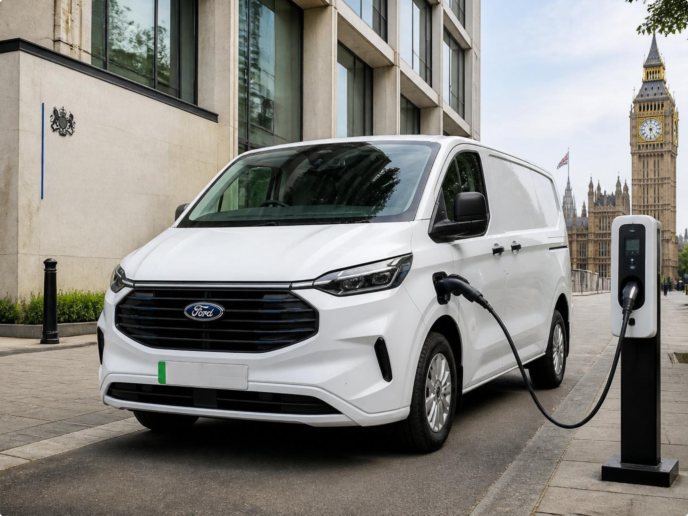
Ford UK has called for an urgent review of the Government’s Zero Emission Vehicle (ZEV) Mandate, stating that current targets need to better reflect the pace at which businesses and motorists are adopting electric vehicles.
The comments from Ford of Britain chair and managing director Lisa Brankin come as manufacturers continue to face challenges in meeting increasingly ambitious EV sales targets. The ZEV Mandate requires vehicle manufacturers to ensure a growing percentage of new vehicle sales are zero-emission each year, with financial penalties applied if targets are not achieved.
While the transition towards electric vehicles remains a key priority for the automotive industry, manufacturers have highlighted the importance of ensuring government policy reflects real-world customer demand, charging infrastructure availability and the operational needs of businesses.
The Government had previously indicated that a review of the policy would take place next year, although Business and Trade Secretary Peter Kyle recently suggested the process could be brought forward, with feedback from manufacturers and industry representatives considered as part of the review.
Ford Highlights Gap Between EV Targets and Customer Demand
Lisa Brankin reiterated that Ford remains fully committed to the long-term transition towards zero-emission transport but believes current policies must better reflect how quickly different customers are able to make the switch.
Writing on LinkedIn, Brankin explained that electric vehicles are already a practical and cost-effective option for many drivers and businesses. However, she acknowledged that the transition will not happen at the same pace for every customer.
She welcomed Government support measures, including the Electric Car Grant, which has helped make electric vehicles more accessible by reducing upfront costs and encouraging more drivers to consider switching.
However, Brankin argued that incentives alone cannot bridge the gap between government targets and current market conditions. Manufacturers have already invested heavily in developing new electric models, improving battery technology and reducing vehicle costs, but demand remains below the levels required to meet current ZEV Mandate targets.
According to Ford, the challenge is ensuring that regulatory ambitions and customer readiness continue to move forward together.
Commercial Vehicle Operators Face Different EV Challenges
The discussion around EV adoption is particularly important for businesses operating commercial vehicles, where the decision to transition can involve more complex considerations than choosing a private car.
For many companies, vans are essential working tools that directly impact productivity and day-to-day operations. Factors including payload capacity, vehicle range, charging access, journey patterns and operating costs all play a significant role in deciding whether an electric van is the right solution.
Electric vans are already proving highly effective for many businesses, particularly those operating urban delivery routes, predictable daily mileage or vehicles that can return to a depot for charging.
However, for other operators covering longer distances, carrying heavier loads or requiring maximum flexibility throughout the working day, the transition may require further planning.
This means businesses need to assess their individual requirements carefully, rather than simply choosing a vehicle based solely on fuel type.
Leasing Can Support a Flexible Fleet Transition
As the UK continues its move towards lower-emission transport, many businesses are exploring ways to introduce electric vehicles into their fleets without disrupting operations.
Vehicle leasing can provide companies with a flexible approach to electrification, allowing them to access the latest electric vehicle technology while avoiding the long-term commitments associated with ownership.
For some businesses, moving directly to a fully electric fleet may be the right decision. For others, a mixed fleet approach combining electric, hybrid and conventional vehicles may provide the best balance while technology, charging infrastructure and customer demand continue to develop.
Working with an experienced commercial vehicle leasing provider can help businesses evaluate important considerations, including total running costs, vehicle suitability, charging requirements and future fleet plans.
A fleet review can also help identify which vehicles are best suited to electrification, allowing businesses to introduce electric vans where they deliver the greatest operational and financial benefits.
A Balanced Approach to the Future of Electric Vehicles
Ford’s comments highlight the importance of creating a realistic pathway towards electrification that supports both environmental objectives and the practical needs of vehicle users.
The move towards electric vehicles is continuing, with more businesses adopting EVs as technology improves and charging networks expand. However, flexibility will remain essential as different industries transition at different speeds.
For companies reviewing their next fleet decision, the most effective approach will depend on their individual operations, vehicle requirements and long-term objectives.
By taking a considered approach and selecting vehicles that genuinely suit their business needs, companies can successfully reduce emissions while maintaining efficiency and productivity throughout the transition.
Looking For Your Next Electric Vehicle?
At Commercial Vehicle Contracts, we offer competitive leasing deals on the latest electric vans and company vehicles from leading manufacturers, including Ford, Mercedes-Benz, Volkswagen, Renault, Vauxhall, Peugeot, Citroën, Nissan, Maxus and many more.
Whether you’re adding a single electric van to your business or transitioning an entire fleet, our experienced team can help you find the right vehicle and lease package to suit your requirements.
Browse our latest Electric Vehicle Special Offers to compare the newest EV lease deals available for UK businesses.
Alternatively, call 01424 863 456 to speak with one of our leasing specialists and discuss your electric vehicle requirements.
 Call our expert team on