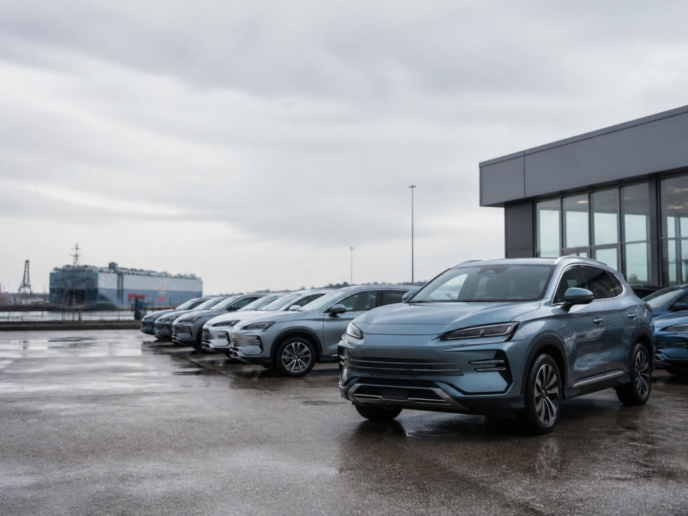
Potential restrictions on Chinese-made hybrid vehicles entering the European Union could have an unexpected knock-on effect on the UK automotive market, particularly if manufacturers begin redirecting vehicles towards Britain.
The European Union is reportedly considering a voluntary agreement with China that would limit the number of Chinese-built hybrid vehicles entering the European market. The proposal forms part of wider discussions between Brussels and Beijing aimed at preventing further escalation of trade tensions.
No agreement has been finalised, but EU trade commissioner Maroš Šefčovič is reportedly preparing for discussions with Chinese commerce minister Wang Wentao ahead of a planned visit to Beijing in October.
While any restrictions would apply to EU member states rather than the UK, the consequences could still be felt by British dealerships and consumers.
If access to European markets becomes more restricted, Chinese manufacturers could potentially look towards the UK as an increasingly important destination for vehicles that might otherwise have been allocated to continental Europe.
Why Chinese Hybrid Imports Are Growing In Europe
Chinese manufacturers have rapidly increased their presence in Europe’s hybrid market, particularly as tariffs on fully electric vehicles have made battery-electric models more expensive to import.
For drivers and businesses trying to understand the increasingly varied range of electrified powertrains, our BEV, PHEV, HEV, and ICE Explained: What Do They Actually Mean? guide provides a useful overview of the differences between each technology.
The EU introduced additional anti-subsidy duties on China-built battery electric vehicles in October 2024. Depending on the manufacturer, those measures pushed the combined tariff burden on some imported electric cars to around 45%.
Hybrids have not faced the same level of additional duties, with China-made hybrid vehicles generally subject to the EU’s standard 10% import tariff.
This has helped make hybrid and plug-in hybrid vehicles a particularly attractive route into the European market for Chinese manufacturers.
The scale of that growth has been substantial. Chinese-made hybrids accounted for around 3,800 vehicles in the EU market in October 2024. By July 2026, that figure had increased to approximately 50,000 vehicles, representing more than a tenfold increase.
Under the reported proposal, Chinese-built hybrids could eventually be restricted to around 15% of the relevant EU market, compared with their current share of more than one-third.
Could More Chinese Hybrids Come To The UK?
For British dealers, one of the most important questions is what manufacturers do with vehicles that can no longer be allocated to the EU at the same level.
The UK operates outside the EU’s trade arrangements, meaning Chinese manufacturers could potentially increase their focus on Britain if restrictions reduce their ability to sell into continental Europe.
That would build on an already growing presence for Chinese manufacturers in Britain. Our recent look at Chinese Car Brands Continue Rapid UK Growth with 15% Market Share in First Half of 2026 highlights how quickly the competitive landscape is changing.
Chinese manufacturers are also continuing to expand their UK model ranges. Chery Confirms Four New UK Models Including First Electric Car provides another example of the increasing number of models being brought to British buyers.
Greater availability could give dealer groups representing Chinese brands access to more vehicles, potentially improving lead times and making it easier to maintain demonstrator fleets.
It could also give manufacturers greater scope to expand their UK dealer networks and increase marketing activity.
However, additional supply does not necessarily mean the market would remain stable.
Increased Supply Could Put Pressure On Prices
If several manufacturers simultaneously redirect vehicles towards the UK, competition could become considerably more intense.
Manufacturers may respond by increasing deposit contributions, introducing more attractive finance packages or reducing transaction prices to move additional stock.
For consumers, that could make some Chinese hybrid and plug-in hybrid models increasingly competitive against established manufacturers.
For dealers, however, the situation is more complicated.
A vehicle that is heavily incentivised when new can quickly lose value on the used market. Increased manufacturer support can therefore have implications for part-exchange valuations, nearly new vehicles and dealer-held stock.
The wider UK market is already undergoing significant change, with greater competition between established manufacturers and newer entrants. Our article on More Choice, Greater Value: How The UK Vehicle Market Is Changing looks at some of the wider forces reshaping vehicle choice and pricing.
Used-car departments may need to monitor auction values and retail pricing particularly closely if large volumes of relatively young hybrid vehicles enter the UK market.
Dealer Stock And Residual Values Could Be A Key Consideration
The potential impact would not necessarily be negative for every dealership.
Franchises that have struggled with supply constraints could benefit from having more vehicles available. Greater access to stock could make it easier to fulfil customer orders, maintain demonstrator fleets and offer a broader selection of specifications.
The challenge comes if additional supply coincides with aggressive manufacturer incentives.
If a new hybrid is suddenly available with a substantial deposit contribution or discounted finance package, customers may be less willing to pay a premium for a nearly new example.
That can create additional pressure when dealers value part exchanges and could make accurate stock management increasingly important.
The issue is particularly relevant to plug-in hybrids, which are already navigating changes in taxation and company-car policy. Our guide to PHEVs and BIK in 2026/27: The “Middle Ground” That’s Getting Squeezed examines the changing position of plug-in hybrids in the UK market.
What Should UK Dealers Be Watching?
There are several areas that could provide an early indication of how the situation develops.
Vehicle allocation will be particularly important. Manufacturers increasing their UK volumes could indicate that Britain is being used to absorb stock that faces greater restrictions elsewhere in Europe.
Dealers should also keep an eye on lead times, manufacturer finance campaigns, deposit contributions and changes in advertised transaction prices.
For used-car operations, auction performance, days to sell and changes in valuations for young hybrid vehicles could provide an early indication of whether increased supply is beginning to affect residual values.
At the same time, stronger availability could present opportunities for dealerships that are able to secure competitive stock and match it with growing consumer demand for hybrid vehicles.
The expansion of Chinese plug-in hybrid models is already becoming more visible in the UK. For example, BYD Confirms UK Pricing for New Ti7 Seven-Seat Plug-in Hybrid SUV demonstrates how manufacturers are continuing to introduce new PHEV products into the British market.
What It Could Mean For The UK Leasing Market
The effects could extend beyond traditional dealer sales.
Greater competition between Chinese manufacturers could also filter through into the leasing market, where vehicle pricing, manufacturer incentives, finance rates and residual-value expectations all influence the overall cost of a vehicle.
This could give businesses and private motorists more choice when considering their next vehicle, particularly for drivers who are not yet ready to move fully to an electric car. The wider UK new-car market is also changing rapidly, with strong demand for hybrid and electric vehicles alongside continued demand for petrol and diesel models.
For businesses running company fleets, the changing market also makes it increasingly important to consider how different powertrains fit into wider fleet strategies. Our Business Car Leasing: The Complete Guide for Companies and Fleet Managers provides further information on the options available to businesses.
Chinese manufacturers may therefore find Britain an increasingly important market if restrictions limit their ability to expand hybrid sales elsewhere in Europe.
 Call our expert team on