A mobile coffee shop needs more than an attractive van. It needs enough space and payload for commercial espresso machines, grinders, refrigeration, water tanks and storage, alongside a practical serving area that reflects the business’s brand.
Whether you are serving coffee at weddings, festivals, corporate events or busy town-centre locations, choosing the right commercial vehicle is an important investment. The right van should accommodate your equipment, support your daily operating requirements and provide a professional platform for your business.
This guide compares a selection of commercial vehicles suitable for mobile coffee businesses, from distinctive electric vans such as the Volkswagen ID. Buzz Cargo and Kia PV5 to practical medium-sized options including the Ford Transit Custom and Renault Trafic E-Tech. We’ll also explore payload requirements, specialist conversions, electric vehicle considerations and the most suitable business van leasing options.
What To Look For In A Mobile Coffee Van
Before choosing a vehicle, consider how much equipment you need to carry and how the finished conversion will affect its weight and available space.
Payload And Weight Limits
Commercial espresso machines, grinders, refrigeration units, batteries, water tanks and cabinetry can add considerable weight. A full 100-litre water tank alone adds approximately 100kg.
Check the vehicle’s maximum authorised mass (MAM), available payload and individual axle weight limits. Remember to include the weight of the conversion, equipment, stock, water and occupants. Businesses should check the vehicle’s maximum authorised mass (MAM), available payload and individual axle weight limits before committing to a conversion. Our guide to van payload and weight limits explains what to consider when choosing a commercial vehicle. You can also compare medium vans with the highest payload capacities if your installation requires heavier equipment.
Load Space And Conversion Potential
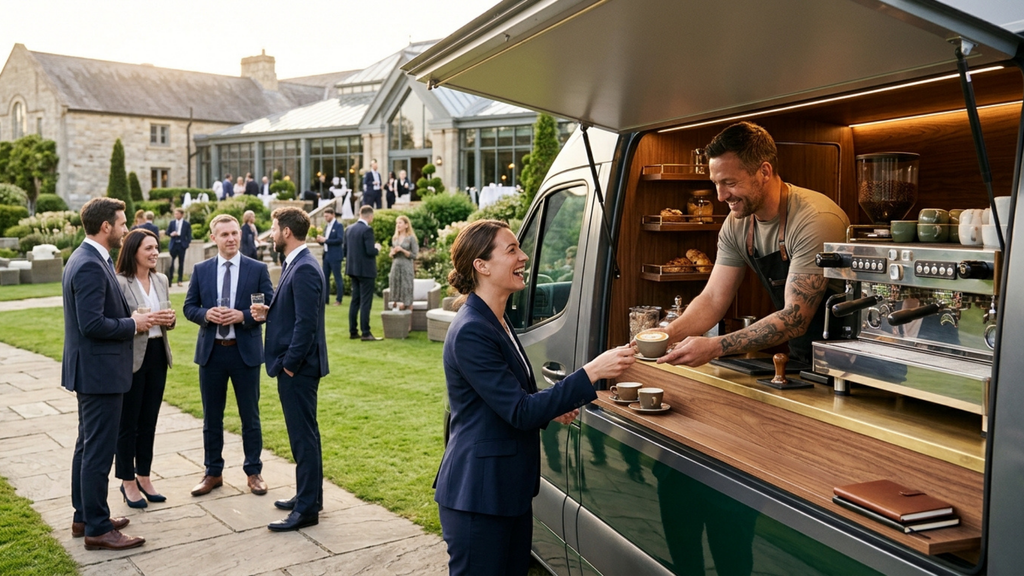
The interior needs to accommodate your equipment without making it difficult to work. Consider loading dimensions, access through the rear and side doors, standing or working space, and whether the layout can accommodate a serving hatch.
Electrical Supply And Ventilation
Commercial coffee equipment can have substantial electrical requirements. Consider whether you will use an external mains connection, battery storage or a generator, and ensure the installation is professionally designed for the equipment’s power demands.
Ventilation, water supply, wastewater storage and safe equipment positioning should also be considered before conversion work begins.
Vans To Consider For A Mobile Coffee Business
1. Volkswagen ID. Buzz Cargo – For Standout Branding
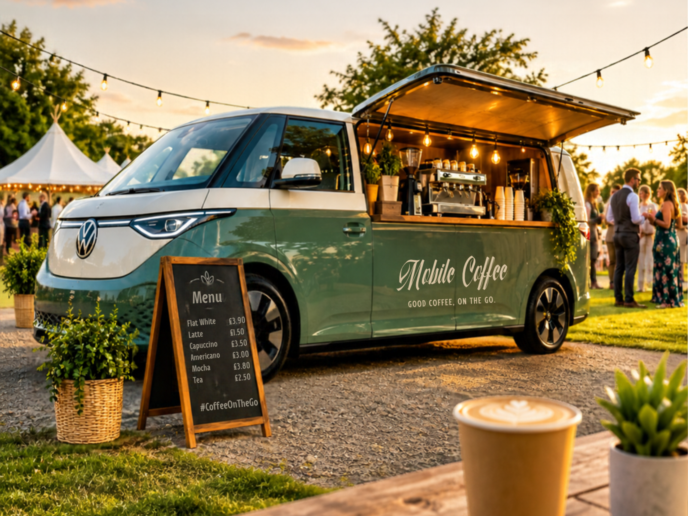
The Volkswagen ID. Buzz Cargo combines distinctive retro-inspired styling with an all-electric powertrain, making it an interesting option for mobile coffee businesses looking to establish a memorable brand.
With up to 3.9m³ of load space, it offers room for a compact coffee installation, refrigeration and storage. Its electric powertrain also makes it particularly appealing for businesses operating in urban areas and locations where local emissions restrictions are important.
However, its relatively compact load area and payload mean that equipment selection and conversion weight need careful consideration. Businesses comparing electric vans should also consider the Kia PV5, which offers a different approach to electric commercial vehicle design. Our Volkswagen ID. Buzz versus Kia PV5 electric van comparison looks at how the two models compare.
2. Kia PV5 – A Modern Electric Alternative
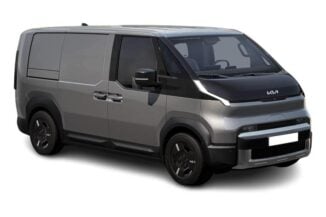
The Kia PV5 is another electric van worth considering for mobile coffee businesses. Built on Kia’s dedicated Platform Beyond Vehicle (PBV) architecture, it offers a modern alternative to conventional panel vans.
Its modular design and different body configurations make it an interesting prospect for businesses considering specialist commercial vehicle conversions. The PV5 range also includes a Chassis Cab configuration, which could provide an alternative starting point for a bespoke mobile coffee installation, subject to conversion suitability and final weight limits.
For businesses comparing compact electric commercial vehicles, the PV5 deserves consideration alongside the Volkswagen ID. Buzz Cargo.
Read more about the Kia PV5 electric van and its Chassis Cab configuration.
Best suited to: Compact coffee operations, corporate events, urban locations and businesses prioritising distinctive vehicle branding.
3. Ford Transit Custom – The Practical All-Rounder
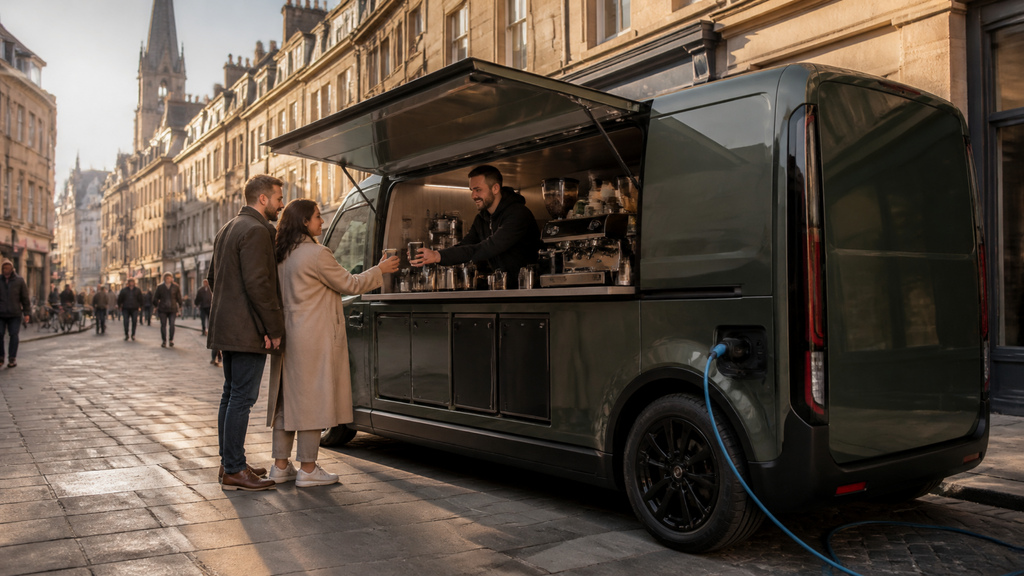
The Ford Transit Custom is a strong option for businesses needing a balance of load space, flexibility and everyday practicality.
With up to 5.8m³ of load space, depending on configuration, it provides more room for commercial coffee equipment, water storage, refrigeration and supplies than a smaller van.
The range includes diesel, plug-in hybrid and all-electric versions, allowing businesses to consider their typical mileage, operating locations and charging arrangements when choosing a powertrain.
Businesses considering alternatives should also compare the Ford Transit Custom and Vauxhall Vivaro to understand the differences between two popular medium-sized commercial vans.
Its conventional panel-van layout also provides a useful starting point for bespoke coffee-shop conversions, particularly where a larger serving area and additional storage are required.
Best suited to: Regular event operators, established mobile coffee businesses and businesses carrying larger equipment installations.
Read more about the Ford Transit Custom.
4. Renault Trafic E-Tech – Practical Electric Load Space
The Renault Trafic E-Tech is another medium-sized electric van worth considering for mobile coffee businesses that need more room than a compact electric commercial vehicle can offer.
Its panel-van format provides a practical starting point for installing coffee equipment, refrigeration, storage and water systems. Businesses should consider the available battery configuration, driving range, charging requirements and payload when deciding whether it is suitable for their conversion.
The new generation Renault Trafic E-Tech is also an important development in the electric commercial vehicle market. Read our guide to Renault Trafic E-Tech electric UK prices and specifications.
The model’s industry recognition is also worth exploring in our article about the Renault Trafic E-Tech being named International Van of the Year 2027.
Best suited to: Mobile coffee businesses requiring a medium-sized electric van with room for a more substantial equipment installation.
5. Morris JE – For A Distinctive Electric Conversion
The Morris JE is an interesting prospect for mobile hospitality businesses looking for something different.
Inspired by the original Morris J-Type, the all-electric van combines traditional styling with modern technology and a recycled carbon-fibre monocoque body. Its distinctive appearance could make it particularly attractive for artisan coffee brands, weddings and premium events.
However, there is an important consideration for businesses planning ahead. The Morris JE remains a developing vehicle rather than an established, readily available leasing option. Pilot production is planned for 2027, with commercial-scale production expected in 2028.
Its final specifications, payload and conversion suitability should therefore be confirmed before making any purchasing decisions.
Best suited to: Businesses planning a future premium coffee conversion and operators looking for a distinctive electric vehicle.
Find out more about the Morris JE electric van.
Other Electric Van Alternatives
The Vauxhall electric van range provides further alternatives for businesses looking to move away from diesel commercial vehicles. Depending on the size of the coffee installation, different electric van configurations may be worth considering. Vauxhall’s commercial vehicle manufacturing credentials have also received recognition, as explored in our article about Vauxhall electric vans gaining Made in Britain recognition.
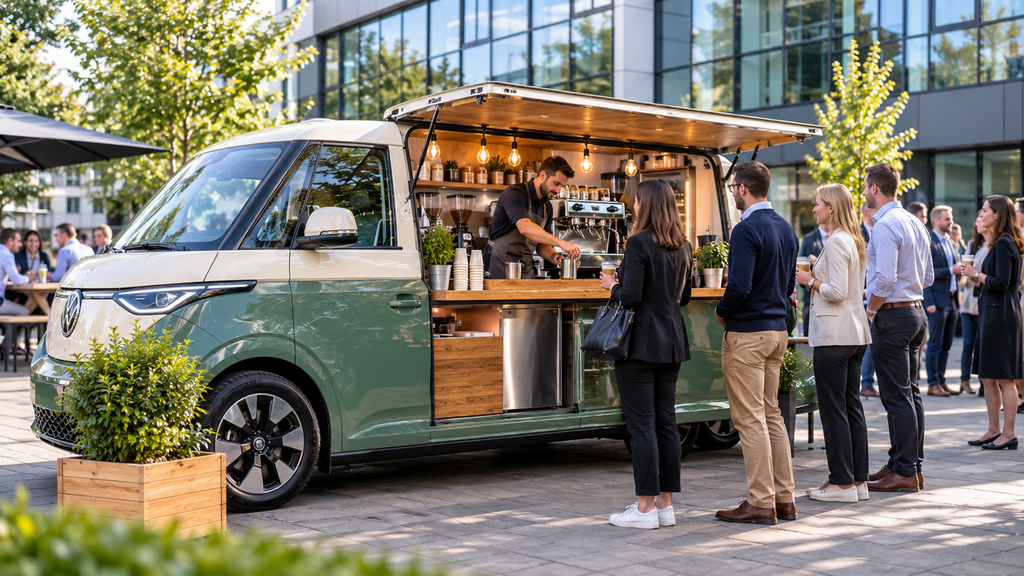
Converting A Van Into A Mobile Coffee Shop
Choosing the base vehicle is only part of the process. The conversion will determine how effectively the van works as a mobile business.
A standard panel van can be adapted to suit a wide range of specialist business requirements. Before choosing a base vehicle, it is worth considering what modifications will be needed and whether the finished installation will affect the vehicle’s payload, dimensions or warranty. Our complete guide to commercial vehicle conversions explains the options available to businesses.
Typical requirements include:
- Work surfaces and cabinetry: Durable, hygienic preparation areas with secure storage for coffee beans, cups and supplies.
- Serving hatch: Convenient access for customers, with sufficient space for safe service.
- Water systems: Freshwater storage, handwashing facilities and suitable wastewater arrangements.
- Electrical installation: A professionally designed power system capable of supporting espresso machines, grinders, refrigeration and lighting.
- Flooring and wall coverings: Durable, washable materials suitable for a food and drink preparation environment.
- External branding: Professional graphics and vehicle wrapping to create a recognisable business identity.
The completed vehicle must also comply with applicable food hygiene, electrical, fire safety and vehicle weight requirements. Speak to the relevant local authority and qualified conversion specialists before starting work.
For businesses wanting to make a stronger visual impression, professional van signwriting and vehicle wrapping can help turn the vehicle into a recognisable part of the brand.
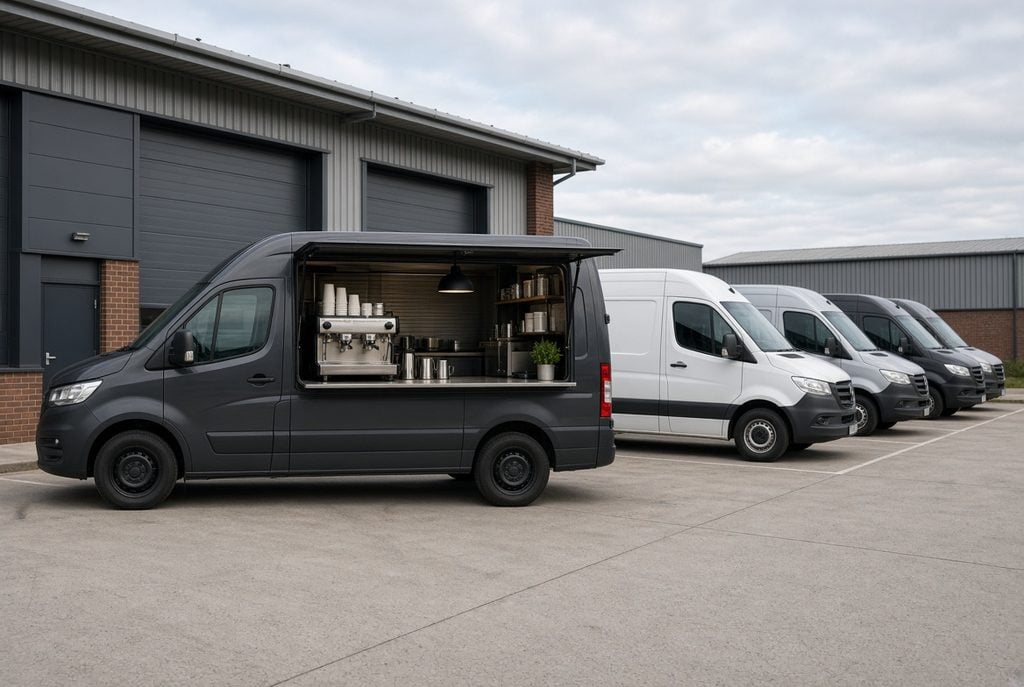
Electric Or Diesel: Which Is Better For A Mobile Coffee Business?
The choice between an electric and diesel van will depend largely on where your mobile coffee business operates and how far you travel between bookings.
Electric vans can be particularly attractive for businesses attending regular events in towns and cities, especially where local emissions restrictions apply. However, operators should consider the availability of charging facilities, daily mileage and the additional electrical demands of their coffee equipment.
Diesel vans may be more suitable for businesses travelling longer distances between festivals, weddings and corporate events, particularly where charging opportunities are limited.
Before choosing an electric commercial vehicle, consider:
- Your typical daily mileage and longest journeys.
- Access to charging at home, business premises and event locations.
- The vehicle’s real-world driving range when carrying equipment.
- Available payload after conversion.
- Whether charging downtime could affect your booking schedule.
Our guide to electric van charger reliability explores an important consideration for businesses relying on electric commercial vehicles.
Leasing A Van For Your Mobile Coffee Business
Buying a van outright is not the only way to establish a mobile coffee operation. Business vehicle leasing can provide access to a newer vehicle through structured monthly payments, helping businesses manage their initial expenditure. Businesses can explore different funding arrangements depending on their budget, ownership preferences and operating requirements. Our business van leasing guide explains the options available.
Two funding options worth considering are Business Contract Hire and Finance Lease.
Business Contract Hire (BCH)
Business Contract Hire allows a business to lease a vehicle for an agreed period and mileage allowance, usually in return for an initial rental followed by fixed monthly payments.
At the end of the agreement, the vehicle is normally returned to the funder, subject to the contract’s mileage, condition and return requirements.
This can be suitable for businesses that want predictable vehicle costs and prefer to replace their van at the end of an agreed term.
For a more detailed explanation of this funding arrangement, read our Business Contract Hire guide.
Finance Lease
Finance Lease offers a different approach, with the business paying rentals over an agreed period and typically taking responsibility for the vehicle’s disposal at the end of the agreement.
Depending on the agreement, a final rental or balloon payment may apply. The vehicle is generally sold to a third party, with the proceeds handled in accordance with the funder’s terms.
It can be worth considering for businesses that want a different structure from a conventional contract hire agreement.
You can also read our Finance Lease explained guide for more information about how these agreements work.
Keeping Your Coffee Van On The Road
A mobile coffee business depends on its vehicle being available for bookings. Unexpected downtime can mean missed events, cancelled appointments and lost trading opportunities.
When comparing leasing agreements, consider whether a maintenance package is available. Depending on the agreement, this can help cover scheduled servicing, routine maintenance and certain repair costs.
Read more about commercial vehicle maintenance and the importance of keeping business vehicles roadworthy.
For businesses looking to compare commercial vehicle options, CVC provides access to a wide range of business van leasing offers, including electric and diesel models from leading manufacturers.
 Call our expert team on