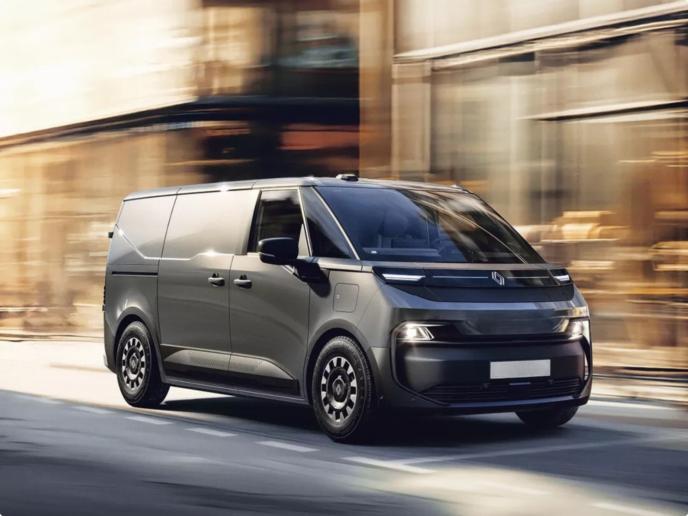
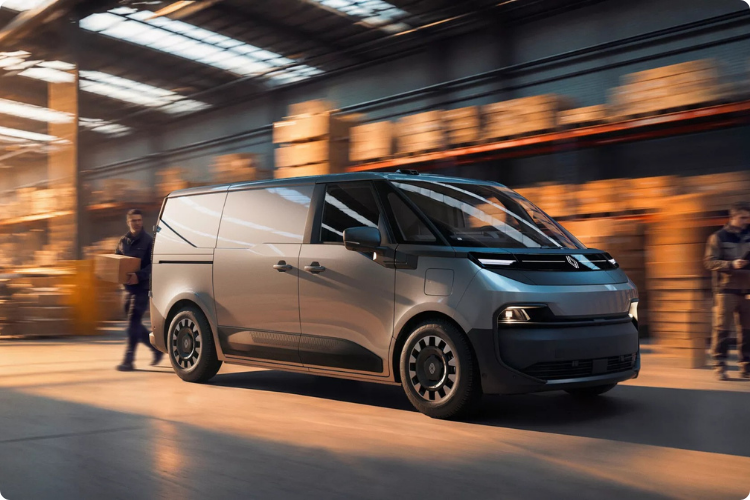
Renault has opened UK pre-orders for its next-generation Trafic E-Tech Electric, with prices starting at £38,000 + VAT before eligible government incentives. The new medium-sized electric van introduces an updated platform, rapid charging technology and a range of practical features aimed at businesses looking to make the switch to electric commercial vehicles.
Following its unveiling at the IAA Transportation Show, where it was named International Van of the Year 2027, the new Trafic E-Tech Electric will be offered in Advance and Extra specifications. Buyers will have a choice of two battery options, two vehicle lengths and panel van or crew van configurations. The award was decided unanimously by the 26-member international jury, with further details available in our article covering the Renault Trafic E-Tech’s International Van of the Year 2027 award.
The electric Trafic forms part of Renault’s wider commercial vehicle plans, which include the introduction of five new light commercial vehicles.
With a claimed electric driving range of up to 292 miles, a payload of up to 1.3 tonnes and towing capacity of up to two tonnes, Renault is targeting operators who need an electric van capable of handling demanding working schedules without compromising on practicality.
The launch comes as businesses continue to assess the practical and financial considerations of electric van adoption across UK business fleets.
The arrival of the new electric model builds on Renault’s established Trafic range, which offers businesses a choice of panel van, crew van and passenger vehicle configurations. Businesses interested in leasing the existing Renault Trafic range can view our Renault Trafic lease deals.
Two Battery Options For Different Business Requirements
Renault will offer the Trafic E-Tech Electric with two battery configurations, allowing businesses to select a version that better reflects their typical mileage and operating requirements.
The 60kWh battery is intended primarily for urban and shorter-distance operations, while the larger 81kWh battery provides an advertised WLTP combined range of up to 292 miles. Businesses comparing electric and diesel models will also need to consider differences in driving range, running costs, payload and refuelling or charging requirements. Our guide to electric vans versus diesel vans examines some of the key considerations when choosing between the two powertrains.
Both versions are powered by a 218hp electric motor producing 355Nm of torque. Renault has also focused on improving energy efficiency through its aerodynamic design, heat pump technology and energy management systems.
Electricity consumption is quoted at as little as 17.2kWh per 100km, which Renault says makes the new model almost 30% more efficient than its closest competitors.
Charging performance is another important feature. The Trafic E-Tech Electric uses an 800V electrical architecture, which Renault identifies as a first for a medium-sized electric van in the UK market. The 81kWh version supports DC rapid charging at up to 240kW, with an 80% charge possible in less than 20 minutes under suitable conditions.
For businesses planning to introduce electric vans, access to suitable charging facilities will remain an important consideration. Our guide to how EV charging works for businesses explains the different charging options available to commercial operators.
Vehicle-to-load (V2L) technology is also available, allowing external electrical equipment to draw power from the vehicle’s battery. This could prove useful for tradespeople and mobile businesses that need to operate electrical tools or equipment away from a mains supply. V2L is standard on Extra models and optional on Advance versions.
Load Capacity, Payload And Manoeuvrability
Despite its electric powertrain, Renault has placed considerable emphasis on ensuring the new Trafic remains suitable for everyday commercial use.
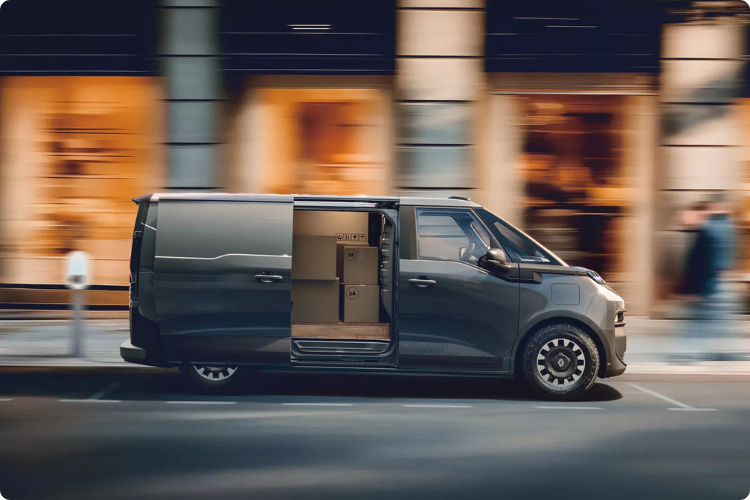
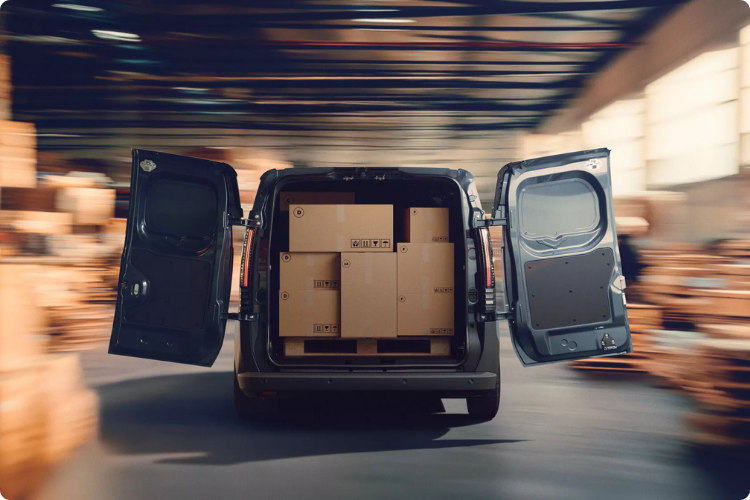
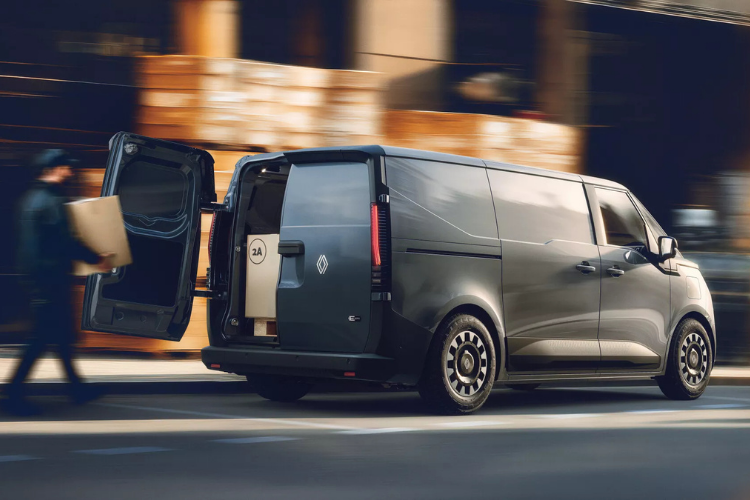
Two body lengths will be available, measuring 4.87 metres and 5.27 metres. Depending on the configuration, load capacity ranges from 5.1m³ to 5.8m³, with sufficient space to accommodate up to three Euro pallets.
Payload is quoted at up to 1,300kg, while maximum towing capacity reaches 2,000kg. These figures will be particularly relevant to businesses assessing whether an electric medium-sized van can meet their existing transport and equipment requirements. Businesses comparing vehicles in this category may also want to consider how the Trafic measures up against other medium-sized vans. Our guide to medium vans with the highest payload capacities looks at alternative models for operators who need to maximise their available carrying capacity.
Payload is an important consideration when selecting a commercial vehicle, as the weight of tools, equipment, materials and any additional fittings can all affect the amount of usable carrying capacity. Businesses can find out more in our guide to van payload and weight limits.
The vehicle also measures just 1.89 metres in height, helping it access many height-restricted car parks and loading facilities. Its 10.3-metre turning circle is designed to make manoeuvring easier in confined urban environments, narrow streets and busy commercial premises.
For businesses operating in towns and cities, these dimensions could make the Trafic E-Tech Electric a practical option where access, parking and loading space are important considerations.
Software-Defined Technology Designed To Evolve
One of the biggest changes introduced with the new Trafic E-Tech Electric is its software-defined vehicle architecture.
Rather than relying solely on the equipment and technology installed during production, the van has been designed to receive over-the-air software updates and additional functionality throughout its working life.
Renault’s approach also allows third-party applications to integrate with the vehicle’s systems, potentially giving businesses greater control over how their vans operate.
For example, delivery operators could integrate route planning, job schedules and delivery information into the dashboard, while specialist vehicle conversions could use dedicated applications to control equipment fitted to the vehicle.
This could be particularly useful for refrigerated vans and other specialist commercial vehicles, where monitoring and controlling onboard equipment is an important part of daily operations. Businesses considering specialist refrigerated vehicle requirements can also explore our fridge van solutions.
The technology is also intended to support remote diagnostics and predictive maintenance, potentially helping fleet operators identify developing issues and reduce unplanned vehicle downtime.
For businesses requiring vehicles adapted to particular working environments, our commercial vehicle conversions guide covers some of the options available when standard panel vans do not meet operational requirements.
Renault also offers a range of specialist vehicle conversion options, allowing businesses to adapt its commercial vehicles for different operational requirements. Further information is available in our guide to Renault commercial vehicle conversions.
Interior Technology And Standard Equipment
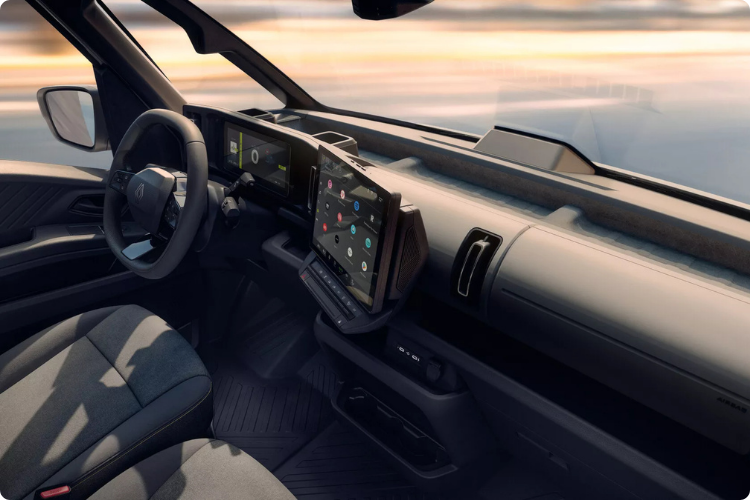
The redesigned cabin places a strong emphasis on driver comfort, connectivity and practicality, with a layout intended to provide a more car-like driving experience.
The dashboard features a digital instrument display alongside a 12.3-inch multimedia touchscreen. There is also 32 litres of interior storage, providing space for everyday work essentials, documents and personal belongings.
Advance models come with a 10-inch digital driver display, wireless smartphone connectivity, Google Play Store access and adaptive cruise control. Other standard equipment includes front, rear and side parking sensors, a reversing camera, automatic emergency braking and an electric parking brake with auto-hold.
LED adaptive headlights, manual air conditioning and hands-free access and starting are also included.
The higher-specification Extra trim adds further equipment, including automatic climate control, metallic paint, additional airbags and an upgraded driver’s seat with lumbar support and an armrest. Wireless smartphone charging and HERE navigation are also included.
Businesses can further tailor the vehicle with options such as a mobile office configuration, 230V power sockets and additional load-area equipment, helping to adapt the van to different working environments.
Renault Trafic E-Tech Electric UK Prices
The new Trafic E-Tech Electric will be available in several configurations, with prices varying according to battery size, body length and trim level.
The UK pricing structure includes a £5,000 Zero Emission Van Grant (ZEVG) deduction against the listed models.
| Model | Basic Price (Excl. VAT) | ZEV Grant | OTR Price (Including ZEVG) |
|---|---|---|---|
| L1H1 60kWh Advance Panel Van | £38,000 | £5,000 | £41,715 |
| L1H1 81kWh Advance Panel Van | £43,000 | £5,000 | £47,715 |
| L2H1 81kWh Advance Panel Van | £44,000 | £5,000 | £48,915 |
| L1H1 81kWh Extra Panel Van | £44,500 | £5,000 | £49,515 |
| L2H1 81kWh Extra Panel Van | £45,500 | £5,000 | £50,715 |
| L2H1 81kWh Advance Crew Van | £46,500 | £5,000 | £51,915 |
| L2H1 81kWh Extra Crew Van | £48,000 | £5,000 | Not provided |
Prices are based on Renault’s announced UK figures. Basic prices exclude VAT. The final OTR figure for the Extra Crew Van was not included in the published pricing information.
Businesses considering a new commercial vehicle can also compare the different business van leasing options available, including the potential benefits of spreading vehicle costs through a leasing agreement.
When assessing the financial implications of introducing electric vans, businesses should consider more than the initial vehicle price. Factors such as monthly leasing costs, electricity prices, maintenance, mileage requirements and vehicle downtime can all influence the overall cost of operating a fleet. Our guide to total cost of ownership for business vehicles explains the factors worth considering.
For companies planning to replace several diesel vehicles, introducing electric vans may require a wider review of vehicle suitability, charging arrangements and driver requirements. Our guide to electric van fleet transition explores the considerations involved in moving an existing commercial fleet towards electric vehicles.
Get ahead of the launch and register your interest in the new Renault Trafic E-Tech Electric. Contact our team to discuss pre-ordering options, specifications and business leasing requirements.
 Call our expert team on