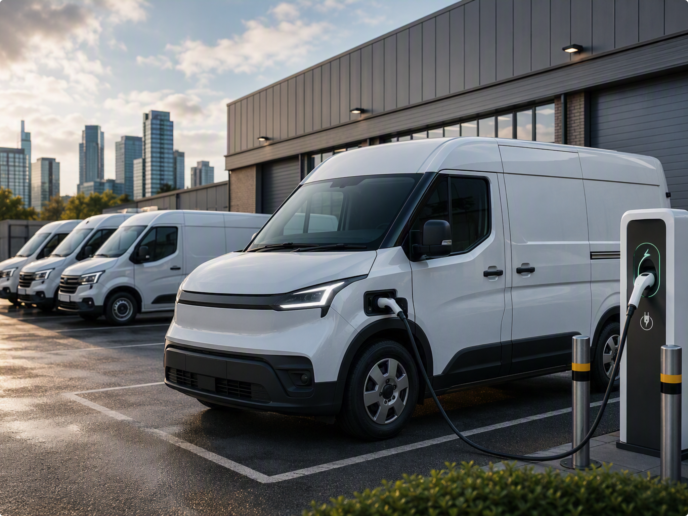
The Government’s review of the UK’s Zero Emission Vehicle (ZEV) Mandate has highlighted a growing challenge for commercial vehicle operators, with electric van adoption continuing to lag significantly behind the targets manufacturers are expected to achieve.
While electric car sales have continued to increase, the transition is proving considerably more difficult for the van market.
For businesses, moving from a diesel van to an electric alternative involves far more than simply choosing a different powertrain. Payload requirements, driving range, charging availability, purchase and leasing costs and the need to keep vehicles working throughout the day can all influence whether an electric van is suitable.
The Government’s decision to bring forward its ZEV Mandate review therefore comes at an important time for the commercial vehicle sector.
The review is considering whether the existing annual sales trajectory remains appropriate, but fleet operators and industry organisations are also highlighting the practical issues that need to be addressed if electric vans are to become a realistic option for more businesses.
Electric Van Adoption Remains Behind Government Targets
The ZEV Mandate requires manufacturers to increase the proportion of zero-emission vehicles they sell each year.
For vans, the target rises from 24% in 2026 to 34% in 2027, before increasing to 46% in 2028, 58% in 2029 and 70% in 2030. The long-term target is for 100% of new cars and vans to be zero-emission by 2035.
However, electric van registrations are currently well below the level required to meet the mandated trajectory.
This creates a significant challenge for manufacturers, particularly because the commercial vehicle market operates differently from the passenger car market.
An electric car may be suitable for a wide range of private journeys, but an electric van often has to perform a specific working role every day.
A tradesperson may need to carry heavy equipment. A delivery business may cover hundreds of miles in a day. A construction company may require a particular payload capacity, while a courier operator may need a vehicle that can remain on the road for long periods without extended charging stops.
These requirements make the transition more complicated.
Why Electric Vans Face Different Challenges
One of the biggest issues facing commercial vehicle operators is that vehicle suitability comes before electrification.
Businesses cannot simply switch to an electric van if the vehicle cannot complete the required work.
Payload is an important consideration. Carrying heavier loads can increase energy consumption and reduce the practical range of an electric van, potentially making certain models unsuitable for particular applications.
Range can also be more difficult to assess for commercial operators than private motorists.
A business needs to consider the vehicle’s typical mileage, traffic conditions, payload, weather, driving style and access to charging before deciding whether an electric van can reliably complete its daily routes.
For operators where vehicles are essential to generating revenue, reliability is particularly important.
A van that needs to stop for lengthy charging during the working day could potentially affect productivity, particularly where the vehicle has a demanding schedule.
This is why the Government’s ZEV review is particularly relevant to the commercial vehicle sector.
Charging Infrastructure Is Critical For Electric Van Fleets
Charging infrastructure remains one of the biggest factors influencing the viability of electric vans.
For businesses operating several vehicles, simply having access to public charge points may not be enough.
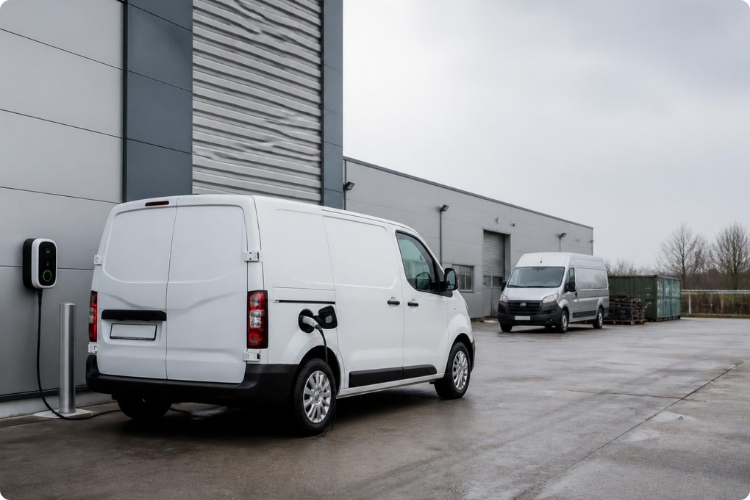
Many commercial operators need to charge vehicles overnight at their own premises, meaning businesses may require suitable depot infrastructure and sufficient electrical capacity.
The Government has recognised the importance of expanding the UK’s charging network, with investment continuing to support the rollout of additional infrastructure. It has also highlighted the importance of ensuring that charging provision develops ahead of growing EV demand.
For van operators, however, the requirements can be more complicated.
A business with five, ten or twenty electric vans returning to the same depot each evening could require significant charging capacity.
In some locations, upgrading the electricity supply or connecting a site to the grid can take considerable time and involve substantial costs.
Public charging can also present practical problems for larger commercial vehicles.
Not every charge point is conveniently located for vans, while limited space, access arrangements and charging speeds can all affect how useful the infrastructure is to working fleets.
Electric Van Costs Remain An Important Consideration
The financial case for electrification is another important factor.
Electric vans can offer lower energy and maintenance costs compared with conventional diesel vehicles, but businesses still need to consider the overall cost of running and financing the vehicle.
The initial vehicle cost, charging equipment, electricity supply upgrades, insurance and potential downtime all need to be considered when calculating the total cost of ownership.
For smaller businesses in particular, these additional considerations can make the decision to electrify more difficult.
Leasing can help businesses manage the initial financial commitment by spreading vehicle costs across an agreed contract period, but the vehicle still needs to meet the operational requirements of the business.
This means that electric van adoption is unlikely to be driven by targets alone.
Businesses need vehicles that work for their particular operations and a charging network capable of supporting them.
Changing The ZEV Target Will Not Solve Every Problem
The Government’s review could ultimately result in changes to the annual ZEV targets.
However, simply adjusting the percentage of electric vehicles manufacturers are expected to sell would not necessarily remove the practical barriers facing commercial operators.
The industry is therefore looking for a broader approach.
For electric vans to become more widely adopted, businesses need access to:
- Suitable electric vans for different applications
- Competitive vehicle costs
- Adequate payload and range
- Reliable workplace and depot charging
- Suitable public charging for commercial vehicles
- Faster and easier grid connections
- A strong second-hand electric van market
- Support for businesses making the transition
These factors are particularly important for businesses that cannot afford to compromise on vehicle availability or operational efficiency.
Fleets Still Have A Major Role To Play
Despite the challenges facing the commercial vehicle market, fleet operators remain an important part of the UK’s electrification strategy.
Businesses typically replace vehicles more frequently than private motorists, meaning fleet and company vehicle decisions can have a significant influence on the number of electric vehicles entering the UK market and the wider fleet electrification process.
The leasing sector also plays an important role because vehicles returned at the end of contracts can eventually enter the used market.
A stronger supply of used electric vehicles could help make EVs accessible to a wider range of drivers and businesses in the future.
This makes the development of a healthy second-hand electric vehicle market particularly important.
The transition therefore needs to be considered as a wider ecosystem rather than simply a question of how many new electric vehicles manufacturers sell each year.
The Electric Van Market Needs Greater Certainty
Another important issue for businesses is uncertainty.
Companies planning vehicle replacements, depot upgrades and charging installations often need to make decisions several years in advance.
A business may be considering whether to install charging infrastructure today for vehicles it intends to operate over the next three, four or five years.
Changes to Government policy can therefore influence investment decisions.
At the same time, maintaining clear long-term objectives gives manufacturers, charging companies and fleet operators greater visibility over the direction of the market.
The Government has confirmed that the review does not change the overall destination of the transition, although the wider ZEV Mandate debate continues.
The UK’s plans for the end of new petrol and diesel car sales in 2030 and the requirement for all new cars and vans to be zero-emission by 2035 remain in place.
The question is therefore increasingly about how the industry gets there.
Automotive Skills Will Also Need To Keep Pace
Electrification creates another challenge that extends beyond vehicles and infrastructure: skills.
As more electric cars and vans enter the UK fleet, technicians, mechanics and other automotive professionals need the appropriate training to work safely and effectively on high-voltage vehicles.
This includes dealerships, independent garages, fleet maintenance providers and roadside support businesses.
If the number of electric vehicles increases faster than the availability of suitably trained technicians, businesses could face additional difficulties when vehicles require servicing or repairs.
For commercial operators, access to maintenance and repair facilities is particularly important because vehicle downtime can directly affect business operations.
A successful transition therefore requires investment not only in vehicles and charging infrastructure but also in the people responsible for maintaining them.
What Does This Mean For UK Van Fleets?
The Government’s ZEV Mandate review creates some uncertainty around the precise pace of electric vehicle adoption, but businesses should not assume that electrification is being abandoned.
Instead, the latest developments highlight the importance of taking a practical approach to fleet electrification.
Businesses considering an electric van should assess their actual operating requirements rather than making a decision based solely on Government targets.
Important questions include:
- How many miles does the vehicle normally cover each day?
- What payload does it need to carry?
- Where does the vehicle return at the end of the working day?
- Can the business install workplace or depot charging?
- How long can vehicles realistically spend charging?
- Are suitable electric alternatives available?
- What happens if additional range is required?
- How does the electric vehicle compare financially with a diesel alternative?
For some businesses, an electric van may already be an excellent fit. Businesses can also compare the latest models and applications through our guide to the best small electric vans on the market.
For others, the current limitations around range, payload, charging or cost may mean that the timing of electrification needs to be considered more carefully.
A More Practical Path To Electric Vans
The Government’s review comes at a crucial stage in the UK’s transition to zero-emission transport.
Electric cars are becoming increasingly established, but the commercial vehicle sector faces a different set of challenges.
The gap between the Government’s van targets and actual electric van adoption demonstrates that simply increasing the required sales percentage will not necessarily make electrification easier for businesses.
The industry needs the right vehicles, charging infrastructure, grid capacity, skills and financial conditions to support the transition.
For UK businesses, the important message is that the direction of travel remains towards electrification, but the route to getting there may need to become more practical and flexible.
The Government’s consultation runs until 23 October 2026, after which changes to the ZEV Mandate could potentially alter the pace of the transition.
Until then, businesses should continue assessing electric vans on their individual operational and financial requirements while keeping a close eye on how the Government’s review develops.
 Call our expert team on