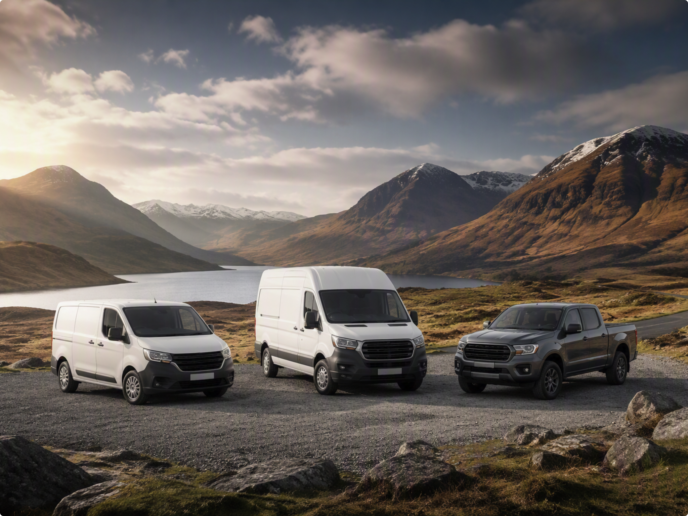
Scotland is home to businesses of all sizes, from tradespeople and construction companies in Glasgow and Edinburgh to agricultural businesses, contractors and service providers operating across the Highlands and rural communities. Whatever the industry, having the right commercial vehicle can make a significant difference to how efficiently a business operates.
Choosing a commercial vehicle in Scotland can also involve different considerations compared with operating in more densely populated parts of the UK. Longer journeys, rural roads, changing weather conditions, varying terrain and the distances between towns and cities can all influence which type of van or pickup is best suited to a business.
For some businesses, a compact van may be ideal for working in busy urban areas. Others may need a large panel van with substantial load space, while businesses operating in rural or agricultural environments may benefit from a capable pickup with four-wheel drive. Electric vans are also becoming an increasingly important option, particularly for businesses with predictable daily routes and access to convenient charging.
In this guide, we’ll look at the key factors Scottish businesses should consider when choosing a commercial vehicle, including van size, payload, mileage, electric vehicles, pickups, specialist conversions and commercial vehicle leasing.
Whether you’re based in Glasgow, Edinburgh, Aberdeen, Dundee or Inverness, or operate across more rural parts of Scotland, the right commercial vehicle should match the way your business actually works.
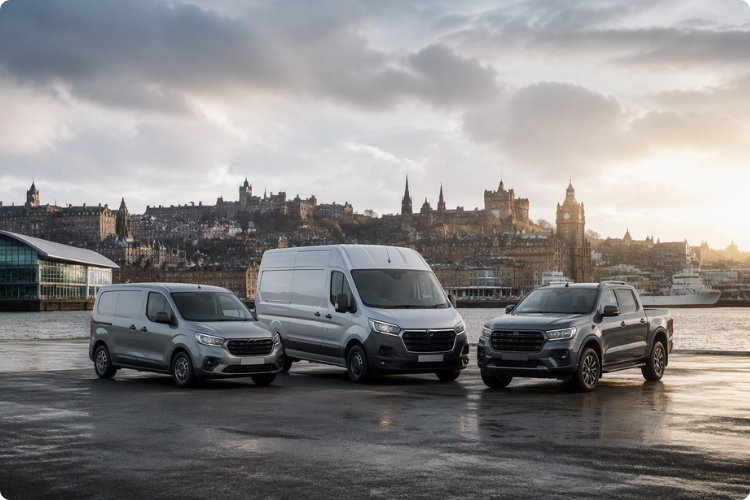
Why Commercial Vehicles Are So Important to Scottish Businesses
For many Scottish businesses, a commercial vehicle is much more than a way of getting from one job to the next. It can effectively form part of the business’s working environment, carrying tools, equipment, materials and stock while allowing employees to travel between customers and job sites.
A plumber may need enough room for tools, pipework and replacement parts. A builder could require a large van capable of carrying heavy materials and equipment. A gardener or landscaper may need space for machinery and tools, while an agricultural business may have very different requirements altogether, potentially making a pickup more suitable.
The geographical diversity of Scotland means that these requirements can vary considerably.
A business operating primarily within Glasgow may spend much of its working day navigating urban roads, traffic and restricted parking. A contractor working across the Highlands could cover significantly greater distances and encounter steep roads, rural tracks and changing weather conditions.
This means there isn’t one commercial vehicle that is automatically right for every Scottish business.
Instead, businesses should consider how far their vehicles travel, what they carry, where they operate and what conditions they regularly encounter before choosing a vehicle.
Commercial Vehicles for Urban Businesses in Scotland
Scotland’s major cities, including Glasgow, Edinburgh, Aberdeen and Dundee, are home to thousands of businesses that rely on commercial vehicles every day.
For businesses working primarily in urban environments, factors such as vehicle dimensions, manoeuvrability, fuel economy and ease of parking can be particularly important.
A smaller van can be an excellent choice for businesses that don’t need a huge amount of load space. Electric vans can also make sense for businesses with predictable daily mileage and regular access to charging, particularly where most journeys are relatively short and local.
Medium-sized vans can offer a useful balance for tradespeople who need additional load space without moving into the largest commercial vehicle categories.
For example, an electrician, plumber or service engineer may benefit from a medium van that provides enough room for tools and equipment while remaining practical for driving around towns and cities.
Commercial Vehicles for Rural and Remote Scottish Businesses
The requirements can be very different for businesses operating outside Scotland’s major urban centres.
Rural businesses may cover substantial distances between customers, suppliers and work sites. Roads can vary from well-maintained A-roads to narrow rural routes, while businesses working in agriculture, forestry, construction and land management may also need to access areas away from conventional roads.
In these circumstances, vehicle capability can become just as important as load capacity.
Businesses should consider:
- Long-distance capability for covering greater daily mileages.
- Payload capacity for transporting tools, materials and equipment.
- Ground clearance when travelling on uneven surfaces.
- Four-wheel drive where additional traction is required.
- Towing capacity for trailers and specialist equipment.
- Vehicle reliability when operating far from major towns and cities.
- Weather conditions that can make driving more challenging during the winter months.
For some rural businesses, a capable pickup can provide greater versatility than a conventional panel van. For others, a large van with plenty of load space will still be the most practical solution.
The important thing is to choose the vehicle around the job rather than simply selecting the largest or most powerful option available.
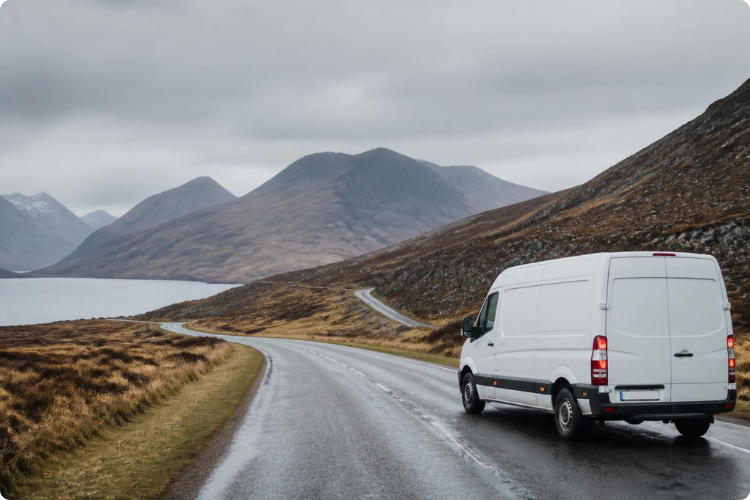
What Should You Consider When Choosing a Commercial Vehicle in Scotland?
Before choosing a van or pickup, Scottish businesses should look beyond the monthly payment or purchase price.
The most suitable commercial vehicle is one that can comfortably handle the business’s everyday requirements without providing more capability than is actually needed.
Several factors should be considered before making a decision.
How Much Mileage Will You Cover?
One of the first things to consider when choosing a commercial vehicle in Scotland is how many miles it will cover.
A business operating within one town or city may have very different requirements from a company sending vehicles across the Central Belt or covering large parts of the Highlands.
Annual mileage is particularly important when considering commercial vehicle leasing, as exceeding an agreed mileage allowance can result in additional charges at the end of a contract.
Before choosing a vehicle, consider how far your drivers typically travel each day and how that translates into annual mileage. It’s worth looking at previous fuel records, mileage reports or vehicle records rather than relying on an estimate.
For businesses covering high mileages, factors such as fuel economy, driving comfort, reliability and servicing requirements can become increasingly important.
Electric vans can also be an option for higher-mileage businesses, but the suitability will depend on the type of journeys being made, the vehicle’s real-world range and access to charging.
What Payload Do You Need?
Payload is another important consideration, particularly for businesses carrying heavy tools, materials or equipment.
The payload is the maximum weight a vehicle can safely carry, including passengers and anything stored in the load area. Choosing a vehicle based purely on its physical size can therefore be misleading.
A van might have plenty of room inside but still have insufficient payload for a particular business.
Builders, construction companies, landscapers and other trades should consider the combined weight of everything they regularly carry. This could include:
- Tools and equipment
- Building materials
- Machinery
- Spare parts
- Workbenches and storage systems
- Additional passengers
- Specialist equipment
If a vehicle is regularly operated close to its maximum payload, it may be worth considering a vehicle with a higher payload capacity.
Getting this right is important for both practicality and compliance, as commercial vehicles should never be overloaded.
How Much Load Space Do You Need?
Payload isn’t the only consideration when choosing the size of a commercial vehicle.
The physical dimensions of the load area are equally important.
A joiner, for example, may need to carry long lengths of timber or other materials, making load length particularly important. A mobile mechanic may need less overall space but require an organised storage system for tools and replacement parts.
A landscaping business could need sufficient room for lawnmowers, strimmers and other machinery, while a courier or delivery business may prioritise usable load volume.
When comparing vans, consider:
- Load length
- Load width
- Load height
- Rear and side door dimensions
- Payload
- Number of seats
- Internal storage options
- Ease of loading and unloading
It’s also worth thinking about how the vehicle will be used several years into the future. A van that is just large enough for today’s requirements could become restrictive if the business expands.
Will You Be Driving on Rural Roads?
For businesses operating across rural Scotland, the type of roads being travelled can have a major influence on vehicle choice.
Not every rural journey requires a four-wheel-drive vehicle. Many Scottish businesses will operate perfectly well with a conventional front- or rear-wheel-drive van.
However, businesses regularly travelling to farms, construction sites, forestry locations, remote properties or other difficult-to-access areas may need to consider the vehicle’s traction, ground clearance and overall capability.
Drivers should consider the types of roads they encounter regularly rather than simply focusing on the vehicle’s appearance or specification.
A commercial vehicle that spends most of its time on normal roads may not need the same specification as one regularly travelling across rough tracks or challenging terrain.
Do You Need Four-Wheel Drive?
Four-wheel drive can provide additional traction in situations where road surfaces are slippery, uneven or difficult to navigate.
This can be particularly useful for certain agricultural, construction, forestry and rural applications.
Pickups are often particularly attractive to businesses that need this combination of load-carrying ability, towing capability and off-road performance.
However, four-wheel drive isn’t automatically necessary simply because a business operates in Scotland.
For many businesses, a conventional two-wheel-drive van will provide everything required while potentially offering lower running costs and better fuel efficiency.
The key question is whether the additional capability will actually be used.
If a vehicle spends almost all of its time travelling between urban areas and established roads, paying extra for four-wheel drive may not provide much practical benefit.
Do You Need to Tow?
Towing requirements should also be considered before choosing a commercial vehicle.
A business may need to tow:
- Trailers
- Plant and machinery
- Landscaping equipment
- Caravans or specialist equipment
- Agricultural machinery
- Construction equipment
If towing forms a regular part of the working day, the vehicle’s approved towing capacity, engine performance, transmission and overall suitability should all be considered.
Pickups can be particularly useful for businesses that regularly combine load carrying with towing requirements.
However, a number of vans can also provide substantial towing capability, meaning a pickup isn’t necessarily the only option.
It’s important to consider the actual weight of the trailer and its contents, rather than simply looking at the maximum towing figure advertised for the vehicle.
What About Scottish Weather?
Weather is another factor that shouldn’t be overlooked.
Scotland can experience significant variations in weather throughout the year, with businesses potentially dealing with heavy rain, strong winds, ice, snow and difficult road conditions.
For businesses operating in exposed or rural areas, these conditions can affect journey times and road accessibility.
This doesn’t necessarily mean choosing a specialist vehicle. Instead, businesses should consider whether the vehicle is appropriately specified for their normal working environment.
Factors such as:
- Tyre choice
- Traction
- Ground clearance
- Driver visibility
- Heating and demisting
- Vehicle stability
- Winter preparation
can all contribute to making a commercial vehicle more practical during challenging conditions.
For electric vans, businesses should also understand how colder temperatures and heating requirements can affect energy consumption and real-world range.
Planning for the conditions a vehicle will actually encounter is more useful than choosing a vehicle based purely on its headline specifications.
Getting the Balance Right
Choosing a commercial vehicle for a Scottish business is ultimately about finding the right balance.
The largest van isn’t necessarily the best van, and the most powerful pickup isn’t necessarily the most cost-effective option.
A business should consider how the vehicle will actually be used throughout the year and choose a specification that provides the required capability without unnecessary expense.
For one business, that could mean a compact electric van used around Glasgow. For another, it could mean a large panel van covering long distances between Scottish towns. For a rural contractor, a capable pickup could be the better choice.
Once these requirements have been established, the next question is often whether a van or pickup is the better fit.
Van or Pickup: Which Is Best for a Scottish Business?
Vans and pickups can both be highly capable commercial vehicles, but they are designed around different priorities.
A van generally provides a secure, enclosed load area, making it particularly useful for businesses carrying tools, equipment, stock and materials.
A pickup, meanwhile, can offer greater versatility for businesses that need towing ability, additional traction or an open load bed.
The right choice depends heavily on the type of work being carried out.
When Does a Van Make More Sense?
A van is often the natural choice for trades and service businesses that need to carry tools and equipment securely.
Benefits can include:
- Large enclosed load areas
- Protection from the weather
- Secure storage for tools and equipment
- Excellent load accessibility
- Wide choice of sizes
- Specialist conversion options
- Good suitability for urban and motorway driving
For electricians, plumbers, builders, joiners, mobile mechanics and many other trades, a van can provide an excellent combination of practicality and everyday usability.
When Is a Pickup the Better Choice?
A pickup can be particularly useful where a business needs a combination of load carrying, towing and all-terrain capability.
Pickups can be well suited to:
- Agricultural businesses
- Construction companies
- Landscaping businesses
- Forestry work
- Rural contractors
- Businesses regularly towing trailers
- Businesses operating on difficult terrain
The open load bed can also be useful for carrying bulky or dirty equipment that may be impractical to transport inside a conventional van.
For businesses working across rural Scotland, a pickup can therefore provide a level of versatility that a standard panel van may not always offer.
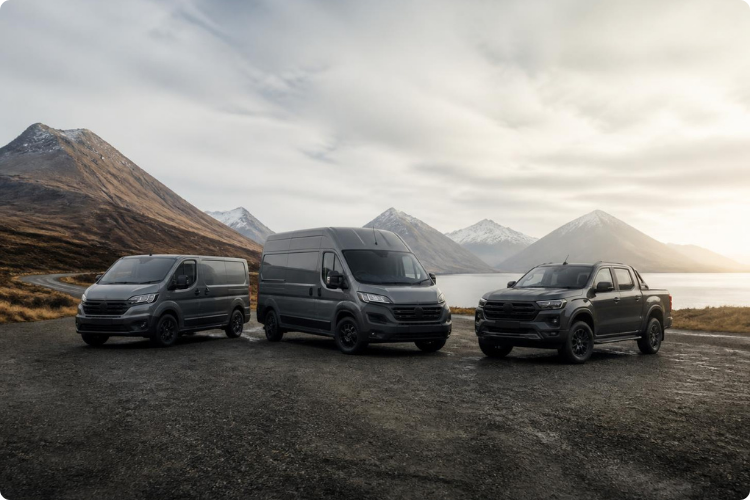
Van or Pickup: Which Is Right for Your Scottish Business?
There is no universal answer to whether a van or pickup is better for a Scottish business. Both can be excellent commercial vehicles, but they suit different types of work.
The right choice will depend on what you carry, where you travel, how much you tow and whether you need an enclosed load area or additional off-road capability.
| Requirement | Van | Pickup |
|---|---|---|
| Enclosed load space | Excellent | Limited |
| Protection from weather | Excellent | Good |
| Tool and equipment storage | Excellent | Good |
| Load length | Excellent | Good |
| Urban driving | Excellent | Good |
| Rural driving | Good | Excellent |
| Rough terrain | Limited–Good | Excellent |
| Towing | Good–Excellent | Excellent |
| Four-wheel drive availability | Some models | Widely available |
| Specialist conversions | Excellent | Good |
| Agricultural applications | Good | Excellent |
| Construction applications | Excellent | Excellent |
| Secure load carrying | Excellent | Good |
| Bulky or dirty equipment | Good | Excellent |
For many trades, a van will remain the most practical choice because it combines a secure load area with plenty of room for tools, equipment and materials.
For agricultural, rural and construction businesses that regularly tow or travel across difficult terrain, a pickup may provide greater versatility.
The important thing is to consider how the vehicle will be used every day rather than choosing based purely on appearance or vehicle size.
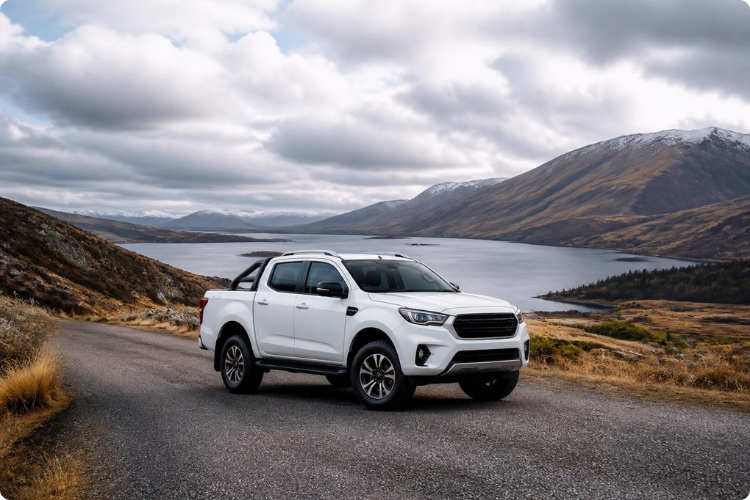
At Commercial Vehicle Contracts, we help businesses source the right commercial vehicle and provide bespoke vehicle conversions tailored to their operational requirements.
Our specialist conversion options include:
- Dropside conversions
- Tipper conversions
- Flatbed conversions
- Curtain-side bodies
- Luton bodies
- Shelving systems
- Internal storage solutions
- Load securing systems
- Non-slip flooring
- LED load area lighting
- Beacons and Light Bars
- Roof storage systems
- Tow bars and towing solutions
- Deadlocks, alarms and vehicle tracking
- Professional vehicle graphics
- Chapter 8 chevrons
The key advantage is that every modification is professionally completed before your vehicle is delivered, ensuring it is ready to support your operation from day one.
We manage the entire process, saving you the time and hassle of coordinating multiple suppliers while delivering a fully converted commercial vehicle tailored to your exact requirements.
The Best Types of Commercial Vehicles for Scottish Businesses
Once you understand what your business needs from a commercial vehicle, the next step is choosing the right type of vehicle.
Commercial vans are available in a wide range of sizes and configurations, from compact vans designed for urban work through to large panel vans capable of carrying substantial loads.
There are also pickups, electric vans and specialist converted vehicles to consider.
Small Vans
Small vans can be an excellent option for businesses that need a practical commercial vehicle without the size of a larger panel van.
They are particularly well suited to businesses operating in towns and cities, where manoeuvrability, parking and running costs can be important considerations.
Small vans can work particularly well for:
- Electricians
- Plumbers
- Couriers
- Delivery businesses
- Service engineers
- Maintenance companies
- Small businesses with limited equipment requirements
For a business operating predominantly around Glasgow, Edinburgh or another urban area, a compact van can provide plenty of practicality without taking up unnecessary road space.
They can also be easier to manoeuvre through narrow streets and busy areas than larger commercial vehicles.
However, businesses should carefully consider payload and load volume before choosing a small van. If you regularly carry bulky tools or equipment, moving up to a medium van may provide considerably more flexibility.
Medium Vans
Medium vans offer a useful middle ground between compact commercial vehicles and large panel vans.
They provide substantially more load space than small vans while remaining practical for everyday driving.
This makes them one of the most versatile choices for Scottish trades and businesses.
Medium vans can be particularly suitable for:
- Builders
- Electricians
- Plumbers
- Joiners
- Carpenters
- Landscapers
- Mobile mechanics
- Heating engineers
- Maintenance businesses
- Installation companies
A medium van can also be a good choice for businesses that travel between urban and rural locations, providing enough space for equipment without moving into the largest commercial vehicle category.
Models such as the Ford Transit Custom, Volkswagen Transporter and Mercedes-Benz Vito are examples of the type of medium vans that can suit a wide range of businesses.
The exact specification is important, however, as load volume, payload, wheelbase, roof height and engine or battery options can vary significantly.
Large Vans
Large vans are designed for businesses that need substantial load capacity.
They can be particularly useful for construction companies, delivery businesses, larger trades and businesses carrying bulky equipment or materials.
Large vans can provide:
- High load volumes
- Long load lengths
- Greater payload options
- Multiple wheelbase choices
- High-roof configurations
- Specialist conversion possibilities
For example, a business may need a large van to carry building materials, machinery or several days’ worth of equipment.
Large vans can also provide an excellent base for specialist conversions.
Depending on the business, this could include a workshop setup, shelving and racking, refrigeration equipment, a tipper body or a specialist body conversion.
Popular vehicles in this category include models such as the Volkswagen Crafter, Ford Transit, Mercedes-Benz Sprinter and Renault Master.
For Scottish businesses covering long distances, comfort and driving position should also be considered alongside load capacity.
A vehicle that spends several hours on the road every day needs to work well for the driver as well as the business.
Pickups
Pickups occupy an important position within the commercial vehicle market, particularly for businesses operating in rural Scotland.
Their combination of a separate load bed, towing capability and the availability of four-wheel drive makes them particularly attractive to certain industries.
Pickups can be well suited to:
- Farmers
- Agricultural contractors
- Builders
- Landscapers
- Forestry businesses
- Grounds maintenance companies
- Rural contractors
- Businesses requiring regular towing
For businesses working away from major roads, four-wheel drive can provide additional traction when conditions become difficult.
A pickup can also be useful where the business needs to carry dirty, wet or bulky equipment that doesn’t need to be stored inside an enclosed load area.
Models such as the Toyota Hilux, Ford Ranger and Isuzu D-Max are established choices in the UK pickup market.
However, businesses should also consider whether the open load bed provides enough protection for the equipment they carry. If tools and valuable equipment need to remain secure and protected from the weather, a van may be the better option.
Electric Vans
Electric vans are becoming an increasingly important part of the commercial vehicle market, and they can be particularly attractive to businesses operating predictable routes.
For Scottish businesses, the key question isn’t simply whether an electric van is available. It is whether an electric van fits the way the business operates.
An electric van could be particularly suitable where:
- Daily mileage is predictable
- The vehicle returns to a depot or home each evening
- Charging can be installed at the usual parking location
- Most journeys are local or regional
- The business wants to reduce reliance on diesel
- The vehicle is regularly used in urban areas
Businesses covering very long or unpredictable routes should consider charging requirements carefully before switching.
Electric vans can work extremely well for some Scottish businesses, while a diesel van may remain more practical for others.
The best choice should be based on the vehicle’s real-world operating requirements rather than simply its advertised range.
Specialist Commercial Vehicle Conversions
Not every business can operate effectively from a standard panel van.
Some require a vehicle to be specifically adapted around the work being carried out.
Commercial vehicle conversions can include:
- Tippers
- Dropsides
- Flatbeds
- Box bodies
- Luton bodies
- Curtain-side bodies
- Refrigerated vehicles
- Workshop conversions
- Specialist storage and racking
This can be particularly valuable for Scottish businesses working in construction, landscaping, deliveries, refrigeration, maintenance and other specialist industries.
Rather than adapting a business around a standard vehicle, a properly specified conversion allows the vehicle to be designed around the business.
For businesses operating across Scotland, this can also help reduce wasted time and improve productivity by ensuring equipment, materials and tools can be transported safely and efficiently.
Choosing a Commercial Vehicle for Different Scottish Industries
The right commercial vehicle will ultimately depend on the industry you’re operating in.
A vehicle that works perfectly for an electrician may be completely unsuitable for a farmer, while a large construction company may have very different requirements from a local delivery business.
Understanding how different industries use their vehicles can therefore make the decision considerably easier.
Builders and Construction Businesses
Construction businesses often need a combination of payload, load space and durability.
Depending on the work being carried out, a large panel van, tipper, dropside, flatbed or pickup may be suitable.
For businesses carrying tools and materials securely, an enclosed van can be particularly useful.
Where the work involves transporting loose materials, heavy equipment or waste, a specialist conversion such as a tipper or dropside may provide greater practicality.
For construction businesses operating on difficult sites, a pickup can also offer additional versatility.
Electricians
Electricians typically need a vehicle that provides secure and organised storage for tools, cables, components and equipment.
A small or medium van can often provide an excellent balance between load space and manoeuvrability.
Internal shelving and racking can also transform the load area into a mobile workshop, helping keep equipment organised and making it easier to find what is needed on site.
For electricians covering mainly urban or local routes, an electric van may also be worth considering.
Plumbers and Heating Engineers
Plumbers and heating engineers can have surprisingly demanding load requirements.
In addition to tools and replacement parts, vehicles may need to carry pipes, fittings, cylinders and other bulky equipment.
A medium van can provide a useful balance between load capacity and everyday practicality, while a larger van may be preferable for businesses carrying larger equipment or more extensive stock.
Landscapers and Gardeners
Landscaping and gardening businesses often need to transport a mixture of machinery, tools, materials and green waste.
Depending on the type of work, either a van or pickup can be suitable.
A van provides secure enclosed storage and protection from the weather, while a pickup can make it easier to carry dirty or bulky equipment and tow a trailer.
For businesses working on larger rural properties or difficult terrain, four-wheel drive may also be worth considering.
Farmers and Agricultural Businesses
Agricultural businesses can have some of the most varied commercial vehicle requirements.
A pickup is often a practical choice where a business needs:
- Four-wheel drive
- Towing capability
- An open load bed
- Rugged construction
- Additional ground clearance
- The ability to carry equipment across rural land
However, a van may still be the better choice where tools, parts or equipment need to be protected from the weather.
For larger agricultural operations, a combination of commercial vehicle types may provide the greatest flexibility.
Joiners and Carpenters
Joiners and carpenters need to pay particular attention to load length and internal dimensions.
Timber, tools and other materials can require considerable load space, making a medium or large van a popular choice.
A high-roof or long-wheelbase model can provide additional flexibility, although the business should always ensure the vehicle’s payload remains suitable for the loads being carried.
Internal racking and storage can also help keep valuable tools secure while making better use of the available load area.
Mobile Mechanics
Mobile mechanics effectively use their commercial vehicle as a workshop, so the layout of the load area can be just as important as the size of the vehicle.
A medium or large van can provide enough room for:
- Tool storage
- Diagnostic equipment
- Replacement parts
- Compressors
- Workbenches
- Shelving and racking
- Lighting and power equipment
A well-planned vehicle conversion can improve efficiency by keeping equipment organised and reducing the time spent searching for tools.
For mobile mechanics travelling across larger areas of Scotland, comfort, reliability and fuel economy can also become important considerations because the vehicle may spend a significant part of the day on the road.
Delivery and Courier Businesses
Delivery businesses often prioritise load volume and ease of access.
Depending on the size and type of deliveries being made, a medium or large van may provide the best balance between carrying capacity and operating costs.
Businesses should consider:
- Number of deliveries per day
- Average parcel size
- Load volume
- Fuel or energy efficiency
- Driver comfort
- Ease of loading and unloading
- Whether the vehicle operates mainly in towns or over longer regional routes
For businesses completing predictable local delivery rounds, an electric van may be particularly attractive where convenient charging is available.
For businesses covering long distances across Scotland, the suitability of an electric vehicle will depend on the route, charging opportunities and the vehicle’s real-world range.
Service and Maintenance Businesses
Businesses providing maintenance, installation or repair services often need a versatile commercial vehicle capable of carrying a broad range of tools and equipment.
A medium van is frequently a good fit because it provides enough load space for shelving and racking while remaining practical for everyday driving.
Examples include:
- Facilities maintenance
- HVAC engineers
- Security installers
- Telecommunications engineers
- Appliance repair businesses
- Property maintenance companies
The ability to organise the load area efficiently can often make a greater difference to productivity than simply choosing the largest vehicle available.
Matching the Vehicle to the Industry
While there is considerable overlap between the types of vehicles used by different industries, a few general patterns tend to emerge.
| Industry | Typical Vehicle Choice |
|---|---|
| Electricians | Small or medium van |
| Plumbers | Medium van |
| Builders | Medium or large van |
| Joiners and carpenters | Medium or large van |
| Landscapers | Medium/large van or pickup |
| Gardeners | Van or pickup |
| Farmers | Pickup |
| Mobile mechanics | Medium or large van |
| Delivery businesses | Medium or large van |
| Service engineers | Small or medium van |
These are only starting points, however.
The right vehicle should always be based on the business’s actual payload, mileage, equipment and operating environment.
Electric Commercial Vehicles in Scotland
Electric vans have become an increasingly important option for businesses across the UK, and Scotland is no exception.
For some businesses, switching to an electric commercial vehicle can significantly reduce day-to-day running costs and provide a practical alternative to diesel.
For others, particularly those covering long and unpredictable routes, a diesel van may still be the more suitable option.
The key is understanding whether an electric vehicle matches the way the business operates.
Are Electric Vans Suitable for Scotland?
Electric vans can work very well in Scotland, but suitability depends on the type of journeys being made.
A business operating mainly within Glasgow, Edinburgh, Dundee or Aberdeen may have very different requirements from a company travelling hundreds of miles across the Highlands.
Electric vans tend to be particularly well suited where:
- Daily mileage is relatively predictable
- The vehicle returns to the same location each evening
- Charging is available at home or the business premises
- Most journeys are local or regional
- Drivers can plan charging around their working day
For businesses with these operating patterns, an electric van can be a highly practical commercial vehicle.
Charging an Electric Van in Scotland
Charging is one of the most important factors when considering an electric commercial vehicle.
Businesses should think about where the vehicle is parked overnight and whether charging can be installed there.
For many businesses, charging at their own premises is often the simplest and most convenient solution.
Public charging can provide additional flexibility, but it is generally better viewed as a supplement to regular depot or workplace charging rather than the sole charging strategy.
Before choosing an electric van, businesses should consider:
- Where the vehicle is parked overnight
- Whether a charger can be installed
- How long the vehicle is stationary each day
- Whether drivers have access to charging during longer journeys
- The routes the vehicle regularly travels
Planning charging around the way the business operates is far more important than simply looking at the number of public charging points in an area.
Electric Vans for Urban Businesses
Urban businesses are often among the best candidates for electric vans.
Many trades and service companies spend the majority of their day travelling between local customers before returning to the same location each evening.
This predictable pattern makes charging easier to manage.
Electric vans can be particularly attractive for:
- Electricians
- Plumbers
- Service engineers
- Delivery businesses
- Maintenance companies
- Local trades
- Businesses operating mainly within towns and cities
Where daily mileage comfortably fits within the vehicle’s usable range, an electric van can be a straightforward option.
Electric Vans for Rural Businesses
Rural businesses need to consider electric vans differently.
Longer distances between customers, fewer convenient charging opportunities and more varied routes can all make planning more important.
This doesn’t mean electric vans are unsuitable for rural Scotland.
Many rural businesses have predictable routes and return to the same premises each evening, making overnight charging entirely practical.
The key questions are:
- How far does the vehicle travel each day?
- Does it return to the same location overnight?
- Can charging be installed there?
- Are there opportunities to charge during longer journeys if required?
Businesses that regularly exceed the vehicle’s practical range without convenient charging opportunities may find that a diesel van remains the more suitable option.
Does Cold Weather Affect Electric Van Range?
Cold weather can have an impact on the real-world range of electric vehicles.
Lower temperatures can reduce battery efficiency, while heating the cabin and windscreen also uses additional energy.
For businesses operating in Scotland during the winter months, this is worth taking into account when planning journeys.
Rather than relying solely on the manufacturer’s advertised range, businesses should allow a sensible margin between their normal daily mileage and the vehicle’s expected real-world range.
This approach helps ensure that the vehicle remains practical throughout the year, rather than only during favourable weather conditions.
Who Should Consider an Electric Van?
An electric commercial vehicle is likely to be a good fit for businesses that have:
- Predictable daily mileage
- Regular overnight parking
- Access to charging
- Mostly local or regional journeys
- A desire to reduce diesel use
- Operations centred around towns and cities
A diesel van may still be the better choice for businesses that:
- Cover very long distances every day
- Travel to remote locations without convenient charging
- Carry particularly heavy loads over extended routes
- Have highly unpredictable daily mileage
The best choice should be based on the business’s actual operating pattern rather than simply choosing between electric and diesel on principle.
For businesses considering the switch to electric vehicles, access to reliable and convenient charging remains a key factor when planning the transition to an electrified fleet.
Leasing providers can help simplify the process by advising on suitable vehicles, charging infrastructure and long-term fleet strategies, enabling businesses to make informed decisions based on their operational needs.
For commercial operators, keeping vehicles on the road is essential. Minimising downtime while maintaining efficiency and reliability is critical to supporting day-to-day business activities.
As charging technology continues to advance, faster charging times could make electric vans, cars and commercial vehicles an even more practical choice. This is especially beneficial for businesses with high-mileage drivers, multiple operating sites or time-sensitive delivery schedules, where reducing time spent charging can have a direct impact on productivity.
Planning for the Future
Even if an electric van isn’t the right choice for every vehicle in a fleet today, many Scottish businesses are beginning to consider where electric commercial vehicles could fit into their operations.
A business with several vans may find that some routes are ideal for electric vehicles while others continue to be better suited to diesel.
Looking at each vehicle’s mileage, route and charging opportunities individually can often produce a more practical transition than trying to replace an entire fleet at once.
Concerned about rising fuel costs? Discover why more UK businesses are turning to electric vehicle leasing to reduce running costs and protect themselves from unpredictable fuel prices in our guide: “Why Now Is the Perfect Time to Lease an Electric Vehicle.” Read the full article
Looking to install EV charging at your business? Find out how the UK Government is supporting the transition to electric vehicles with increased funding for home and workplace charging installations in our latest guide.
Still have questions about owning an electric vehicle? Find out what happens if an electric vehicle runs out of charge or breaks down, and how roadside assistance providers help get drivers back on the road.
Commercial Vehicle Leasing in Scotland
Once a business has identified the right type of commercial vehicle, the next decision is how to acquire it.
For many Scottish businesses, leasing can provide a straightforward way to access a new commercial vehicle while keeping costs predictable.
Rather than tying up capital in purchasing a vehicle outright, a lease can spread the cost across fixed monthly payments for an agreed contract period.
Why Lease a Commercial Vehicle?
Commercial vehicle leasing can offer several benefits to businesses, including:
- Fixed monthly payments
- Lower upfront costs than purchasing outright
- Access to newer vehicles
- A choice of contract lengths
- Mileage options to suit the business
- Maintenance packages on many agreements
- The ability to budget vehicle costs more easily
For businesses replacing vehicles regularly, leasing can also make it easier to move into newer models as contracts come to an end.
Can Businesses in Scotland Lease Commercial Vehicles?
Yes.
Businesses across Scotland can access commercial vehicle leasing, whether they are based in major cities or more rural areas.
The important factors are generally the business itself, the vehicle required and the terms of the finance agreement rather than whether the company is located in a particular part of the country.
This means businesses in places such as Glasgow, Edinburgh, Aberdeen, Dundee, Inverness, Perth, Stirling and elsewhere across Scotland can consider leasing a commercial vehicle that matches their requirements.
Can You Lease a Converted Commercial Vehicle?
Many businesses require more than a standard panel van.
Specialist commercial vehicles can also be leased, depending on the vehicle and finance arrangement.
Examples include:
- Tippers
- Dropsides
- Flatbeds
- Box bodies
- Luton bodies
- Curtain-side bodies
- Refrigerated vehicles
- Workshop conversions
- Specialist storage and racking
For businesses in construction, landscaping, food distribution and other specialist industries, this can provide access to a vehicle that is ready to work without needing to arrange the conversion separately.
Choosing the Right Leasing Agreement
When comparing commercial vehicle leasing options, businesses should look beyond the headline monthly payment.
It’s worth considering:
- Contract length
- Annual mileage allowance
- Initial rental
- Whether maintenance is included
- Any specialist equipment or conversion required
- The vehicle specification
- The business’s expected future needs
A slightly different contract structure can sometimes be a better fit for a business even if the monthly payment isn’t the lowest available.
The aim should be to choose an agreement that matches how the vehicle will actually be used throughout the term.
Commercial Vehicle Leasing for Businesses Across Scotland
Businesses across Scotland operate in very different environments, and those differences can influence the type of commercial vehicle they choose.
A company working mainly in central Glasgow may prioritise manoeuvrability and efficiency, while a business serving customers across Aberdeenshire or the Highlands may place greater importance on long-distance capability, payload and towing.
Commercial vehicle leasing can therefore suit a wide range of Scottish businesses, including those based in:
- Glasgow
- Edinburgh
- Aberdeen
- Dundee
- Inverness
- Perth
- Stirling
- Falkirk
- Paisley
- Livingston
- Ayr
- Dumfries
The key is not simply where the business is based, but how the vehicle will be used.
Businesses operating locally may benefit from smaller or electric vans, while those travelling between towns or working in rural areas may need larger vans or pickups with different capabilities.
By matching the vehicle to the operating environment, Scottish businesses can choose a commercial vehicle that is practical, cost-effective and suited to their everyday requirements.
How Much Does It Cost to Lease a Commercial Vehicle in Scotland?
One of the most common questions businesses have when considering a commercial vehicle is how much it will cost to lease.
There isn’t one standard price for commercial vehicle leasing in Scotland. Monthly payments can vary considerably depending on the vehicle, specification, contract and business requirements.
Rather than choosing a vehicle based purely on the lowest advertised monthly payment, businesses should consider the overall agreement and whether it provides the right vehicle and mileage for the job.
What Affects the Cost of Commercial Vehicle Leasing?
Several factors can influence the monthly cost of a commercial vehicle lease.
Vehicle Model and Specification
Different vans and pickups have significantly different prices, even within the same vehicle class.
A compact van will generally cost less to lease than a large high-roof panel van, while specialist vehicles and higher specifications can increase the monthly payment.
The specification can also make a difference.
Factors such as:
- Engine or electric powertrain
- Vehicle size
- Wheelbase
- Roof height
- Payload
- Trim level
- Additional equipment
- Specialist conversions
can all affect the overall cost.
Initial Rental
Many commercial vehicle leasing agreements involve an initial rental, sometimes referred to as an initial payment.
The initial rental can affect the monthly payments that follow.
Businesses should therefore compare agreements on their overall structure rather than looking only at the monthly figure.
Contract Length
The length of the agreement can also affect the monthly cost.
Commercial vehicle leases can be structured over different contract periods depending on the vehicle, finance product and business requirements.
A longer agreement may result in a lower monthly payment, but businesses should consider how long they actually want to keep the vehicle and whether their requirements could change during that period.
Annual Mileage
Mileage is particularly important for Scottish businesses because some operators may cover substantial distances.
A business working locally around one city could have very different mileage requirements from a contractor travelling between Glasgow, Edinburgh, Aberdeen and more rural locations.
When choosing a lease, businesses should estimate their annual mileage as accurately as possible.
Underestimating mileage simply to secure a lower monthly payment can result in additional costs if the agreed mileage is exceeded.
Maintenance
Maintenance can sometimes be included as part of a commercial vehicle leasing agreement.
For businesses that want greater predictability over vehicle running costs, a maintenance package can help reduce the need to budget separately for routine servicing and certain maintenance expenses.
Whether maintenance is worthwhile will depend on the business, vehicle and agreement.
Should You Choose the Cheapest Commercial Vehicle Lease?
Not necessarily.
The cheapest monthly payment may not provide the best overall value if the vehicle is too small, has insufficient payload or doesn’t suit the mileage being covered.
For example, choosing a smaller van because it has a lower monthly payment could prove counterproductive if the business regularly needs more load space.
Similarly, selecting an agreement with an unrealistically low mileage allowance could lead to additional costs later.
The better approach is to start with the business requirement and then find the most appropriate vehicle and agreement.
Commercial Vehicle Leasing for Scottish Fleets
The requirements become more complex when a business operates several commercial vehicles.
A fleet may include a mixture of small vans, medium vans, large vans, pickups and electric vehicles, depending on what each vehicle is used for.
Rather than giving every driver the same vehicle, fleet operators can consider assigning vehicles according to individual roles.
For businesses operating multiple vehicles, leasing can simplify fleet management.
Instead of managing a mixed fleet of vehicles at different ages and stages of ownership, companies can create a more structured replacement cycle.
Benefits can include:
- Easier vehicle planning
- More consistent fleet standards
- Reduced administration
- Improved reliability
- Better driver experience
A modern fleet is often easier to manage, easier to maintain and more cost-effective to operate. Many organisations now use a structured fleet lifecycle management strategy to ensure vehicles are replaced at the optimum time.
Choosing Vehicles for Different Drivers
A fleet could potentially include:
- Small vans for local service engineers
- Medium vans for tradespeople
- Large vans for teams carrying substantial equipment
- Pickups for rural or construction work
- Electric vans for predictable local routes
This approach can help businesses avoid paying for unnecessary vehicle capacity while ensuring that each driver has the equipment required to do their job effectively.
Fleet Replacement
Commercial vehicles are a major business expense, so replacing them at the right time is important.
Running older vehicles for too long can increase maintenance requirements and downtime, while replacing vehicles too frequently can increase overall expenditure.
A planned replacement strategy can help businesses manage:
- Vehicle age
- Mileage
- Maintenance
- Downtime
- Driver requirements
- Fuel or energy costs
- Future emissions requirements
Leasing can provide a structured replacement cycle, allowing businesses to plan vehicle changes around the end of existing agreements.
Managing an Electric Fleet
For businesses considering electric vans, fleet management becomes particularly important.
Not every vehicle needs to make the switch at the same time.
A business could identify which vehicles have the most suitable routes for electrification and introduce electric vans where they are most practical.
For example, local service vehicles returning to a depot every evening may be strong candidates for electrification, while vehicles travelling long and unpredictable routes may continue using diesel until the available technology and charging infrastructure better suit their requirements.
Maintenance and Downtime
A commercial vehicle isn’t generating value for a business when it is sitting unused.
For this reason, maintenance and vehicle reliability can be particularly important for fleets.
A planned maintenance package can help businesses manage servicing requirements and reduce the risk of unexpected vehicle downtime.
For businesses operating across Scotland, minimising downtime can be especially important where a replacement vehicle or repair facility may be some distance away.
How to Choose the Right Commercial Vehicle for Your Scottish Business
With so many different vans, pickups and powertrains available, choosing the right commercial vehicle can initially seem complicated.
The easiest approach is to work backwards from how the vehicle will actually be used.
Mostly Urban Driving?
If your business operates mainly within a town or city, consider a small or medium van.
An electric van could also be worth considering if daily mileage is predictable and convenient charging is available.
Covering Long Distances?
If your business regularly covers substantial distances, prioritise:
- Driving comfort
- Fuel or energy efficiency
- Range
- Reliability
- Payload
- Annual mileage
For some businesses, a diesel van may remain the most practical option. For others, a long-range electric vehicle could work well.
Carrying Heavy Equipment?
Pay particular attention to payload rather than simply load volume.
Calculate the approximate weight of the equipment and materials regularly carried and allow sufficient capacity for passengers and additional items.
Carrying Long or Bulky Items?
Look closely at the load dimensions.
Load length, width, height and door openings can all affect whether a vehicle will actually accommodate the equipment you need to transport.
A longer-wheelbase or high-roof van could provide a better solution than simply choosing a larger engine or higher trim level.
Working on Rural Sites?
Consider whether you genuinely need additional traction or ground clearance.
A conventional van may be perfectly adequate for many rural businesses.
However, if your work regularly involves farms, construction sites, forestry locations or rough tracks, a pickup or four-wheel-drive vehicle could provide additional capability.
Towing Regularly?
Look beyond the headline towing figure.
Consider the weight of the trailer and its normal load, how frequently towing takes place and the type of roads being travelled.
A pickup may be particularly suitable for regular towing, although several large vans can also offer substantial towing capability.
Need a Specialist Vehicle?
A standard panel van may not be the best solution if your business has specific requirements.
Consider whether a conversion such as a tipper, dropside, flatbed, Luton, box body or refrigerated vehicle would improve productivity.
The right commercial vehicle should make the job easier rather than forcing the business to work around the vehicle.
Commercial Vehicles for Scotland: A Simple Decision Guide
If you’re still unsure which direction to take, the following guide can provide a useful starting point.
Mostly urban driving
→ Consider a small or medium van.
Local routes with predictable mileage
→ Consider an electric van.
Regular trade work
→ Consider a medium van with appropriate storage.
Large equipment or materials
→ Consider a large van.
Heavy loads
→ Prioritise payload capacity.
Long materials
→ Consider a long-wheelbase van.
Agricultural work
→ Consider a pickup.
Regular towing
→ Consider a pickup or suitable large van.
Difficult terrain
→ Consider four-wheel drive where genuinely required.
Specialist work
→ Consider a commercial vehicle conversion.
Large fleet
→ Consider different vehicles for different operational roles.
The most important point is that there is no single “best commercial vehicle” for Scotland.
There is only the best commercial vehicle for the way your business operates.
Why Choosing the Right Commercial Vehicle Matters
A commercial vehicle is an important investment in the day-to-day operation of a business.
Choosing correctly can help a business transport equipment more efficiently, reduce unnecessary running costs and provide drivers with a vehicle that is suited to their working environment.
Choosing incorrectly can have the opposite effect.
A van that is too small can create loading problems. A vehicle with insufficient payload can restrict what you can carry. An electric van without a suitable charging strategy can create unnecessary disruption, while a large pickup may provide capability that an urban business simply doesn’t need.
Taking the time to understand your requirements before choosing a vehicle can therefore pay off throughout the entire contract.
Find the Right Commercial Vehicle for Your Scottish Business
From trades operating in Glasgow and Edinburgh to agricultural businesses in rural Scotland and contractors covering the Highlands, commercial vehicles play an important role in keeping businesses moving.
The right choice depends on much more than the badge on the front of the vehicle.
Mileage, payload, load space, terrain, towing requirements, charging access and the type of work being carried out should all be considered before choosing a van or pickup.
At Commercial Vehicle Contracts, we can help businesses compare commercial vehicles and find a leasing solution suited to their individual requirements.
Whether you’re looking for a small van, medium van, large panel van, electric commercial vehicle, pickup or specialist conversion, the right vehicle starts with understanding what your business needs from it.
Ready to find your next commercial vehicle? Get in touch with Commercial Vehicle Contracts to discuss your requirements and request a quote.
FAQs About Commercial Vehicles in Scotland
Yes. Businesses across Scotland can access commercial vehicle leasing, subject to the relevant finance provider’s criteria. The vehicle, contract structure, mileage and business requirements will all influence the available options.
There isn’t one van that is best for every Scottish business. A small van may be ideal for an urban service business, while a construction company may need a large panel van and a rural contractor could be better suited to a pickup.
Electric vans can be suitable for many Scottish businesses, particularly those with predictable daily mileage and access to convenient charging. Businesses covering long or unpredictable routes should carefully assess range and charging requirements before making the switch.
A four-wheel-drive pickup can be particularly useful for businesses working on difficult terrain, agricultural land or rural sites. However, not every rural business needs four-wheel drive, so the decision should be based on the conditions the vehicle regularly encounters.
The best choice depends on mileage, payload, route and charging access. A diesel van may remain suitable for businesses covering long and unpredictable distances, while some businesses with predictable routes could consider a long-range electric van.
Yes, depending on the vehicle and finance arrangement. Specialist commercial vehicles can include tippers, dropsides, flatbeds, box bodies, Lutons, curtain-side vehicles, refrigerated vans and other conversions.
Small businesses can consider commercial vehicle leasing, subject to finance provider criteria. The appropriate agreement will depend on the business, vehicle, expected mileage and individual circumstances.
There is no single price. Monthly costs depend on factors including the vehicle, specification, initial rental, contract length, mileage, maintenance and any specialist conversion required.
Yes. Businesses throughout Scotland can consider commercial vehicle leasing. The important considerations are the business’s requirements, the vehicle selected and the terms of the finance agreement.
It depends on the type of work. A large van can be ideal for businesses carrying substantial equipment, while a pickup may be more suitable where towing, four-wheel drive or an open load bed is required.
 Call our expert team on