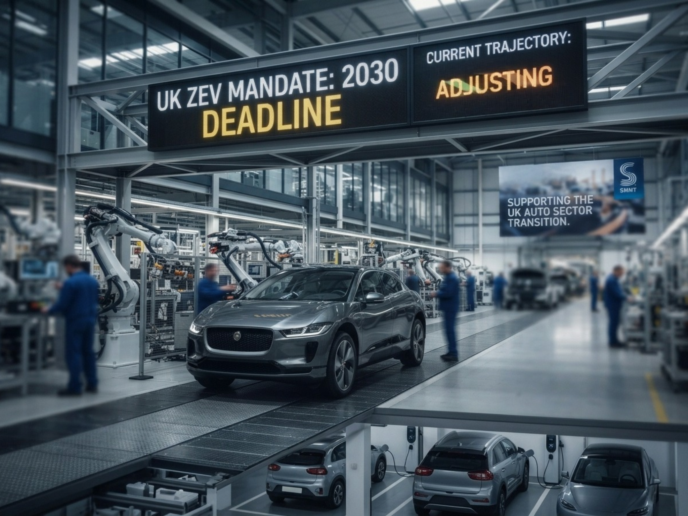
The UK Government is reportedly considering changes to its zero-emission vehicle (ZEV) mandate, potentially reducing the proportion of new cars manufacturers must sell as fully electric by 2030. The discussions come as vehicle manufacturers face mounting pressure to meet electrification targets while demand for electric vehicles continues to vary across different parts of the market.
Under the options reportedly being considered, the Government could reduce the 2030 target for fully electric car sales from 80% to 60%. Some manufacturers are understood to have pushed for a lower target of 50%, suggesting a continuing divide between the automotive industry’s concerns and the Government’s longer-term environmental ambitions.
No final decision has been announced, and the reported proposals should not be treated as confirmed policy.
The Government has launched an official review of the UK’s Zero Emission Vehicle (ZEV) mandate, inviting views on the current targets, compliance arrangements and possible changes to the policy. The consultation closes on 23 October 2026, and any reported proposals should be treated as provisional until the Government confirms its position.

What Could Change Under The ZEV Mandate?
The ZEV mandate requires vehicle manufacturers to increase the proportion of new cars and vans they sell that produce zero tailpipe emissions. Annual targets become progressively more demanding, with financial penalties potentially applying when manufacturers fall short of their obligations and cannot use other permitted compliance mechanisms.
The current framework requires 80% of new car sales to be zero-emission by 2030, rising to 100% by 2035. A lower interim target could give manufacturers more flexibility as they transition away from petrol and diesel vehicles.
The proposals follow ongoing industry pressure for a more achievable transition. CVC has previously examined the debate in its coverage of the UK’s ZEV mandate and electric vehicle targets, including the challenges manufacturers face as annual requirements increase.
However, any adjustment to the 2030 target would not automatically mean the planned end of new petrol and diesel-only car sales had been postponed. The Government has previously maintained that the 2030 phase-out would remain in place, alongside its longer-term ambition for all new cars to be zero-emission by 2035.
For motorists and businesses, this distinction matters. Changes to manufacturers’ sales obligations would not, by themselves, establish new rules governing which vehicles customers could buy after 2030.

Electric Van Targets Remain A Key Question
Although the latest discussion centres on car sales, the potential consequences for the commercial vehicle sector are less certain.
The ZEV mandate sets separate targets for vans, reflecting the additional practical considerations involved in electrifying commercial vehicles. Businesses must consider factors such as payload, daily mileage, charging access, vehicle downtime and whether an electric van can complete a full working day without disrupting operations.
The current targets are:
| Year | New car sales | New van sales |
|---|---|---|
| 2026 | 33% | 24% |
| 2027 | 38% | 34% |
| 2028 | 52% | 46% |
| 2029 | 66% | 58% |
| 2030 | 80% | 70% |
These figures represent the existing targets outlined in the reported coverage, not proposed revised figures.
It remains unclear whether any reduction to the car target would be accompanied by changes to the van requirements. That is a significant consideration for businesses that depend on commercial vehicles and need manufacturers to offer a suitable range of powertrains during the transition.
CVC has explored these practical issues in its guide to electric van adoption among UK business fleets, which considers the challenges businesses face when moving towards zero-emission commercial vehicles.
The latest registration figures underline the scale of the challenge. Battery-electric light commercial vehicles accounted for 9.6% of the van market in September 2026, reaching 10.8% across the year to date. Both figures remain well below the existing 24% target for 2026.
For operators whose vehicles carry heavy loads, cover long distances or work in areas with limited charging infrastructure, the transition may require more careful planning than simply replacing a diesel van with an electric equivalent.

Manufacturers Face Pressure As The Market Shifts
The review comes as electric vehicle registrations continue to grow, although stronger sales do not necessarily mean manufacturers are on course to meet their mandated targets.
According to the latest figures from the Society of Motor Manufacturers and Traders (SMMT), battery-electric car registrations increased by 36.3% in September, reaching 99,201 registrations and accounting for 28.3% of the market. Plug-in hybrid registrations also rose sharply, increasing by 55.5% to achieve a record 17% market share.
These figures show that electrified vehicles are becoming an increasingly important part of the new-car market. However, manufacturers must balance that growth against purchase prices, production costs, charging infrastructure and differing levels of demand among private motorists and fleet operators.
Businesses assessing their options can compare the practical differences in CVC’s guide to electric vans versus diesel vans, which is relevant when evaluating how well each powertrain suits a particular operation.
The Government has already adjusted the financial framework surrounding the mandate. Last year, the penalties for vehicles sold below the required ZEV levels were reduced by £3,000, leaving stated rates of £12,000 per car and £15,000 per van.
The current review could provide another opportunity to change how quickly manufacturers must increase electric vehicle sales. However, until the Government publishes its final decision, the extent of any changes remains uncertain.
Public Opinion On The Petrol And Diesel Phase-Out Remains Divided
The transition to zero-emission motoring continues to generate mixed reactions among UK drivers.
Research by Venson Automotive Solutions found that 42% of surveyed motorists believed the planned 2035 phase-out date for new combustion-engined vehicles should remain in place, while 41% believed it should not.
The findings illustrate the challenge facing policymakers as they seek to accelerate electric vehicle adoption while addressing concerns about affordability, charging availability and the suitability of different vehicles for everyday use.
For businesses, the decision can be more complex than choosing between two powertrains. A company operating a fleet of high-mileage vehicles may have very different requirements from a business whose vans make shorter journeys and return to a depot every evening.
Charging arrangements are particularly important when calculating the practical costs of electrification. CVC’s guide to how EV charging works for businesses explains the considerations involved in charging vehicles used for work, while its guide to the UK electric vehicle charging network provides further context on public charging provision.

What Does This Mean For Business Vehicle Fleets?
For businesses planning vehicle replacements, the reported review is another reason to monitor developments in UK electrification policy. However, there is no need to change an existing fleet strategy solely because a possible reduction in the ZEV mandate has been reported.
The outcome could influence which vehicles manufacturers prioritise, the availability of different powertrains and the incentives used to encourage electric vehicle adoption. Nevertheless, businesses should continue to plan around the rules currently in force until revised targets are formally confirmed.
Fleet managers should assess their requirements individually, taking account of:
- Daily mileage and journey patterns: whether vehicles can complete their usual routes within their available driving range.
- Payload and vehicle suitability: whether an electric model can carry the necessary equipment, goods or materials.
- Charging access: whether workplace, depot or home charging is practical for the drivers concerned.
- Whole-life costs: how leasing payments, energy or fuel, maintenance and charging infrastructure affect the overall budget.
- Replacement schedules: whether it makes sense to transition individual vehicles now or review the decision closer to their next renewal.
CVC’s fleet planning and leasing guide provides a useful starting point for businesses reviewing their vehicle requirements. For organisations managing several vehicles, fleet management solutions can also help bring vehicle planning, administration and ongoing fleet requirements together.
Leasing can give businesses the flexibility to compare available electric, hybrid, petrol and diesel vehicles against their operational needs. Reviewing options before a renewal date can also help avoid making decisions based on assumptions about future legislation that has not yet been confirmed.
Businesses considering their next commercial vehicle can explore CVC’s business van leasing options or read the UK guide to business van leasing for more information about the process and the factors to consider.
Electric Van Targets Could Have Wider Industry Implications
The unresolved question is whether the review will lead to revised electric van targets as well as changes to the car market.
A less demanding timetable could give manufacturers additional time to respond to differences in demand, vehicle capability and charging provision. Conversely, retaining ambitious targets would maintain pressure on manufacturers to expand their electric offerings and encourage greater adoption among businesses.
The commercial vehicle sector will be watching closely because manufacturers’ product strategies and fleet operators’ replacement decisions are closely connected. Any confirmed changes could affect the pace of the transition, but their practical impact will depend on the final targets and any accompanying measures.
For now, the existing requirements remain the relevant reference point. Businesses should continue evaluating electric vehicles on their individual merits, rather than assuming the review will either accelerate or delay the transition for every type of fleet.

 Call our expert team on