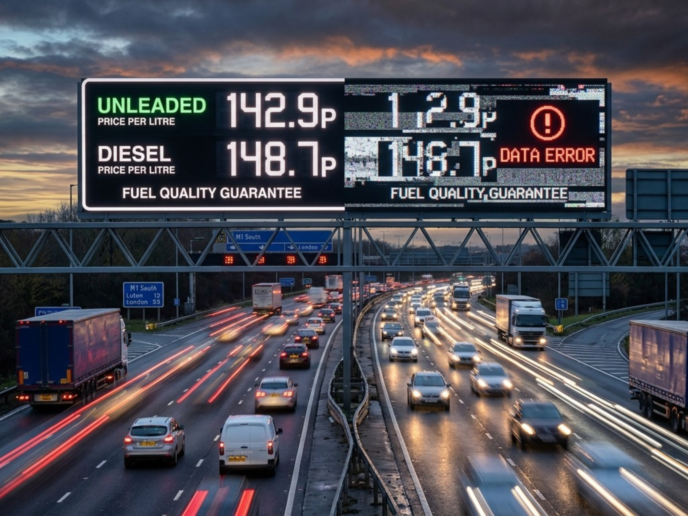
The Government’s £2 million Fuel Finder scheme was designed to help motorists find cheaper petrol and diesel, but concerns over inaccurate forecourt details and outdated prices have raised questions about how effectively it is delivering on that promise.
An investigation published by What Car? in July 2026 identified errors in the information supplied through the scheme, including incorrectly located filling stations, misclassified retailers and prices that had not been updated for days or weeks.
The findings matter to both private motorists and businesses operating cars and vans, particularly those looking to keep fuel expenditure under control. However, subsequent Government monitoring has reported improvements in participation and price reporting, meaning the scheme’s progress also needs to be considered.

How The Government’s Fuel Finder Scheme Works
Fuel Finder was introduced in February 2026 to improve transparency across the UK fuel market. Developed for the Department for Energy Security and Net Zero (DESNZ) by VE3 Global, it provides fuel-price and forecourt information to third-party websites and apps.
Rather than being a consumer-facing app itself, the service supplies data that other providers can use to help motorists compare prices before deciding where to refuel.
Under the Motor Fuel Price (Open Data) Regulations 2025, fuel retailers must register with the scheme and submit price changes within 30 minutes of a change occurring.
The objective is straightforward: make it easier for drivers to identify competitive prices and encourage retailers to compete more effectively.
However, the quality of the information is crucial. If a forecourt is incorrectly positioned on a map or its advertised price does not reflect what drivers will pay, the comparison may be of little practical value.
Investigation Identifies Errors In Forecourt Data
Data examined by PetrolPrices.com as part of the What Car? investigation highlighted several discrepancies among approximately 8,300 filling stations included in the Government’s data feed.
The reported problems included:
- Incorrect geographical coordinates: Nine filling stations had their latitude and longitude values reversed, potentially placing them in entirely incorrect locations.
- Misclassified retailers: A total of 825 stations were incorrectly labelled as supermarkets, while 81 supermarket fuel sites were not identified as such.
- Incorrect motorway classifications: Thirty-five forecourts were listed as being on motorways when they were not, while six motorway sites were not identified correctly.
- Inaccurate locations: Another 155 filling stations were recorded at least 500 metres from their actual positions.
These discrepancies could make it harder for motorists to identify suitable places to refuel and compare prices accurately.
Supermarket forecourts are often attractive to price-conscious drivers because they can offer competitive fuel prices. Motorway service stations, meanwhile, can be more expensive than alternatives away from major routes.
Incorrect classifications could therefore undermine comparisons, while inaccurate locations could make a forecourt difficult to find.
Clare Lafferty of PetrolPrices.com criticised the scheme’s implementation, arguing that engagement with the industry had been insufficient. She also warned that motorists could be disadvantaged in areas where fuel retailers were not regularly updating their information.
Outdated Fuel Prices Could Reduce Potential Savings
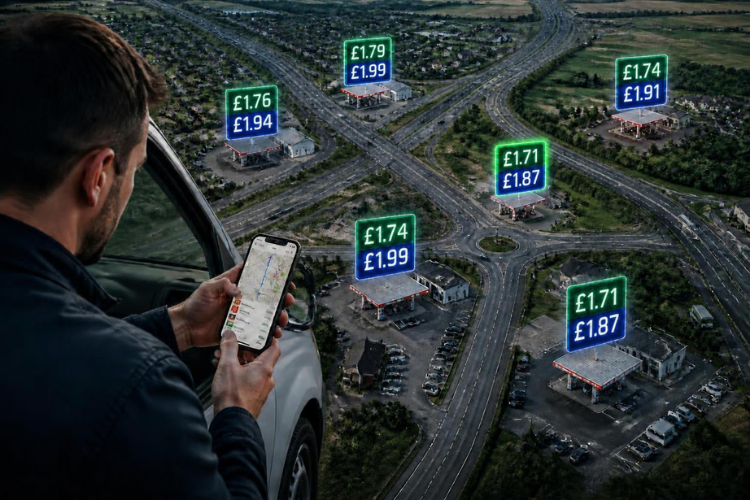
The investigation also raised concerns about the freshness of the prices supplied through Fuel Finder.
The scheme’s accuracy matters because fuel is a significant operating expense for many businesses. Recent rises in petrol and diesel prices have added further pressure to motorists and businesses trying to keep transport costs under control.
According to research reported by the Press Association, 1,751 filling stations had not updated their prices for more than seven days, while 96 had gone more than a month without submitting updated pricing information.
An unchanged price does not necessarily mean the information is incorrect. Fuel retailers may leave prices untouched for extended periods, particularly where local market conditions are relatively stable.
The difficulty is determining whether a price has been recently confirmed or simply has not been updated in the system.
Motorists can also use Google Maps fuel prices to compare prices at nearby stations, although checking when the information was last updated is important before making a detour.
Previous What Car? research estimated that motorists could potentially pay up to £260 more per year because of inaccurate fuel comparison information. That estimate was based on a scenario in which drivers paid around 8p per litre more than the advertised information suggested.
DESNZ disputed that assessment, stating that Fuel Finder could help households with a car save around £40 a year at the pump.
These are different estimates of the potential financial impact, rather than guaranteed savings or losses. Actual results depend on individual mileage, fuel consumption, local prices and the accuracy of the information available.
Changes To Price Reporting Created Further Concerns
The What Car? investigation also highlighted a change to how fuel prices were submitted to the system.
According to the report, VE3 Global changed its approach in March 2026, no longer allowing retailers to submit routine price confirmations every few hours when their prices had not changed. Instead, submissions were permitted when prices changed.
Previously, some retailers had resubmitted their prices regularly, even when the figures remained the same. This provided a clearer indication that the information had been checked recently.
Under the revised approach, a price could remain unchanged for an extended period without making it clear to consumers whether it had been reconfirmed.
The RAC welcomed the principle behind Fuel Finder but stressed that accurate forecourt details and up-to-date prices were essential to building motorists’ confidence.
Its head of policy, Simon Williams, also called for action to ensure retailers supplied the required information and that consumers could trust what they saw on comparison services.
Government Monitoring Reports Progress
The concerns raised by the July investigation should be considered alongside subsequent developments.
In an update published on 18 August 2026, the Competition and Markets Authority (CMA) reported that approximately 97% of UK petrol stations were registered with Fuel Finder, representing an estimated 99% of fuel sold in the country.
The CMA also reported that the overwhelming majority of sites had recorded a price update within the previous week. It acknowledged, however, that a lack of recent price changes does not automatically indicate a failure to report.
The regulator said it had sent 1,166 letters to retailers and issued compliance notices relating to 53 sites as part of its enforcement work.
These findings suggest that participation and reporting have progressed since the scheme’s introduction. Nevertheless, registration levels and recent price updates do not, by themselves, resolve every concern about incorrect locations, retailer classifications or the usefulness of the information presented to motorists.
DESNZ has maintained that Fuel Finder is an important part of its efforts to improve fuel-price transparency and help households manage motoring costs.
VE3 Global has also defended the service, stating that the overwhelming majority of price data is accurate and that identified anomalies are investigated with the relevant fuel retailers.
The key question is whether the information ultimately reaching consumers is sufficiently accurate, current and clear to support reliable comparisons.
What Fuel Finder Means For Businesses Running Cars And Vans
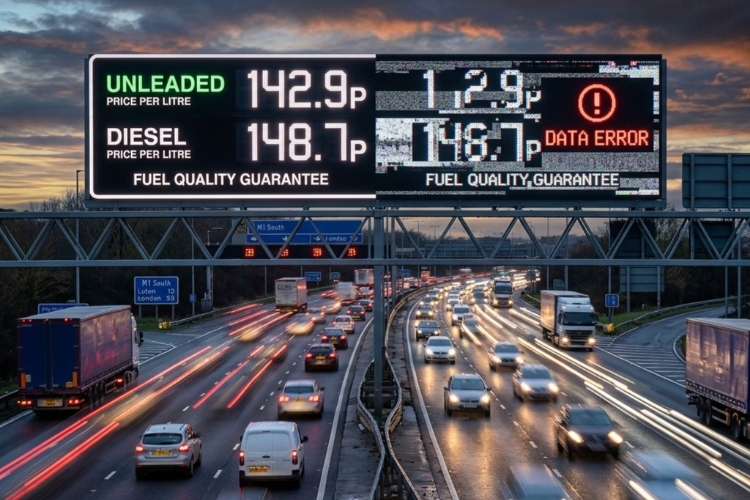
For businesses operating commercial vehicles, fuel remains a significant running cost. Reliable price comparisons can help drivers identify competitive forecourts, but the reported problems highlight the importance of considering the wider journey and operating budget.
There are several practical steps businesses can take to manage fuel expenditure.
- Check prices before travelling: Use comparison services as a guide, but remember that displayed prices may not reflect the latest changes at the pump.
- Consider the complete journey: Travelling further to save a few pence per litre may not be worthwhile once additional mileage, time and fuel consumption are taken into account.
- Review regular refuelling locations: Businesses operating established routes may be able to identify convenient, competitively priced forecourts through experience and regular checks.
- Assess fuel purchasing arrangements: Businesses with multiple vehicles may wish to consider whether fuel fleet cards could help manage purchases and monitor expenditure across their operations.
- Calculate actual fuel expenditure: A fuel cost calculator can help businesses estimate spending and assess the impact of mileage and fuel consumption.
- Review wider vehicle costs: Fuel should be considered alongside the overall cost of running a van, including maintenance, mileage, vehicle efficiency and leasing expenditure.
For businesses reviewing their vehicle budgets, fluctuating diesel prices are also a reason to compare conventional vans with electric alternatives. Our guide to electric vans versus diesel vans examines how mileage and charging arrangements can affect running costs.
Businesses should also consider the effect of changing fuel prices on their budgets. Our coverage of rising UK fuel prices provides further context on the pressures facing motorists and operators. Businesses looking to reduce fuel consumption can also compare the most fuel-efficient vans when choosing their next vehicle, particularly if they cover high annual mileages.
For fleet operators, fuel comparisons are just one part of the picture. A broader approach to fleet management solutions can help businesses assess fuel expenditure alongside other vehicle-related costs and operational requirements.
Businesses running company cars should also distinguish between forecourt prices and the rates used for business mileage claims. Our guide to HMRC advisory fuel rates explains the rates used when calculating eligible company-car fuel expenses.
Ultimately, the value of any fuel comparison service depends on whether it helps drivers make better-informed decisions. Fuel Finder has the potential to improve transparency, but maintaining accurate forecourt information and giving consumers confidence in the prices displayed remain essential to achieving that objective.
 Call our expert team on