UK businesses are delaying van replacement decisions as rising vehicle costs and uncertainty over future demand put pressure on operating budgets, according to the British Vehicle Rental and Leasing Association’s (BVRLA) October 2026 Leasing Outlook findings.
The report found that the number of leased vans fell by 0.4% year-on-year to 473,425 vehicles, even as the wider leased car and van fleet grew by 9.6%.
The figures highlight a growing divide between the car and commercial vehicle leasing markets. While demand for car leasing continues to expand, businesses operating vans are taking a more cautious approach, with some choosing to extend existing agreements rather than commit to replacement vehicles.
For tradespeople, delivery operators, contractors and businesses with specialist van requirements, the decision is increasingly about balancing immediate costs against the longer-term risks of keeping an ageing van on the road.

Why Are Businesses Delaying Van Replacement?
Several factors are influencing replacement decisions, including higher vehicle costs, uncertainty over future demand and the expense of leasing new vans. Wider economic conditions can add to these pressures, making inflation and business costs another consideration for operators planning their vehicle expenditure.
For businesses trying to control expenditure, a new lease may represent a considerably higher monthly commitment than an existing agreement. Our guide to rising van leasing costs explores the pressures affecting businesses considering their next vehicle. Smaller operators, in particular, may be reluctant to increase their fixed costs when they cannot be certain how much work they will have in the months ahead.
The transition towards electric commercial vehicles adds another consideration. Although electric vans may suit some businesses, purchase and leasing costs, charging access, driving distances and operational requirements all influence whether switching makes financial sense.
As a result, replacing a van is no longer simply about choosing a newer model. Businesses must consider affordability, vehicle suitability and the financial implications of committing to a new agreement.
Is Keeping An Older Van Actually Cheaper?
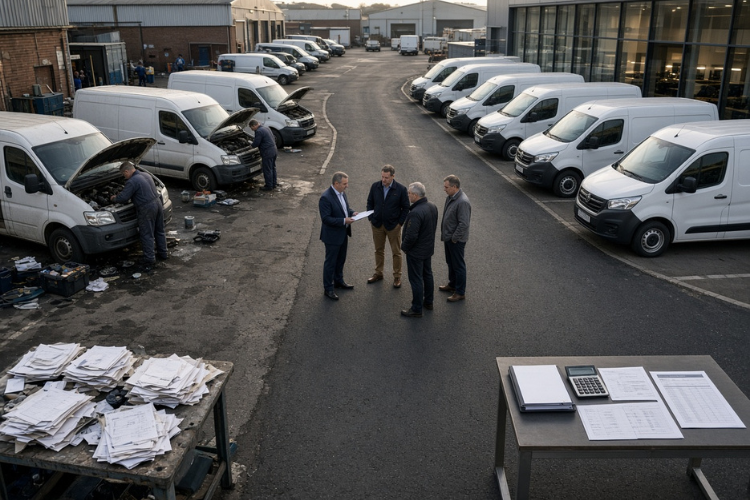
Delaying a replacement can help a business avoid an immediate increase in monthly vehicle costs. Businesses should also consider the total cost of running a van, including fuel, maintenance, insurance and other operating expenses, when deciding whether to keep an existing vehicle or replace it. However, those savings need to be weighed against potentially higher maintenance bills, unexpected repairs and operational disruption.
An older van that continues to perform reliably may remain a sensible option. But as mileage increases and components wear, the risk of unexpected downtime can become more significant.
For businesses where a van is essential to generating revenue, even a short period off the road can affect appointments, deliveries and customer commitments. Repair costs can also become harder to predict, making it more difficult to budget accurately.
This makes it important to assess the total cost of keeping a vehicle, rather than focusing solely on the cost of replacing it.
Businesses should consider:
- Maintenance and repairs: Are repair bills becoming more frequent or expensive?
- Reliability: Is the van dependable enough to meet daily business commitments?
- Downtime: What would it cost if the vehicle were unavailable for several days?
- Capacity: Does the existing van still meet the business’s payload, load space and operational requirements?
- Replacement costs: Would a new lease offer a manageable monthly commitment in exchange for greater cost predictability?
Fuel is another important consideration when comparing an older van with a replacement. Businesses can use our fuel cost calculator to estimate fuel expenditure and understand how running costs could affect their budget.
Businesses can also review CVC’s guide to vehicle maintenance to understand the importance of maintaining their vehicles, alongside its maintenance versus warranty guide when considering potential repair costs.
There is no universal answer. Keeping an existing van may be the right decision for one operator, while another could benefit from replacing a vehicle before maintenance and downtime costs escalate.
What Does This Mean For Van Leasing?
The latest figures suggest that businesses are becoming more cautious about committing to new van leases, rather than abandoning leasing altogether.
For operators considering a replacement, the challenge is finding an agreement that fits their budget without compromising the practical requirements of the business.
Leasing can provide a structured way to budget for vehicle use through agreed monthly rentals and a defined contract period. Depending on the agreement, businesses may also be able to include maintenance, helping them manage certain servicing and repair costs more predictably.
However, monthly rentals, mileage allowances, contract terms and maintenance arrangements vary. Businesses should compare the overall costs and conditions of an agreement against their current vehicle’s running costs before making a decision. For businesses operating several vehicles, fleet management and total cost of ownership can also help inform decisions about vehicle replacement, operating expenditure and fleet efficiency.
It is also worth reviewing whether the existing vehicle remains suitable for the work being carried out. A van that was the right choice several years ago may no longer offer the payload, load capacity or efficiency needed as the business changes.
CVC helps businesses compare commercial vehicle leasing options to find vehicles and agreements suited to their operational requirements. Businesses can explore business van leasing and learn more about the vehicle leasing process when reviewing their next steps.
For companies concerned about affordability, CVC’s Price Match Promise is another option to consider when comparing suitable leasing offers.
Should Businesses Consider Electric Vans?
Electric vans remain part of the wider commercial vehicle transition, but the decision to switch depends on more than the headline monthly rental.
Some businesses may find an electric van suitable for predictable routes, regular depot returns and operations where charging can be planned around working hours. Others may need the flexibility, range or refuelling convenience offered by diesel vehicles.
The right choice depends on how the vehicle will be used, the availability of charging, the distances covered and the overall cost of operation. Businesses operating in or travelling through regulated urban areas should also account for potential emissions-related charges. Our guide to Clean Air Zone charges explains the costs operators may need to consider when choosing and running a commercial vehicle.
Businesses should compare vehicles on their suitability for the job and their expected running costs, rather than assuming that switching powertrain will automatically reduce expenditure.
For companies not ready to transition, reviewing suitable diesel options may remain the most practical approach. Equally, operators with predictable mileage and access to charging may find that electric models are worth considering as part of their next replacement cycle.
Businesses considering the transition can read CVC’s guide to electric van leasing for businesses to explore some of the considerations involved.
The important point is to assess the options against actual business needs rather than making a decision based on headline rental prices alone.

 Call our expert team on