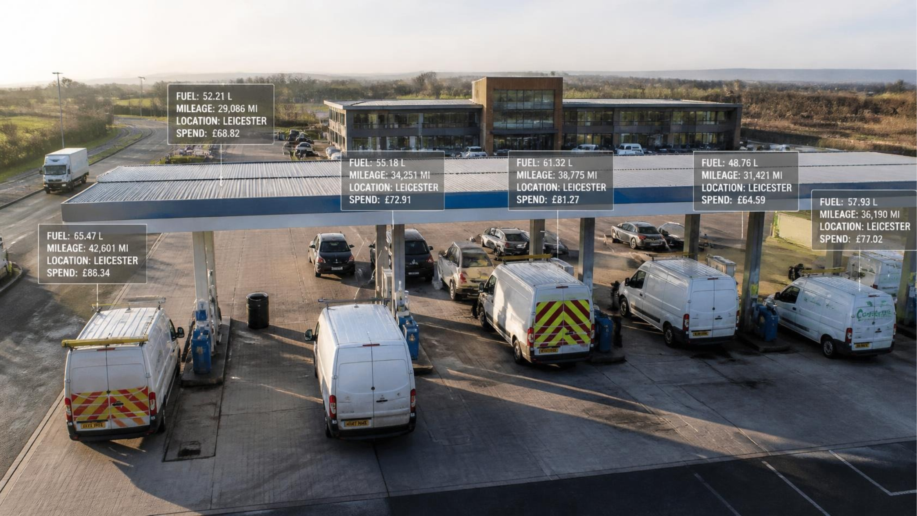
For businesses operating cars, vans or larger fleets, fuel is one of the most significant ongoing running costs.
When a company operates several vehicles, keeping track of where drivers are refuelling, how much fuel is being purchased and how much the fleet is spending can quickly become an administrative challenge.
This is where fuel fleet cards can help.
A fuel card gives businesses a dedicated way of paying for fuel while potentially providing additional information about each transaction. Depending on the provider and card selected, businesses may also benefit from fuel network access, spending controls, consolidated invoicing and detailed reporting.
But are fuel cards actually worthwhile?
For some businesses, they can make managing fuel considerably easier. For others, particularly very small fleets, paying directly at the pump may remain the simplest option.
The key is understanding how fuel cards work, what they cost and whether the benefits fit the way your vehicles are used.
What Is A Fuel Fleet Card?
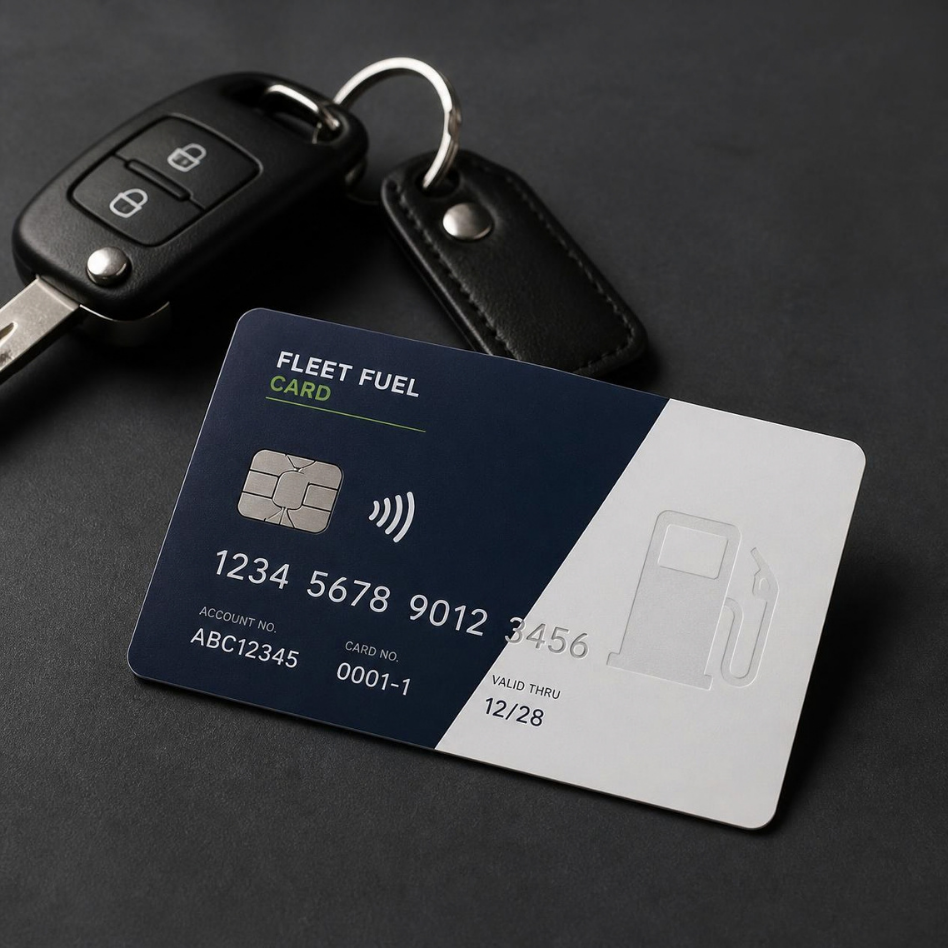
A fuel fleet card is a payment card designed specifically for businesses to purchase fuel for their vehicles.
Instead of drivers paying for fuel themselves and subsequently submitting receipts or expenses, the business provides an approved fuel card.
The card can generally be used at participating filling stations, although the exact network depends on the provider and type of card.
Some cards are associated with a particular fuel brand or network, while others provide access to a much wider selection of filling stations.
For businesses operating multiple vehicles, this can provide a more centralised way of managing fuel expenditure.
A fuel card may also record information such as the vehicle registration, date and location of the transaction, amount of fuel purchased and, depending on the system, mileage.
This means the card can provide more than just a payment method. It can become another source of information for managing a business fleet.

How Do Fuel Fleet Cards Work?
The basic process is relatively straightforward.
A business applies for a fuel card and then allocates cards to its drivers or vehicles.
When a driver needs to refuel, they use the card at an approved fuel station. Depending on the provider, they may need to enter information such as:
- Vehicle registration
- Mileage
- Driver identification
- PIN
- Fuel type
The transaction is then recorded by the fuel card provider.
Rather than the business collecting individual receipts from drivers, fuel purchases can be brought together through statements or consolidated invoices.
This can make it easier for the business to monitor spending and reconcile fuel costs.
Fuel Fleet Cards At A Glance
| Feature | Potential Benefit For Businesses |
|---|---|
| Dedicated fuel payment | Drivers don’t necessarily need to pay personally and claim expenses |
| Centralised billing | Multiple transactions can be brought together |
| Transaction records | Businesses can see when and where fuel was purchased |
| Driver controls | Some cards allow restrictions or spending limits |
| Mileage recording | Mileage can potentially be captured alongside fuel purchases |
| Fuel monitoring | Businesses can identify unusual spending or consumption |
| Reporting | Fleet managers can analyse fuel expenditure |
| Reduced administration | Less reliance on individual fuel receipts |
The precise features will vary between providers, so businesses should always check the terms and functionality of a particular fuel card.
Why Do Businesses Use Fuel Fleet Cards?
Fuel cards can be particularly useful when a business has several vehicles making regular journeys.
The main attraction isn’t necessarily the card itself. It is the additional control and information that can come with it.
For a growing fleet, this can make fuel expenditure easier to manage.
Easier Fuel Expense Management
One of the most obvious benefits is reducing the administration associated with fuel purchases.
Without a fuel card, drivers might pay for fuel using their own debit or credit cards, keep receipts and then submit expenses to the business.
For a small number of vehicles, that may not be particularly difficult.
As the fleet grows, however, the process can become increasingly time-consuming.
A centralised fuel-card system can bring transactions together, giving the business a clearer record of fuel expenditure.
This can be particularly useful alongside wider fleet management solutions, where businesses are already looking to improve control over vehicle running costs.
Better Visibility Of Fuel Spending
A fuel card can give businesses a clearer picture of where their fuel budget is going.
Depending on the provider, fleet managers may be able to see:
- Which vehicle purchased fuel
- When the purchase took place
- Where it took place
- How much fuel was purchased
- The amount spent
- Mileage at the time of purchase
This information can help identify trends across a fleet.
For example, if one van is consistently using significantly more fuel than similar vehicles, the business may want to investigate why.
The difference could be perfectly legitimate. The vehicle might carry heavier loads, operate in congested areas or cover significantly more miles.
However, the data provides a starting point for investigating fuel consumption.
Greater Control Over Driver Spending
Some fuel cards provide businesses with controls over how cards can be used.
Depending on the provider, businesses may be able to restrict fuel types, set spending limits or monitor transactions associated with individual vehicles or drivers.
This can give fleet managers greater control over company fuel expenditure.
For businesses with multiple drivers, that can be particularly valuable.
Potential Fuel Savings
Some fuel cards offer discounts, preferential pricing or access to particular fuel networks.
However, businesses shouldn’t automatically assume that using a fuel card will result in cheaper fuel.
The important figure is the overall cost of fuel to the business.
A card might advertise a discount against one price but still be more expensive than an alternative local forecourt.
This is why businesses should compare the actual cost per litre, card fees, transaction charges and network availability before making a decision.
Are Fuel Cards Cheaper Than Paying At The Pump?
Not necessarily.
This is one of the most important points to consider when looking at fuel fleet cards.
A fuel card may offer a discounted or fixed price, but that does not automatically make it cheaper than every alternative filling station.
Businesses should consider:
- The price per litre
- Card fees
- Transaction charges
- Any minimum monthly charges
- The fuel stations available
- Where drivers normally operate
- Whether drivers need to make a detour to use the card
- Local supermarket and independent forecourt prices
For a fleet travelling predictable routes, a particular fuel-card network may work extremely well.
For a fleet whose drivers operate across the country, wider network coverage may be more important than a small headline discount.
It is also worth considering how fuel prices are changing generally. For example, businesses can now use Google Maps to compare petrol and diesel prices across the UK at participating forecourts. This can help businesses compare the price available through a fuel-card network with other nearby options.
Can Fuel Cards Reduce Fleet Administration?
Potentially, yes.
This can be one of their biggest advantages.
Imagine a business operating 20 vans, with each vehicle refuelling several times a week.
Without a centralised system, the finance team could be dealing with hundreds of individual fuel transactions and receipts.
A fuel card can consolidate much of this information.
That doesn’t eliminate the need for financial controls, but it can make the process easier to manage.
This is particularly relevant for businesses already looking to reduce the administrative workload associated with their vehicles.
For larger fleets, technology can also bring vehicle information, servicing, mileage and other data together.
CVC’s Fleet Source UK (FSUK) customer portal is an example of how digital technology can give businesses greater visibility across the vehicle leasing lifecycle.
Fuel Cards And Fleet Management
Fuel is only one part of managing a business fleet.
Fleet managers may also need to consider:
- Vehicle acquisition
- Leasing and finance
- Maintenance
- Servicing
- Tyres
- MOTs
- Insurance
- Driver compliance
- Mileage
- Vehicle downtime
- Replacement planning
- Fuel or charging costs
- Vehicle suitability
This is why fuel-card data can be particularly useful when viewed as part of a wider fleet-management strategy.
For example, fuel consumption could be compared against mileage, vehicle type and operating requirements.
A fleet manager might then identify opportunities to replace particularly inefficient vehicles, change vehicle specifications or improve driver practices.
This can contribute towards reducing the total cost of operating the fleet, rather than simply reducing the price paid at the pump.
Can Fuel Cards Help Businesses Monitor Fuel Efficiency?
They can, although a fuel card doesn’t automatically make a vehicle more efficient.
The benefit comes from having better information.
Consider a fleet with several similar vans.
If one consistently consumes more fuel per mile than the others, the business has an opportunity to investigate the reason.
Possible explanations could include:
- Different types of journeys
- Heavier payloads
- Excessive idling
- Driving style
- Traffic conditions
- Vehicle condition
- Tyre pressures
- Maintenance requirements
- Different vehicle specifications
Regular vehicle maintenance can also play an important role in keeping vehicles operating efficiently.
A poorly maintained vehicle can potentially consume more fuel and may also be more likely to suffer downtime.
Fuel Cards For Van Fleets
Fuel cards can be particularly useful for businesses operating commercial vans.
Many van-based businesses rely on their vehicles every working day, whether they are used by tradespeople, engineers, couriers, delivery companies, contractors or service businesses.
For these businesses, fuel isn’t an occasional expense.
It is an ongoing operational cost.
That makes fuel management particularly important.
The right vehicle can also make a significant difference to operating costs.
Businesses comparing different vans may therefore want to consider fuel efficiency alongside payload, load volume, equipment requirements and purchase or leasing costs.
Our guide to the best MPG vans in the UK can be useful for businesses looking at fuel-efficient commercial vehicles.
Fuel Cards And Vehicle Maintenance
Fuel expenditure shouldn’t be considered in isolation.
A van that appears cheap to run because it uses relatively little fuel could still prove expensive if it experiences frequent maintenance issues or downtime.
Similarly, a vehicle that is used heavily may need a more comprehensive maintenance strategy.
Businesses should understand the difference between routine maintenance and warranty protection.
Our guide to Maintenance Vs Warranty: What’s the Difference? explains how these two areas differ and why both can matter when running business vehicles.
The Complete Guide To Van Warranty can also help businesses understand the protection available with their vehicle.
Do Fuel Cards Help With VAT?
VAT is another area businesses need to consider.
The fact that a business uses a fuel card does not automatically mean it can reclaim all the VAT associated with every fuel purchase.
VAT treatment depends on the circumstances, including how the vehicle and fuel are used and whether journeys are for business or private purposes.
For VAT-registered businesses, accurate records are therefore important.
A fuel card can make record-keeping easier because transactions are brought together and can provide an itemised record.
However, businesses should ensure they apply the correct VAT treatment to their individual circumstances.
If you’re looking at the wider tax implications of running a business vehicle, our guide to Benefit-In-Kind (BIK) Tax provides further information for company-car users.
Fuel Cards Vs A Business Credit Or Debit Card
A fuel fleet card isn’t the only way to manage business fuel expenditure.
Some businesses may instead provide drivers with a company credit or debit card.
There are advantages and disadvantages to both approaches.
| Fuel Fleet Card | Business Credit/Debit Card |
|---|---|
| Designed specifically for vehicle fuel | Designed for general business spending |
| May be restricted to fuel stations | Usually usable across a wider range of businesses |
| Fuel transactions can be linked to vehicles | May require additional expense tracking |
| Can provide fuel-specific reporting | Reporting varies by card provider |
| May offer specific fuel pricing | May offer cashback or other benefits |
| Can provide fuel-specific controls | General spending controls may be available |
For a business operating several vehicles, the additional reporting and controls available through a fuel card may make it preferable.
For a very small business, a company card could potentially be simpler.
There isn’t a single solution that works for every business.
What Should You Look For In A Fuel Fleet Card?
Before signing up, businesses should consider how their vehicles actually operate.
Fuel Station Coverage
Check whether the network covers the areas where your drivers regularly work.
A card isn’t particularly useful if drivers regularly have to leave their normal routes to find an approved filling station.
Fuel Pricing
Look beyond the advertised discount.
Compare the actual price available to your business against alternative forecourts in the areas where your vehicles operate.
Fees
Check whether there are:
- Card fees
- Transaction charges
- Account fees
- Minimum monthly charges
- Other administrative costs
These can affect the overall value of the card.
Reporting
Consider what information you’ll actually receive.
Useful information could include fuel volume, expenditure, vehicle registration, mileage and transaction location.
Driver Controls
If your business has several drivers, check whether you can control how cards are used.
Invoicing
Consolidated invoicing can be particularly valuable for larger fleets because it reduces the need to process individual fuel receipts.
EV Charging
The UK fleet market is increasingly made up of a mixture of petrol, diesel, hybrid and electric vehicles.
If you’re planning to introduce electric vans or cars, it may therefore be worth considering whether a provider can also support EV charging.
Our Electric Vehicle Charging Explained guide looks at the different charging options available to businesses.
Do Electric Vehicles Use Fuel Cards?
Electric vehicles obviously don’t use petrol or diesel, but the principle of fleet payment management still applies.
Businesses operating electric vans may need to manage charging costs rather than traditional fuel costs.
This could include:
- Workplace charging
- Home charging
- Public charging
- Employee reimbursement
- Charging-network payments
For mixed fleets, businesses may therefore want a solution capable of handling both conventional fuel and EV charging.
As electric vehicle adoption continues to grow, the distinction between a traditional fuel card and a broader fleet mobility payment solution is likely to become increasingly important.
Are Fuel Cards Suitable For Small Businesses?
Yes, but that doesn’t necessarily mean every small business needs one.
A business operating one van may find that paying for fuel using a business card is perfectly adequate.
Once a business operates several vehicles, however, the administrative benefits can become more attractive.
The decision should therefore be based on:
- Fleet size
- Annual mileage
- Fuel expenditure
- Number of drivers
- Typical routes
- Required reporting
- Card fees
- Fuel network coverage
The bigger and more geographically dispersed the fleet becomes, the more valuable centralised fuel management can potentially be.
Fuel Cards And Fleet Compliance
Fuel management is also connected to wider fleet compliance.
Businesses have responsibilities around keeping vehicles safe, roadworthy and properly maintained.
This includes ensuring vehicles are maintained appropriately and that drivers understand their responsibilities.
For businesses operating commercial vehicles, our RHA Van Standard guide provides useful information on standards designed to support safer and more consistent van operations.
Businesses operating vehicles in urban areas should also consider the impact of environmental restrictions.
Our Complete 2026 Guide To ULEZ, Clean Air Zones And Low Emission Zones explains the UK’s major emission-zone rules, charges and compliance considerations.
Fuel type can have a direct effect on the cost of operating vehicles in these areas.
Fuel Cards And Diesel Vans
For businesses still operating diesel vans, fuel management remains particularly important.
Modern diesel vehicles are designed to meet increasingly strict emissions standards and incorporate systems such as Diesel Particulate Filters and, in many cases, AdBlue.
Businesses should therefore consider more than simply the price of diesel.
Our guides to Diesel Particulate Filters and Diesel Exhaust Fluid (AdBlue) explain two important systems that many modern diesel van operators need to understand.
This is another reason why calculating the true cost of running a vehicle requires more than looking at its fuel price alone.
Are Fuel Fleet Cards Worth It?
For many businesses, they can be.
However, the biggest benefit isn’t necessarily saving a specific number of pence per litre.
It is the combination of control, visibility, reporting and reduced administration.
A small business operating a single vehicle may not gain much from a dedicated fuel-card system.
For a business operating several vans, however, having fuel purchases recorded centrally can make it much easier to understand where money is being spent and how individual vehicles are performing.
The most important thing is to compare the complete cost of the card rather than being influenced by a headline fuel discount.
A good fuel card should fit the way your fleet actually operates.
How Fuel Cards Fit Into A Wider Fleet Strategy
Fuel is just one component of the overall cost of operating a business vehicle.
The vehicle itself, finance arrangement, maintenance, insurance, taxation, depreciation, downtime and suitability for the job can all influence the true cost of running a fleet.
That is why businesses should consider fuel cards as one part of a wider fleet strategy rather than a standalone cost-saving measure.
Choosing vehicles that are appropriate for their workload can be equally important.
A compact van may be ideal for an urban delivery business, while a larger van may be necessary for a tradesperson carrying heavy equipment. An electric van could make financial sense for a business with predictable daily mileage and access to suitable charging infrastructure, while diesel may remain more appropriate for certain high-mileage operations.
The key is to look at the fleet as a whole.

 Call our expert team on