HMRC has introduced its latest Advisory Fuel Rates (AFRs), with changes to several petrol, diesel and LPG reimbursement rates coming into effect from 1 September 2026.
The updated rates determine how much employers can reimburse employees for business mileage in company cars without the payment normally being treated as taxable income.
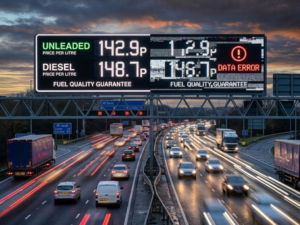
The latest changes come as fuel prices remain relatively high, with petrol and diesel costs continuing to put pressure on business motoring budgets.
For September 2026, HMRC has increased the rate for larger petrol engines, while reducing the rates for some diesel and LPG vehicles. Rates for smaller petrol and diesel engines remain unchanged.
There has also been no change to the Advisory Electric Rate (AER), with the reimbursement rates for both home and public charging remaining at their existing levels.
What Are HMRC Advisory Fuel Rates?
Advisory Fuel Rates are mileage rates published by HMRC for employers using company cars.
They are designed to provide a straightforward way for businesses to reimburse employees for fuel or electricity used when making business journeys in company vehicles.
The rates vary depending on the vehicle’s fuel type and, for petrol, diesel and LPG vehicles, its engine size.
Businesses can use the HMRC rates when calculating mileage payments or when employees repay their employer for private mileage.
The rates are advisory rather than compulsory, meaning employers can choose to use their own calculations where they can demonstrate that the actual cost of fuel or electricity is higher.

New Petrol Advisory Fuel Rates
The petrol AFR for vehicles with engines of up to 1,400cc remains unchanged at 14p per mile.
Vehicles with petrol engines between 1,401cc and 2,000cc also retain their existing rate of 17p per mile.
However, the rate for larger petrol engines has increased.
For petrol company cars with engines above 2,000cc, the AFR rises from 26p to 27p per mile from 1 September 2026.
Petrol AFRs From September 2026
| Engine Size | AFR |
|---|---|
| Up to 1,400cc | 14p per mile |
| 1,401cc to 2,000cc | 17p per mile |
| Over 2,000cc | 27p per mile |
For businesses operating larger petrol-powered company cars, the increase provides a slightly higher reimbursement allowance for eligible business mileage.
Diesel AFRs Reduced For Larger Engines
The latest HMRC update goes in the opposite direction for some diesel vehicles.
The AFR for diesel company cars with engines between 1,601cc and 2,000cc has fallen from 17p to 16p per mile.
For diesel engines above 2,000cc, the rate has also been reduced, falling from 23p to 22p per mile.
The smallest diesel engine category remains unchanged at 15p per mile.
Diesel AFRs From September 2026
| Engine Size | AFR |
|---|---|
| Up to 1,600cc | 15p per mile |
| 1,601cc to 2,000cc | 16p per mile |
| Over 2,000cc | 22p per mile |
The reductions mean businesses using eligible diesel company cars may need to review their mileage reimbursement calculations to ensure they are using the latest rates.
LPG Rates Also Change
There has been one change to the LPG Advisory Fuel Rates.
The rates for LPG vehicles with engines up to 1,400cc and between 1,401cc and 2,000cc remain at 11p and 13p per mile respectively.
For LPG vehicles with engines above 2,000cc, however, the rate has been reduced from 21p to 20p per mile.
LPG AFRs From September 2026
| Engine Size | AFR |
|---|---|
| Up to 1,400cc | 11p per mile |
| 1,401cc to 2,000cc | 13p per mile |
| Over 2,000cc | 20p per mile |
HMRC Electric Car Mileage Rate Remains Unchanged
There has been no change to the Advisory Electric Rate for the latest quarter.
HMRC continues to distinguish between electricity charged at home and electricity obtained through public charging networks.
The rate for home charging remains at 7p per mile, while the rate for public charging remains at 15p per mile.
Advisory Electric Rates From September 2026
| Charging Location | Advisory Electric Rate |
|---|---|
| Home charging | 7p per mile |
| Public charging | 15p per mile |
The different rates reflect the substantially higher cost of using public charging infrastructure compared with charging an electric vehicle at home.
HMRC’s calculation for the 7p home-charging rate uses an electricity cost of 24.47p per kWh, together with an assumed vehicle efficiency figure.
The public charging calculation uses an electricity cost of 54p per kWh.
Can Businesses Pay More Than The Advisory Electric Rate?
Yes.
The Advisory Electric Rate is intended to provide a standard reimbursement figure, but it does not necessarily represent the exact electricity cost experienced by every driver.
This is particularly relevant when an employee has to rely on more expensive public charging infrastructure.
Where an employer can demonstrate that the actual electricity cost per mile is higher than the relevant advisory rate, a higher reimbursement amount can be used.
Businesses should retain appropriate evidence to support the calculation.
This can be particularly important for drivers covering significant business mileage in electric company cars, where charging costs can vary considerably depending on where and how the vehicle is charged.
What About Hybrid Company Cars?
Hybrid vehicles are treated as either petrol or diesel vehicles for the purposes of HMRC’s Advisory Fuel Rates.
This means the applicable AFR is determined according to whether the hybrid is petrol- or diesel-powered and the relevant engine-size category.
Plug-in hybrid vehicles do not have a separate AFR category within the standard petrol and diesel tables.
Why Do HMRC Change The Rates?
HMRC reviews its Advisory Fuel Rates periodically to reflect changes in fuel and electricity costs.
As energy prices fluctuate, the cost of operating a company car can change considerably.
The latest update demonstrates this clearly.
While the petrol rate for larger engines has increased, diesel rates for medium and larger engines have fallen. LPG rates have also been reduced for the largest engine category.
For fleet managers, these changes highlight the importance of checking the current HMRC rates rather than relying on previous mileage reimbursement figures.
What Does This Mean For UK Businesses?
For most businesses, the changes are relatively small on a per-mile basis. However, the impact can become more noticeable across a larger fleet or where employees regularly undertake substantial business mileage.
For example, a difference of 1p per mile may appear insignificant for an individual journey. Across tens of thousands of business miles, however, the difference can add up.
Businesses operating mixed fleets should therefore make sure their mileage policies account for the correct rate for each vehicle.
This is particularly important as fleets increasingly contain a combination of petrol, diesel, hybrid and electric vehicles.
The continued separation between home and public charging rates also highlights one of the practical considerations of running electric company cars.
While EV running costs can be attractive, the cost of charging can vary significantly depending on where the vehicle is plugged in.
Electric Vehicles Are Becoming A Bigger Part Of Business Fleets
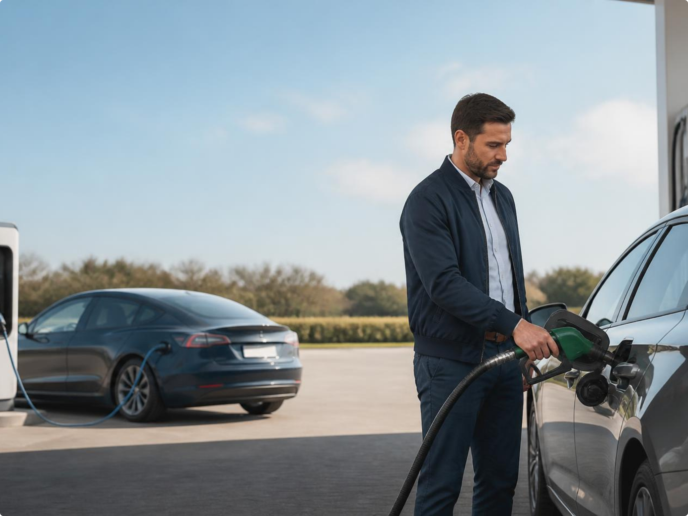
The latest electric reimbursement rates come at a time when electric vehicles are becoming increasingly common within company and business fleets.
Improvements in battery technology, vehicle range and charging infrastructure have made electric cars a much more practical option for many businesses.
For some drivers, concerns have shifted away from whether an EV has enough range and towards the practicalities of charging.
Access to reliable public chargers, charging speeds and the cost of electricity can all influence the real-world running costs of an electric company car.
For businesses considering electrification, these factors need to be considered alongside the vehicle’s lease cost, expected mileage, charging arrangements and tax position.
Businesses Should Review Their Mileage Policies
The September 2026 AFR changes provide a useful reminder for businesses to review their company-car and mileage policies regularly.
Employers should check that the rates being used for petrol, diesel and LPG company cars are up to date and that the correct Advisory Electric Rate is being applied to electric vehicles.
Where a business chooses to reimburse more than the relevant advisory rate, it should ensure that it has appropriate evidence to support the higher amount.
Keeping mileage policies aligned with the latest HMRC guidance can help businesses avoid unnecessary administration while ensuring employees are reimbursed appropriately for business travel.

 Call our expert team on
 Drop us a message