The UK’s long-running diesel emissions litigation has taken another significant turn after the High Court refused claimants permission to appeal a ruling that largely found in favour of major car manufacturers.
The decision follows one of the largest group litigation cases ever brought before the English courts, involving around 1.6 million claimants and allegations that diesel vehicles were fitted with prohibited “defeat devices” that affected the operation of their emissions control systems.
The latest development follows a major judgment handed down by the High Court in July 2026 after a 13-week trial involving 20 representative vehicles from Mercedes-Benz, Ford, Nissan, Renault and Stellantis-owned Peugeot and Citroën.
While the July judgment rejected the majority of the allegations, the court did find that three of the 20 representative vehicles contained prohibited defeat devices.
The claimants have now been refused permission to appeal by the High Court. However, they can still apply directly to the Court of Appeal if they want to continue challenging the July ruling.
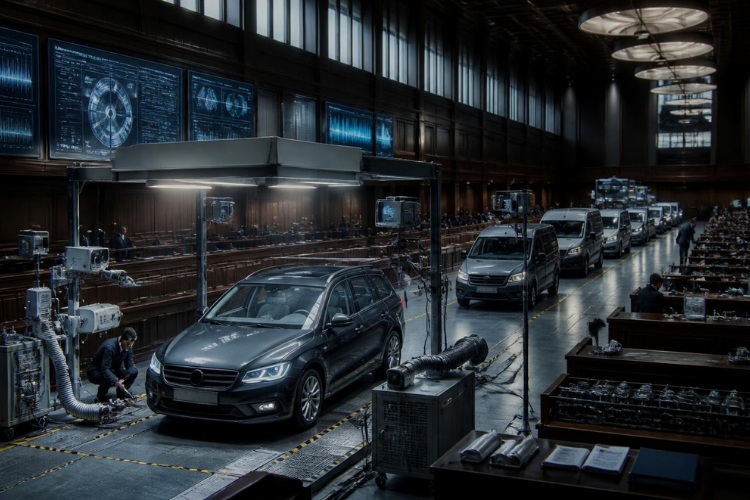
What Is The UK Diesel Emissions Case About?
The litigation forms part of the Pan-NOx Emissions Group Litigation, which brings together claims from approximately 1.6 million motorists against a number of vehicle manufacturers.
At the centre of the case are allegations that certain diesel vehicles used technology or software that reduced the effectiveness of their emissions-control systems in circumstances outside official laboratory testing.
The legal arguments focus particularly on nitrogen oxides, commonly known as NOx.
NOx is produced during the combustion process in internal combustion engines and has been subject to increasingly strict emissions limits because of its contribution to air pollution and its impact on air quality. These emissions requirements are also closely connected to the rules affecting vehicles operating in UK clean air zones and low-emission zones.
The litigation concerns vehicles developed under the Euro 5 and Euro 6b emissions standards, with the wider proceedings covering vehicles manufactured during the period when these standards applied.
The case is part of the much wider fallout from the Dieselgate emissions scandal, which first attracted worldwide attention following the Volkswagen emissions controversy.
However, the UK litigation extends well beyond Volkswagen, with claims involving a large number of manufacturers.
What Did The High Court Decide In July 2026?
On 10 July 2026, Lady Justice Cockerill handed down judgment following a 13-week trial.
The court was asked to determine whether emissions-control strategies used in 20 representative vehicles amounted to prohibited defeat devices under the relevant emissions regulations.
The majority of the allegations were rejected.
However, the judgment did not clear every vehicle examined.
Three of the 20 representative vehicles were found to contain prohibited defeat devices:
- One Mercedes-Benz vehicle
- Two Peugeot/Citroën vehicles
The remaining 17 representative vehicles were not found to contain prohibited defeat devices under the legal test applied by the court.
This included the Ford, Renault and Nissan vehicles examined during the trial.
The distinction is important because the judgment concerned specific technologies, vehicles and legal questions. It did not amount to a finding that diesel emissions systems generally were lawful or unlawful.
What Is A Defeat Device?
A defeat device is broadly understood as a system or strategy that affects the operation of a vehicle’s emissions-control system under particular conditions.
The legal question in this case was more specific.
The court had to determine whether the technologies used in the vehicles met the legal definition of a prohibited defeat device under the applicable European emissions regulations.
The claimants argued for a broader interpretation of those regulations.
The manufacturers, meanwhile, disputed the allegations and argued that the relevant emissions-control strategies did not constitute prohibited defeat devices.
The interpretation of these rules was therefore central to the outcome of the trial.
Why Did The Court Reject Most Of The Claims?
One of the most significant aspects of the July judgment was the court’s interpretation of what constitutes a prohibited defeat device.
The claimants argued that a number of emissions-control strategies should fall within the legal definition because they could result in increased NOx emissions during certain real-world driving conditions.
The court did not accept the majority of these arguments.
Instead, the judgment adopted a narrower interpretation of the relevant legal provisions and considered factors including the purpose and operation of the emissions-control strategies.
As a result, many of the systems examined during the trial were not classified as prohibited defeat devices, even though the claimants argued that they could reduce the effectiveness of emissions controls in real-world conditions.
Which Vehicles Were Found To Have Prohibited Defeat Devices?
The court did make findings against individual vehicles.
One Mercedes-Benz vehicle was found to contain a prohibited defeat device involving a coolant temperature setpoint strategy.
The court also found that a split-injection strategy used in two Peugeot/Citroën vehicles amounted to prohibited defeat devices.
These findings are significant, but they should not be interpreted as meaning that every vehicle produced by either manufacturer was affected.
The trial was structured around representative vehicles and specific technical and legal issues, with the intention that the findings could help establish principles for the much wider group litigation.
Why Are There Around 1.6 Million Claimants?
The scale of the case is one of the reasons it has attracted considerable attention.
The Pan-NOx proceedings bring together approximately 1.6 million claims involving numerous vehicle manufacturers.
Rather than examining every individual vehicle separately, the litigation uses representative vehicles to address common technical and legal questions.
The main trial involved representative vehicles from:
- Mercedes-Benz
- Ford
- Nissan
- Renault
- Peugeot/Citroën
The wider litigation encompasses claims involving a much larger number of manufacturers, meaning the July judgment represents an important stage in the proceedings rather than necessarily resolving every individual claim.
Why Did The Claimants Want To Appeal?
The claimant legal teams have argued that the High Court adopted too narrow an interpretation of the law when deciding what constitutes a prohibited defeat device.
They have also argued that aspects of the judgment differ from approaches taken in other European jurisdictions.
The interpretation of the emissions regulations is particularly important because it affected whether various emissions-control strategies could be classified as unlawful.
The claimants therefore sought permission to challenge parts of the July judgment.
High Court Refuses Permission To Appeal
The latest development came on 8 October 2026.
Lady Justice Cockerill refused the claimants permission to appeal the July judgment.
However, this does not necessarily mean that the appeal process has ended.
The claimants can still apply directly to the Court of Appeal for permission to appeal.
The Court of Appeal would then have to decide whether the proposed appeal should be allowed to proceed.
For the time being, the July High Court judgment therefore remains the key ruling on the issues examined during the trial.
What Does The Decision Mean For Diesel Vehicle Owners?
For motorists who own or have previously owned diesel vehicles, the latest development does not mean that all diesel emissions claims have been dismissed.
Equally, it would be incorrect to suggest that all diesel vehicles involved in the wider litigation have been found to contain unlawful defeat devices.
The High Court’s findings relate to particular vehicles, technologies and legal questions.
The wider litigation involves a substantial number of vehicles and manufacturers, meaning the position can vary depending on the vehicle concerned and the individual circumstances of a claim.
The latest decision should therefore be viewed in the context of the wider Pan-NOx litigation rather than as a ruling that applies equally to every diesel vehicle.
What Does The Case Mean For Businesses Running Diesel Vehicles?
The case is also relevant to businesses that have operated diesel cars and vans over recent years.
Diesel remains an important part of the UK’s commercial vehicle market, particularly for businesses that require long-distance capability, high payloads or regular use away from urban areas. However, diesel running costs remain an important consideration for businesses operating commercial vehicles, as fuel prices can have a significant impact on total fleet expenditure.
However, emissions regulations and vehicle technology have changed considerably since many of the vehicles involved in the litigation were first introduced.
Businesses choosing vehicles today have a much wider range of powertrains available, including diesel, petrol, mild-hybrid, hybrid, plug-in hybrid and fully electric models. Understanding the differences between BEV, PHEV, HEV and ICE powertrains can help businesses assess which technology is best suited to their fleet.
For fleet operators, the right choice will depend on how the vehicle is actually used. Factors such as mileage, payload, journey patterns, charging availability, fuel costs, taxation, clean air zone requirements and the availability of suitable infrastructure can all play a role when deciding which type of vehicle is appropriate. For businesses managing multiple vehicles, effective fleet management can also help keep vehicle costs, compliance and operational requirements under control.
Diesel Emissions Technology Has Changed
The vehicles at the centre of the Pan-NOx litigation come from a period when manufacturers were responding to increasingly stringent emissions requirements while continuing to develop diesel technology.
Since then, emissions-control systems have continued to evolve, while governments and regulators have introduced further measures aimed at reducing transport emissions.
The UK vehicle market has also changed significantly.
Businesses can now consider a growing number of electric and electrified vehicles alongside conventional petrol and diesel models, with electric vehicle fleets becoming an increasingly important option for UK businesses.
This does not mean that one powertrain is automatically suitable for every business.
A van carrying heavy loads over long distances, for example, may have very different requirements from a car used primarily for shorter urban journeys.
For businesses, understanding how a vehicle will be used remains one of the most important factors when choosing a new vehicle. This is particularly important when considering whether a diesel van remains the right choice or whether switching from a diesel van to an electric van could make financial sense.
Is The Diesel Emissions Case Finished?
The High Court’s refusal to grant permission to appeal is another important milestone in the litigation, but it does not necessarily bring the wider legal dispute to an immediate end.
The claimants can still seek permission directly from the Court of Appeal.
There are also wider claims involving other manufacturers and vehicles beyond the representative vehicles examined during the main trial.
The consequences of the July judgment will therefore continue to develop as the wider litigation progresses.
For motorists and businesses, the case also demonstrates just how significant emissions technology has become within the automotive industry.
What was once largely a technical issue involving vehicle software and engine management has developed into a major legal and regulatory issue involving manufacturers, motorists and businesses across the UK.
 Call our expert team on