Leasing companies are playing a crucial role in helping businesses transition to electric vehicles (EVs), according to the latest findings from the 2026 Arval Mobility Observatory Barometer.
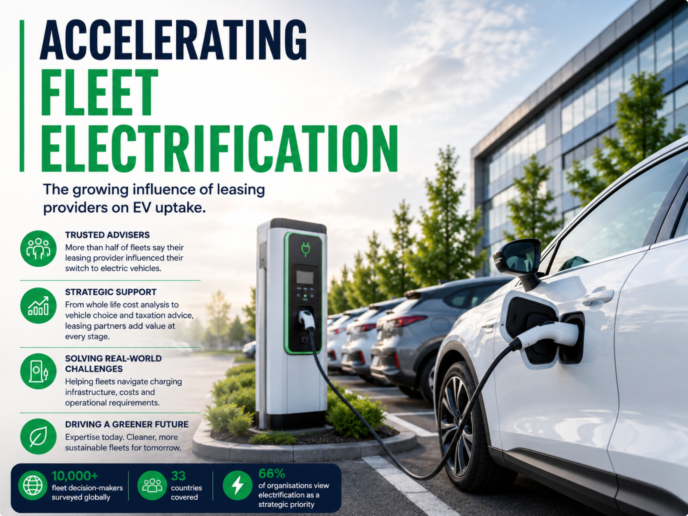
More than half of fleet operators (53%) said their leasing provider had influenced their decision to switch to electric vehicles. Among those surveyed, 13% described the impact as significant, while a further 40% said their leasing partner had a moderate influence on their electrification strategy.
In contrast, 30% of fleets reported only a limited level of influence, while 12% said their leasing provider had no impact on their decision-making process.
The findings underline the increasingly important advisory role leasing companies have assumed as organisations navigate the transition away from petrol and diesel vehicles.

John Peters, Head of the Arval Mobility Observatory UK, said the results reflect the support that leasing providers have delivered to businesses over recent years as fleet electrification has accelerated.
“Moving to electric vehicles is a significant step for any fleet operator, so it is unsurprising that many businesses say their leasing company has helped shape that journey,” he said.
“Across the leasing sector, providers have invested heavily in supporting customers through the transition, offering guidance, practical solutions and specialist expertise that have helped make EVs the default choice for many company car drivers today.”
For many organisations, the electrification process begins with understanding the financial benefits available through EV adoption. Leasing providers often assist fleets in assessing taxation advantages, fuel savings and whole-life operating costs before helping determine which vehicles are most suitable for specific operational requirements.
Beyond vehicle selection, leasing companies have increasingly taken on an educational role as businesses seek reliable information about electric mobility.
“Over the last few years, there has been considerable misinformation surrounding electric vehicles,” Peters added.
“Our role has been to provide businesses with accurate, real-world information that enables informed decisions. We aim to make the transition as straightforward as possible through consultancy, practical guidance, information resources and hands-on driving experiences.”
The research suggests that the UK’s experience mirrors wider international trends. According to the report, fleet operators across Europe and other global markets are facing similar opportunities and challenges as they work towards electrification.
“One of the most notable findings from this year’s data is the consistency of fleet experiences across different regions,” Peters said.
“Businesses around the world are responding to EV adoption in remarkably similar ways.”
The wider study, which surveyed more than 10,000 fleet decision-makers across 33 countries, indicates that electrification has now moved beyond the planning stage for many organisations. Around two-thirds of businesses globally view fleet electrification as a strategic priority, while nearly half already operate electrified vehicles within their fleets.
As a result, the conversation has shifted from whether businesses should adopt EVs to how they can maximise the benefits of operating them.
Advances in battery technology, vehicle efficiency and charging capabilities have transformed the market in recent years. Many modern electric cars are now capable of travelling more than 300 miles on a single charge, making them suitable for the majority of business driving requirements.
Consequently, traditional range anxiety is becoming less of a concern for fleet operators. Instead, attention is increasingly turning towards charging infrastructure and operational convenience.
Fleet managers are now more likely to be concerned about charger availability, charging speeds and the cost of public charging than the distance an EV can travel between charges. Access to home charging facilities for employees and the availability of workplace charging infrastructure also remain important considerations for organisations seeking to expand their electric fleets.
To address these challenges, businesses are exploring a range of solutions, including greater use of rapid charging networks, enhanced home charging support schemes and investment in workplace charging facilities.
Emerging technologies such as vehicle-to-everything (V2X) systems could also play a significant role in the future, allowing vehicles to interact with buildings and energy networks, helping businesses improve energy efficiency and reduce operating costs.
For businesses considering the switch to electric vehicles, access to specialist expertise can make the transition significantly easier. Commercial Vehicle Contracts (CVC) supports organisations at every stage of the fleet acquisition process, from identifying the most suitable vehicle for operational requirements through to sourcing stock, arranging competitive finance packages and coordinating vehicle delivery. Whether a business requires a single company car, a fleet of electric vans or a mixed vehicle fleet, CVC provides tailored solutions designed around individual business needs.
Beyond vehicle sourcing and finance, CVC offers a comprehensive range of specialist vehicle conversion services, ensuring fleets are fully equipped for their intended purpose from day one. This includes refrigerated van conversions for temperature-controlled transport, shelving and racking installations, custom cargo storage solutions, accessibility modifications, wheelchair-accessible vehicle adaptations, passenger transport conversions and professional vehicle branding. For businesses transitioning to electric vehicles, CVC can also advise on the suitability of electric models for specialist applications and help identify conversion solutions that maximise operational efficiency while supporting sustainability goals. Where required, CVC can also coordinate specialist electric vehicle conversions and bespoke fleet modifications, ensuring vehicles are fully equipped for their intended role before delivery.
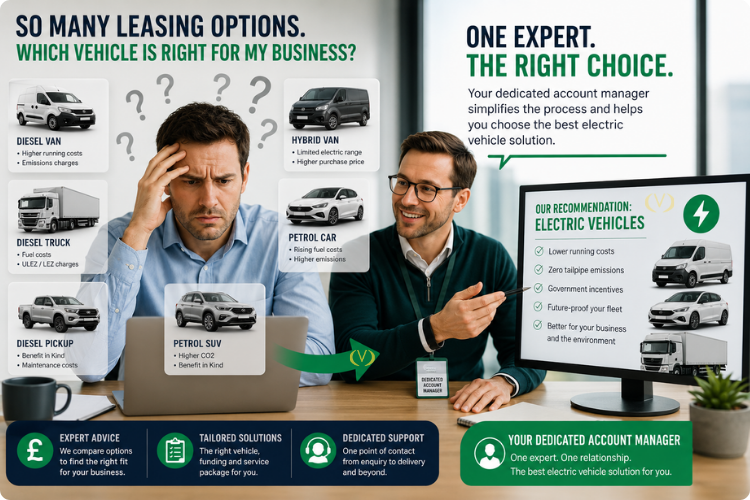
As electric vehicle specialists, CVC helps organisations navigate total cost of ownership, charging infrastructure requirements, taxation benefits and wider fleet electrification strategies. Every client is assigned a dedicated account manager, providing a single point of contact throughout the entire process and ensuring expert guidance from initial enquiry through to vehicle handover, conversion completion and ongoing fleet support.
Alongside environmental considerations, cost savings remain one of the strongest drivers of EV adoption. Lower fuel costs, reduced maintenance requirements and favourable tax treatment continue to strengthen the business case for electrification, particularly as organisations place greater emphasis on total cost of ownership rather than upfront vehicle prices.
With EV technology maturing and fleet confidence growing, leasing providers are expected to remain central to the next phase of electrification, helping businesses overcome practical barriers and maximise the value of their transition to zero-emission mobility.

Why Businesses Choose Commercial Vehicle Contracts
As fleet requirements become increasingly complex, many organisations are looking beyond traditional leasing providers and instead seeking partners capable of managing the entire vehicle lifecycle.
Commercial Vehicle Contracts (CVC) offers a complete fleet solution, helping businesses source the right vehicles, secure competitive funding, arrange specialist vehicle conversions and coordinate nationwide delivery. From electric company cars and commercial vans through to fully customised fleet vehicles, CVC supports businesses at every stage of the procurement process.
Beyond vehicle sourcing and finance, CVC offers a comprehensive range of specialist vehicle conversion services, including refrigerated vans, welfare and tipper conversions, shelving and racking systems, secure storage solutions, accessibility and passenger transport adaptations, vehicle branding, and bespoke modifications tailored to specific operational requirements. For businesses transitioning to electric vehicles, CVC can also advise on suitable EV models and specialist electric conversions, helping ensure vehicles are fully equipped for operational efficiency, productivity, and sustainability goals.
Every customer is assigned a dedicated account manager who acts as a single point of contact throughout the entire process, from vehicle selection and finance through to delivery and ongoing fleet support. This streamlined approach helps businesses reduce administrative burden, minimise downtime and ensure vehicles are ready for work from day one.
Why Businesses Choose CVC
- Vehicle sourcing across cars, vans and specialist fleet vehicles
- Competitive leasing and finance solutions
- Expert EV and fleet electrification advice
- Dedicated account manager for every client
- Refrigerated, welfare, tipper and specialist vehicle conversions
- Shelving, racking and storage solutions
- Vehicle branding and livery services
- Nationwide vehicle delivery
- Ongoing fleet support throughout the lease term
Related EV & Fleet Leasing Guides
Looking to learn more about electric vehicles, leasing and fleet management? Explore our expert guides:
👉 EV Salary Sacrifice Explained: How UK Employees Can Drive a New Electric Car for Less in 2026 – Discover how salary sacrifice schemes can significantly reduce the cost of driving a new electric vehicle while benefiting from attractive tax savings.
👉 How Vehicle Leasing Became a Core Driver of Corporate ESG Strategy – Learn how vehicle leasing is helping businesses achieve sustainability targets and strengthen their environmental, social and governance (ESG) commitments.
👉 Top 10 Electric Cars to Lease in 2026: The Best EVs for Private Drivers, Company Cars and Salary Sacrifice Schemes – Compare the leading electric vehicles available this year and find the right model for your personal or business needs.
👉 The Best Small Electric Vans on the Market – Explore the latest compact electric vans designed to help businesses reduce emissions without compromising practicality.
👉 Reclaiming VAT on a Business Van or Car Lease: A Complete Guide for UK Businesses – Understand the rules around VAT recovery and how businesses can maximise savings when leasing vehicles.
 Call our expert team on