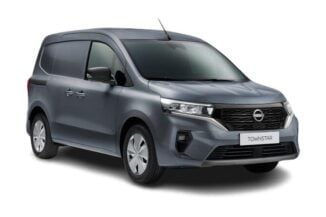
Looking for a van lease between £250 and £350 per month? There are currently a wide range of commercial vehicles available within this budget, including small vans, medium vans and larger panel vans.
A monthly budget in this region can also give you more choice than you might expect. Current offers include compact vans suited to urban businesses and sole traders, medium vans for trades and delivery work, and even larger vehicles such as the Peugeot Boxer and Renault Master.
At Commercial Vehicle Contracts, our van leasing offers change regularly as manufacturer promotions, funder rates and vehicle availability change. The deals shown below therefore represent current offers and may be updated as new vehicles become available.
Current Van Leasing Deals: £250–£300 Per Month
The table below highlights a selection of current van leasing offers priced between £250 and £300 per month, showing just how much choice is available even at the lower end of the £250–£350 budget. The offers include small, medium and large vans, with diesel, petrol and electric options available.
A £250–£300 budget can therefore stretch across considerably more than small vans. Depending on the current offers, businesses can consider everything from compact models such as the Volkswagen Caddy through to medium vans such as the Ford Transit Custom and Renault Trafic, and larger commercial vehicles including the large vans such as the Peugeot Boxer and Renault Master.
All advertised prices should be checked against the individual vehicle offer before proceeding, as monthly rentals can change according to contract length, initial rental, annual mileage, funder and vehicle availability.

Compare Van Leasing Offers
The monthly rental is an important consideration, but it should not be the only factor when comparing van lease deals.
Two vans costing a similar amount each month can have very different payloads, load areas, equipment levels and running costs.
| What To Compare | Why It Matters |
|---|---|
| Monthly rental | Helps you stay within your budget |
| Initial rental | Determines the amount payable at the start of the agreement |
| Contract length | Affects your monthly rental and overall commitment |
| Annual mileage | Important if the van will cover significant business mileage |
| Payload | Determines how much weight the van can legally carry |
| Load length | Important when carrying long tools or materials |
| Load volume | Helps determine whether the van has enough usable space |
| Fuel type | Consider whether diesel, petrol or electric suits your operation |
| Maintenance | Check whether maintenance is included or available as an option |
| Specification | Compare standard equipment and safety features |
It is also worth checking exactly what is covered by any maintenance package and what remains the responsibility of the driver or business. Maintenance and warranty cover are not the same thing, so understanding the difference can help you avoid unexpected costs during the lease.
Our guide to Maintenance vs Warranty: What’s the Difference? explains what each type of cover is designed to provide and what you should look out for when comparing leasing offers.
A van with a slightly higher monthly rental may ultimately be the better choice if it provides the payload, load space or specification your business requires.
Why Lease A Van Between £250–£350 Per Month?
A monthly budget of £250–£350 can provide access to a broad selection of commercial vehicles without requiring you to purchase a van outright.
For businesses, leasing can make vehicle costs easier to budget because the rental is agreed for the duration of the contract. You also avoid taking ownership of a depreciating vehicle, while a contract hire agreement can allow you to return the vehicle at the end of the agreement rather than keeping an ageing van within your business.
For smaller businesses and sole traders, this can be particularly useful when reliable transport is essential but tying up a large amount of capital in a vehicle is not desirable. Businesses that are just starting out may also want to consider how to lease a van as a new business.
The range also means businesses don’t necessarily have to compromise on vehicle size. As the current offers demonstrate, there are small, medium and large vans available within the £250–£300 part of the budget alone.
It is important to remember that the monthly rental is only one part of the overall cost. Insurance, fuel or charging, servicing where maintenance is not included, tyres and other running costs may need to be budgeted for separately.
How To Choose The Right Van For Your Business
The cheapest van is not necessarily the best van for your business. Before choosing one of the van leasing offers in the £250–£350 range, consider what the vehicle needs to do every day.
Consider The Size Of The Van
The right van size depends heavily on how you use it.
Businesses operating mainly in urban areas may find small van leasing particularly suitable. Compact vans can provide useful load space while remaining relatively easy to manoeuvre and park.
If you need more room for tools, equipment or materials, medium van leasing can provide a useful step up in carrying capacity without necessarily moving into a larger panel van.
For businesses carrying larger loads, large van leasing can provide considerably more load space and payload capacity. However, a larger vehicle is not necessarily the right choice if your day-to-day work does not require the additional capacity.
You can also explore our wider van leasing options if you’re unsure which size or type of vehicle best suits your requirements.
Consider The Type Of Work You Do
A standard panel van will suit many businesses, but some jobs require a more specialist vehicle.
For businesses transporting bulky goods, a Luton van can provide a large, enclosed load area. A tipper van can be particularly useful for construction, landscaping, groundworks and other applications where loose materials need to be loaded and unloaded efficiently.
Choosing the right body type at the outset can be just as important as choosing the right size. Think about the equipment you carry, the type of loads you transport and how the vehicle will be used before deciding which van is most suitable.
Think About Where You Drive
A compact van can be easier to manoeuvre and park in towns and cities, while a larger panel van may be more appropriate for businesses covering longer distances or carrying substantial loads.
Your typical journey should also influence your choice of powertrain. Diesel remains a popular option for higher-mileage commercial use, while electric vans can be particularly attractive for businesses operating predictable routes with access to suitable charging.
The current offers also show that electric vans are not necessarily restricted to the higher end of the price range. Options such as the Toyota Proace City Electric and Peugeot E-Expert can fall within the £250–£300 monthly budget, depending on the current offer and contract terms.
Consider Your Business As It Grows
It is worth thinking beyond your immediate requirements.
If your business is taking on additional work or you expect your transport requirements to increase, choosing a van with some additional capacity could prevent you from outgrowing the vehicle too quickly.
The same applies to specialist requirements. If you need a refrigerated vehicle, welfare van, tipper, Luton or another specialist conversion, the most suitable solution may not be a standard panel van.
Van Leasing Explained: Process, Eligibility & FAQs
Leasing a van does not need to be complicated. Once you have found a suitable vehicle, you can request a quotation based on your preferred contract requirements.
The process will normally involve:
- Choose a van – Select a vehicle that matches your business requirements and budget.
- Choose your contract requirements – This can include the contract length, annual mileage and initial rental.
- Request a quotation – We can provide a quotation based on your requirements and the vehicle available.
- Complete the application – If you decide to proceed, the relevant finance application and checks are completed.
- Vehicle order and preparation – Once approved and ordered, the vehicle can progress towards delivery.
- Delivery – Your new van is delivered when it is ready, and the relevant arrangements have been completed.
The exact process can vary depending on the vehicle, funder and type of agreement.
Why Choose Commercial Vehicle Contracts?
Commercial Vehicle Contracts has been helping customers arrange vehicle finance and leasing for more than 25 years.
As an independent broker and BVRLA member, we work with a wide range of funders and can help you compare suitable vehicles and finance options rather than limiting you to a single manufacturer or finance provider.
We can also help businesses with more than simply finding a monthly rental. From choosing the right vehicle through to arranging delivery, our team can provide guidance based on how you intend to use the van.
Our customer service is backed by a 4.9 out of 5 TrustScore from more than 330 customer reviews, alongside FCA authorisation and regulation.
For businesses running multiple vehicles, our fleet management solutions can also help take some of the administration and management burden away from your business.
Get Started: Find A Van Between £250–£350 Per Month
If your budget is between £250 and £350 per month, there are plenty of van leasing options worth considering.
Start by comparing the current offers above, but don’t choose purely on the headline monthly rental. Consider the van’s payload, load space, mileage allowance, fuel type, contract length and specification to make sure it is suitable for the work you need it to do.
If you already know what type of van you need, you can request a quotation, and our team can help you find a suitable option based on your budget, mileage and business requirements.
Frequently Asked Questions About Van Leasing Between £250–£350 Per Month
Yes. There are currently a range of vans available within the £250–£350 per month price range, although the exact choice will depend on factors such as the van’s size, specification, fuel type, contract terms, annual mileage and initial rental.
This price range can include small, medium and some large panel vans, depending on current offers and vehicle availability. You may also find petrol, diesel and electric vans within this budget, giving businesses a choice of vehicles for different types of work.
Yes, larger vans can sometimes fall within this monthly budget. Current offers can include models such as the Peugeot Boxer and Renault Master, although availability, contract terms and pricing can change. If you need a larger van, it is important to compare payload, load length and load volume as well as the monthly rental.
Yes. Electric vans can be available within the £250–£350 per month range. Options can vary depending on manufacturer promotions, funder rates and stock availability, so it is worth checking the latest offers if you are considering switching to an electric van.
Not necessarily. The advertised monthly rental is only one part of the overall lease cost. You should also check the initial rental, contract length, annual mileage, VAT, maintenance arrangements and any applicable fees before choosing an offer.
For business leasing, advertised prices are commonly shown excluding VAT. You should always check whether VAT is included in the advertised rental and consider how VAT applies to your own circumstances before comparing offers.
Yes. Sole traders can apply for van leasing, subject to the relevant finance provider’s eligibility and credit requirements. The most suitable lease will depend on how the van is being used and the business’s circumstances.
Some leasing agreements can include a maintenance package, while others are offered without maintenance. If maintenance is important to your business, compare the full agreement rather than choosing a vehicle based solely on its monthly rental.
There is no single van size associated with this budget. Depending on current offers, you could find everything from compact small vans through to medium and larger panel vans. The right choice should be based on the load space, payload and type of work you need the vehicle to handle.
Look beyond the monthly price and compare the initial rental, contract duration, annual mileage, payload, load space, fuel type, specification, maintenance and any additional charges. A slightly more expensive van may offer much better value if it is better suited to your business.
Yes. Van leasing offers can change regularly due to manufacturer promotions, funder rates, vehicle availability and stock levels. The monthly rentals shown on this page should therefore be treated as current offers rather than fixed prices for all future orders.
With a typical contract hire agreement, the van is returned to the leasing company at the end of the contract, subject to the agreed mileage and the vehicle’s condition. Excess mileage or damage outside fair wear and tear may result in additional charges.
 Call our expert team on