Vehicle telematics and fleet tracking systems are becoming increasingly useful tools for businesses that rely on cars, vans and other commercial vehicles. While these technologies were once more commonly associated with large transport and logistics operations, smaller businesses can also benefit from the information they provide.
From monitoring vehicle locations and improving journey planning to keeping track of mileage, identifying maintenance requirements and encouraging safer driving, telematics can give business owners greater visibility over their vehicles.
For small businesses operating a handful of vans or a growing fleet of cars and commercial vehicles, understanding how telematics works can help identify opportunities to improve efficiency, manage running costs and make better-informed fleet decisions.
What Is Vehicle Telematics?
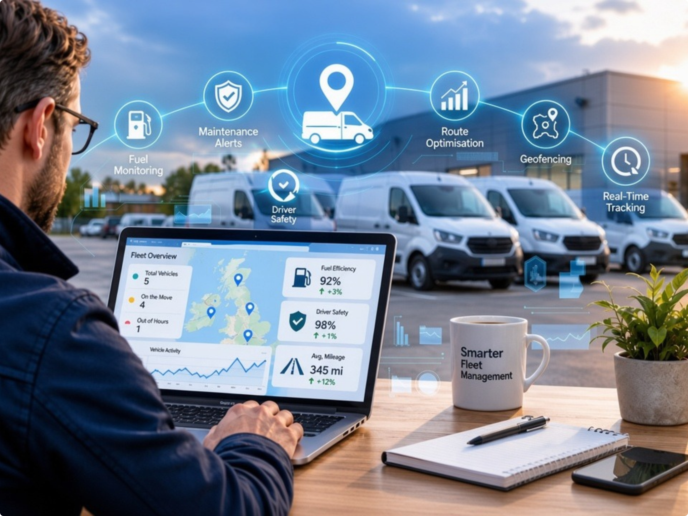
Vehicle telematics combines telecommunications, GPS technology and vehicle data to collect and transmit information about how vehicles are being used.
A telematics system typically uses an installed tracking device or an integrated vehicle system to gather information, which is then made available through an online dashboard or mobile application.
Depending on the technology and subscription package, this information can include:
- Live vehicle location: See where company vehicles are currently located.
- Journey history: Review previous journeys, distances travelled and journey times.
- Mileage monitoring: Keep track of business mileage and vehicle utilisation.
- Driver behaviour: Identify patterns such as harsh acceleration, harsh braking and excessive speeding.
- Fuel consumption: Monitor fuel usage or estimated consumption, where supported by the vehicle and tracking system.
- Vehicle diagnostics: Receive available vehicle fault-code information, warning alerts and other data that may help identify potential maintenance requirements.
- Geofencing: Set virtual boundaries around locations and receive alerts when vehicles enter or leave designated areas.
Not every telematics system includes all these features. Businesses should compare different solutions to establish which functions are relevant to their operational requirements.
Modern vehicles are also becoming increasingly connected, with manufacturers introducing more sophisticated onboard technology and data-sharing capabilities. Our guide to modern cars and vans, cameras, data and the right to repair explores some of the wider developments affecting vehicle technology.
Why Should Small Businesses Consider Fleet Tracking?
For smaller businesses, managing vehicles can become increasingly complicated as the number of drivers and daily journeys grows.
Without a centralised tracking system, it can be difficult to establish where vehicles are, how efficiently they are being used and whether unnecessary mileage is adding to operating costs.
Fleet tracking can provide a clearer picture of vehicle activity, helping businesses make more informed decisions.
1. Improve Vehicle Visibility
Knowing where company vehicles are can make day-to-day operations easier to manage.
For businesses with mobile employees, such as electricians, plumbers, builders and delivery operators, live vehicle tracking can help managers understand which vehicles are closest to a particular job or customer.
This can support more efficient job allocation, particularly when appointments change, or urgent work needs to be arranged.
It can also provide additional reassurance when vehicles are left unattended at customer premises, building sites or other locations.
Vehicle security is another important consideration for businesses operating commercial vehicles. Our guide to van security and how to protect your van looks at practical measures businesses can take to reduce theft risks and protect valuable equipment.
2. Identify Opportunities To Reduce Fuel Costs
Fuel is a significant operating expense for many businesses that rely on cars and vans.
Telematics can help identify unnecessary mileage, excessive idling and inefficient driving patterns that may contribute to higher fuel consumption.
For example, reviewing journey information could highlight opportunities to:
- Reduce unnecessary journeys between jobs.
- Improve route planning and scheduling.
- Avoid excessive engine idling.
- Identify vehicles covering unusually high mileage.
- Encourage smoother acceleration and braking.
These improvements can help businesses make better use of their existing vehicles, although actual savings will depend on driving patterns, vehicle type and how effectively the information is used. Businesses looking to improve overall fleet performance can also benefit from our fleet efficiency business guide, which explores practical ways to make business vehicles more productive and cost-effective.
Businesses looking to understand their wider vehicle expenditure can also use CVC’s Fuel Cost Calculator to estimate fuel costs and compare the potential running costs of different vehicles.
Fuel management can also form part of a wider cost-control strategy. Our guide to fuel fleet cards explores how businesses can manage fuel purchasing and expenditure across their vehicles.
For a broader understanding of the financial implications of running a fleet, see our guide to the total cost of ownership for business vehicles.
3. Encourage Safer Driving
Driver behaviour can have an impact on vehicle operating costs, maintenance requirements and road safety.
Some telematics systems monitor driving patterns, including harsh braking, rapid acceleration, cornering and speeding.
This information can help businesses identify areas where additional driver training or improved driving practices may be beneficial. Businesses should also make sure that anyone driving a company vehicle is authorised to do so. Our guide to company vehicle licence checks explains the checks employers should consider.
Rather than using the information simply to criticise drivers, employers can use it as part of a wider approach to driver development and fleet safety.
For businesses with multiple employees driving company vehicles, this can support a more structured approach to managing driving standards.
There are also wider responsibilities involved in ensuring employees use company vehicles appropriately. Our Fleet Driver Safety Guide explores common driving risks, including speeding and distracted driving.
Businesses should also consider how tracking information fits into their wider company vehicle policy, particularly where multiple employees share vehicles or use them outside normal working hours.
4. Monitor Vehicle Maintenance Requirements
Unexpected vehicle downtime can be particularly disruptive for smaller businesses.
If a van is essential for completing customer appointments or transporting equipment, an unexpected breakdown can affect productivity and potentially lead to lost business.
Depending on the system, telematics can provide information about vehicle mileage, diagnostic alerts and maintenance requirements.
This can help businesses identify potential issues earlier and organise servicing around operational schedules.
However, telematics should complement rather than replace routine vehicle inspections, servicing schedules and manufacturer maintenance recommendations.
Businesses should establish a structured approach to fleet maintenance planning to ensure servicing and preventative maintenance are not overlooked.
Daily inspections are equally important. Our guide to daily van checks and business legal responsibilities explains the checks that businesses and drivers should undertake to help keep vehicles roadworthy.
A wider fleet risk assessment can also help identify potential operational and safety issues before they develop into more serious problems.
5. Improve Customer Service
For businesses that rely on deliveries, site visits or customer appointments, knowing where vehicles are can help improve communication.
Live location information and estimated arrival times can make it easier to update customers if a driver is delayed or a job is taking longer than expected.
It can also help managers allocate work more effectively when unexpected appointments arise.
For smaller companies competing against larger organisations, improving the reliability and organisation of their services can make a meaningful difference to the customer experience.
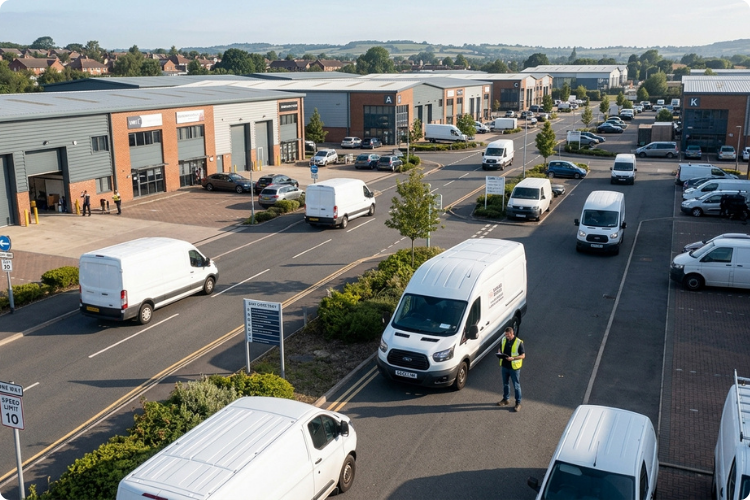
What Types Of Vehicle Tracking Systems Are Available?
There are several different approaches to vehicle tracking, and the most suitable option will depend on the size of the fleet and the information a business wants to collect.
| Tracking system | How it works | Best suited to |
|---|---|---|
| GPS tracking devices | Uses satellite positioning to provide vehicle location information | Businesses wanting live tracking and journey history |
| Plug-in telematics | Connects to a vehicle’s diagnostic port to collect relevant data | Smaller fleets looking for relatively straightforward installation |
| Hardwired telematics | A tracking unit is professionally installed into the vehicle | Businesses requiring a permanent tracking solution |
| Manufacturer-connected services | Uses technology built into compatible vehicles | Businesses wanting access to integrated vehicle information |
| Smartphone-based tracking | Uses a mobile phone’s GPS and an application to record journeys and location information | Sole traders and very small businesses looking for a simple tracking option |
The features, accuracy and installation requirements can vary between providers. Businesses should also check whether devices can be transferred between vehicles and whether ongoing subscriptions are required.
How Much Does Fleet Tracking Cost?
The cost of vehicle tracking depends on the technology, number of vehicles and level of functionality required.
Some providers offer relatively simple GPS tracking packages, while more advanced telematics solutions can include driver behaviour reporting, vehicle diagnostics, fuel monitoring and additional fleet management tools.
Potential costs include:
- Hardware: The purchase or rental of tracking devices.
- Installation: Charges for fitting hardwired equipment.
- Monthly subscriptions: Ongoing access to tracking software and data services.
- Additional features: Optional reporting, cameras, alerts and integrations.
- Contract terms: Minimum subscription periods and early termination charges.
Small businesses should look beyond the initial installation price and consider the total cost over the expected period of use.
It is also worth considering whether the information provided will deliver sufficient operational value to justify the ongoing expense.
A business operating three vans with relatively straightforward routes may have very different requirements from a company managing 30 vehicles and multiple drivers.
Vehicle Tracking, Employee Privacy And Data Protection
While vehicle tracking can provide useful operational information, businesses must also consider the privacy implications of monitoring company vehicles.
Location information and journey records can constitute personal data when they relate to identifiable employees.
Under UK data protection legislation, employers should have a clear and lawful reason for collecting this information and explain to employees what is being monitored and why.
Important considerations include:
- Be transparent: Tell employees and, where relevant, passengers what information is collected, why it is collected and who can access it.
- Establish a clear purpose: Identify a lawful basis for monitoring and only collect information that is necessary and proportionate to the business requirement.
- Respect private use: If employees are permitted to use company vehicles privately, employers will rarely be able to justify monitoring during personal journeys. Appropriate privacy controls, such as the ability to switch off tracking outside working hours, should be considered.
- Protect the information: Restrict access to authorised personnel and establish appropriate data retention and security arrangements.
- Assess privacy risks: Employers must carry out a Data Protection Impact Assessment (DPIA) before introducing monitoring that is likely to result in a high risk to individuals. This can include monitoring driver behaviour, driving style or using cameras and audio.
Employers should not assume that installing a tracking device automatically gives them unrestricted access to information about an employee’s movements.
The ICO’s guidance on monitoring workers and work vehicles provides further information about employer responsibilities.
Choosing The Right Vehicles For Your Business Fleet
Telematics is only one part of effective fleet management. The vehicles themselves also need to be appropriate for the work being undertaken.
For small businesses, choosing the wrong vehicle can result in unnecessary operating costs, insufficient load capacity or a vehicle that does not meet the practical requirements of the job.
Before adding vehicles to a fleet, businesses should consider:
Vehicle size and payload: Does the vehicle have sufficient load space and payload capacity for the equipment, tools or materials being transported? Our guide to van payload explains why payload capacity is an important consideration when choosing a commercial vehicle.
Annual mileage: How many miles will the vehicle cover each year, and does this justify a particular vehicle type or specification? Understanding mileage allowances in vehicle leasing can help businesses avoid choosing an unsuitable contract.
Fuel type: Would petrol, diesel, hybrid or electric power be most suitable for the journeys being undertaken? Businesses considering electrification can read our guide to electric van fleet transitions.
Running costs: Consider fuel or electricity, servicing, maintenance, insurance and vehicle tax where applicable. Our cost of running a van guide provides further information.
Driver requirements: Does the vehicle offer the necessary comfort, safety features and practicality for employees who spend significant time on the road?
Contract flexibility: Does the chosen leasing arrangement reflect the business’s expected mileage, vehicle requirements and operational plans?
Businesses with specialist requirements may also need to consider vehicle conversions and additional equipment. CVC offers a range of commercial vehicle conversion solutions, including practical adaptations for different industries.
For businesses looking to introduce additional vehicles or replace ageing models, CVC provides business van leasing and car leasing solutions, with access to a wide choice of vehicles.
The information gathered through telematics can also help businesses plan future vehicle requirements and make more informed leasing decisions. Our guide to fleet planning and leasing explains the key considerations.
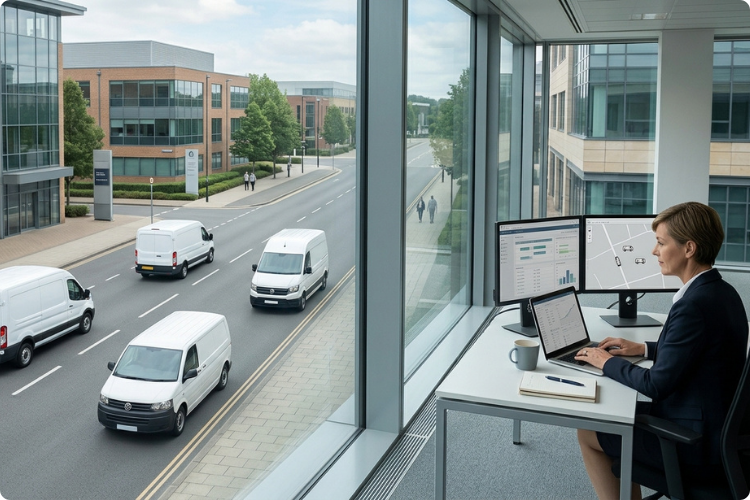
Using Telematics Data To Improve Fleet Management
Collecting vehicle information is only useful if businesses know how to interpret and act on it.
For smaller companies, even relatively straightforward reports can highlight patterns that might otherwise go unnoticed. For example, a business might discover that some vehicles are underused, certain routes regularly involve unnecessary mileage or maintenance costs are increasing on particular vehicles. Reviewing this information can help businesses identify when a vehicle is no longer meeting operational requirements or when replacement may be worth considering. For further guidance, read when businesses should replace fleet vehicles.
As a fleet grows, bringing this information together becomes increasingly important.
A structured fleet audit can help businesses review vehicle utilisation, operating costs, maintenance arrangements and overall fleet performance. Artificial intelligence is also creating new opportunities to analyse vehicle information, identify patterns and support more informed decisions. Read our guide to the business benefits of AI fleet management for more information.
Businesses should also consider how information is shared between different systems. Fragmented records can make it harder to understand overall fleet performance, particularly when vehicle tracking, fuel management, maintenance and administration are handled separately.
Our guide to fragmented fleet data and business costs explores why having a clearer picture of fleet information matters.
For organisations looking to improve their wider operational processes, fleet administration and account support can also play an important role in keeping vehicle information and leasing arrangements organised.
Can Vehicle Leasing Work Alongside Fleet Telematics?
Yes. Vehicle leasing and telematics serve different purposes, but they can form part of the same fleet management strategy.
Leasing provides businesses with access to vehicles through an agreed contract, while telematics can provide additional information about how those vehicles are being used.
Combining the two can help businesses take a more structured approach to managing their fleet.
For example, telematics data could help a business review annual mileage requirements before arranging its next batch of lease vehicles.
If a company discovers that certain vans consistently cover significantly more miles than expected, it may need to reconsider its mileage allowances when arranging replacement vehicles.
Similarly, reviewing vehicle utilisation could help identify whether the business needs to replace every vehicle at the same time or whether a phased replacement programme would be more appropriate.
Our guide to fleet lifecycle management explores how businesses can plan vehicle acquisition, operation, maintenance and replacement over time.
CVC’s Fleet Management Solutions can help businesses take a broader view of their vehicle requirements, from choosing suitable vehicles to managing their leasing arrangements.
For organisations managing multiple vehicles, a One-Stop Fleet Solutions approach can also help bring vehicle sourcing and ongoing fleet requirements together.
Businesses can also use CVC’s Vehicle Lease Management Portal to support the administration and management of their vehicle leasing arrangements.
Is Fleet Tracking Worthwhile For A Small Business?
Fleet tracking is not essential for every business, and the benefits will depend on how vehicles are used.
A sole trader operating one van with predictable local journeys may have little need for a comprehensive telematics package.
However, a business operating several vehicles, employing multiple drivers or covering a wide geographical area may find that tracking provides valuable operational information.
It is particularly worth considering when:
- Managers regularly need to establish where vehicles are located.
- Fuel expenditure is difficult to monitor.
- Vehicles cover substantial annual mileage.
- There are frequent changes to daily schedules.
- Businesses want to improve driver safety.
- Vehicle downtime is affecting productivity.
- The business is expanding and needs greater visibility of its fleet.
The most effective approach is to identify the operational problems a business wants to solve before investing in technology.
Frequently Asked Questions About Vehicle Telematics
GPS tracking primarily provides information about a vehicle’s location and movements. Telematics is a broader technology that can combine GPS information with vehicle diagnostics, mileage, fuel consumption and driver behaviour data.
Yes. Vehicle tracking systems are available for businesses of different sizes, including sole traders and companies operating only a handful of vans. The appropriate solution will depend on the features required and the available budget.
It can help businesses identify unnecessary mileage, excessive idling and inefficient driving patterns. Acting on this information may help reduce fuel consumption, although savings are not guaranteed.
Some systems record information about acceleration, braking, cornering and speeding. Businesses can use this information to identify potential driver training requirements and encourage safer driving.
No. Vehicle telematics is not a standard requirement for every leased vehicle. Businesses should check their leasing agreement, the vehicle’s existing technology and any installation requirements before fitting aftermarket equipment.
Yes. Many systems record journey distances and provide mileage reports. This information can help businesses understand vehicle utilisation and make more informed decisions when setting annual mileage allowances for future lease agreements.
 Call our expert team on