Modern cars and vans are becoming increasingly sophisticated, with cameras, sensors, connected technology and software now playing a major role in how vehicles operate. But as technology advances, so do concerns about privacy, surveillance and whether vehicle owners are losing control over their own vehicles.
From claims that manufacturers are installing “spy cameras” to fears that governments could monitor drivers, there is plenty of speculation surrounding the technology being introduced into modern vehicles. At the same time, independent garages are facing a different challenge: increasingly complex vehicles can require specialist software, diagnostics and security access simply to carry out vehicle maintenance.
So how much of this is actually true? Are modern vehicles really watching their drivers? Can manufacturers see where you are? And are we heading towards a future where you can no longer repair your own car or van without going through an approved garage?
The reality is more complicated than many headlines suggest.
Why Are People Talking About Cameras In Cars?
Cameras in vehicles are nothing new. Reversing cameras and parking cameras have been around for years, while front-facing cameras are now common on vehicles equipped with advanced driver assistance systems (ADAS).
However, the technology is moving further inside the vehicle.
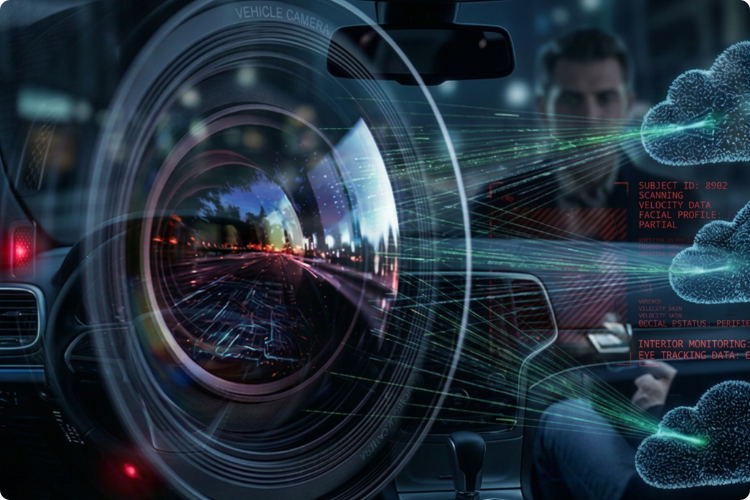
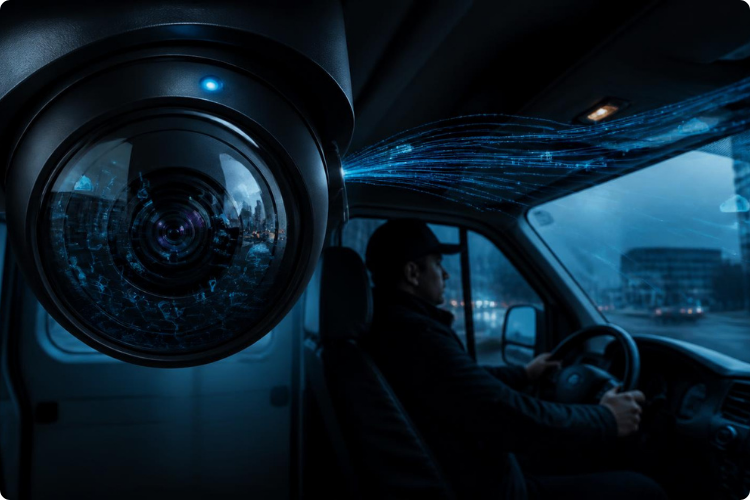
Modern vehicles can use cameras and sensors to monitor the road, detect pedestrians and cyclists, recognise lane markings, identify traffic signs and help determine whether a driver is becoming distracted or tired.
The UK Government itself acknowledges that some modern vehicle safety systems use internal cameras and sensors to monitor driver behaviour. Its 2026 consultation on vehicle safety technologies specifically refers to Driver Drowsiness and Attention Warning (DDAW) and Advanced Driver Distraction Warning (ADDW) systems using internal cameras and sensors.
That is important because it means the basic claim that cameras can be used to monitor a driver’s behaviour is not a conspiracy theory. The technology genuinely exists.
But that doesn’t automatically mean someone is sitting somewhere watching you through your vehicle.
Are New Cars Really Getting “Spy Cameras”?
This is where things can become confusing.
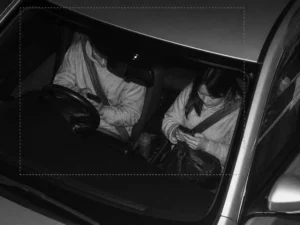
Driver-monitoring cameras are increasingly being introduced as part of vehicle safety technology. These systems can use cameras and sensors to assess things such as whether a driver appears distracted or drowsy.
The purpose is safety rather than surveillance.
If a driver repeatedly looks away from the road, becomes distracted or shows signs of drowsiness, the system can issue a warning.
There is an obvious safety argument for this. A vehicle capable of recognising that its driver is becoming dangerously distracted could potentially prevent an accident.
However, it is understandable why some drivers are uncomfortable with the idea.
For generations, the inside of a car has been regarded as a relatively private space. You could sit in your vehicle, have a conversation, listen to music or simply drive without thinking about whether electronic systems were analysing your behaviour.
That is changing.
Is The Government Spying On Drivers Through Their Cars?
This is probably the biggest concern surrounding the technology — and it is also where fact and speculation need to be separated.
There is currently no basis for claiming that the UK Government is secretly using cameras in ordinary people’s cars to watch them.
However, it is equally true that modern vehicles can contain technology capable of collecting significant amounts of information.
Depending on the vehicle, this can include information relating to the vehicle’s location, operation, faults, driving systems, connected services and other vehicle-generated data.
In June 2026, evidence given to Parliament’s Science, Innovation and Technology Committee on connected vehicles explicitly discussed the fact that vehicle data can be sent back to manufacturers and that connected vehicles create genuine cybersecurity and data-security considerations.
The privacy question therefore isn’t completely unreasonable.
If your vehicle has cameras, GPS, mobile connectivity and multiple electronic systems, it is perfectly reasonable to ask:
Who has access to that information?
Where is it stored?
How long is it retained?
Who can it be shared with?
And, perhaps most importantly, does the person who owns the vehicle actually control the data generated by it?
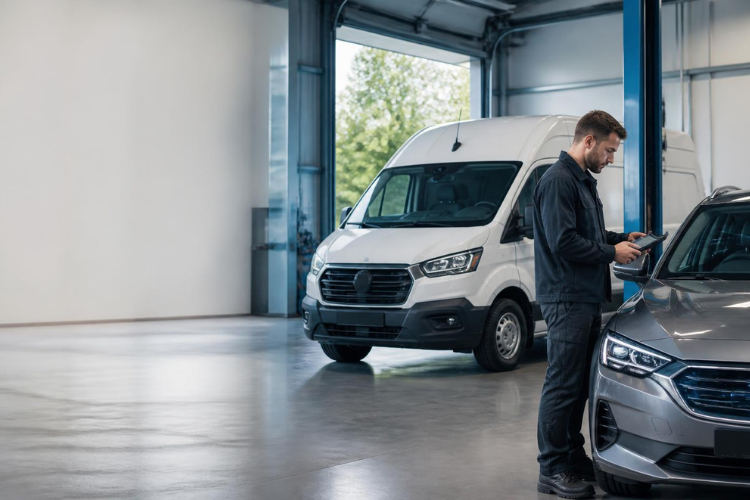
Your Car May Know More About You Than Your Old Car Did
Think about the difference between a van from 2005 and a brand-new van in 2026.
The older vehicle might have had an engine computer, a basic immobiliser and perhaps an alarm.
A modern van could have:
- Front-facing cameras
- Rear-view cameras
- 360-degree cameras
- Parking sensors
- Radar sensors
- Driver-monitoring cameras
- Lane-departure technology
- Automatic emergency braking
- Traffic-sign recognition
- Intelligent speed assistance
- GPS and navigation
- Connected vehicle services
- Bluetooth and smartphone connectivity
- Multiple electronic control units
The result is a vehicle that can generate and process vastly more information than the vehicles many of us grew up driving.
That doesn’t mean all of this information is being sent to a manufacturer or government agency. In many cases, information is processed locally within the vehicle for the system to perform its intended function.
But the fact that a vehicle can generate this information raises legitimate questions about privacy and ownership.
The Camera Doesn’t Necessarily Mean Someone Is Watching
One of the most important distinctions to make is between a camera being present and a person remotely viewing that camera.
They are not the same thing.
A driver-monitoring camera can analyse the driver’s face, eyes or head position without somebody sitting in a control room watching a live video feed.
Similarly, a forward-facing camera can identify lane markings or road signs without necessarily recording everything it sees and sending it somewhere.
This is why claims that “the government can see everything through your car camera” should be treated with considerable caution.
The technology is real. The conclusion doesn’t necessarily follow.
But The Privacy Concerns Are Real
That doesn’t mean motorists should simply dismiss all privacy concerns.
Connected vehicles are part of a much bigger shift towards data-driven technology. Smartphones, smart TVs, smart speakers and other connected devices have already changed our expectations about privacy.
Cars are now joining that ecosystem.
There are also practical questions for vehicle owners.
For example, if you sell a connected car or van, what happens to the data associated with it?
If several people drive the vehicle, whose data is being collected?
If an employer operates a fleet of connected vans, what information can it access about its drivers?
And if a manufacturer provides connected services, what information is being transmitted and for what purpose?
These are much more meaningful questions than simply asking whether your vehicle has a “spy camera”.
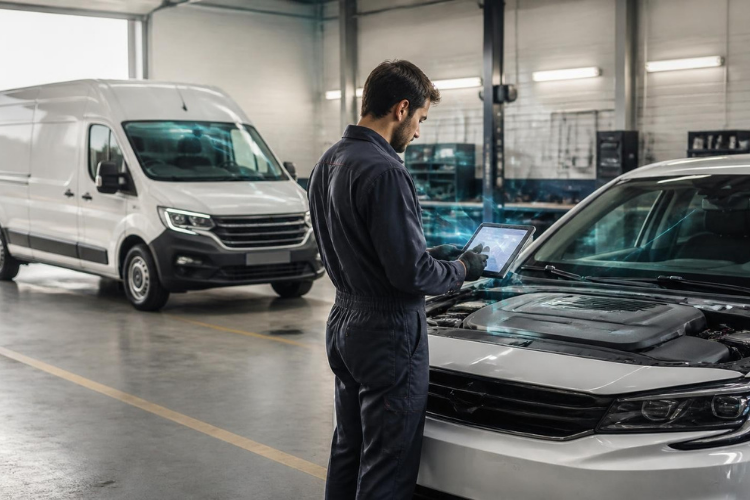
There Is Another Concern: Can You Still Repair Your Own Vehicle?
The camera debate is only one side of the story.
The other major concern is repairability.
Modern vehicles increasingly rely on software, electronic control units and security systems. That can make vehicle maintenance and repairs considerably more complicated than they were in the past.
Imagine something as simple as replacing a windscreen.
On an older vehicle, the job could largely be a mechanical one.
On a modern vehicle, however, a camera mounted behind the windscreen may form part of the vehicle’s safety systems. If that camera is disturbed or replaced, it may need to be recalibrated.
The issue is significant enough that Parliament has received evidence calling for manufacturers to provide accredited repairers with access to the latest software required for ADAS calibration and to remove technical barriers that can prevent independent repairers from completing necessary work following windscreen replacement or body repairs.
The same principle applies to radar sensors, parking sensors and other ADAS equipment.
A small accident that once meant replacing a bumper could now potentially involve sensors, cameras, wiring, electronic modules and calibration.
The vehicle may work mechanically, but its electronic systems could still require specialist attention.
Why Independent Garages Are Worried
This is where the Right to Repair debate becomes particularly interesting.
Independent garages have traditionally played an important role in keeping Britain’s cars and commercial vehicles on the road.
You didn’t necessarily need to take your van to a manufacturer’s main dealer for every repair. A competent independent garage could diagnose problems, source parts and carry out repairs.
Modern vehicle technology is making that more complicated.
Some repairs can require access to manufacturer-specific diagnostic systems, software, security information or calibration procedures.
The UK Government published an explanatory memorandum in May 2026 concerning new requirements around standardised access to vehicle on-board diagnostics and repair and maintenance information, including secure access to diagnostic information.
The issue is clearly becoming more important.
In fact, Parliament currently has a petition calling for private vehicle owners to be given regulated access to manufacturer diagnostic software, service procedures and repair information. A separate petition calls for stronger Right to Repair legislation specifically covering motor vehicles.
These petitions do not prove that manufacturers are deliberately trying to stop people repairing their vehicles. They do, however, demonstrate that vehicle repairability has become a genuine consumer issue.
Could A Simple Repair Become A Dealer-Only Job?
This is one of the biggest fears among motorists.
Nobody wants to discover that a relatively minor fault can only be fixed by taking their vehicle back to the manufacturer’s dealer network.
There are legitimate reasons why certain systems need controlled access. Vehicle security is an obvious example. Manufacturers cannot simply make immobiliser and anti-theft systems freely accessible to anybody with a laptop.
There are also safety reasons for controlling access to systems that operate braking, steering and driver assistance technology.
But there is a difference between protecting safety-critical systems and making ordinary repairs unnecessarily difficult.
That is the line at the heart of the Right to Repair debate.
What About Changing A Light Bulb?
This is one of the claims that has been circulating alongside the wider discussion: that eventually you won’t even be able to change something as simple as a light bulb without taking your vehicle to a garage.
There is some truth behind the underlying concern, but the claim is often exaggerated.
Modern vehicles increasingly use LED lighting assemblies rather than the replaceable bulbs found on older vehicles. Some lighting systems are also integrated with electronic control modules.
That can make a lighting fault considerably more complicated — and potentially more expensive — than simply replacing a traditional bulb.
But there is no general UK law saying that a vehicle owner must take their car or van to a manufacturer’s main dealer to replace a light bulb.
The bigger issue is that some modern components are no longer designed as simple, individually replaceable mechanical parts.
That is a consequence of vehicle design, rather than evidence of a secret law preventing owners from repairing their vehicles.
Is This A Bigger Problem For Van Drivers?
Potentially, yes.
For a private motorist, a vehicle being off the road can be inconvenient.
For a business, it can cost money.
A plumber without a van can’t get to a customer’s house.
A builder without a van can’t get to a site.
A delivery company without a vehicle can’t make deliveries.
A mobile mechanic without a van can’t reach customers.
This makes vehicle repairability particularly important for commercial vehicle operators.
If increasingly sophisticated technology means a minor fault requires specialist diagnostics, software access and calibration, downtime could become a more significant consideration for businesses.
This is one reason the Right to Repair debate isn’t simply about whether somebody wants to repair their own car on a Sunday afternoon. It can also be about competition, repair costs and keeping Britain’s commercial vehicles on the road.
Are Manufacturers Deliberately Making Vehicles Harder To Repair?
This is where we need to be careful.
It would be wrong to claim that every manufacturer is deliberately trying to prevent independent garages from repairing vehicles.
There are legitimate reasons for many of the technological changes taking place.
Cameras and sensors can improve road safety.
Electronic systems can make vehicles more efficient.
Software can improve performance and allow faults to be identified more accurately.
Connected technology can provide useful breakdown and maintenance information.
Driver-monitoring technology could potentially prevent accidents caused by fatigue or distraction.
Security controls can help prevent vehicle theft.
The problem is that all of these benefits can come with a trade-off.
The more dependent a vehicle becomes on software and connected technology, the more important access to that technology becomes when something goes wrong.
So Who Really Owns Your Vehicle’s Data?
This could become one of the biggest automotive debates of the next decade.
When you buy a vehicle, you own the physical vehicle.
But what about the information it generates?
What about the diagnostic data?
What about driving information?
What about information generated by connected services?
What about data generated by a camera inside the cabin?
These questions are becoming increasingly important as vehicles become more connected.
The UK is already dealing with regulations concerning access to vehicle on-board information, diagnostics and repair data, while cybersecurity and software-update requirements are also becoming an established part of vehicle regulation.
The debate is therefore no longer simply about cars and vans.
It is about data ownership, privacy, cybersecurity, competition and consumer rights.
What About Government-Required Cameras?
This is where the story becomes particularly interesting in 2026.
The UK Government is actively developing regulations around increasingly automated and connected vehicles.
Its current work on vehicle safety technologies confirms that cameras and other sensors are being used for systems such as lane-keeping, intelligent speed assistance and driver attention and distraction monitoring.
That does not mean the Government is secretly installing surveillance cameras in people’s cars.
But it does mean that governments and regulators are actively shaping the technology that will appear in future vehicles.
And that is probably why the debate feels so unsettling to some motorists.
The technology is moving faster than many people’s understanding of what it can do.
Why Connected Vehicles Are A Genuine Security Issue
There is another part of this debate that shouldn’t be dismissed as conspiracy theory: cybersecurity.
A connected vehicle is, by definition, connected to something outside itself.
That creates potential vulnerabilities.
The UK’s Vehicle Certification Agency says modern vehicle cybersecurity requirements cover passenger cars, goods vehicles and other vehicle categories, while separate requirements govern software updating and software-update management systems.
The reason for these rules is straightforward.
If software controls important parts of a vehicle, manufacturers need to ensure that the software is secure and that updates can be managed safely.
So there is a genuine balancing act.
Vehicles need to be connected enough to provide modern functionality and receive important updates, but secure enough to prevent those connections becoming a route for criminals or other malicious actors.
So Are The Conspiracy Theories True?
Some of the claims circulating online contain a small amount of truth wrapped inside a much larger conclusion.
Yes, modern vehicles have cameras.
Yes, some cameras can monitor the driver.
Yes, connected vehicles can generate and transmit data.
Yes, modern vehicles increasingly rely on software.
Yes, some repairs require specialist equipment or software.
Yes, governments and regulators are actively developing rules around connected and automated vehicles.
But that does not mean that the Government is sitting in a control room watching every driver.
It does not mean manufacturers can legally prevent every independent garage from repairing their vehicles.
And it does not mean that changing a light bulb has suddenly become illegal for vehicle owners.
The reality is more subtle — and arguably more important.
The Real Question Isn’t “Is My Car Spying On Me?”
The bigger question is:
“Who controls the technology?”
Who controls the data?
Who can access the diagnostic information?
Who can repair the vehicle?
Who can recalibrate the safety systems?
Who controls the software?
And what happens when something goes wrong?
These are questions that motorists, businesses, manufacturers, garages and governments will increasingly have to answer.
The Future Of Vehicle Ownership Is Changing
The car or van sitting outside your house may look familiar, but the technology underneath it is becoming very different.
The next generation of vehicles will likely contain even more sensors, cameras, connectivity and software, particularly as electric vans become an increasingly important part of the commercial vehicle market.
That could bring significant benefits. Vehicles could become safer, more efficient and better at identifying dangerous situations. Predictive maintenance could reduce breakdowns. Connected systems could make fleet management easier. Driver-assistance technology could prevent collisions.
But there is another side to the story.
Greater connectivity means greater responsibility for protecting personal data.
Greater reliance on software means repairers need access to the information required to fix vehicles properly.
Greater complexity could mean higher repair bills and longer periods off the road. For businesses that require specialist commercial vehicle conversions, additional electronic systems and equipment can also introduce further considerations when maintaining a vehicle.
 Call our expert team on