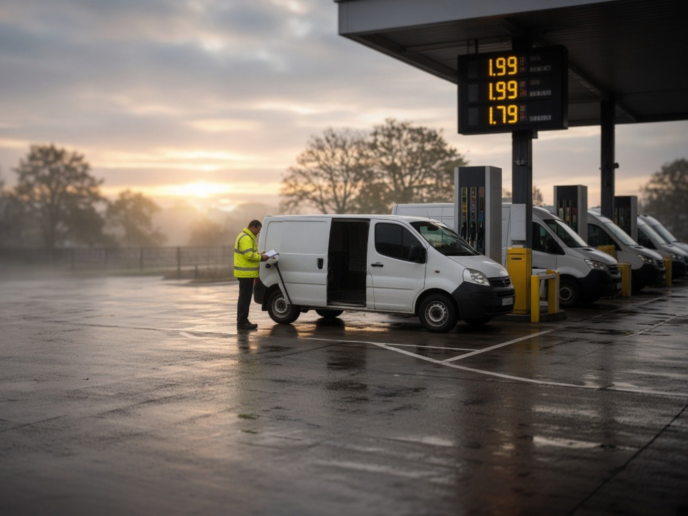
UK diesel prices have reached a new record high, adding further pressure to businesses, van operators and motorists already facing rising vehicle running costs.
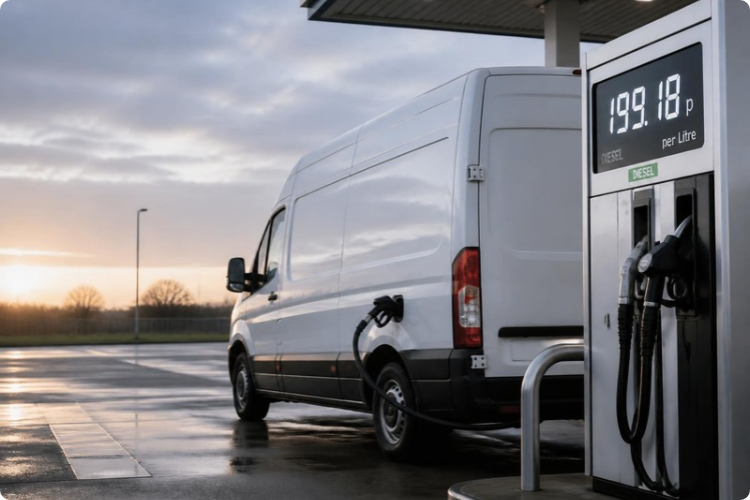
The average price of diesel at UK forecourts has climbed to 199.18p per litre, exceeding the previous record of 199.09p per litre recorded in June 2022.
The latest increase comes as global fuel markets remain under significant pressure, with disruption to oil supplies and refining capacity pushing up the cost of diesel in markets around the world.
For businesses operating vans and other commercial vehicles, the impact can be particularly significant. Unlike private motorists, many businesses cannot simply reduce the amount they drive when fuel prices rise. Delivery companies, tradespeople, engineers, couriers and other mobile businesses often depend on their vehicles every working day.
That means an increase of even a few pence per litre can become a substantial additional operating cost over the course of a year.
Diesel Reaches A New UK Record
The RAC reported that the average UK diesel price reached 199.18p per litre, taking the market beyond the previous record set in 2022.
The rise represents a significant change from earlier in the year. At the end of February, diesel was being sold at an average of 142.38p per litre, meaning the price has increased by more than 56p per litre since the start of the current period of disruption.
RAC head of policy Simon Williams said the latest record would place additional financial pressure on households and businesses that rely heavily on vehicles.
The effect is particularly pronounced for commercial operators because fuel represents an unavoidable day-to-day expense. A business operating several vans can use thousands of litres of diesel every year, meaning a major change in the price per litre can quickly feed through into the cost of running the fleet.
The increase also comes after an already sharp rise in UK fuel prices during September, with diesel now sitting extremely close to the £2-per-litre threshold.
Why Are Diesel Prices Rising?
The current increase is not being caused by a single factor.
Global diesel markets have been affected by a combination of geopolitical disruption, refinery problems, restricted exports and increased competition for available supplies.
Diesel is particularly sensitive to refining capacity because crude oil needs to be processed before it becomes usable fuel. Disruption affecting refineries can therefore have a major effect on the availability and wholesale price of diesel, even when the movement in crude oil prices does not tell the whole story.
Global diesel supplies have become increasingly tight, with refineries operating at or close to capacity while disruption in Russia, the Middle East and elsewhere continues to affect the market.
Russia’s restrictions on diesel exports have also contributed to the wider supply squeeze, adding further pressure to an already tight international diesel market.
For UK motorists and businesses, these international developments can ultimately feed through into the price displayed at the forecourt.
The UK Relies Heavily On Imported Fuel
One of the reasons international fuel markets are particularly important to the UK is the country’s reliance on imported refined products.
UK refining capacity has reduced over the years, meaning imports play an important role in meeting domestic demand.
This makes the UK more exposed to disruption elsewhere in the global fuel market. If a major supplier reduces exports, UK buyers may need to compete with other countries for alternative supplies.
The situation has also highlighted the importance of the UK’s diesel supply arrangements at a time when global inventories are under pressure.
Reports published in September have raised concerns about the amount of diesel held in UK emergency stocks. However, the precise meaning of the figures depends on whether they refer to particular categories of emergency stock or wider fuel availability, so they should not be interpreted as meaning that UK forecourts are about to run out of diesel.
The UK’s overall energy security position is more complicated than a simple number of days of fuel supply.
US Diesel Exports Could Add Further Pressure
Another issue being closely watched by the European fuel market is the possibility of US diesel export restrictions.
The United States is an important supplier of diesel to international markets, including Europe. US diesel shipments to Europe have increased significantly during 2026 as other sources of supply have been disrupted.
That makes any potential restriction on US exports particularly significant for European fuel buyers.
US politicians have called for restrictions on diesel exports as American fuel prices have risen. However, the position remains subject to change, and there has been no blanket US diesel export ban implemented at the time of writing.
For the UK, any significant reduction in US diesel exports could increase competition for alternative supplies.
That does not automatically mean UK forecourts would run out of fuel. Instead, the more immediate concern would be the potential effect on wholesale prices as buyers compete for diesel from other sources.
The eventual impact would depend on whether restrictions were introduced, their scope and how quickly alternative supplies could become available.
What Does £2-A-Litre Diesel Mean For Van Operators?
For a private motorist, a higher pump price can make filling a tank noticeably more expensive.
For a business operating commercial vehicles, however, the impact can accumulate quickly because fuel is an ongoing operating cost.
The table below illustrates how much diesel expenditure could increase at different annual mileages if the price rises by 10p per litre. The figures are illustrative and assume fuel consumption of 40mpg, so actual costs will vary according to the vehicle, payload, driving conditions and type of work being carried out.
| Annual Mileage | Approx. Diesel Used at 40 mpg | Additional Cost From A 10p/L Increase |
|---|---|---|
| 10,000 miles | 1,136 litres | £114 |
| 15,000 miles | 1,705 litres | £171 |
| 20,000 miles | 2,273 litres | £227 |
| 25,000 miles | 2,841 litres | £284 |
| 30,000 miles | 3,409 litres | £341 |
| 40,000 miles | 4,546 litres | £455 |
For a business operating multiple vans, the difference becomes more noticeable.
A fleet of 10 vans each covering 20,000 miles a year, for example, would use approximately 22,730 litres of diesel at 40mpg. A 10p-per-litre increase would therefore add around £2,273 to the fleet’s annual fuel bill, assuming all other factors remained unchanged.
At the current diesel price of 199.18p per litre, the same 20,000-mile van using 40mpg would require approximately £4,526 of diesel per year.
The actual figure will vary considerably between vehicles and businesses. A heavily loaded van operating in urban traffic is likely to achieve very different fuel economy from a lightly loaded van covering longer motorway journeys.
Nevertheless, the calculation demonstrates why fuel efficiency can become increasingly important when diesel prices approach £2 per litre.
This is also why businesses should consider expected mileage and fuel consumption when choosing their next vehicle, rather than looking at the monthly vehicle cost in isolation.
Businesses operating multiple vehicles can also consider the wider cost of managing their fleet through CVC’s Fleet Management Solutions.
Rising Fuel Prices Could Affect The Wider Cost Of Running A Van
Fuel is only one part of the total cost of operating a commercial vehicle.
Businesses also need to consider insurance, maintenance, servicing, road tax, tyres, downtime and vehicle replacement costs.
When fuel prices rise sharply, however, the fuel element of that calculation can become considerably more significant.
This is particularly relevant to businesses whose vehicles cover large annual mileage, especially as petrol and diesel prices have reached their highest levels for around four years. A courier covering hundreds of miles each week will have a very different fuel requirement from a tradesperson whose van is mainly used for local journeys.
The type of work carried out can therefore influence which vehicle and powertrain makes the most sense.
Businesses can compare different van leasing options according to their expected mileage, vehicle requirements and operating circumstances rather than considering the monthly rental in isolation.
Fuel Economy Is Becoming An Increasingly Important Consideration
With diesel now approaching £2 per litre, fuel efficiency deserves greater consideration when businesses choose their next van.
The advertised fuel economy figure will not necessarily match real-world consumption, as factors such as payload, traffic, driving style, motorway use and stop-start operation can all affect how much fuel a vehicle actually uses. Businesses comparing models can also consider the most fuel-efficient vans available in the UK when assessing their options
For a commercial operator, those differences can accumulate over thousands of miles.
A vehicle that uses slightly less fuel per mile may therefore reduce operating expenditure over the course of a lease, although the saving will depend on the vehicle, mileage and prevailing fuel prices.
Businesses should also consider whether they need a diesel vehicle at all.
Petrol, hybrid and electric vans are increasingly available, although the suitability of each option depends heavily on how the vehicle is going to be used.
Could Electric Vans Reduce Exposure To Diesel Prices?
The increase in diesel prices is likely to encourage some businesses to reassess their choice of powertrain.
Electric vans do not require petrol or diesel, meaning businesses operating them are not directly exposed to changes in pump prices.
However, switching to an electric van involves considerably more than comparing the cost of electricity with the price of diesel. Comparing an electric van with a diesel van also means considering mileage, charging arrangements, maintenance and how the vehicle will actually be used.
Businesses need to consider daily mileage, payload, charging access, journey patterns and how long vehicles are stationary between trips.
For a company whose vans return to base every evening, workplace charging could potentially form an important part of the operating model. A business whose vehicles spend most of the day away from its premises may need to rely more heavily on public charging.
CVC’s guide to Switching To An Electric Vehicle looks at some of the practical considerations involved when moving away from conventional petrol and diesel vehicles.
The cost of charging also needs to be considered. Public charging prices can vary considerably depending on the provider and charger used, while businesses with access to workplace charging may have different costs.
For businesses assessing whether an electric van is suitable, CVC’s Electric Van FAQs provides further information about charging, range and other practical considerations.
That does not mean electric will automatically be the right choice for every business.
High-mileage operators, businesses carrying heavy payloads or companies without suitable charging infrastructure may still have operational reasons for choosing diesel.
Fuel Duty Adds Another Layer Of Uncertainty
The price businesses pay at the pump is not determined solely by the wholesale cost of oil or diesel.
Fuel duty and VAT also form part of the final retail price.
The Government’s temporary 5p-per-litre fuel duty reduction, originally introduced in 2022, is currently scheduled to remain in place until the end of 2026. Current legislation provides for increases in fuel duty during 2027.
That means businesses could potentially face pressure from two directions: changes in the underlying wholesale price of diesel and changes in the amount of duty included in the pump price.
For businesses planning vehicle budgets several years ahead, this makes fuel expenditure more difficult to forecast.
The impact will naturally depend on future Government decisions and movements in global energy markets.

Higher Fuel Costs Can Feed Through To Businesses And Consumers
The consequences of expensive diesel extend beyond the vehicle owner.
Vans and trucks are used throughout the UK’s supply chain, from transporting goods between warehouses to delivering products directly to customers.
A business facing higher transport costs has several options. It may absorb the additional expense, reduce margins, improve efficiency or ultimately pass some of the increase on through its prices.
The same applies to businesses where vans are essential to providing services.
A plumber, electrician, engineer or maintenance company, for example, may need to travel to customers regardless of the price of diesel. Higher fuel expenditure therefore becomes part of the cost of carrying out the work.
This is one reason fuel prices can contribute to wider inflationary pressure.
Businesses can also face higher costs elsewhere at the same time, including wages, insurance, servicing and parts.
Businesses Need To Consider The Whole Cost Of Vehicle Operation
The current diesel price record demonstrates why businesses should consider more than the initial cost of acquiring a van.
The monthly lease payment is only one part of the overall cost.
Annual mileage, fuel consumption, maintenance requirements, insurance, taxation and vehicle suitability can all influence how much a commercial vehicle costs to operate.
Mileage is particularly important.
A vehicle covering 25,000 miles a year is likely to have a substantially different fuel requirement from one covering 8,000 miles, even if both vehicles have identical lease payments.
Businesses reimbursing employees for eligible business journeys also need to keep accurate mileage records and use the appropriate HMRC rates. CVC’s AER Reimbursement Calculator can help businesses calculate advisory fuel reimbursement for eligible journeys.
What Does The Diesel Price Record Mean For Fleet Planning?
The latest record provides another reason for businesses to review how their vehicles are being used.
For an existing fleet, that could mean examining annual mileage, fuel consumption and route patterns to understand where the greatest costs are being generated.
For a business preparing to replace vehicles, it may mean comparing different powertrains and vehicle types against actual operating requirements.
There is no single solution for every commercial vehicle operator.
A diesel van may remain the most practical option for some businesses because of mileage, payload, journey requirements or the availability of refuelling infrastructure. Others may be able to consider petrol, hybrid or electric alternatives.
The important consideration is how the vehicle will actually be used.
Businesses operating vehicles in urban areas should also factor in any local charging or emissions requirements. CVC’s complete guide to ULEZ, Clean Air Zones and Low Emission Zones in the UK explains the different restrictions and charges that can affect motorists and commercial vehicle operators.
UK Diesel Prices Remain Vulnerable To Global Events
The latest record diesel price demonstrates just how closely the UK’s fuel market is connected to international events.
Disruption to refineries, export restrictions, conflicts and changes in global demand can all influence the amount businesses ultimately pay at UK forecourts.
The situation is particularly significant for diesel because the fuel remains essential to road transport, logistics, construction, agriculture and numerous other industries.
Global diesel supplies have already been affected by reduced Russian exports and disruption to refining capacity, while Europe is competing for alternative supplies.
For UK businesses, the result is an increasingly difficult fuel-cost environment.
The potential for further changes to US diesel exports adds another variable, although the eventual effect on UK prices will depend on whether restrictions are introduced, their scope and how quickly alternative supplies become available.
At the same time, changes to UK fuel duty mean businesses need to consider both international market conditions and domestic taxation when planning future vehicle costs.

 Call our expert team on