UK businesses could face further pressure on vehicle running costs after the US backed the idea of restricting diesel exports, adding another layer of uncertainty to an already difficult global fuel market.
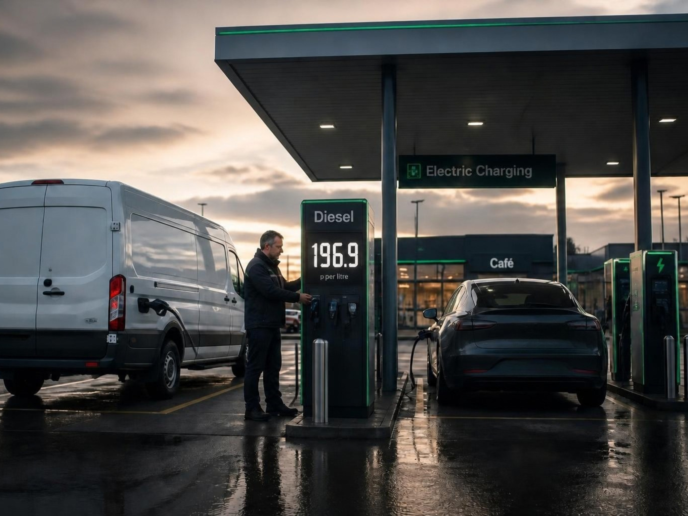
Diesel prices have risen sharply during September, with the latest figures putting the average UK price at 196.89p per litre, while petrol stood at 172.85p per litre.
That puts diesel within touching distance of £2 a litre, creating additional pressure for businesses that depend on vans and other commercial vehicles every day.
The potential US export restrictions come as global diesel supplies are already under pressure, with disruption to international oil markets contributing to higher fuel prices.
For UK businesses, the situation is particularly relevant because the country relies heavily on imported fuel. Any significant reduction in US diesel exports could tighten international supplies further and potentially add to wholesale and pump price pressures.
US Diesel Export Ban Could Add To UK Fuel Price Pressure
The US is considering measures to restrict diesel exports as it looks for ways to tackle rising domestic fuel prices.
The scale and timing of any potential restriction remain uncertain, but limiting exports from one of the world’s major fuel suppliers could have consequences beyond the American market.
The UK is increasingly reliant on imported fuel, meaning disruption to international supply can quickly become a concern for motorists and businesses.
It is not yet clear whether the US will introduce an export ban, or precisely what effect any restrictions would have on UK fuel prices.
However, with diesel already approaching £2 a litre, the prospect is another concern for businesses trying to manage their vehicle operating costs.
Rising Diesel Costs Matter To Van-Based Businesses
For a private motorist, an increase of several pence per litre can make a noticeable difference to the cost of filling a car.
For a business operating several vans, the impact can be considerably greater.
Tradespeople, delivery companies, couriers, engineers and other businesses can cover thousands of miles each year. When fuel prices rise, the additional cost is multiplied across every vehicle and every journey.
This makes fuel economy an increasingly important consideration when businesses choose their next commercial vehicle.
Our The True Cost Of Running A Van guide looks at the wider costs businesses need to consider, rather than focusing solely on the initial vehicle price or monthly lease payment.
The latest rise also follows a period of sustained pressure on UK fuel costs, as covered in our article on Petrol And Diesel Prices Hit Four-Year High.
Fuel efficiency is another important part of the equation, particularly for businesses covering high annual mileages. Our Ultimate Fuel Economy Guide looks at how vehicle efficiency can affect running costs.
Diesel Is Already Close To £2 A Litre
The latest increase follows a period of considerable volatility in global energy markets.
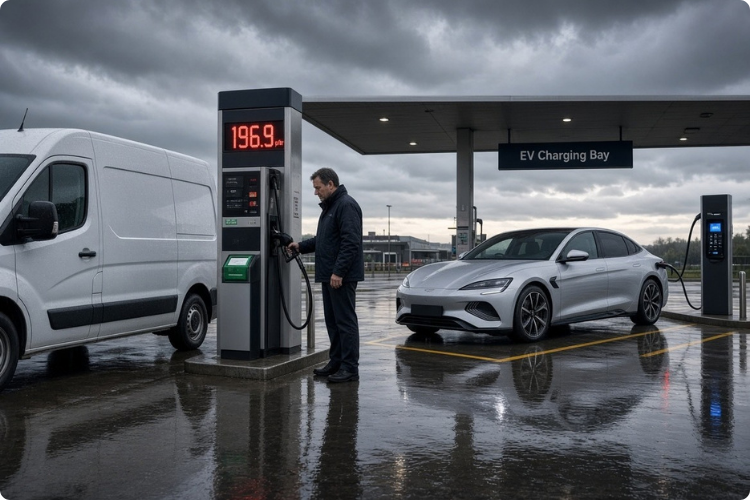
UK diesel prices have climbed significantly during September, moving from around 184p per litre at the start of the month to almost 197p per litre. The increase is part of a wider period of volatility in the UK fuel market, with our UK Fuel Prices Rising article looking at the factors behind the latest increases.
That is particularly significant for commercial vehicle operators because diesel remains an important fuel for the UK’s van market.
A business covering 20,000 miles a year in a diesel van could use well over 2,000 litres of fuel, depending on the vehicle, payload and driving conditions. Even a relatively small change in the price per litre can therefore translate into hundreds of pounds of additional annual expenditure for a single vehicle.
Multiply that across a larger fleet, and the difference becomes considerably more substantial.
This is one reason why businesses may want to consider Fleet Management Solutions that take the wider cost of operating vehicles into account.
Rising Fuel Prices Could Make Electric Vans More Attractive
Higher diesel prices may also encourage businesses to look more closely at alternative powertrains. The relationship between rising fuel costs and electric vehicle adoption is explored further in our guide to Leasing An Electric Vehicle As Fuel Prices Rise.
Electric vans are becoming an increasingly established part of the UK commercial vehicle market, with more models now available across different sizes and applications.
However, switching from diesel to electric is not simply a case of comparing the cost of a litre of fuel with the cost of electricity. Businesses considering the switch can also look at How Much Could You Save By Switching From A Diesel Van To An Electric Van?, which considers the potential running-cost differences between the two powertrains.
Businesses need to consider annual mileage, daily routes, payload requirements, charging availability and where vehicles are parked when not in use.
Our guide to Switching To An Electric Vehicle covers some of the practical considerations businesses should look at before making the move.
Charging infrastructure is another important factor. Businesses considering electric vans need to understand whether workplace, home or public charging will work for their particular operation.
Our Electric Vehicle Charging Guide looks at the different charging options available to UK businesses.
For some businesses, an electric van could provide a way of reducing exposure to fluctuating diesel prices. For others, diesel may remain the more practical option because of mileage, payload, journey patterns or charging limitations.
Charging can also be a consideration for employees or businesses that do not have dedicated off-street parking. Our guide to EV Charging Without A Driveway looks at some of the options available where home charging is not straightforward.
Businesses also need to consider the availability of public and workplace charging, particularly where vehicles cover high daily mileages. Our Electric Vehicle Charging Explained guide covers the different charging options available.
Fuel Duty Adds Another Cost For Businesses
Wholesale fuel prices are not the only factor affecting what businesses pay at the pump.
Fuel duty also makes up a significant proportion of the price motorists pay, and further increases remain an important consideration for businesses planning their future vehicle costs.
The Government previously announced plans to begin reversing the temporary 5p-per-litre fuel duty reduction introduced in 2022. However, the planned September 2026 increase was delayed until the end of the year as fuel prices came under further pressure.
Further increases are expected from 2027, meaning businesses could face additional fuel costs even if wholesale prices stabilise.
For companies already dealing with higher wages, insurance, maintenance and other operating costs, additional fuel expenditure can make fleet budgeting more difficult.
The issue is particularly relevant for businesses that have little flexibility over how much they drive. A delivery business or mobile service provider cannot simply reduce mileage every time fuel prices increase.
Businesses Need To Look Beyond The Pump Price
The current situation highlights why the cost of operating a commercial vehicle is considerably more than the monthly lease payment.
Fuel, maintenance, insurance, mileage, taxation and vehicle efficiency can all influence the overall cost of running a van.
For businesses reviewing their fleets, understanding those costs before committing to a vehicle can provide a clearer picture of what it will actually cost to operate over the course of a lease.
Businesses can also use our HMRC AER Reimbursement Calculator when looking at business mileage reimbursement for eligible electric vehicles.
With diesel prices now approaching £2 per litre and global fuel supplies remaining vulnerable to further disruption, operating costs are likely to remain an important consideration for van-based businesses.
 Call our expert team on