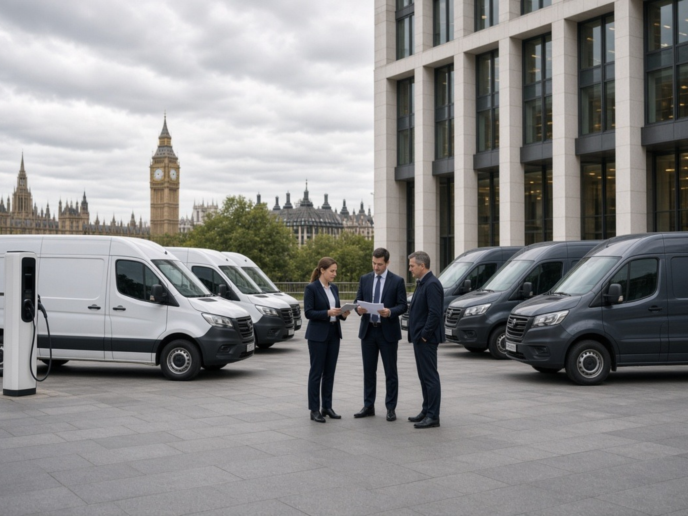
The National Franchised Dealers Association (NFDA) has called for a change to the UK’s Zero Emission Vehicle (ZEV) Mandate, proposing lower 2030 targets for both cars and vans.
The organisation has submitted its response to the Government’s ongoing ZEV Mandate consultation, arguing that the targets should better reflect consumer demand, charging infrastructure and the practical realities of the current vehicle market.
For the van market, the NFDA is proposing that 40% of new vans sold in 2030 should be zero-emission. It is also proposing a 50% to 60% zero-emission target for new cars.
The proposals come as the Government reviews the future operation of the ZEV Mandate, with the consultation remaining open until 23 October 2026.
What Is The NFDA Proposing?
The NFDA’s consultation response calls for a revised trajectory towards the Government’s longer-term zero-emission vehicle ambitions.
Its proposed 2030 targets are:
| Vehicle type | NFDA proposed 2030 target |
|---|---|
| New cars | 50%–60% zero-emission |
| New vans | 40% zero-emission |
The organisation says a more gradual trajectory would allow additional time for customer demand, charging infrastructure and vehicle choice to develop.
The NFDA is also calling for greater flexibility within the ZEV Mandate. This includes additional credits for zero-emission vans and what it describes as more proportionate compliance payments for manufacturers.
Sue Robinson, Chief Executive of the NFDA, said the organisation remains committed to the transition towards zero-emission vehicles, but believes the targets need to reflect what customers are currently able and prepared to purchase.
The NFDA’s position is therefore not a call to end the transition to electric vehicles. Instead, its submission seeks a different pace of transition towards the Government’s longer-term objectives.

Electric Vans Are Still Behind The Current Target
The timing of the NFDA’s submission is particularly relevant to the commercial vehicle market.
Electric van registrations have been increasing in the UK, but their overall share remains below the trajectory set by the current ZEV Mandate.
According to the Society of Motor Manufacturers and Traders (SMMT), electric vans accounted for 11% of UK new van registrations between January and August 2026.
That compares with a 24% ZEV Mandate target for vans in 2026, meaning the market remains less than halfway towards the required proportion.
The figures do, however, show continued growth.
In August alone, electric van registrations increased by 25.9% year on year to 2,395 vehicles, giving electric vans a record monthly market share of 16.3%.
SMMT cautioned that August is normally a lower-volume month, meaning individual monthly figures can produce larger percentage movements than the year-to-date position.
The difference between the monthly and year-to-date figures highlights the challenge facing the commercial vehicle industry: electric van adoption is growing, but it has not yet reached the levels required by the current mandate.
Why Electric Vans Are Different
For businesses, moving from a diesel van to an electric model is not simply a question of choosing a different powertrain.
A van needs to perform its intended job, and the suitability of an electric model can depend heavily on how it is operated.
The NFDA specifically identifies range, payload, towing capability and access to charging as important considerations for businesses.
For a business operating a van locally from a depot with overnight charging, an electric van may be relatively straightforward to integrate into its fleet.
The situation can be different for businesses covering high annual mileage, carrying heavy loads, towing regularly or operating vehicles across areas where convenient charging is not always available.
This is one reason why the transition to electric vans can be more complicated than simply looking at the number of electric models currently available.
Businesses considering the change can also need to consider workplace charging, public charging availability, journey patterns and whether the vehicle’s usable range and payload meet their operational requirements. Businesses considering the transition can also read our guide to switching to an electric vehicle for more information on the practical considerations involved.
For businesses considering their next vehicle, our electric van leasing options provide an alternative to purchasing an electric commercial vehicle outright.
The Electric Van Market Is Expanding
Despite the gap between registrations and the ZEV Mandate target, the electric van market itself continues to develop.
SMMT reported that electric vans represented 16.3% of new LCV registrations in August 2026, while electric van registrations were up by more than a quarter compared with August 2025.
The organisation also reported that more than two-thirds of van models available on the market now have an electric version, demonstrating how manufacturers have expanded their zero-emission commercial vehicle ranges.
This growing choice of electric vans could make electrification increasingly viable for businesses with suitable operating patterns
However, the fact that a vehicle is available as an electric model does not necessarily mean it will be appropriate for every operator.
Payload, body configuration, range, charging requirements and daily mileage all remain important when assessing whether an electric van can replace a conventional petrol or diesel vehicle.
What Is The Government’s ZEV Mandate Review?
The Government launched its formal review of the ZEV Mandate in August 2026.
The consultation is examining how the Vehicle Emissions Trading Schemes (VETS) Order, which underpins the ZEV Mandate, is operating and whether changes are required.
Among the areas being considered are the existing annual ZEV targets, compliance flexibilities and alternative policy approaches.
The Government has said the review is intended to help ensure the policy remains effective while also supporting consumers, industry and the UK’s wider decarbonisation objectives.
The consultation is being conducted jointly by the UK Government and devolved governments for the relevant parts of the legislation.
The Government’s wider objective remains for all new cars and vans to be zero emission by 2035, while its policy framework also includes the planned 2030 phase-out of new cars relying solely on internal combustion engines.
The current review could therefore have a significant bearing on how the market progresses towards those longer-term objectives.
Charging Infrastructure Is Part Of The Equation
The NFDA’s response also highlights charging infrastructure as one of the factors that needs to develop alongside vehicle demand.
For commercial vehicle operators, this can be particularly important.
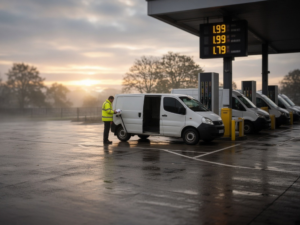
A private car can often be charged at home overnight, whereas a van may be operated by a business with several vehicles returning to the same premises. That can make workplace charging an important part of the transition.
Our guide to Electric Vehicle Charging Explained: Home, Workplace & Employee Solutions for UK Businesses explains the different charging options available to businesses and their employees.
The Government says more than 120,000 public charge points are now available across the UK and has announced a further £600 million investment in charging infrastructure. It also says there are more than one million chargers in homes and workplaces.
The availability of charging is therefore increasing, but businesses still need to consider whether the infrastructure available to their particular operation is suitable. The Government has also introduced measures to support the development of EV infrastructure, including its Electric Vehicle Infrastructure Support Service.
For some fleets, depot charging may be the most practical solution. For others, access to rapid and ultra-rapid public charging could be more important.
This is also why businesses should assess their actual driving requirements before choosing their next van rather than assuming that one powertrain will suit every operation.
What Could A Lower 2030 Target Mean For Van Buyers?
The NFDA’s proposed 40% target is not Government policy at this stage.
It is the organisation’s response to the current consultation, and the Government will need to consider this alongside submissions from manufacturers, retailers, businesses, charging operators, consumers and other organisations. The NFDA is also not the only industry voice to have raised concerns about the current trajectory, with Ford previously calling for a review of the ZEV Mandate.
The Government’s consultation specifically asks for views on the existing ZEV trajectory and annual headline targets, as well as the effectiveness of the current compliance mechanisms and potential alternative approaches.
Any eventual changes could affect the commercial vehicle market in several ways, particularly as businesses continue to assess the implications of the UK’s Zero Emission Vehicle Mandate.
Manufacturers may have greater flexibility over the pace at which they need to increase zero-emission sales. At the same time, changes to the mandate could influence model availability, manufacturer incentives and the wider balance between electric and conventionally powered vehicles.
For businesses, however, the most important question is likely to remain whether an electric van is suitable for the work it needs to perform.

The ZEV Mandate Consultation Closes In October
The NFDA’s submission is one contribution to a wider Government consultation that remains open until 23 October 2026.
The Department for Transport says evidence gathered through the consultation could inform future amendments to the Vehicle Emissions Trading Schemes Order.
That means the final outcome has not yet been decided.
For van operators, the coming months could therefore provide greater clarity over the future direction of the ZEV Mandate and what manufacturers will be expected to achieve during the remainder of the decade.
In the meantime, businesses should continue to assess electric vans on their individual requirements, including mileage, payload, range, charging access and the type of work the vehicle will undertake.
 Call our expert team on