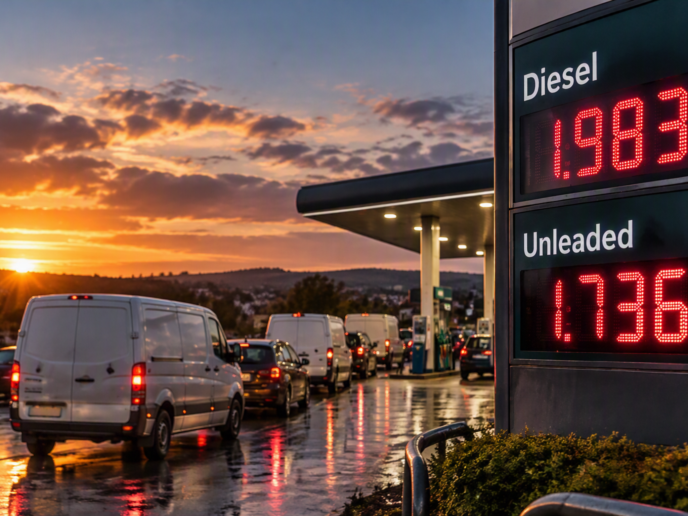
UK diesel prices have climbed to their highest level in Europe, with the average cost of a litre now just below £2 as rising wholesale costs continue to put pressure on motorists and businesses.
The latest figures from the RAC show that the average UK diesel price reached 198.32p per litre on 25 September 2026. That leaves the national average just 0.77p below the previous record of 199.09p per litre, recorded in June 2022.
The RAC says the UK is now paying around 12p per litre more for diesel than Finland and the Netherlands, which had previously been among the European countries with the highest diesel prices.
The sharp increase is creating additional pressure for businesses operating diesel-powered cars, vans and commercial vehicles, particularly those covering high annual mileages.
Diesel Prices Rise More Than 14p Per Litre In September
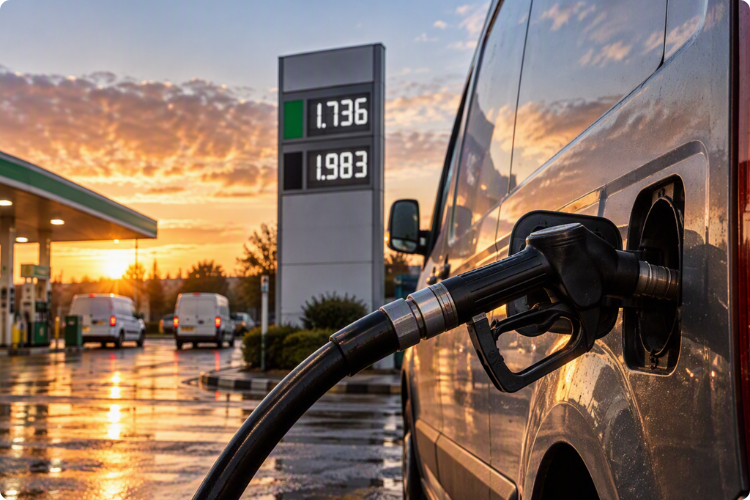
Diesel prices have risen particularly quickly during September.
According to the RAC, the average price has increased by 14.5p per litre during the month alone. Since 28 February 2026, when the current conflict involving the US and Iran began, diesel has increased by 55.9p per litre, representing a rise of 39.3%.
The increase has also affected petrol drivers.
Petrol is now averaging 173.6p per litre, its highest level in more than four years. The RAC says petrol has risen by almost 12p per litre during September and by more than 40p per litre since 28 February.
For businesses running vehicles every day, these increases can quickly feed through into operating costs.
A van travelling tens of thousands of miles each year can use a significant amount of fuel, meaning a sustained increase in the cost per litre can have a noticeable effect on the overall cost of running a vehicle.
| Fuel price measure | Latest figure |
|---|---|
| UK average diesel price | 198.32p per litre |
| Previous diesel record | 199.09p per litre |
| Diesel increase during September | More than 14p per litre |
| Diesel increase since 28 February | Around 55p per litre |
| UK average petrol price | 173.6p per litre |
| Petrol increase during September | Nearly 12p per litre |
| Approximate cost of 55 litres of diesel | £109 |
| UK diesel price compared with Finland/Netherlands | Around 12p per litre higher |
A 55-Litre Diesel Fill-Up Now Costs Around £109
The latest average diesel price means filling a 55-litre tank costs approximately £109.
That is around £30 more than the equivalent fill-up cost at the start of the current US/Iran conflict, according to the RAC’s analysis.
The impact can be considerably greater for commercial vehicles because many vans have larger fuel tanks than passenger cars and can cover significantly greater annual mileages.
For businesses operating multiple vehicles, the difference between diesel costing £1.40 per litre and almost £2 per litre becomes particularly significant when multiplied across an entire fleet.
Fuel is also only one element of the total cost of operating a commercial vehicle. Businesses also need to consider insurance, maintenance, tyres, vehicle tax, depreciation and downtime when calculating their overall transport expenditure.
Our guide to The True Cost Of Running A Van: What Businesses Need To Budget For In 2027 looks at the wider costs businesses should consider when operating a van.
Why Are UK Diesel Prices Rising?
There are several factors contributing to the latest increase.
The most significant pressure is coming from international energy markets, with crude oil prices remaining elevated amid continued geopolitical uncertainty.
The RAC says the price of a barrel of oil has reached around $106, having remained close to the $100 level for much of the previous two weeks.
Higher crude oil prices can increase the wholesale cost of producing petrol and diesel. However, pump prices are also affected by refining capacity, supply availability, exchange rates, distribution costs and retailer pricing.
The current situation is particularly challenging for diesel because supplies of refined diesel have also been affected by disruption to international markets.
US Diesel Export Ban Could Put Further Pressure On UK Prices
Another potential source of pressure is the possibility of restrictions on US diesel exports.
The US is considering a temporary diesel export ban as it attempts to reduce domestic fuel prices. The European Commission has warned that such a move could negatively affect both the US and European markets.
The issue is particularly important for the UK because of its reliance on imported refined fuel.
The Guardian has reported that the UK could lose almost 90,000 barrels of US distillate per day, equivalent to around 18% of UK consumption, if exports were stopped.
A reduction in the amount of diesel available to international markets could place additional pressure on wholesale prices, although the eventual effect would depend on how long any restrictions lasted and how alternative supplies responded.
The potential impact is covered in more detail in UK Van Drivers Face Further Fuel Price Pressure As US Considers Diesel Export Ban.
Why Rising Diesel Prices Matter To Van Fleets
Fuel costs can represent a significant proportion of the running costs for businesses that depend on commercial vehicles.
The effect is particularly noticeable for operators with high annual mileages.
For example, a van travelling 20,000 miles per year will consume considerably more fuel than one covering 8,000 miles. The difference in fuel expenditure becomes even greater when the price of diesel rises sharply.
Fleet operators therefore need to consider both fuel consumption and annual mileage when assessing the cost of running different vehicles.
A vehicle with a slightly higher lease cost could potentially have lower overall operating costs if it offers substantially better fuel economy. Equally, a lower-cost vehicle may not necessarily be the cheapest option over the whole period it is operated.
This is why looking at the total cost of ownership can be more useful than focusing solely on the monthly vehicle cost.
Could Higher Diesel Prices Increase Interest In Electric Vans?
The latest fuel-price increases could encourage businesses to reassess the cost of running diesel vans and consider whether switching to an electric vehicle could reduce their overall operating costs. However, higher diesel prices do not automatically make an electric van the cheaper option. Potential savings depend on factors including annual mileage, electricity costs, charging arrangements, vehicle efficiency and how the van is used.
Electric vans are not directly affected by movements in the wholesale diesel market because they use electricity rather than conventional fuel. However, their running costs are still influenced by electricity prices and where and how the vehicle is charged.
For example, a business with access to workplace charging may have a very different operating cost from one that relies primarily on public rapid chargers. Daily mileage and journey patterns also matter. An electric van may be well suited to a business completing predictable local routes, while a company covering long distances with limited charging opportunities may have different requirements.
Businesses considering an electric van can also find answers to common questions around charging, range, running costs and day-to-day use in our Electric Van FAQs.
Businesses can also use our How Much Could You Save By Switching From A Diesel Van To An Electric Van? guide to compare the potential running-cost difference between the two powertrains.
Businesses Need To Consider More Than Fuel Type
Although fuel prices are an important consideration, businesses should avoid looking at fuel or electricity costs in isolation when choosing a commercial vehicle.
The right vehicle depends on the work it needs to perform. Factors such as payload, load space, annual mileage, journey length, vehicle range, charging access and expected utilisation can all affect the suitability of a particular vehicle.
For some businesses, diesel will continue to offer the combination of range, refuelling speed and practicality required for their operations. For others, higher diesel prices could make alternative powertrains more attractive, particularly where vehicles operate predictable routes and can be charged at relatively low cost.
Businesses operating in urban areas should also consider whether vehicle choice affects the charges associated with driving in regulated areas. Our guide to EV Congestion Charge Exemption explains the rules businesses and drivers need to consider.
HMRC Mileage Rates Also Matter For Business Drivers
Fuel costs can also be relevant when businesses reimburse employees who use vehicles for work journeys.
HMRC publishes advisory fuel rates that employers can use when calculating the amount paid to employees for business mileage in company cars. The rates vary according to fuel type and, for petrol and diesel vehicles, engine size.
The latest New HMRC Advisory Fuel Rates Take Effect From September 2026 include updated rates for petrol, diesel, LPG and electric vehicles.
Businesses that reimburse employees using their own vehicles for business journeys can also use our HMRC AER Reimbursement Calculator to help calculate the appropriate reimbursement amount based on the journey and applicable rate.
For businesses, these rates provide a useful reference point when calculating business mileage reimbursement, although they are separate from the actual amount a driver may pay at the pump.
Diesel Prices Are Close To A New Record
At 198.32p per litre, the UK average is now only 0.77p below the previous record of 199.09p per litre.
The RAC has indicated that the record could be exceeded as retailers continue to pass on higher wholesale costs.
The latest figures also demonstrate how quickly fuel prices can change.
The latest figures also demonstrate how quickly fuel prices can change. On 23 September, the RAC reported an average diesel price of 197.31p per litre; two days later, the figure had increased to 198.32p
Individual forecourts can also be considerably more expensive than the national average, meaning some motorists and businesses are already paying more than £2 per litre.
With diesel prices continuing to be influenced by international oil markets, refining capacity and global fuel supply, businesses operating diesel vans are facing another significant increase in one of the key costs associated with vehicle operation.
 Call our expert team on