
A new campaign is encouraging electric vehicle (EV) owners across the UK to share their home charging facilities with other motorists, potentially providing a more affordable and convenient alternative for people without private parking.
Led by Zemo Partnership, the initiative aims to make better use of existing residential chargepoints by allowing homeowners to offer charging access to nearby drivers through dedicated regulated apps.
The arrangement could benefit both parties. Motorists without access to a driveway or private charger gain another local charging option, while homeowners can generate additional income by making their equipment available when they are not using it.
The campaign highlights an opportunity to improve access to EV charging without relying entirely on the installation of new public charging infrastructure. It also adds another option for households that cannot easily install their own equipment, an issue explored in CVC’s guide to EV charging for households without driveways.
For many households, particularly those living in terraced properties, flats or rented accommodation, installing a dedicated home chargepoint is not always practical. Property restrictions, installation requirements and the availability of suitable parking can all influence whether a private charger is a realistic option. CVC has also examined recent changes to home EV charging installation rules.
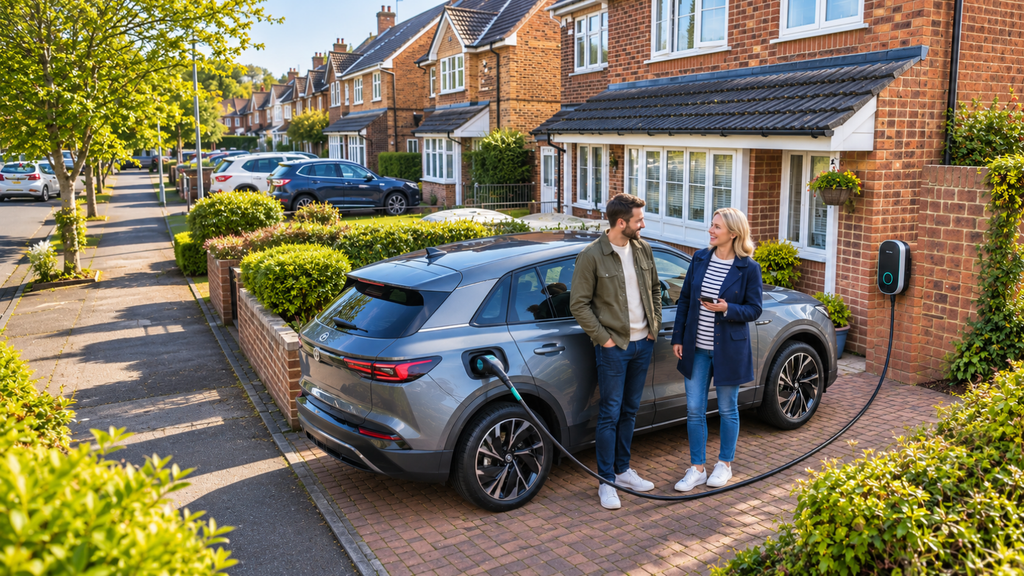
More Than Nine Million UK Households Face Home Charging Barriers
Zemo Partnership estimates that more than nine million households across the UK do not have straightforward access to home EV charging.
A lack of off-street parking is one of the main obstacles, particularly for residents who rely on on-street parking. Renters may also face restrictions or difficulties obtaining permission to install charging equipment, while other property-related limitations can make installation impractical.
Without access to private charging, motorists may have to depend more heavily on public charging networks, potentially increasing the cost and inconvenience of running an electric vehicle. The availability of local alternatives is therefore important, alongside the continued expansion of the UK’s public EV charging network.
The wider development of charging infrastructure remains another part of the picture. CVC has previously reported on growth in EV charging infrastructure, highlighting the importance of expanding charging provision as electric vehicle use increases.
The cost difference between residential and public charging can also influence where motorists choose to recharge. CVC has examined the VAT differences between home and public EV charging, an issue that can affect the overall cost of running an electric vehicle.
Drivers looking to assess potential charging expenses can also use CVC’s EV journey cost calculator to estimate the cost of charging for a particular journey, or its electric vehicle running cost calculator to explore electricity costs more generally.
The new campaign aims to raise awareness of the opportunities offered by residential chargepoint sharing, with support from several organisations across the automotive and EV charging industries. These include The AA, Corpay, EVA England and Zapmap.
The initiative also reflects wider efforts to improve charging availability for people who cannot install their own equipment.
Jonathan Murray, managing director of Zemo Partnership, highlighted the difference between motorists who can conveniently charge at home and those who face practical barriers to accessing residential charging.
He believes making better use of existing chargepoints could help narrow that gap and make electric vehicle ownership more accessible.
Murray also pointed to the financial advantages of sharing. Drivers could benefit from potentially cheaper local charging, while chargepoint owners would have an opportunity to earn additional income from equipment that might otherwise remain unused for much of the day.
He emphasised that sharing should complement the expansion of public charging facilities rather than replace the investment needed to develop a comprehensive charging network.
Shared Charging Could Give Businesses More Flexibility
The potential benefits of home chargepoint sharing could extend beyond private motorists, particularly for businesses operating electric company cars and commercial vehicle fleets.
Employees who cannot install a charger at their property may otherwise have to rely on public facilities or workplace charging. Access to privately owned chargepoints within their local area could provide another option, helping businesses offer greater flexibility to drivers. For businesses providing electric company cars, charging arrangements are only one consideration. Employers should also understand the tax implications, including the changes to electric company car tax relief from April 2027.
Organisations operating a grey fleet may also have employees who use their privately owned electric cars for business journeys but do not have access to home charging. Shared residential chargepoints could provide these drivers with another local charging option, although businesses would need clear arrangements for reimbursing business-related electricity costs. CVC’s grey fleet management guide explains some of the considerations involved in managing employees’ own vehicles for business use.
Businesses assessing their options can refer to CVC’s guide to how EV charging works for businesses, which covers residential, workplace and other charging arrangements.
Tom Rowlands, managing director of global EV solutions at Corpay, which includes fuel payment provider Allstar, said making the transition to electric vehicles more practical and accessible remained an important objective for the organisation.
He highlighted the importance of providing charging arrangements that reflect the different operational requirements of businesses and their drivers.
Access to convenient charging close to home could help reduce costs while giving employees greater confidence that electric vehicles can fit into their everyday routines.
Rowlands also suggested that providing businesses and drivers with more choice over charging locations could help remove some of the practical obstacles associated with electrification.
For fleet operators, this is particularly relevant when considering employees who do not have driveways or access to dedicated residential charging facilities. Businesses that reimburse employees for electricity used to charge company vehicles at home can refer to CVC’s coverage of home EV charging reimbursement for UK fleets.
The reimbursement process is another consideration. CVC has covered the introduction of a two-tier EV mileage reimbursement tool for fleets, while its AER reimbursement calculator provides a practical resource for businesses calculating advisory electricity rate reimbursements.
Charging duration can also influence how businesses plan vehicle use and employee access to charging facilities. CVC’s EV charging time calculator can help estimate how long a vehicle may need to recharge.
As the number of electric vehicles on UK roads increases, providing drivers with reliable and accessible charging options will remain an important part of fleet electrification strategies. Businesses considering the practical requirements of making the transition can read CVC’s guide to transitioning a business van fleet to electric.
The shift is already affecting commercial vehicle operators. CVC has also reported on electric van adoption among UK business fleets, providing further context on the growing use of electric vehicles by businesses.
 Call our expert team on