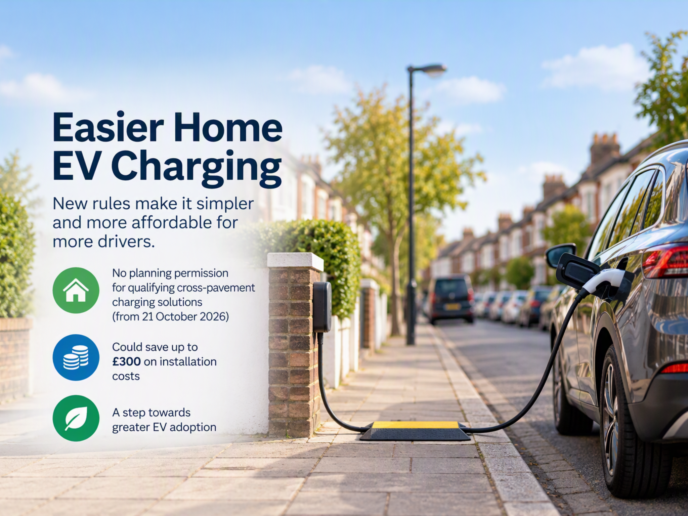
The Government has introduced changes in England designed to make installing electric vehicle (EV) charging equipment at home easier and more affordable, particularly for drivers without off-street parking.
From 21 October 2026, qualifying cross-pavement charging solutions will no longer require planning permission. The change could save motorists up to £300 in installation costs, potentially removing one of the barriers faced by households considering the switch to an electric vehicle.
The National Franchised Dealers Association (NFDA) has welcomed the move, describing improved access to home charging as an important step towards encouraging greater EV adoption.
Making Electric Vehicle Ownership More Accessible
For drivers with a driveway or private parking space, home charging can provide a convenient way to charge overnight and reduce reliance on public charging networks. However, motorists who park on the street have often faced additional challenges when looking for practical charging solutions.
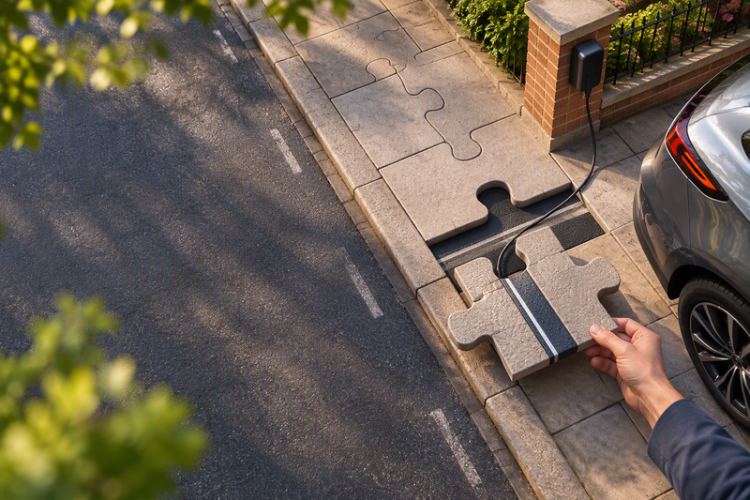
Cross-pavement charging systems are designed to address this issue by allowing charging cables to cross the pavement safely, subject to the relevant installation requirements. Removing the planning permission requirement for qualifying installations could reduce the cost and complexity involved in setting up a suitable system. For drivers who cannot charge at home, the expansion of public and on-street infrastructure remains important. Our article on the UK EV charging network looks at how charging provision is developing across the country.
For a closer look at the options available, read our guide to EV charging without a driveway.
Improving access to charging remains an important consideration for drivers weighing up the benefits of going electric. Although EVs can offer lower running costs in certain circumstances, the availability and cost of charging infrastructure continue to influence purchasing decisions. Our guide to EV charging costs and the difference between home and public charging explores another important part of the decision.
EV Demand Remains In Focus
The announcement comes after a record-breaking September for the UK electric car market. Battery-electric car registrations rose by 36.3% year on year to 99,199, accounting for 28.3% of all new car registrations.
The latest figures reflect wider growth across the UK new car market. Our analysis of UK new car registrations in 2026 looks at September’s registration performance, the growing role of fleet and business buyers, and the continued rise in electric vehicle demand.
The NFDA believes that making charging more accessible will help support continued growth, particularly as the Government reviews the Zero Emission Vehicle (ZEV) Mandate. The debate around the mandate reflects the wider challenge of encouraging drivers to switch to electric vehicles while ensuring the transition remains practical for consumers and the automotive industry. Industry concerns have also focused on whether manufacturers can meet the increasingly demanding targets, as explored in our article on manufacturers struggling to meet ZEV Mandate targets.
For more on the policy debate, see our coverage of the UK’s ZEV Mandate review.
NFDA chief executive Sue Robinson welcomed the changes, highlighting the importance of making home charging more affordable and removing obstacles that could discourage motorists from switching to electric vehicles.
The association also reaffirmed its commitment to working with the Government to support a practical and affordable transition to electric motoring for consumers and retailers.
What Does This Mean For Businesses And Company Car Drivers?
The changes could also be relevant to businesses considering electric vehicles for employees who do not have access to a driveway or private parking.
Home charging is often an important consideration when assessing whether an electric company car will suit an employee’s circumstances. Drivers who depend entirely on public charging may face different costs and practical considerations from those able to charge at home.
Employers should also consider how employees are reimbursed when they charge company vehicles at home. Our guide to home EV charging reimbursement for fleets explains the issues businesses need to consider.
For a closer look at the two-tier system, read our guide to two-tier EV mileage reimbursement. Businesses can also use our AER reimbursement calculator to calculate mileage reimbursement using the applicable home and public charging rates.
Our guide to how EV charging works for businesses explains some of the considerations organisations need to take into account when planning for electric vehicles.
For employers reviewing their options, charging access should form part of the wider decision-making process alongside vehicle choice, leasing costs, mileage requirements and expected running costs. For businesses planning a wider transition to electric commercial vehicles, our guide to electric van adoption among UK business fleets explores the considerations involved.
Businesses operating larger fleets may also benefit from reviewing their wider fleet management solutions when assessing the practicalities of electrification.
While the planning changes will not resolve every charging challenge, they could make home charging a more realistic option for some households and company car users. The extent of the benefit will depend on the installation, the driver’s parking arrangements and the availability of a suitable charging solution.
 Call our expert team on