
Businesses operating vans have a responsibility to ensure their vehicles are safe, roadworthy and properly maintained. From checking tyres and brakes to identifying defects, recording inspections and ensuring drivers understand their responsibilities, daily vehicle checks play an important role in keeping commercial fleets compliant and reducing avoidable risks.
Whether a business operates a single company van or manages a fleet of commercial vehicles, overlooking basic vehicle checks can have serious consequences. Defective tyres, faulty lights, damaged windscreens and unsecured loads can put drivers, other road users and business operations at risk.
For employers, vehicle inspections should form part of a wider approach to fleet safety, maintenance and compliance. Having a consistent process helps identify problems before vehicles are used, reduces the likelihood of unexpected breakdowns and provides a clear record of how vehicle defects are managed.
Daily vehicle inspections should also form part of a wider fleet risk assessment, helping businesses identify potential hazards, assess risks and put appropriate controls in place to protect drivers and other road users.
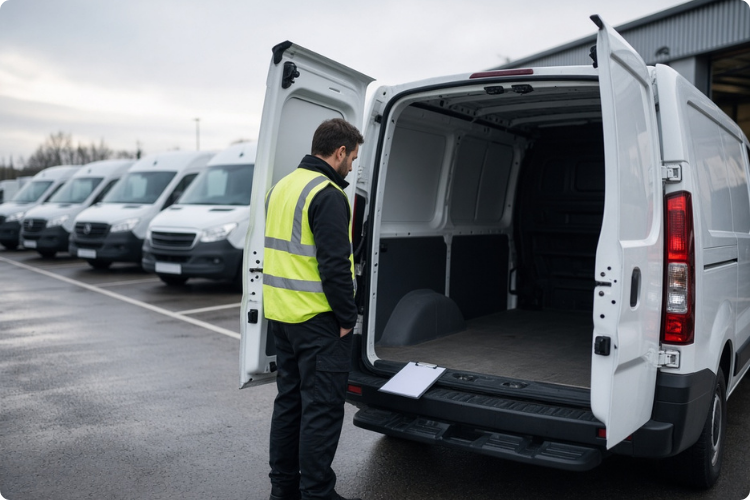
Introduce A Standardised Vehicle Inspection Checklist
A consistent vehicle inspection process can help businesses improve road safety, identify defects earlier and maintain better records across their fleet.
Whether a company operates a handful of vans or manages a larger number of commercial vehicles, giving drivers a standardised checklist helps ensure important inspection points are not overlooked.
Without a clear process, daily checks can vary between drivers, vehicles and locations. One person might routinely check tyre condition and lights, while another may concentrate on visible damage or fluid levels. A standardised approach gives everyone the same guidance and provides managers with a clearer record of vehicle condition.
To help businesses put this into practice, we have created a Daily Vehicle Inspection Checklist that can be printed or adapted for internal use. It covers key areas including tyres, lights, brakes, steering, visibility, fluid leaks, load security and vehicle equipment, with space to record defects and the action taken.
The checklist can be incorporated into a company’s existing vehicle inspection procedure and adapted to suit the vehicles being operated. It is intended as a practical aid rather than a replacement for manufacturer guidance, scheduled maintenance or any specific legal requirements that apply to the business.
Are Daily Van Checks A Legal Requirement In The UK?
Businesses and drivers have responsibilities to ensure that vehicles used for work are safe, properly maintained and roadworthy.
The Driver and Vehicle Standards Agency (DVSA) advises van drivers to carry out a walkaround check before setting off on a journey. This helps identify defects that could affect the vehicle’s safety, including problems with tyres, lights, brakes, mirrors, bodywork and load security.
The DVSA also makes an important distinction regarding defect records. Drivers working for businesses that hold a relevant goods vehicle operator’s licence must record and report defects identified during their checks, including nil-defect reports where applicable. These records help demonstrate that inspections have taken place and that any problems have been reported.
Businesses operating under operator-licensing requirements must also have appropriate systems in place for vehicle inspections, maintenance and defect management. The precise requirements depend on the vehicles being operated and the type of licence held.
Even where a business does not require an operator’s licence, employers still have health and safety responsibilities for employees who drive as part of their work. A clearly documented company vehicle policy can help communicate inspection procedures, driver responsibilities and the steps employees should take when defects are identified.
The Health and Safety Executive (HSE) advises employers to manage work-related driving risks and ensure vehicles are properly maintained.
Having a consistent daily inspection procedure is therefore an important part of responsible fleet management, whether a business operates one van or a larger fleet.
A valid MOT certificate or servicing agreement does not remove the need to identify problems that develop between inspections. A vehicle can become unroadworthy at any time, so drivers should report defects as soon as they are identified.
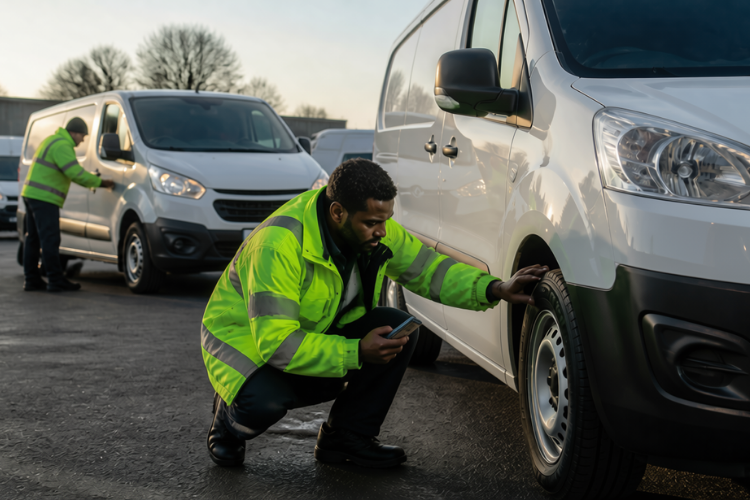
What Should Drivers Check During A Daily Van Inspection?
A walkaround inspection should cover the vehicle’s exterior, interior and any equipment that could affect its safe operation.
Drivers should be given sufficient time and clear instructions to complete the checks properly. The inspection should take place before the vehicle is used, with additional checks where operating conditions or the nature of the work make them necessary.
The following areas should form part of a practical daily van inspection.
1. Tyres And Wheels
Tyres are one of the most important parts of any vehicle safety inspection. Worn or damaged tyres can affect braking, handling and overall vehicle stability.
Drivers should check:
- Tread depth to ensure it meets the legal minimum.
- Tyre pressures against the manufacturer’s recommendations.
- Cuts, bulges, cracks or other visible damage.
- Exposed cords or signs of excessive wear.
- Wheel nuts and fixings for signs of looseness or damage.
- Wheels for cracks or other visible defects.
The minimum legal tread depth for cars, light vans and light trailers is 1.6mm across the central three-quarters of the tread, around the entire circumference.
Businesses should pay particular attention to vehicles carrying heavy equipment or operating close to their maximum permitted payload, as these conditions can place additional demands on tyres.
For more information, read our guide to vehicle payload and commercial van weight limits.
Businesses should also be alert to the risks associated with unsuitable or part-worn tyres. Our guide to part-worn tyre safety and vehicle maintenance explains why tyre condition deserves particular attention.
2. Lights And Indicators
All external lights should be checked to ensure they are working correctly and are not damaged or obscured.
Drivers should inspect:
- Headlights and dipped beams.
- Rear lights and brake lights.
- Indicators and hazard warning lights.
- Reversing lights.
- Number plate lights.
- Number plates are clean, legible and securely fitted.
- Fog lights where fitted.
Faulty lights can reduce visibility and make it more difficult for other road users to recognise a vehicle’s movements, particularly during poor weather and darker winter conditions. Businesses should also be aware of changes to MOT lighting requirements. Our guide to new MOT rules for vans and LED headlight changes in 2026 explains the updated requirements for approved LED replacement bulbs and what fleet operators need to check.
3. Brakes And Steering
Drivers should look for warning signs that could indicate problems with the braking or steering systems.
Checks should include:
- Brake warning lights on the dashboard.
- Any unusual noises when braking.
- The horn operates correctly.
- Changes in brake pedal feel.
- Visible signs of fluid leaks.
- Unusual steering behaviour or excessive play.
- Warning messages relating to braking or steering systems.
Drivers should report any concerns immediately rather than continuing to use a vehicle that may have a safety-critical defect.
Our guide to fleet compliance, faulty brakes and tyres explains why these issues deserve particular attention.
4. Windscreen, Windows And Mirrors
Good visibility is essential for safe driving, particularly when operating larger commercial vehicles in busy urban environments.
Drivers should check that:
- The windscreen is free from damage that could obstruct their view.
- Windows are clean and provide adequate visibility.
- Windscreen wipers operate correctly.
- Screenwash is available.
- Mirrors are secure, correctly positioned and undamaged.
- Reversing cameras and other visibility equipment are working where fitted.
Any damage that affects the driver’s ability to see clearly should be assessed before the vehicle is used.
5. Bodywork, Doors And Locks
The condition of the vehicle’s bodywork should also be inspected.
Drivers should look for loose panels, sharp edges, damaged doors and defective locking mechanisms.
Particular attention should be given to rear and side loading doors, as these need to close securely during journeys.
Businesses using vans to transport tools, machinery or valuable equipment should also ensure that security systems are functioning correctly.
Our guide to van security and protecting commercial vehicles covers additional measures businesses can consider.
6. Fluids, Oil And Engine Warning Lights
Drivers should check for visible fluid leaks and pay attention to dashboard warning lights.
Depending on the vehicle and manufacturer’s instructions, checks may include:
- Engine oil level.
- Coolant level.
- Brake fluid.
- Windscreen washer fluid.
- AdBlue levels on applicable diesel vehicles.
Some modern vehicles provide electronic warnings or instructions when fluid levels require attention.
Drivers should follow the manufacturer’s guidance and never ignore warning lights that could indicate a serious mechanical problem.
For further information, see our guides to AdBlue and diesel particulate filters.
7. Exhaust And Emissions Systems
The exhaust system should be checked for visible damage, leaks and signs of excessive smoke.
Drivers should also pay attention to unusual engine noises or warning messages relating to emissions systems.
Diesel vehicles fitted with diesel particulate filters and selective catalytic reduction systems may require additional attention to ensure these components continue operating correctly.
Ignoring warning signs can lead to reduced vehicle performance, repair costs and potentially prevent a vehicle from meeting its emissions requirements.
8. Load Security And Weight Distribution
Businesses must ensure that loads carried in commercial vehicles are properly secured and do not create a danger to the driver or other road users.
Before setting off, drivers should check:
- Equipment and materials are secured.
- Loads cannot slide, roll or fall during transit.
- Heavy items are positioned appropriately.
- The load does not exceed the vehicle’s permitted payload.
- Internal storage systems and shelving are secure.
- Rear doors and other access points are properly closed.
Incorrectly distributed or unsecured loads can affect vehicle handling and braking performance.
Businesses should also ensure that drivers understand the difference between a vehicle’s gross vehicle weight and its available payload.
Our guides to commercial vehicle payload and commercial vehicle conversions provide further information.
9. Safety Equipment And Specialist Vehicle Features
Some commercial vehicles require additional checks because of their intended use or fitted equipment.
Examples include:
- Tail lifts and their associated safety equipment.
- Towbars and trailer connections.
- Roof racks and external storage systems.
- Internal racking and shelving.
- Warning beacons and lightbars.
- Specialist electrical equipment.
- Seat belts are present, secure and show no visible signs of damage.
A vehicle fitted with a tail lift, for example, should have its equipment checked for visible damage and obvious defects before use. Any more detailed inspection or statutory examination must be carried out in accordance with the applicable requirements.
Businesses operating specialist vehicles should ensure that inspection procedures reflect the equipment fitted.
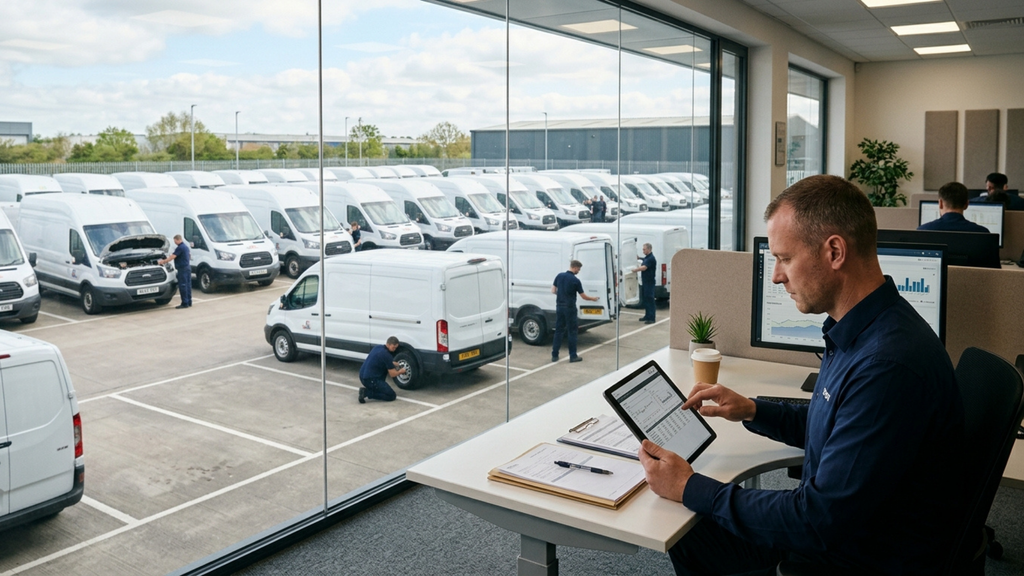
What Happens If A Driver Finds A Defect?
Finding a defect during a daily inspection is only part of the process. Businesses also need a clear procedure for reporting problems, assessing their seriousness and arranging repairs.
Drivers should know exactly who to contact and what information they need to provide.
Defects can generally be considered in two broad categories.
Safety-Critical Defects
These are problems that could make a vehicle dangerous or unroadworthy.
Examples include:
- Unsafe or severely damaged tyres.
- Defective brakes.
- Serious steering problems.
- Faulty safety-critical lighting.
- Damage that compromises vehicle safety.
- Dangerous fluid leaks.
A vehicle with a dangerous defect must not be used on the road until the problem has been rectified.
Drivers should stop using the vehicle and report the issue to the appropriate person within the business.
Minor Defects And Maintenance Issues
Some issues may not immediately prevent a vehicle from being used, but they should still be reported and assessed.
Examples might include minor cosmetic damage, non-critical equipment issues or maintenance requirements that do not affect roadworthiness.
Businesses should record these issues and arrange repairs within an appropriate timeframe.
Importantly, drivers should not be expected to decide independently that a potentially serious defect is safe to ignore. The business should have a clear process for assessing reported problems.
Do Businesses Need To Keep Records Of Daily Van Checks?
Keeping accurate inspection and maintenance records is an important part of an effective fleet management system.
For businesses operating under an operator’s licence, appropriate defect reporting and maintenance records form part of their roadworthiness responsibilities.
The DVSA recommends recording details of defects identified during daily walkaround checks, including nil-defect reports where applicable.
A useful vehicle inspection record should include:
- Vehicle registration or identification number.
- Date of inspection.
- Details of the checks carried out.
- Any defects or symptoms identified.
- Whether the defect has been assessed as dangerous.
- Name of the person completing the inspection.
- Who the defect was reported to.
- Details of repairs or corrective action.
- Confirmation of when the vehicle was returned to service.
Electronic systems can be used instead of paper inspection sheets, provided the records meet the applicable requirements and can be accessed when needed.
For operators covered by the DVSA’s roadworthiness requirements, defect reports and records of associated repairs must be retained for at least 15 months. The guidance recommends retaining nil-defect reports for at least three months.
Businesses should also make sure records are backed up and accessible to the people responsible for managing vehicle maintenance. Regular fleet audits can help businesses review vehicle condition, maintenance records and compliance procedures. Our fleet audits guide explains how these reviews can support better fleet management.
Changes to MOT testing procedures are also helping strengthen confidence in vehicle inspection records. Our article on the new MOT photo requirement introduced to tackle fraud explains how photographic evidence is being introduced to help prevent fraudulent MOT certificates.
Who Is Responsible For Daily Van Checks: The Driver Or Employer?
Vehicle roadworthiness is a shared responsibility, although drivers and employers have different duties.
The Driver’s Responsibilities
Drivers are responsible for ensuring that the vehicle they use is safe and roadworthy.
Their responsibilities include:
- Carrying out the required walkaround checks.
- Reporting defects promptly.
- Monitoring the vehicle while driving.
- Following company inspection procedures.
- Not using a vehicle with a dangerous defect.
- Reporting any damage or problems identified during a journey.
For further information, read our guide to leased vehicle driver responsibilities.
Drivers should also be familiar with the vehicle manufacturer’s instructions and any additional checks required for specialist equipment.
The Employer’s Responsibilities
Employers must ensure that appropriate arrangements are in place to manage the safety of vehicles used for work.
This includes:
- Providing clear instructions on vehicle inspection procedures.
- Making sure drivers understand their responsibilities.
- Allowing sufficient time for checks.
- Establishing a system for reporting and recording defects.
- Arranging repairs and maintenance.
- Ensuring unsafe vehicles are removed from service.
- Monitoring compliance and addressing recurring problems.
Businesses should also make sure that employees receive appropriate training and understand how to report vehicle defects.
Vehicle inspections are just one part of managing occupational road risk. Businesses should also address driver behaviour, including speeding and distracted driving. Our guide to fleet driver safety, speeding and distracted driving explores how employers can use driver monitoring, training and fleet management policies to improve road safety.
Employers should also have a process for checking that employees are legally permitted to drive the vehicles assigned to them. Our guide to company vehicle licence checks explains how businesses can manage this responsibility.
The HSE’s guidance on workers who drive or ride for work provides further information about employer and employee responsibilities.
Do Leased Vans Still Need Daily Checks?
Yes. Leasing a commercial vehicle does not remove the driver’s or business’s responsibility to ensure it remains safe to use.
Although a leasing agreement may include servicing, maintenance and repair arrangements, these do not replace daily vehicle checks.
Businesses should understand exactly what is included in their leasing agreement and who is responsible for arranging routine maintenance and reporting defects. Our guide to leased vehicle driver responsibilities explains the wider responsibilities drivers and businesses have throughout a vehicle lease.
For example, a maintenance-inclusive agreement may cover scheduled servicing, routine maintenance and certain repairs, depending on the terms and conditions.
However, drivers still need to identify potential problems before using the vehicle and report any issues that develop during their journeys.
It is also important to understand the difference between maintenance and warranty cover.
Read our guides to vehicle maintenance and maintenance versus warranty for further information.

How Can Businesses Improve Their Daily Vehicle Inspection Processes?
Having an inspection procedure is useful, but businesses also need to make sure it is followed consistently.
A structured approach can help improve compliance, identify recurring problems and reduce unnecessary vehicle downtime.
Introduce A Standardised Inspection Checklist
Every driver should know what needs to be checked and how to report problems.
A standardised checklist helps ensure that important inspection points are not overlooked, particularly when multiple employees use the same vehicle.
Allow Enough Time For Inspections
Daily checks should be treated as part of the working day rather than an inconvenience that drivers are expected to complete in a hurry.
Businesses should make sure that drivers have sufficient time to carry out meaningful inspections before starting their journeys.
Use Digital Inspection Systems
Digital vehicle inspection systems can make it easier to record checks, report defects and monitor outstanding repairs.
Depending on the system, fleet managers may be able to:
- Monitor completed vehicle inspections.
- Identify outstanding defect reports.
- Track repair progress.
- Maintain vehicle maintenance histories.
- Identify recurring faults.
- Access inspection records when required.
Businesses managing larger fleets may benefit from integrating these processes with their wider fleet management systems.
CVC’s Fleet Source UK customer portal provides a further example of how technology can support vehicle and fleet administration.
Review Vehicle Maintenance Regularly
Daily checks should complement a wider planned maintenance programme.
Businesses should monitor servicing schedules, inspection intervals, tyre condition and recurring mechanical issues.
A proactive approach can help identify problems before they develop into more expensive repairs or cause vehicles to be taken off the road unexpectedly.
Our guide to fleet maintenance planning explores how businesses can organise their maintenance requirements. Businesses should also have suitable arrangements for fleet vehicle servicing and maintenance, ensuring that routine servicing and repairs complement the checks carried out by drivers.
Businesses should also factor MOT testing into their vehicle maintenance budgets. Our article on calls for an increase in MOT fees for cars and vans examines the potential implications of rising testing costs for motorists and commercial vehicle operators.
Monitor Driver Compliance
Managers should periodically review inspection records to identify missed checks, incomplete reports and recurring defects.
If particular vehicles repeatedly develop similar problems, this could indicate that additional maintenance or a more detailed investigation is required.
Businesses should also ensure that drivers receive refresher training when inspection procedures change or recurring issues are identified.
What Are The Consequences Of Failing To Carry Out Vehicle Checks?
Failing to maintain commercial vehicles properly can expose businesses and drivers to a range of risks.
These include:
Road traffic offences: Drivers may face penalties, penalty points or prosecution if they use vehicles that are unsafe or do not meet legal requirements.
Vehicle prohibitions: The DVSA and police can inspect commercial vehicles. If serious defects are identified, a vehicle may be prohibited from being driven until the necessary repairs have been completed.
Operator licence consequences: Businesses holding an operator’s licence can face regulatory action if they fail to maintain appropriate vehicle maintenance and roadworthiness systems.
Increased repair costs: Identifying mechanical problems early can help prevent minor faults from developing into more expensive repairs.
Business disruption: Vehicles taken off the road unexpectedly can affect deliveries, customer appointments and day-to-day operations.
Health and safety risks: Poorly maintained vehicles can put employees, customers and other road users at risk.
Businesses should therefore view vehicle inspections as an essential part of their operational and safety procedures, rather than simply another administrative task.
Businesses should also have a clear procedure for responding when a company vehicle is involved in an accident. Our guide to company vehicle accident procedures explains what drivers should do at the scene, how fleet managers should respond and why preserving evidence is important.

 Call our expert team on