
Switching from diesel vans to electric vehicles can help businesses reduce tailpipe emissions, manage running costs and prepare for changing transport requirements. However, making the transition successfully involves more than choosing a new van. Businesses also need to consider vehicle range, payload, charging facilities, driver requirements and the impact on day-to-day operations.
For some fleets, electric vans are already a practical alternative to diesel. For others, a gradual transition that retains diesel vehicles for longer journeys or more demanding applications may be the more suitable approach.
The key is to understand how each vehicle is used, identify where electric vans make operational sense and introduce changes at a pace that works for the business. Businesses still weighing up whether to make the switch can read our guide to switching to an electric vehicle for further advice on the practical considerations involved in moving away from conventional vehicles.
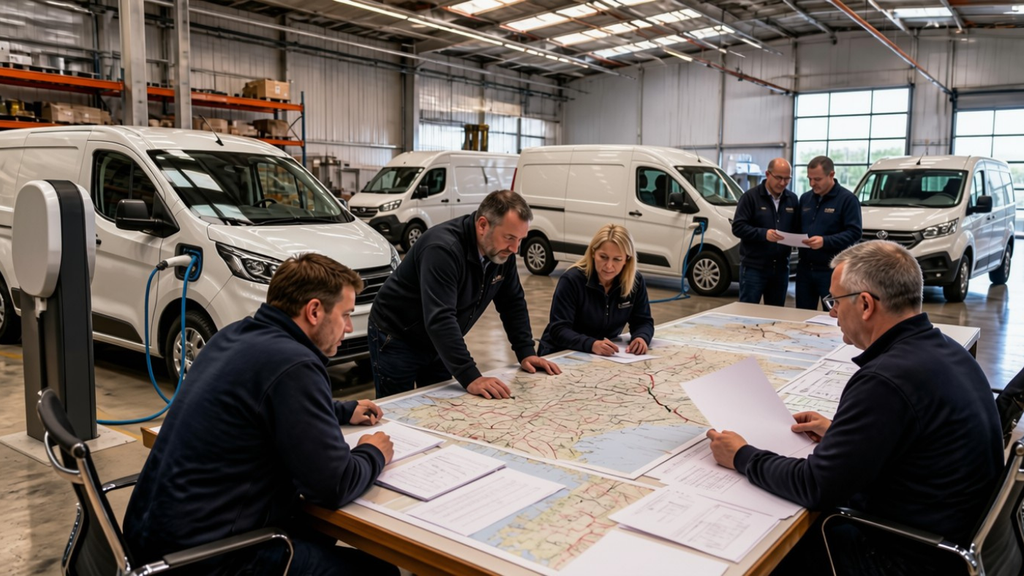
1. Assess Your Existing Van Fleet
Before considering replacement vehicles, businesses should establish how their current vans are used. A vehicle that spends most of its working day covering predictable local routes will have different requirements from one that regularly travels long distances or carries heavy equipment.
Reviewing existing fleet data can help identify which vehicles are the strongest candidates for electrification. Businesses looking to improve their approach can also explore fleet planning and leasing and the role of fleet lifecycle management in coordinating vehicle replacement decisions.
Important factors include:
- Daily mileage: How far does each van typically travel, and what is its longest regular journey?
- Payload requirements: How much weight does it carry, including tools, equipment, materials and stock?
- Load space: Does the business need a compact van, a larger panel van or a specialist conversion?
- Driving patterns: Do vehicles follow predictable routes, or do jobs and destinations change throughout the day?
- Downtime: How long do vans remain parked between shifts and overnight?
- Operating locations: Do vehicles return to a central depot, stay at employees’ homes or operate across several sites?
This assessment can reveal opportunities to introduce electric vans without requiring the entire fleet to change at once.
For example, a business with engineers visiting customers within a defined area may find that some vehicles are well suited to electric power. A separate group of vans covering longer distances or transporting heavier loads may need a different solution.
Businesses should also examine how efficiently their existing vehicles are being used. A fleet audit can help identify underused vehicles, inconsistent specifications and opportunities to improve utilisation before replacement decisions are made.

2. Choose Electric Vans That Meet Your Requirements
Electric van technology has developed considerably, giving businesses more choice across different vehicle sizes and applications. However, not every electric van will be suitable for every job.
The most appropriate vehicle should be selected according to its working requirements rather than headline range figures or lease costs alone. CVC’s guide to electric van leasing for businesses provides a useful starting point for companies considering the options available.
Range and Daily Mileage
Manufacturers’ published range figures provide a useful starting point, but actual driving range will vary according to factors such as speed, temperature, payload, driving style and the use of heating or air conditioning.
Businesses should consider the longest journeys their vans regularly undertake, rather than relying solely on average daily mileage. An electric van that comfortably covers a typical working day may still require additional charging on particularly demanding routes.
Winter trials can be especially useful when assessing whether a vehicle has sufficient range for year-round operations. Drivers should also understand how vehicle settings and driving conditions influence energy consumption.
Payload and Load Space
Payload is particularly important for tradespeople, delivery operators and businesses carrying heavy equipment.
The battery contributes to a vehicle’s overall weight, so businesses should check the available payload of the specific model and configuration they intend to lease. They should also account for any racking, tools, accessories or conversion equipment fitted to the van.
Load dimensions matter just as much. A van may offer sufficient payload but lack the length, height or access required for a particular job.
CVC’s guide to van payload explains why carrying capacity matters when selecting a commercial vehicle. Businesses should also consider the best vans for tradespeople when comparing vehicles for tools, equipment and materials.
Where a business regularly transports bulky materials, it may be worth reviewing how frequently the full load capacity is actually needed. Occasional requirements could potentially be handled through alternative delivery arrangements rather than determining the specification of every vehicle.
Vehicle Size and Suitability
Electric vans are available in different sizes, from compact vehicles for urban deliveries to larger models designed for more demanding commercial applications.
Businesses should match the vehicle to its primary role. Choosing a van that is larger than necessary can increase costs and make parking or urban driving more difficult, while an undersized vehicle could restrict productivity.
CVC’s comparison of electric vans and diesel vans can help businesses assess the differences between the two powertrains before deciding which is best suited to their requirements.
The objective is to select a vehicle that meets operational needs without introducing unnecessary compromises.
If you are still weighing up whether an electric van is right for your business, our electric van FAQs cover common questions about charging, running costs, driving an EV and choosing a suitable vehicle.
For businesses whose daily work involves local deliveries, service calls or urban journeys, a smaller electric van may be a practical starting point. Our guide to the best small electric vans compares compact models and their suitability for different business requirements.
3. Plan Your Charging Strategy
Charging arrangements can have a significant influence on the practicality and cost of running electric vans. Before introducing vehicles, businesses should establish where they can charge, how long charging will take and who will be responsible for managing the process.
There is no single solution that works for every fleet. Many businesses will benefit from combining different charging methods.
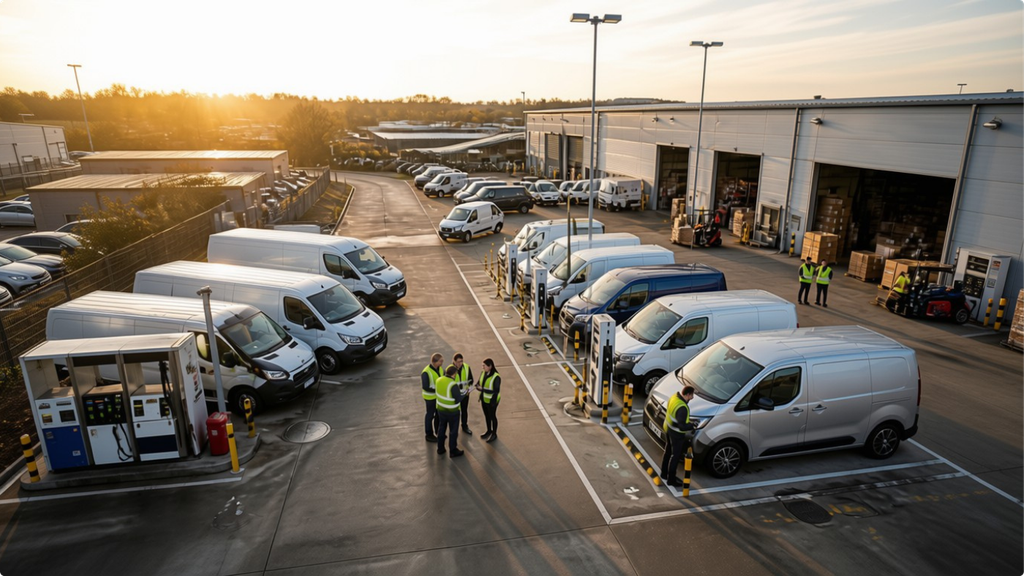
Depot Charging
Businesses with vehicles that return to a central location each day may be able to charge them overnight or during scheduled downtime.
Depot charging can make daily operations easier to manage because vehicles can begin their shifts with an appropriate level of charge. However, installing charging points may involve electrical upgrades, installation costs, planning and consideration of available power capacity.
Businesses planning charging facilities should also consider safe charging practices and understand the risks associated with damaged or overheating batteries. CVC’s guide to what causes lithium-ion battery fires explains the factors that can contribute to battery fires.
Fleet operators should assess how many vehicles need to charge simultaneously and whether the existing electrical supply can support future requirements. CVC’s guide to EV charging infrastructure growth explores developments in the wider charging network, while its article on EV charger grants for fleet leasing covers financial support that businesses may wish to investigate, subject to current eligibility and availability.
Home Charging
Where employees take their vans home, home charging may provide a convenient alternative to returning to a depot.
However, not every driver has access to off-street parking or suitable charging facilities. Businesses should read CVC’s guide to EV charging without a driveway to understand some of the challenges drivers may face.
Employers also need clear arrangements for reimbursing charging costs, recording energy use and handling employees’ changing circumstances. CVC’s guide to home EV charging reimbursement for fleets explores this issue in more detail.
Home charging should therefore be assessed on a driver-by-driver basis rather than assumed to be available across the fleet.
Public Charging
Public charging networks can provide flexibility for drivers who cannot charge at home or at a depot, and for vehicles undertaking longer journeys.
However, businesses should consider charger availability, locations, vehicle compatibility, charging speeds and the cost of using different networks. Public rapid charging can be considerably more expensive than charging at a suitable workplace or home tariff.
Drivers should also have a practical plan for charging during working hours without unnecessarily disrupting schedules. CVC’s guide to the UK electric vehicle charging network can help businesses understand the wider infrastructure available to drivers.
For many businesses, a combination of depot, home and public charging will provide the most flexible arrangement.

4. Compare the Total Cost of Ownership
Electric vans can offer lower energy and maintenance costs, but the overall financial case depends on how the vehicles are used and how they are charged.
Comparing headline vehicle prices alone will not provide a complete picture. Businesses should assess the total cost of ownership (TCO) over the period they expect to operate or lease each vehicle.
| Cost factor | What businesses should consider |
|---|---|
| Vehicle costs | Lease payments, initial rentals and any relevant fees |
| Energy | Electricity tariffs, charging losses and the proportion of public charging required |
| Fuel | Diesel consumption and realistic fuel price assumptions for existing vehicles |
| Maintenance | Servicing, tyres, repairs and expected maintenance requirements |
| Charging infrastructure | Installation, electrical upgrades, maintenance and ongoing access costs |
| Downtime | Time spent charging and any impact on vehicle availability |
| Tax and incentives | Applicable tax treatment, grants and eligibility requirements |
Electric vans may have higher lease costs than comparable diesel vehicles in some cases, although pricing varies by model, specification and available offers. Potential savings on energy and maintenance may help offset the difference, particularly for vehicles covering substantial annual mileage.
However, a fleet that relies heavily on expensive public charging may achieve different results from one that can charge predominantly overnight at a depot.
Businesses should use realistic assumptions based on their own operations. Where possible, they should compare actual mileage, energy consumption, fuel use and charging costs rather than relying on generalised savings estimates. The financial case will vary depending on how each van is used. Read our comparison of electric vans vs diesel vans for a closer look at the differences businesses should consider when comparing the two powertrains.
CVC’s guide to the cost of running a van offers further context for assessing operating expenses, while its article on electric vehicle charging VAT explores tax considerations associated with charging at home and through public networks.
Reliability and maintenance requirements are also worth considering when assessing the long-term value of electric vehicles. Research analysing millions of UK MOT tests suggests that high-mileage electric cars can perform well compared with petrol equivalents, although these findings should not automatically be applied to electric vans. Read our article on high-mileage electric cars and MOT durability data for more detail.
Leasing as Part of the Transition
Leasing can provide a way to introduce electric vans without committing to outright vehicle ownership. Businesses can compare business contract hire with other funding arrangements, including a finance lease, before deciding which option best suits their financial and operational requirements.
The right choice will depend on factors such as cash flow, vehicle use, contract length and the business’s approach to replacement planning. Businesses should also understand their expected mileage and the potential implications of exceeding contractual allowances.
CVC’s guide to mileage allowance in vehicle leasing explains why accurate mileage estimates matter when arranging a lease. Businesses should also consider how their vehicles will be funded and how the payments fit their budgets. Our guide to van finance options explains the different funding arrangements available, helping businesses compare the options before deciding which best suits their requirements.

5. Prepare Drivers and Operational Teams
Introducing electric vans changes some aspects of everyday driving and fleet management. Engaging employees early can help businesses identify potential problems before they affect operations.
Drivers should understand how the new vehicles will be used, where charging will take place and what to do if a journey takes longer than expected or a charger is unavailable.
Training should cover practical considerations such as:
- Planning routes around realistic driving range.
- Identifying suitable charging points before longer journeys.
- Understanding how payload, speed and weather affect range.
- Using regenerative braking and vehicle driving modes appropriately.
- Knowing how to operate charging equipment safely.
- Reporting issues with vehicles or charging infrastructure.
It is equally important to involve employees in the vehicle selection process. Drivers who regularly transport specialist equipment or work across multiple sites may identify practical requirements that are not immediately apparent from fleet data alone.
Where possible, businesses should arrange demonstrations or short trials so that drivers can experience electric vans in their normal working environment.
Feedback from those trials can help refine vehicle specifications, charging arrangements and driver guidance before more vehicles are introduced.
Fleet managers should also consider how the transition fits into their wider responsibilities. CVC’s guide to leased vehicle driver responsibilities covers important considerations for employees using leased vehicles.

6. Trial Electric Vans Before Expanding
A trial can help businesses establish whether an electric van is suitable for a particular role before committing to a wider rollout.
Rather than selecting vehicles based solely on published specifications, businesses should test them under realistic operating conditions.
A useful trial should reflect typical routes, working hours, payloads and charging opportunities. Where possible, it should also cover colder weather and more demanding journeys.
During the trial, businesses should record:
- Actual daily mileage and remaining battery charge.
- Energy consumption under normal working conditions.
- Charging time and charging costs.
- Payload and load-space suitability.
- Driver feedback and any changes to working practices.
- Any delays, range concerns or operational difficulties.
The results can then be compared against the existing diesel fleet.
If the trial identifies problems, businesses can investigate whether they stem from the vehicle specification, route planning, charging arrangements or an underlying mismatch between the vehicle and its intended role.
This is an important distinction. A vehicle that proves unsuitable for one application may still work well in another part of the business.
CVC’s article on electric van adoption across UK business fleets provides additional context on the wider transition, including the challenges businesses face when adopting electric commercial vehicles.
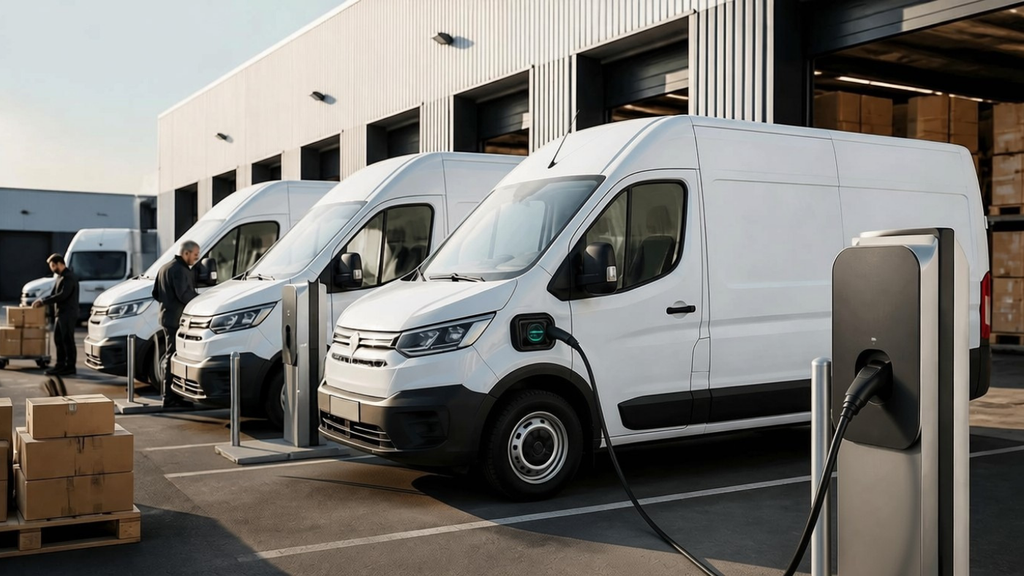
7. Introduce Electric Vans in Phases
For many businesses, a gradual transition is more manageable than replacing every diesel van at once.
A phased approach allows fleet managers to build experience, review costs and make adjustments before expanding the number of electric vehicles.
A practical transition could follow four stages:
Stage 1: Identify suitable vehicles. Review existing fleet data and select vehicles with predictable mileage, suitable payload requirements and practical charging options.
Stage 2: Run a controlled trial. Introduce a small number of electric vans and monitor their performance across normal working conditions.
Stage 3: Review the results. Compare running costs, driver feedback, charging requirements and vehicle utilisation against the original expectations.
Stage 4: Expand where appropriate. Introduce more electric vans into suitable roles while retaining other powertrains where they remain necessary for operational reasons.
This approach can also help businesses plan charging infrastructure investment in line with actual requirements rather than installing more capacity than they initially need.
Reviewing the wider fleet at the same time may reveal opportunities to improve vehicle utilisation, standardise specifications or change how materials are delivered to work sites.
A joined-up approach to fleet management solutions can help businesses consider these decisions alongside their wider vehicle requirements. Businesses should also consider their long-term fleet administration and account support needs as the number and types of vehicles in their fleet change.
8. Consider the Wider Business Benefits
The decision to introduce electric vans is not solely about vehicle running costs. Depending on the business and its operating environment, electrification may offer other advantages.
Electric vans produce no tailpipe emissions while driving, which can be beneficial for businesses operating in urban areas or seeking to reduce their direct vehicle emissions.
Fire safety may also be a consideration for businesses moving from diesel to electric vans. Electric vehicles have different fire risks from petrol and diesel vehicles, particularly because damage to a lithium-ion battery can lead to thermal runaway and make a fire more difficult to extinguish. However, the challenges associated with tackling a battery fire do not necessarily mean that fires are more likely to occur. Read our guide to EV fire risk compared with petrol and diesel vehicles for a closer look at the available evidence.
They may also help businesses meet customer sustainability requirements, support environmental reporting objectives and prepare for changing expectations around commercial transport.
For businesses operating in London and other urban areas, emissions requirements may also influence vehicle selection. CVC’s ULEZ and clean air zones guide explains the importance of checking the rules that apply to different locations. Businesses should also consult its guide to van clean air zone charges when assessing the potential costs associated with operating existing diesel vehicles.
However, these benefits should be considered alongside the practical requirements of each operation. Vehicle availability, charging access, payload and cost remain essential factors when deciding whether an electric van is the right choice.
The wider market is also changing as manufacturers face increasingly ambitious zero-emission vehicle targets. Our report on record electric van registrations and the Government’s ZEV target examines the gap between growing demand and the targets set for the industry.
Businesses should also keep track of relevant regulations, local restrictions and available incentives, checking the current requirements before making investment decisions.

 Call our expert team on