Electric van registrations have surged across the UK, with battery-electric vans recording their strongest market share yet as businesses gain access to a growing choice of electric commercial vehicles.
The latest figures from the Society of Motor Manufacturers and Traders (SMMT) show that battery-electric van registrations increased by 74.1% in July 2026, taking electric vans to a record 14.7% share of the UK light commercial vehicle market.
The wider van market also performed strongly, with 28,578 vans, pickups and 4x4s registered during July, an increase of 22% compared with the same month last year. Vans weighing between 2.5 and 3.5 tonnes were particularly strong, with registrations increasing by 29.9%.
The figures highlight how quickly the electric van market is developing and how much more choice is now available to UK businesses.
For operators considering their next vehicle, the question is increasingly less about whether electric vans are available and more about which electric van is right for their business.
Electric Van Market Continues To Grow
Electric vans are becoming an increasingly important part of the UK commercial vehicle market.
The latest SMMT figures show that battery-electric van registrations increased by 74.1% in July compared with the same month in 2025, giving electric vans their highest monthly market share on record at 14.7%.
This growth comes as manufacturers continue to expand their electric commercial vehicle ranges.
Businesses can now choose from electric vans across a much wider range of sizes and applications, from compact urban vans through to larger vans with a gross vehicle weight of up to 3.5 tonnes.
The current market includes vehicles such as:
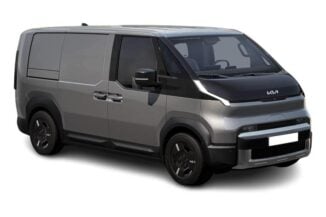
- Kia PV5 Cargo
- Volkswagen ID. Buzz Cargo
- Ford E-Transit Custom
- Mercedes-Benz eVito
- Ford E-Transit
- Mercedes-Benz eSprinter
- Renault Kangoo E-Tech
- Peugeot e-Partner
- Vauxhall Vivaro Electric
- Toyota Proace Electric
- Maxus eDELIVER range
The Kia PV5 has also made a significant impact in the UK market. The PV5 Cargo is currently the UK’s best-selling electric van in 2026, highlighting how quickly the electric van market is changing. The Kia PV5’s sales success is another indication of the growing competition in the electric van market.
For businesses looking at the latest models, CVC’s electric van leasing range covers small, medium and large electric vans, with options available through different finance arrangements.
More Choice Is Giving Businesses More Options
One of the biggest changes in the electric van market is the sheer amount of choice now available.
Electric vans are no longer limited to a small number of specialist models.
Manufacturers are introducing electric versions across some of their most popular commercial vehicle ranges, giving businesses the opportunity to consider an EV without necessarily changing the type or size of vehicle they operate.
For example, a business that previously relied on a conventional diesel medium van can now consider electric alternatives such as the Peugeot E-Expert or Vauxhall Vivaro Electric. Larger operators can also look at models such as the Ford E-Transit and Mercedes-Benz eSprinter.
If you’re comparing some of the latest electric vans for business use, our Volkswagen ID. Buzz vs Kia PV5 comparison looks at the differences between these two increasingly prominent electric commercial vehicles.
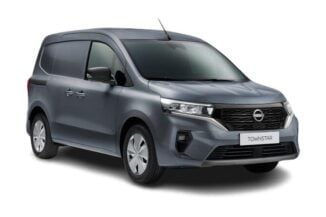
Smaller and medium-sized electric vans are also becoming increasingly common, with options including the Renault Kangoo E-Tech, Peugeot e-Partner, and Toyota Proace Electric.
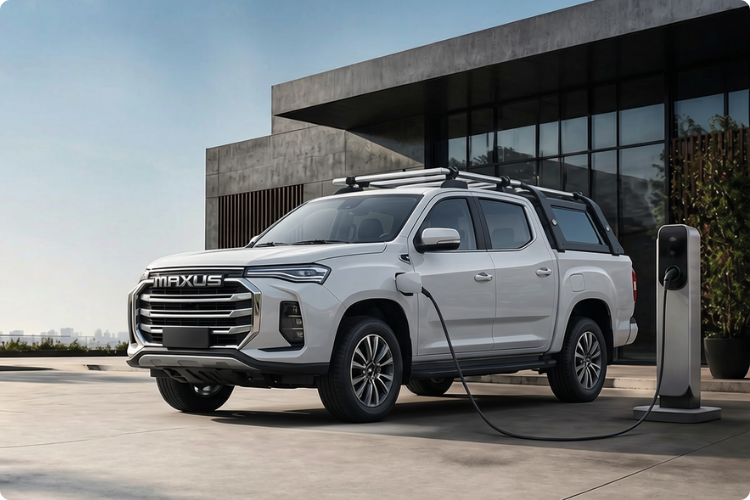
The choice of larger electric commercial vehicles is also expanding, with models such as the Maxus eDELIVER range giving businesses more alternatives to traditional diesel vans. Businesses looking for an electric vehicle that can carry passengers rather than goods can also consider the Kia PV5 Passenger.
This is particularly important for businesses that use their vans for predictable daily routes.
An electric van can make particular sense where vehicles:
- Return to base regularly
- Cover predictable daily mileage
- Can be charged overnight
- Operate predominantly in urban or regional areas
- Have access to suitable workplace charging
- Can take advantage of lower day-to-day running costs
The suitability of an electric van will ultimately depend on how the vehicle is used.
Electric Vans Are Becoming More Practical
The technology behind electric vans is also developing rapidly.
Newer models are offering improvements in range, charging speeds, payload capacity and vehicle technology, helping make electric vans a more practical proposition for a wider range of businesses.
This doesn’t mean that an electric van is automatically the right choice for every operator.
A business covering high annual mileage, carrying heavy loads or operating without reliable access to charging may have different requirements from a company whose van returns to the same premises every evening.
That is why choosing an electric van should start with the business’s actual requirements rather than simply looking at the vehicle’s headline range.
What Should Businesses Consider Before Leasing An Electric Van?
For businesses considering making the switch, there are several important factors to consider.
1. Daily Mileage
The first question should be how far the van actually travels during a normal working day.
A van covering 80 miles a day with an overnight charging opportunity has very different requirements from one regularly covering 200 miles.
Businesses should look at their real-world mileage rather than simply relying on the manufacturer’s maximum range figure.
2. Charging
Charging is another important consideration.
Businesses should establish where the van will be charged and how frequently it will need charging.
For many operators, overnight charging at a business premises can provide a straightforward solution. Others may need access to public charging infrastructure during the working day.
The UK Government has also identified charging infrastructure as an important part of supporting the transition to zero-emission vehicles.
3. Payload
Payload is particularly important for commercial vehicle operators.
Adding a large battery can affect the amount of weight a vehicle can legally carry, so businesses should consider the vehicle’s usable payload alongside its range.
This is especially important for tradespeople, delivery businesses and companies carrying equipment or materials.
4. The Type Of Work The Van Does
The best electric van for a courier business may not be the best option for a builder, electrician or mobile mechanic.
A business carrying tools and equipment may prioritise payload and load space, while an urban delivery operator may place greater emphasis on efficiency, manoeuvrability and charging.
This is why businesses should choose the vehicle around the job it needs to perform.
5. Lease Costs
The monthly cost of leasing an electric van will depend on the model, contract length, mileage, initial rental and finance product selected.
Leasing can provide businesses with access to the latest electric vans without having to purchase the vehicle outright.
CVC offers electric van leasing through Contract Hire and Finance Lease, allowing businesses to compare different ways of funding their next vehicle.
Government Targets Are Also Driving Change
The growth in electric van registrations comes against the backdrop of the UK’s Zero Emission Vehicle (ZEV) Mandate.
The current ZEV Mandate sets a 24% zero-emission sales target for vans in 2026, rising to 70% in 2030 and 100% in 2035.
The Government is currently consulting on potential changes to the ZEV Mandate, including alternative van targets for 2030.
For businesses, this means the electric van market is likely to continue expanding as manufacturers introduce more models and invest further in electric technology.
The Electric Van Market Is Changing Quickly
The latest registration figures provide a clear indication of the direction of travel.
Electric vans accounted for a record 14.7% of the market in July, while overall van registrations increased by 22%.
At the same time, the number of electric commercial vehicles available to businesses continues to grow.
That gives operators more opportunity to choose a vehicle based on their individual requirements rather than simply selecting from a small number of electric alternatives.
For some businesses, a diesel van will still be the most appropriate option.
For others, an electric van could now provide a practical alternative, particularly where daily mileage, charging and vehicle usage are well suited to electrification.
 Call our expert team on