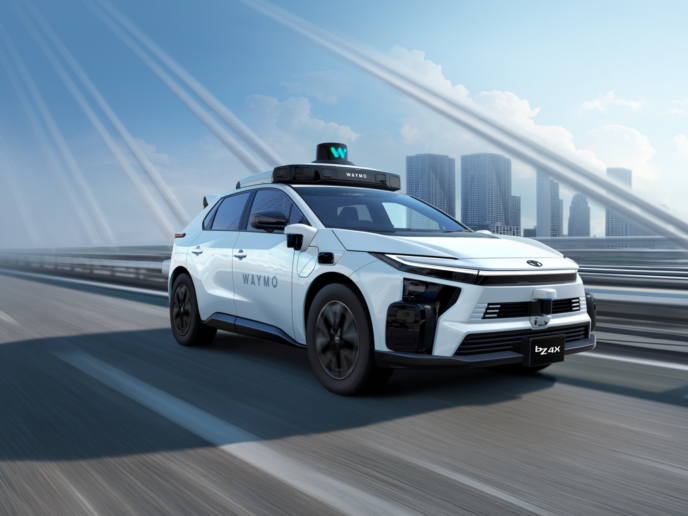
Toyota Motor Corporation and autonomous driving technology company Waymo are moving into the next phase of their partnership, with plans to test and validate a fleet of autonomous Toyota bZ4X electric vehicles in Japan from 2027.
The agreement builds on a preliminary partnership announced in April 2025. Following the initial Japanese testing programme, deployment in the UK and other markets where Waymo operates is planned for subsequent years.
The project is intended to support the development of Japan’s first fully autonomous ride-hailing service using high-volume vehicles manufactured domestically by Toyota. It also represents a further step towards bringing autonomous transport technology into international markets.
The collaboration will involve Toyota producing specially adapted Toyota bZ4X electric vehicles, incorporating Waymo’s autonomous driving technology. Initial testing will focus on validating the vehicles and their integrated systems before any wider commercial deployment is considered.
Although Japan will be the first market involved, the companies have indicated that the technology could subsequently be introduced in countries where Waymo plans to expand its operations, including the UK.
For the transport and fleet industry, the announcement represents another significant development in autonomous vehicle technology, particularly as manufacturers and technology companies explore how driverless systems could change the way people and businesses travel.
Toyota And Waymo Expand Autonomous Driving Partnership
The latest agreement builds on an initial partnership announced in 2025, bringing together Toyota’s vehicle manufacturing and engineering capabilities with Waymo’s experience in developing fully autonomous driving technology.
Toyota will manufacture the adapted bZ4X vehicles at its Takaoka plant in Toyota City, Aichi Prefecture, Japan. The production process will bring the assembly of the base vehicle and integration of Waymo’s autonomous driving hardware together under one roof.
The vehicles will be specially configured for autonomous passenger transport, with features designed to improve comfort and accessibility. These include generous rear legroom, automatic doors, a powered liftgate and ambient interior lighting, helping passengers enter and exit the vehicle more easily.
The initial testing programme is expected to begin in Japan in 2027, allowing both companies to evaluate the vehicles and their autonomous driving systems in real-world operating conditions.
Waymo has already established driverless vehicle operations in the United States, where its technology is being used in commercial passenger transport services. Its existing operations provide useful context for the company’s international ambitions. We previously examined Waymo’s self-driving car technology and its development in the United States.
Beyond the development of driverless vehicles, Toyota and Waymo are also considering how information gathered from autonomous vehicle operations could contribute to wider road safety improvements.
This includes exploring opportunities to use operational data, technology and insights from Waymo’s existing autonomous fleet to improve vehicle safety and support other road users.
The longer-term ambition is to combine Toyota’s approach to vehicle safety with Waymo’s autonomous driving technology, potentially making driverless transport more widely accessible.

Dmitri Dolgov, Co-Chief Executive Officer, Waymo
Toyota And Waymo: Key Details Of The Autonomous Vehicle Partnership
The partnership combines Toyota’s vehicle manufacturing expertise with Waymo’s autonomous driving technology. The following table summarises the main elements of the agreement and its anticipated development.
Replace your existing table with this:
| Area | Details |
|---|---|
| Companies | Toyota Motor Corporation and Waymo |
| Vehicle | Toyota bZ4X electric SUV |
| Autonomous technology | Level 4 autonomous driving |
| Manufacturing location | Takaoka plant, Toyota City, Japan |
| Initial testing | Planned for 2027 |
| UK deployment | Planned for subsequent years |
| Vehicle adaptations | Automatic doors, powered liftgate, generous rear legroom and ambient lighting |
| Initial application | Fully autonomous ride-hailing service |
| Future development | Exploring autonomous technology for personally owned Toyota vehicles |
| Wider objective | Improving road safety and freedom of movement |
The Toyota and Waymo partnership will focus on scaling safety-validated Level 4 autonomous vehicles.
Level 4 automation allows a vehicle to perform all driving tasks independently within defined operating conditions. Unlike driver assistance systems, which require a driver to remain responsible for the vehicle, Level 4 technology is designed to operate without human intervention during normal driving within its approved operating area.
For businesses and fleet operators, this distinction is important. Autonomous ride-hailing vehicles could eventually operate without a conventional driver, potentially changing how passenger transport services are organised and managed.
However, the technology is not unrestricted. Its operation depends on defined conditions and the areas in which the autonomous system has been validated for use.
What Could Autonomous Vehicles Mean For UK Fleets?
Although the initial testing programme will take place overseas, the possibility of future UK deployment raises important questions for businesses operating company cars, vans and other commercial vehicles.
Autonomous driving technology could eventually influence several areas of fleet management, including vehicle utilisation, driver availability, journey planning and operational efficiency.
For businesses involved in passenger transport, delivery services and logistics, driverless vehicles could offer opportunities to rethink how certain journeys are managed.
The potential impact extends beyond passenger cars. Manufacturers are also investigating autonomous technology for commercial applications, including driverless delivery vehicles and automated transport solutions. Our coverage of Stellantis and Wayve’s autonomous electric vehicle development provides another example of how established vehicle manufacturers and technology businesses are exploring this market.
However, the extent to which these technologies can be adopted commercially will depend on their reliability, operating costs, regulatory approval and suitability for different working environments.
There are also practical considerations around insurance, vehicle maintenance, cybersecurity and responsibility when an autonomous vehicle is involved in a collision.
For fleet operators, these issues will need to be addressed before driverless technology can become a realistic alternative to conventional vehicle operations.
Businesses will also need to consider how emerging technology fits into their wider fleet management and planning requirements, particularly where vehicle replacement cycles, operational demands and long-term leasing arrangements are concerned.
It is important to distinguish between autonomous driving systems and the driver assistance technology already available in many modern vehicles. Features such as adaptive cruise control, lane-keeping assistance and automatic emergency braking can support drivers, but they do not make a vehicle fully autonomous.
Our guide to modern cars and vans, vehicle cameras, data and the right to repair explores some of the wider technological and data-related considerations affecting today’s vehicles.

Hiroki Najajima, Member of the Board of Directors and Executive Vice President, Toyota Motor Corporation
UK Autonomous Vehicle Rollout Faces Further Questions
The potential expansion of autonomous vehicles into the UK comes as questions continue to be raised about the wider economic, social and regulatory implications of driverless transport.
A research initiative by the Institute for Driverless Transport (IfDT) has highlighted 65 questions surrounding the future development and introduction of autonomous vehicles.
Its research examines five key areas: economics and productivity, social change, employment, security and geopolitics, and the speed of technological rollout.
Among the issues being considered are how quickly autonomous vehicle technology could become affordable, whether driverless transport could eventually cost less than conventional alternatives and what the impact could be on professional driving jobs.
The research also considers what would happen if autonomous transport services were withdrawn after communities or businesses had become dependent on them.
The questions were developed following discussions with a range of organisations and specialists, including autonomous vehicle operators, regulators, academics, logistics businesses, trade unions, local authorities and security experts.
These concerns are particularly relevant to the UK, where the introduction of driverless passenger services is already attracting attention from policymakers and transport authorities.
For example, London Assembly discussions about driverless taxi fleet limits demonstrate how the potential expansion of autonomous passenger transport raises questions about how these services should operate within existing urban transport networks.
The regulatory framework will also be important. Autonomous vehicles must meet appropriate safety and approval requirements before they can be introduced more widely. Our coverage of proposed changes to UK vehicle safety and type approval rules provides further context around the standards governing new vehicle technologies.
The findings highlight that the introduction of autonomous vehicles is not simply a technological challenge. It also involves employment, public infrastructure, economic planning and the resilience of transport services.
Electric Vehicles And Autonomous Technology Are Converging
Toyota and Waymo’s partnership also highlights the growing relationship between electric vehicle development, connected technology and automated driving systems.
The adapted bZ4X provides the electric vehicle platform for the latest testing programme, demonstrating how manufacturers can combine existing vehicle technology with specialist autonomous driving equipment.
For businesses considering the transition to electric vehicles, developments in automation represent another area of automotive innovation to monitor.
However, autonomous driving and vehicle electrification remain separate considerations. An electric vehicle is not automatically autonomous, and the adoption of driverless technology does not remove the practical requirements associated with charging, vehicle range and operating costs.
Businesses assessing electric vehicle suitability should also consider the wider implications for electric vehicle fleet transitions and the operational challenges involved in introducing zero-emission vehicles.
The cost and energy requirements of autonomous operation are another consideration. Our article examining how autonomous vehicles could affect energy consumption provides additional context on the relationship between automated driving systems and vehicle efficiency.
For organisations managing larger vehicle fleets, these developments could eventually influence longer-term decisions around vehicle technology, replacement planning and fleet investment.
Toyota and Waymo are also exploring how autonomous technology could eventually be used in personally owned Toyota vehicles. Working alongside Woven by Toyota, they intend to investigate how insights from Waymo’s real-world operations, data-driven intelligence and technology could contribute to improving road safety for other road users.
This means the partnership is not limited to the development of driverless taxis. It could also help inform Toyota’s wider approach to vehicle safety and future autonomous driving technology, although no launch date for privately owned autonomous models has been confirmed.
 Call our expert team on