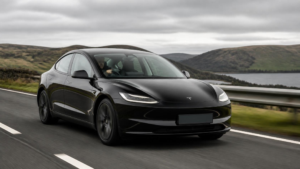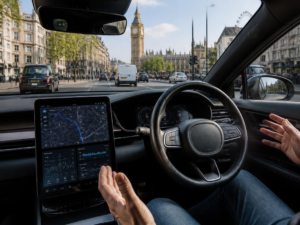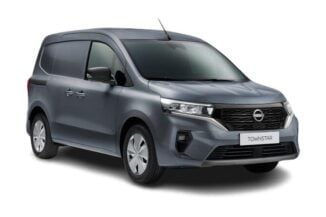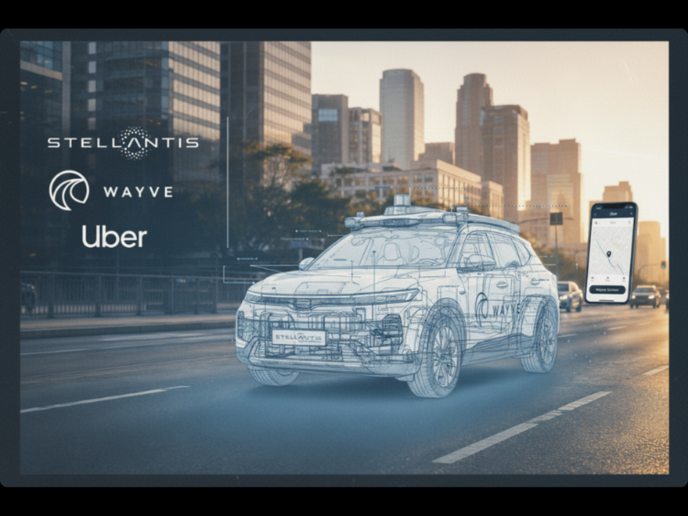
A major new collaboration between Stellantis, Wayve and Uber has taken autonomous vehicle development another step closer to real-world deployment, with plans to scale Level 4 robotaxi services across global markets.
What the Partnership Involves
The collaboration aims to accelerate the development of Level 4 autonomous mobility services, with a focus on expanding robotaxi deployment across multiple regions.
As part of the agreement, Stellantis will develop and produce vehicles built on autonomous-ready architectures designed to support driverless operation. These platforms are expected to include integrated sensor systems, redundancy features and the safety systems required for commercial autonomous use cases.
During initial deployments, a human safety driver will remain seated behind the wheel and be ready to take control of the vehicle if required, as the system continues to be validated in real-world conditions.
Wayve will provide its AI driving software, which is designed to operate without relying heavily on detailed pre-mapped environments. This “mapless” approach is intended to allow autonomous systems to adapt more efficiently to different cities and driving conditions, supporting faster and more scalable deployment.
Wayve has highlighted London as a particularly challenging environment for autonomous testing, claiming the city has around 20 times more roadworks than San Francisco and 10 times more vulnerable road users, such as pedestrians and cyclists. The company has been trialling its autonomous driving systems on London roads since 2018 as part of its long-term development programme.
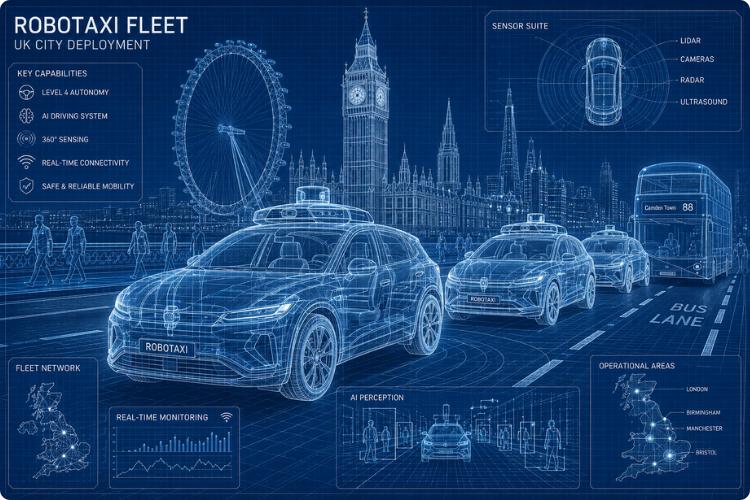
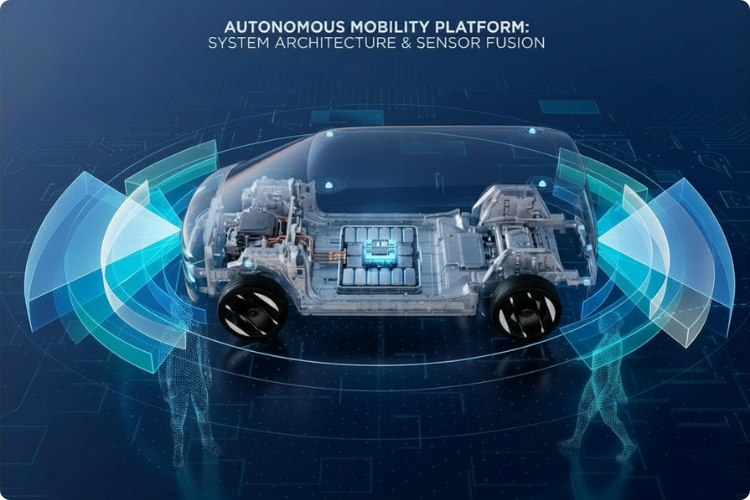
Vehicles equipped with Wayve’s system use a combination of six cameras, radar technology and an AI-powered computer installed in the boot to process driving decisions in real time.
Uber will be responsible for integrating autonomous vehicles into its mobility network, enabling passengers to access driverless journeys through its existing app-based platform as the technology matures and becomes commercially available.
The companies plan to scale the service across multiple global cities, including London and Tokyo, with further expansion expected to more than 10 additional markets over time.
Uber has also launched an in-app “list of interest,” allowing customers to opt in to be matched with a driverless ride during the initial rollout phase. The rides are expected to be priced in line with conventional Uber journeys.
The collaboration is structured around vehicle integration, testing, validation and future deployment planning, combining Stellantis’ manufacturing capability, Wayve’s AI driving technology and Uber’s mobility platform to support autonomous transport services at scale.
While the initial focus is on passenger mobility, the wider implications extend beyond ride-hailing. For UK fleet operators, leasing companies and commercial vehicle users, the development signals how rapidly autonomous technology is advancing — and how it may begin to influence fleet strategy in the coming years.
At the regulatory level, the UK Government is continuing to shape the framework for deployment through its consultation on self-driving vehicle safety principles, following the introduction of the Automated Vehicles Act 2024.
Taken together, these developments highlight the growing convergence of vehicle manufacturing, artificial intelligence and regulation in the push toward commercial autonomous mobility.
These developments underline the growing convergence of vehicle technology, artificial intelligence and regulation.
Why This Matters Beyond Robotaxis
Although the immediate application is focused on taxi services, the technology being developed has wider relevance for the commercial vehicle sector.
Many of the systems required for autonomous driving — including advanced driver assistance, predictive hazard detection, real-time data processing and sensor fusion — are already filtering into modern vans and fleet vehicles.
For fleet operators, this evolution is significant. Even before fully autonomous vehicles become commercially viable for business use, semi-autonomous features are already reshaping how vehicles are driven, maintained and managed.
Features such as lane-keeping assistance, adaptive cruise control and automated emergency braking are now increasingly standard across new vehicle ranges. These systems are expected to become more advanced over time, gradually moving towards higher levels of driving automation.
For businesses running large fleets, this could eventually translate into improved safety outcomes, reduced accident-related downtime and more consistent driving performance across vehicles.
Potential Impact on Fleet Leasing and Commercial Vehicles
The leasing industry is likely to play a key role in how autonomous and semi-autonomous technologies are introduced into commercial fleets.
Traditional leasing models are built around predictable factors such as depreciation, mileage, maintenance requirements and residual value. However, autonomous technology introduces new considerations that may reshape these assumptions.
Software updates, sensor calibration, system maintenance and cybersecurity requirements could all become important cost factors in future vehicle leasing agreements. At the same time, the long-term value of vehicles equipped with advanced autonomous systems remains uncertain, particularly as technology evolves rapidly.
For leasing companies and fleet management providers, this creates both opportunity and complexity. Vehicles with advanced automation may offer improved safety and efficiency, but forecasting their lifecycle value will require new data and risk modelling approaches.
As seen during the transition to electric vehicles, technological change in the automotive sector often leads to a period of adjustment where residual values, contract structures and fleet strategies are re-evaluated.
The UK’s Role in Autonomous Vehicle Development
The UK continues to position itself as an important hub for autonomous vehicle innovation and regulation.
The Government’s ongoing consultation on safety principles for automated vehicles is part of a broader effort to establish a clear legal and operational framework for self-driving technology. This follows the introduction of legislation designed to support the safe testing and deployment of autonomous vehicles on UK roads.
The consultation seeks input from industry stakeholders, safety organisations and transport experts, with the aim of ensuring that regulation keeps pace with technological development.
For fleet operators and commercial vehicle users, regulatory clarity will be essential before autonomous systems are widely adopted. Questions around liability, insurance, operational boundaries and compliance will all need to be addressed before businesses can confidently integrate autonomous vehicles into everyday operations.
The UK’s approach is widely viewed as one of cautious progression — encouraging innovation while maintaining a strong emphasis on safety and public trust.
Transport Secretary Heidi Alexander said the technology has “the potential to transform how people travel” by reducing road danger while supporting economic growth and creating high-skilled jobs.
Other autonomous vehicle companies are also testing in London, including Waymo, the self-driving subsidiary of Alphabet, which has been carrying out trials ahead of potential commercial deployment.
From Early Trials to Long-Term Change
Although fully autonomous vehicles are not yet operating at scale in the UK, progress is clearly accelerating.
Pilot schemes and controlled trials are already underway, and companies such as Wayve are actively testing systems on UK roads. Early deployments are expected to begin in limited environments, with gradual expansion as technology matures and regulatory approval develops.
For now, commercial fleets are unlikely to see immediate disruption from robotaxis or driverless vans. However, the direction of travel is becoming increasingly clear.
The development of AI-driven driving systems, combined with increasing investment from major automotive manufacturers and mobility platforms, suggests that autonomy will play a growing role in the future of transport.


What Fleet Operators Should Take From This
For UK fleet operators, the key takeaway is not that autonomous vehicles will replace traditional fleets in the short term, but that vehicle technology is evolving rapidly and will continue to influence fleet decisions.
In the near future, this is likely to be seen in:
- Continued expansion of advanced driver assistance systems across new vehicles
- Increasing importance of vehicle data and connectivity in fleet management
- Greater emphasis on safety technology when selecting vehicles
- Gradual integration of semi-autonomous capabilities into everyday operations
Fleet operators who stay informed about these developments will be better positioned to adapt as new technologies become commercially viable.
Looking Ahead
The partnership between Stellantis, Wayve and Uber represents another milestone in the global development of autonomous mobility. While its immediate focus is on robotaxi services, its wider significance lies in how quickly autonomous driving technology is advancing and how it may eventually reshape multiple areas of transport.
For the UK fleet sector, the impact will not be immediate, but it will be gradual and cumulative. Over time, advancements in automation are likely to influence everything from vehicle selection and leasing structures to safety standards and operational efficiency.
As with previous shifts in the automotive industry — particularly electrification — the businesses that stay ahead of the curve are likely to be the best positioned for the future.
For fleet operators looking to understand the longer-term implications in more detail, we previously explored how autonomous vehicles could impact leasing structures, residual values and wider fleet strategy.
You can read that analysis here to get a broader view of how the technology may reshape commercial vehicle operations: 👉 How autonomous vehicles could impact UK fleet leasing and operational strategy
Commercial Vehicle Contracts will continue to monitor these developments as the market evolves.
 Call our expert team on