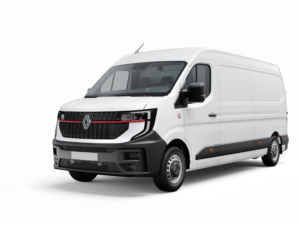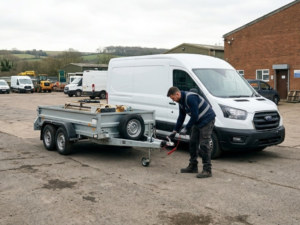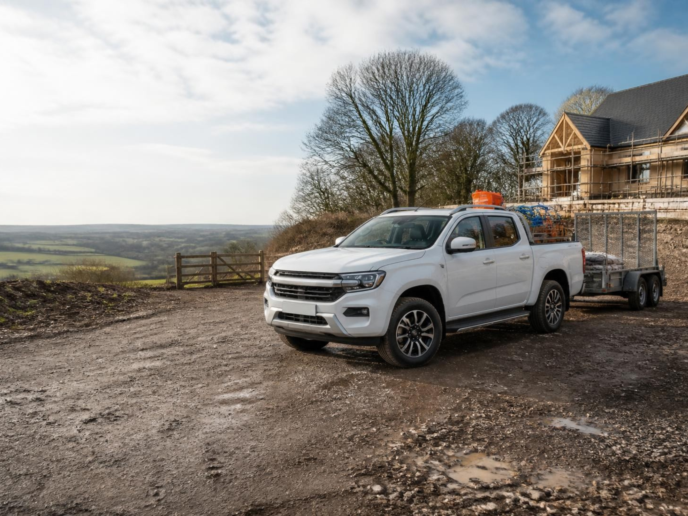
Pickup trucks have become increasingly versatile vehicles for UK businesses. Once primarily associated with farmers, builders and off-road work, today’s pickups combine the practicality of a commercial vehicle with the comfort, technology and refinement of a modern passenger car.
For businesses that need to carry equipment, tow trailers or regularly travel across challenging terrain, a pickup can offer a combination of capabilities that a conventional van cannot always match.
Leasing can also make these vehicles more accessible, allowing businesses to use a brand-new pickup without having to purchase the vehicle outright.
But is a pickup the right choice for your business? And what should you consider before taking one on a lease?
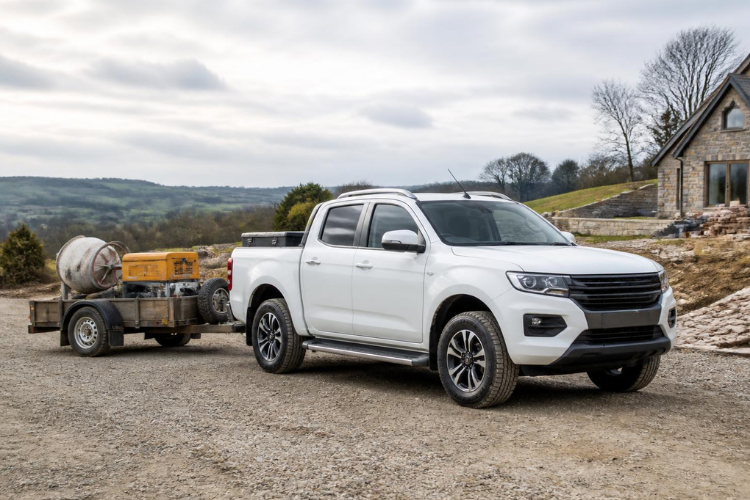
What Is A Pickup Truck?
A pickup is a light commercial vehicle with a separate load bed behind the passenger compartment.
Unlike a traditional panel van, the rear load area is open, although it can be protected with accessories such as a hardtop, roller cover or tonneau cover.
Most modern pickups are available with four-wheel drive, generous towing capabilities and substantial payloads. Double-cab versions can also accommodate five people, making them particularly useful for businesses where employees need to travel together.
This combination of passenger space and working capability is one of the reasons pickups have become such a popular alternative to traditional commercial vehicles.
Why Are Pickup Trucks So Popular With UK Businesses?
The modern pickup is considerably more sophisticated than the basic workhorses that once dominated the market.
Manufacturers have developed pickups that can perform demanding commercial duties while also providing the comfort, safety and technology expected from a modern vehicle.
There is also now greater choice than ever, with conventional diesel pickups sitting alongside petrol, plug-in hybrid and fully electric models.
For many businesses, this means a pickup can perform several roles instead of being limited to one particular type of work.
Why Choose A Pickup Instead Of A Van?
There is no single vehicle that is right for every business.
A panel van will generally provide a larger enclosed load area, making it the better option when a business regularly transports bulky goods or needs maximum protection from the weather.
A pickup, however, offers several advantages of its own.
Excellent Towing Capability
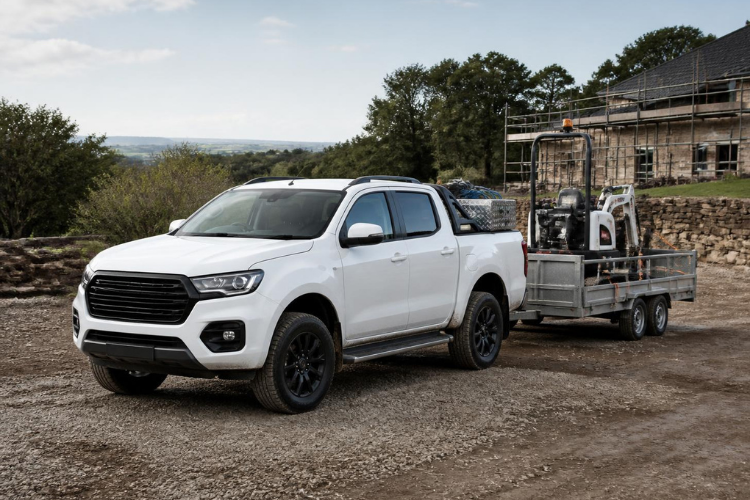
For businesses regularly towing trailers, plant or equipment, a pickup can be an extremely capable choice.
Many models are engineered with towing in mind and combine strong engines with four-wheel drive and substantial torque.
This makes them particularly useful for industries where trailers form part of everyday operations.
Farmers, landscapers, construction businesses, groundworkers and other trades may all benefit from this capability.
However, towing capacity varies between models and specifications, so businesses should always check the manufacturer’s figures before choosing a vehicle.
A Practical Load Bed
The rear load bed provides a convenient place to carry tools, machinery, materials and other equipment.
Because the load area is separate from the passenger compartment, dirty or bulky equipment can be kept away from the cabin.
The load bed can also be adapted with a range of accessories depending on how the vehicle is going to be used.
Hardtops can create a more enclosed storage area, while bed liners can help protect the load bay from everyday wear and tear.
Four-Wheel Drive For Difficult Conditions
Four-wheel drive is another major attraction for businesses operating away from conventional roads.
Although it is not necessary for every business, it can be particularly valuable when vehicles regularly operate on muddy building sites, fields, unmade roads or other challenging surfaces.
For businesses working away from conventional roads, the additional traction offered by a four-wheel-drive pickup can provide a significant practical advantage.
Passenger Flexibility
Double-cab pickups can also provide seating for up to five people, depending on the model.
This can be particularly useful for businesses where employees need to travel to jobs together.
A landscaping company, for example, may be able to transport several members of a team while also carrying tools and equipment in the load bed.
This combination of passenger accommodation and commercial capability is one of the main reasons pickups appeal to businesses that need more flexibility from a single vehicle.
Modern Pickups Are More Comfortable Than Ever
One of the biggest changes in the pickup market has been the development of the cabin.
Today’s pickups are no longer purely functional work vehicles. Depending on the specification, they can include features such as:
- Touchscreen infotainment systems
- Smartphone connectivity
- Climate control
- Adaptive cruise control
- Heated seats
- Parking cameras and sensors
- Advanced driver assistance systems
- Automatic transmissions
- Leather or premium upholstery
For people spending several hours a day behind the wheel, this can make a considerable difference.
A pickup can therefore perform the role of a working vehicle during the week while still providing a comfortable environment for longer journeys.
Best Pickup Trucks For UK Businesses
There is now a wide selection of pickup trucks available to UK businesses, ranging from straightforward work vehicles to highly specified models with advanced technology and electrified powertrains.
Ford Ranger
The Ford Ranger is one of the most established pickups in the UK market and is available in a range of configurations and powertrains.
Its combination of towing ability, load-carrying capability, four-wheel-drive options and comfortable cabin makes it a versatile choice for businesses that want one vehicle capable of handling a wide variety of jobs.
It can be particularly well suited to construction, landscaping, agriculture and general trade work.
Toyota Hilux
The Toyota Hilux has built a strong reputation for durability and working capability.
It is available in different configurations and can be particularly appealing to businesses that regularly operate in demanding conditions.
Toyota also offers business leasing for the Hilux, with current business contract hire offers available on the model.
Isuzu D-Max
The Isuzu D-Max is another pickup designed with professional users in mind.
Different cab configurations and specifications allow businesses to choose a version based on their priorities, whether that is straightforward working capability or additional passenger and equipment flexibility.
Its range includes both two-wheel-drive and four-wheel-drive variants, depending on specification.
Volkswagen Amarok
The Volkswagen Amarok combines commercial capability with a more premium approach to interior design and technology.
It can appeal to businesses that want the practicality of a pickup without sacrificing the comfort required for frequent road use.
KGM Musso
The KGM Musso has also become an established option within the UK pickup market, offering businesses another alternative for carrying equipment and towing.
Its combination of specification, practicality and competitive leasing availability can make it worth considering when comparing different pickup options.
Electric Pickup Trucks
The pickup market is also beginning to move towards electrification.
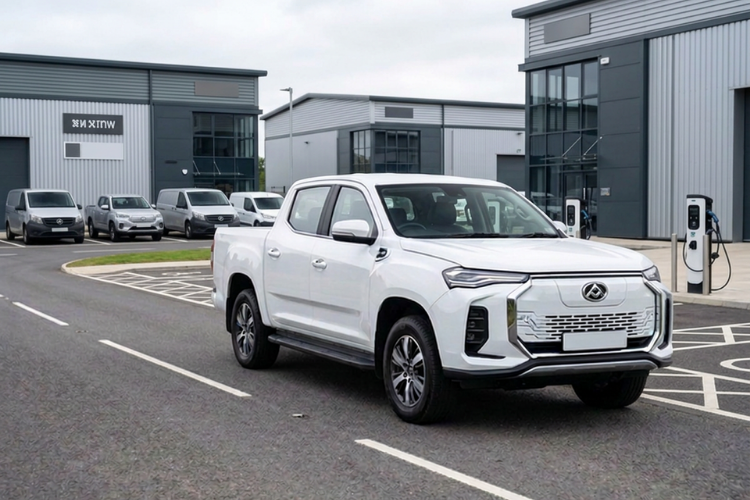
Models such as the Maxus eTERRON 9 demonstrate how electric powertrains are being introduced into larger commercial pickups, while the Maxus T90 EV is another example of an electric pickup aimed at UK businesses.
For businesses with suitable daily mileage and access to reliable charging, an electric pickup could provide an alternative to a conventional diesel vehicle.
Pickups Can Make Sense For Tradespeople
Pickups are particularly popular among trades and industries where carrying equipment is part of everyday work. If a pickup is not the right fit, our guide to the best vans for tradespeople in 2026 compares alternative commercial vehicles for different types of work.
Construction
Builders and construction companies may need to transport tools, materials and equipment while also towing trailers. Businesses looking at alternatives can also compare the best vans for builders in 2026.
A pickup can provide the combination of load-carrying ability, towing capability and off-road performance required for certain jobs.
Landscaping
Landscapers can benefit from the ability to carry equipment such as mowers, strimmers and other machinery while keeping the passenger cabin separate from potentially dirty equipment. Businesses considering a conventional van can also compare the best vans for landscapers in 2026.
Four-wheel drive can also be useful when accessing gardens, estates and rural properties.
Agriculture
Farm work often involves difficult terrain, towing and carrying equipment. Businesses looking at alternative commercial vehicles can also compare the best vans for farmers in 2026.
A four-wheel-drive pickup can be particularly well suited to these conditions, offering greater versatility than many conventional commercial vehicles.
Groundworks And Site Work
Businesses working on construction sites, infrastructure projects and rural developments may regularly encounter rough ground and difficult access.
A capable pickup can provide the additional traction and ground clearance required in these environments.
Tree Surgeons
Tree surgeons and arboricultural businesses can also benefit from the versatility of a pickup. Businesses can also compare the best vans and commercial vehicles for arborists and tree surgeons in 2026.
Equipment such as chainsaws, ropes, climbing equipment and smaller machinery can be transported separately from the passenger cabin, while trailers can be used for additional equipment or waste where appropriate.
Utility And Maintenance Businesses
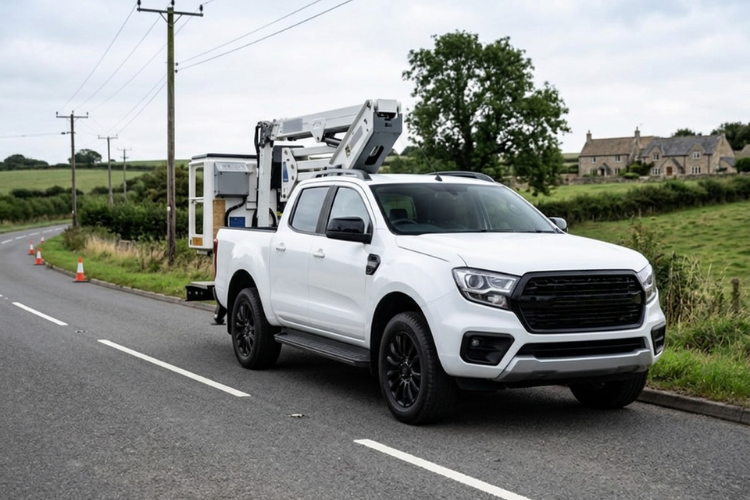
Utility contractors and maintenance businesses often need to carry tools while travelling between multiple sites.
A pickup can provide a useful balance between passenger accommodation, load-carrying ability and the ability to access less-developed locations.
What Is Pickup Truck Leasing?
Buying a pickup outright means committing a significant amount of capital to the vehicle.
Leasing provides an alternative.
Instead of purchasing the vehicle, you make an agreed initial payment followed by regular monthly rentals for the duration of the agreement.
With Business Contract Hire, the vehicle is normally returned to the finance provider at the end of the agreement, subject to the terms of the contract, including mileage and vehicle condition requirements.
This can make budgeting easier because the business knows its agreed rental payments from the outset.
The exact cost of a pickup lease will depend on factors including:
- The vehicle selected
- Contract length
- Annual mileage
- Initial rental
- Finance agreement
- Vehicle specification
- Any optional equipment or accessories
- Whether maintenance is included
Leasing agreements can vary considerably, so it is important to understand exactly what is included before comparing different offers.
Pickup Truck Leasing Vs Buying
One of the biggest decisions for a business is whether to lease a pickup or purchase one outright.
Buying gives the business ownership of the vehicle, but it also means taking responsibility for depreciation and tying up capital in an asset.
Leasing provides access to a new vehicle without purchasing it outright, which can help businesses preserve cash for other areas of their operation.
Buying A Pickup
Buying can make sense for a business that intends to keep a vehicle for a long period and wants to own the asset.
The business also has greater freedom over how long it keeps the vehicle and when it eventually sells it.
However, the initial cost can be significant and the business takes on the risk associated with depreciation and future resale value.
Leasing A Pickup
Leasing can offer predictable monthly rentals and allows a business to change vehicles more regularly.
It can also reduce the amount of capital required at the start of the agreement.
The business does not own the vehicle, however, and must comply with the agreed terms of the contract.
There are different types of finance available, including Finance Lease, so businesses should ensure they understand the specific agreement being offered
What Does Pickup Truck Leasing Cost?
There is no single price for pickup truck leasing because monthly rentals are calculated using a range of factors.
The same pickup can have very different monthly payments depending on the contract structure, annual mileage allowance and initial rental
Current UK leasing offers demonstrate the range of monthly rentals available across different pickup models and specifications, with business offers varying according to contract terms and vehicle specification.
Businesses should therefore avoid choosing a pickup based solely on the headline monthly rental.
Instead, consider the overall cost of the agreement, including:
- Initial rental
- Monthly rentals
- Contract length
- Annual mileage
- Maintenance
- Road tax where applicable
- Excess mileage charges
- Potential end-of-contract charges
- Required accessories and modifications
A slightly more expensive monthly rental may ultimately provide better value if the vehicle is better suited to the business or the agreement includes services that would otherwise have to be paid for separately.
Business Pickup Leasing
For businesses, leasing can provide a way of putting a new pickup onto the road without tying up as much capital in vehicle ownership.
This can be particularly useful for small businesses and sole traders that would rather keep cash available for other areas of the business.
The tax and VAT treatment of a business pickup can depend on how the vehicle is classified, how it is used and the type of finance agreement involved.
Businesses should therefore obtain appropriate accounting or tax advice before making a decision based on potential tax advantages.
Business leasing arrangements can also be structured around factors such as contract length, mileage and initial rental, allowing businesses to choose terms that better reflect how the vehicle will be used.
Choosing The Right Pickup
Not every pickup is designed for exactly the same job.
Before choosing a vehicle, consider how it will actually be used.
Payload
Payload is the maximum weight the vehicle can safely carry.
If your business regularly transports heavy tools or equipment, check the pickup’s payload rather than assuming that a large-looking vehicle will automatically carry everything you need.
It is also important to remember that passengers, accessories and other items carried by the vehicle can contribute to the vehicle’s overall weight.
Towing Capacity
If towing is one of the main reasons for choosing a pickup, check the manufacturer’s specified towing capacity and make sure it is suitable for the trailers and equipment you intend to use.
You should also consider the legal requirements surrounding towing and the weight of the complete combination.
Never assume that every pickup can tow the same weight simply because it looks similar to another model.
Load Bed Dimensions
The physical size of the load bed matters just as much as its payload.
Think about the equipment you regularly carry and check whether it will fit comfortably.
Accessories such as hardtops, bed liners and load covers can also change how useful the load area is for your particular business.
Cab Configuration
Double-cab pickups are popular because they provide space for additional passengers while retaining a usable load bed.
However, adding extra seats can affect the amount of available load space.
If carrying capacity is more important than passenger accommodation, a different configuration may be more appropriate.
Fuel Type
The pickup market is changing, with manufacturers introducing more efficient petrol, diesel and electrified powertrains.
For businesses covering high annual mileages, fuel consumption and running costs should form part of the decision-making process.
A plug-in hybrid pickup may also be worth considering where the vehicle’s typical journeys and charging arrangements make electrification practical.
Fully electric pickups may also make sense for businesses with predictable routes, suitable charging infrastructure and sufficient daily range.
Understanding Payload, Towing And Weight Limits
Pickup specifications can contain several different weight figures, and businesses should understand what they mean before using a vehicle for demanding work.
Gross Vehicle Weight
The gross vehicle weight is the maximum permitted weight of the vehicle when loaded.
This includes the vehicle itself, passengers, fuel and anything being carried.
Payload
Payload refers to how much additional weight the vehicle can carry within its permitted limits.
If you add heavy accessories such as a hardtop, tool storage or other equipment, the available payload can be reduced.
Towing Capacity
Towing capacity refers to the maximum trailer weight that the vehicle is designed and approved to tow under the relevant conditions.
Businesses should always check the exact manufacturer’s specification for the vehicle they are considering.
Gross Train Weight
Gross train weight is the maximum permitted combined weight of the vehicle and trailer combination.
This is particularly important for businesses that regularly tow heavy trailers because being within the pickup’s towing capacity does not automatically mean that every combination will be legal.
If towing is a major part of your business, it is worth checking all relevant weights before selecting a vehicle.
Pickup Accessories Can Transform Their Practicality
One of the biggest advantages of a pickup is the ability to adapt the vehicle to suit the job.
Popular accessories include:
Hardtops
A hardtop can turn an open load bed into a more secure enclosed storage area.
This can be useful for businesses carrying valuable tools or equipment that need additional protection from the weather.
Bed Liners
The load bed can experience considerable wear, particularly when heavy equipment and materials are regularly loaded.
A liner can help protect the underlying surface from scratches, dents and general damage.
Roller Covers
A roller cover provides a convenient way to cover the load area while still allowing relatively easy access to equipment.
Tool Storage
Storage systems can make it easier to organise tools and equipment while making better use of the available load space.
For a business vehicle, good storage can save time as well as protect equipment.
Tow Bars
A tow bar may be an essential addition for businesses that regularly pull trailers or other equipment.
However, towing equipment should be correctly specified and fitted, and the vehicle’s towing limits should always be considered.
Electric Pickup Truck Leasing
Electric pickups are becoming an increasingly interesting option for businesses.
Although diesel remains important for many users, electric models are beginning to provide an alternative for businesses whose operating patterns suit electrification.
The Maxus eTERRON 9, for example, is now available within the UK pickup leasing market as an all-electric option.
Electric pickup leasing could be particularly attractive to businesses that:
- Have predictable daily mileage
- Can charge at their premises
- Have access to suitable home charging
- Operate primarily within a defined area
- Want to reduce tailpipe emissions
- Are looking at longer-term fleet electrification
However, electric pickups should not be selected simply because they are electric.
Businesses need to consider real-world range, charging time, charging infrastructure, payload and towing requirements.
Towing and heavy loads can also affect the efficiency and range of an electric vehicle, so businesses should assess the vehicle against their actual working requirements.
Pickup Or Panel Van: Which Is Better?
The answer depends entirely on what the vehicle needs to do.
| Requirement | Pickup | Panel Van |
|---|---|---|
| Towing | Excellent on suitable models | Depends on model |
| Off-road ability | Excellent on suitable models | Limited on many models |
| Open load carrying | Excellent | Limited |
| Enclosed storage | Requires accessory | Standard |
| Bulky load capacity | Moderate | Often higher |
| Passenger space | Excellent in double-cab models | Depends on configuration |
| Tool storage | Highly adaptable | Excellent |
| Weather protection | Requires cover or hardtop | Standard |
A panel van is often the more practical solution for businesses transporting large volumes of enclosed cargo.
A pickup can be the better option where towing, off-road capability, open load access and passenger accommodation are higher priorities.
The best choice is therefore not necessarily the vehicle with the biggest payload or the highest towing capacity. It is the vehicle that best matches the way the business actually operates.
When Is A Panel Van Better Than A Pickup?
There are situations where a conventional van will clearly be the better choice.
If your business regularly carries large quantities of boxed goods, tools or materials that need to remain dry and secure, an enclosed load compartment can be much more practical than an open pickup bed.
Panel vans also tend to make better use of their available length and height, allowing businesses to carry bulky items that may not fit easily within a pickup’s load bed.
For businesses such as delivery companies, plumbers, electricians and mobile service providers, the ability to organise tools and equipment inside a secure load area can be more valuable than the off-road capability of a pickup.
Is A Pickup Truck Right For Your Business?
The biggest mistake is choosing a pickup simply because it looks impressive.
A pickup should be selected because its capabilities match the demands of the business.
Ask yourself:
- How much weight do I normally carry?
- Do I regularly tow a trailer?
- Do I work off-road or on rough terrain?
- Do I need four-wheel drive?
- How many people need to travel in the vehicle?
- Do I need an enclosed load area?
- What annual mileage will I cover?
- What accessories will I need?
- Would a panel van actually be more practical?
- Would an electric or hybrid pickup suit my daily driving?
If the answers point towards towing, difficult terrain, equipment carrying and passenger flexibility, a pickup could be an excellent fit.
Leasing A Pickup With Commercial Vehicle Contracts
At Commercial Vehicle Contracts, we understand that choosing a commercial vehicle is about more than finding an attractive monthly payment.
The right pickup needs to suit the work you do, the equipment you carry and the way your business operates.
Our pickup leasing options give businesses access to a range of modern commercial vehicles, with agreements tailored around factors such as contract length, mileage and initial rental.
Whether you need a pickup for construction, agriculture, landscaping, groundworks or another industry, choosing the right specification is essential.
We can help businesses consider the practical requirements of their vehicle before deciding which pickup and leasing arrangement is most suitable.
From payload and towing requirements to passenger accommodation, fuel type and accessories, understanding how the vehicle will be used is the first step towards choosing the right solution.
 Call our expert team on