Renault is preparing to launch five new light commercial vehicles (LCVs) by 2028 as it begins a major expansion of its van range, adding to the growing choice of electric vans now available to UK businesses.
The plans form part of Renault’s new FuturReady strategy, which is designed to strengthen the manufacturer’s position in the European LCV market with a wider range of electric and technologically advanced vans.
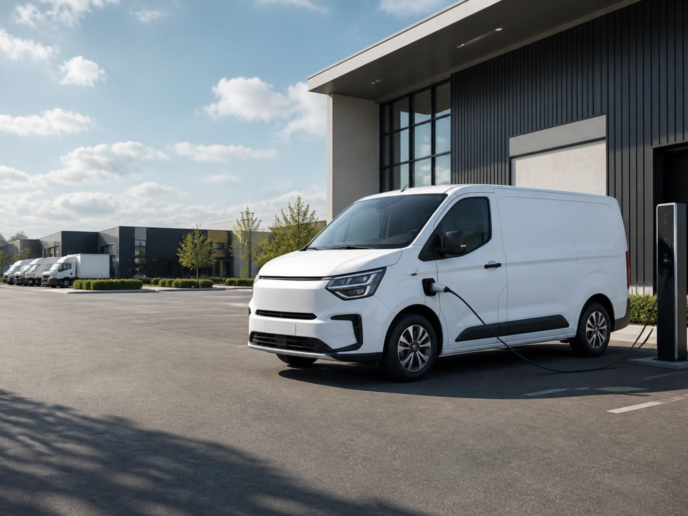
Renault unveiled the new Trafic Van E-Tech electric at the 2026 IAA Transportation show in Hanover, describing it as the first model in a new generation of LCVs focused on improving efficiency, technology, comfort and versatility.
For UK businesses considering the move to electric commercial vehicles, the new Trafic could become an important addition to the market when it arrives later this year.
New Renault Trafic Electric Offers More Than 280 Miles Of Range
The new Renault Trafic Van E-Tech electric is expected to deliver more than 280 miles of range on a single charge, although final official figures have yet to be confirmed.
Renault says the van could achieve significantly more in urban driving, with an anticipated range of around 430 miles in city conditions.
The figures will ultimately depend on the final specification and official testing, but the claimed range represents a substantial increase in the practicality of an electric van for businesses covering high daily mileages.
The new Trafic is based on Renault’s RGEV medium-van platform and uses an 800-volt electrical architecture.
This enables rapid charging, with Renault stating that around 170 miles of range can be added in approximately 20 minutes using a suitable high-speed charger. For businesses moving towards electric vans, understanding how EV charging works is becoming an increasingly important part of fleet planning.
The manufacturer also quotes up to 236 miles of range during city driving, highlighting the potential advantages of regenerative braking and lower-speed urban operation.
Trafic Electric Offers Up To 5.8m³ Of Load Space
Despite its electric powertrain, Renault has designed the new Trafic around the practical requirements of commercial users.
The van will offer up to 5.8m³ of load volume, while payload capacity will reach 1.3 tonnes. With a payload of up to 1.3 tonnes, businesses also need to consider how much equipment, stock and additional conversion equipment the vehicle will actually carry. Our guide to van payload explains the rules and practical considerations when calculating what a commercial vehicle can safely carry. Towing capacity is rated at up to 2 tonnes, giving the electric Trafic the ability to handle a trailer as well as carrying a substantial load.
Renault says the van can accommodate up to three Euro pallets, while the load floor sits approximately 53cm from the ground.
Two wheelbase options will be available.
The shorter L1 version will provide:
- 5.1m³ of load volume
- Up to 4.87m of load length
The longer L2 version will provide:
- 5.8m³ of load volume
- Up to 5.27m of load length
The Trafic is also designed to remain practical for urban operators, with a 10.3-metre turning circle and an overall height of approximately 1.9 metres.
Electric Trafic Designed To Reduce Business Running Costs
Renault is positioning the new Trafic Van E-Tech electric as more than simply an electric alternative to a diesel van.
The manufacturer estimates that its total cost of ownership could be up to 10% lower than an equivalent internal combustion engine model.
Lower energy costs, reduced servicing requirements and the potential benefits of running an electric vehicle in urban environments could all contribute to the overall savings for businesses.
The van will also introduce additional connected technology designed to help fleet operators manage vehicles more efficiently.
Renault’s Uptimize system is scheduled to become available from 2027 and will use connected-vehicle data to provide businesses with personalised assistance following incidents. Technology such as this is becoming an increasingly important part of fleet management solutions as businesses look to reduce downtime and improve vehicle efficiency.
Renault says the technology could help reduce vehicle downtime by as much as 50%, potentially allowing operators to get vehicles back on the road more quickly.
Fleet managers will also be able to apply specific efficiency, performance and safety settings to selected vehicles through an in-vehicle application.
The system can then help optimise energy consumption and driving modes according to the requirements of the business.
New Trafic Brings Passenger-Car Comfort To The Van Market
Renault has also placed considerable emphasis on the driving experience.
The new Trafic uses a multi-link rear suspension system, alongside an ergonomic driving position and the quieter operation associated with an electric powertrain.
The result is intended to provide a driving experience closer to that of a passenger car while retaining the load-carrying capability expected from a medium-sized commercial vehicle.
The van is also only around 1.9 metres high, which should make it easier to use in car parks and other locations where vehicle height can become a limitation.
Vehicle-To-Load And Vehicle-To-Grid Technology
Another feature of the new electric Trafic is its support for vehicle-to-load (V2L) and vehicle-to-grid (V2G) technology.
V2L allows the van’s battery to supply electricity to external equipment.
For tradespeople and other mobile businesses, this could be particularly useful, as electrical equipment such as tools and laptops can be powered directly from the vehicle rather than requiring a separate generator or mains connection.
Power can be accessed through a connection in the cab’s charging area or using an adapter.
V2G technology could also allow compatible vehicles to interact with the electricity grid, potentially creating further opportunities for businesses to manage energy consumption and charging.
More Renault Electric Vans Coming By 2028
The new Trafic Van E-Tech electric is only the beginning of Renault’s planned LCV expansion.
The manufacturer says it will launch five new LCVs by 2028, creating a broader commercial vehicle line-up as demand for electric vans continues to develop across Europe.
The new Trafic panel van is expected to become available by the end of 2026, while chassis-cab and crew-cab versions are planned for 2027.
This will give Renault greater flexibility to target businesses with different body, load-carrying and conversion requirements, particularly those looking for commercial vehicle conversions tailored to their individual operations.
The wider programme also demonstrates Renault’s intention to compete more aggressively in the increasingly competitive electric van market, where manufacturers are being pushed to offer greater range, faster charging and lower operating costs without compromising payload or practicality.
For businesses looking at electric van leasing, models such as the new Trafic Van E-Tech could provide an increasingly viable alternative to conventional diesel vans as charging infrastructure improves and electric commercial vehicle technology continues to develop.
 Call our expert team on