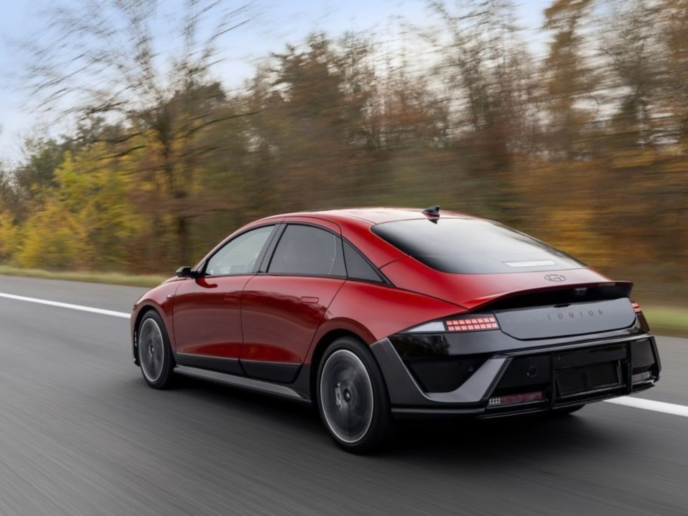
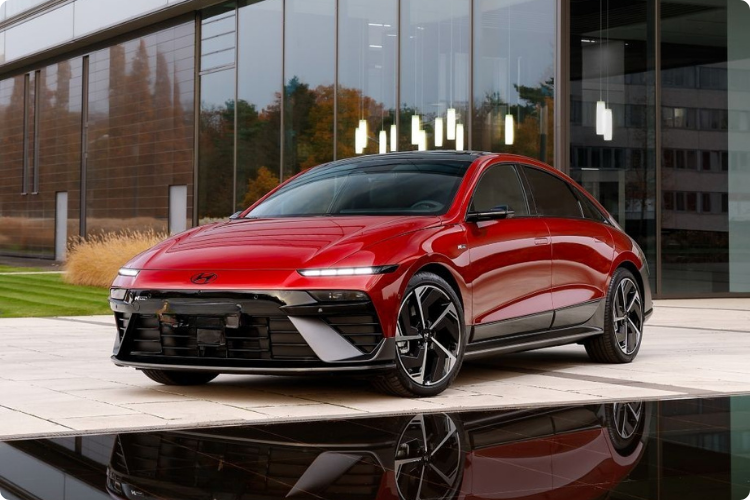
Hyundai has opened UK orders for the updated IONIQ 6, introducing a revised model range, a larger 84kWh battery and an advertised driving range of up to 422 miles.
The latest version of Hyundai’s electric saloon brings changes to its exterior styling, interior equipment and technology, alongside a revised range of specifications. Customers can choose between Premium, N Line and N Line Evo models, with rear-wheel-drive and all-wheel-drive options available.
UK prices start at £33,240 after the full £3,750 Government Electric Car Grant has been applied to eligible versions. First UK deliveries are expected in early 2027.
For businesses considering an electric company car, the updated IONIQ 6 provides another option in Hyundai’s growing electric vehicle range. Organisations comparing different body styles and sizes can also consider the Hyundai IONIQ 5, which offers a more SUV-focused alternative.
Updated Hyundai IONIQ 6 Prices And Specifications
The updated IONIQ 6 is available in three trim levels, with differences in performance, equipment and driving range.
The entry-level Premium and standard N Line rear-wheel-drive versions qualify for the full £3,750 Electric Car Grant, reducing their purchase prices. The Government’s support for electric car buyers is explained in our guide to the Government Electric Car Grant.
Hyundai’s own KONA Electric grant information also provides a useful example of how the scheme applies to eligible electric vehicles.
The updated UK pricing is as follows:
| Model | Power | Drivetrain | Price |
|---|---|---|---|
| Premium 84kWh | 229hp | RWD | £33,240 |
| N Line 84kWh | 229hp | RWD | £36,240 |
| N Line 84kWh | 325hp | AWD | £43,490 |
| N Line Evo 84kWh | 229hp | RWD | £43,270 |
| N Line Evo 84kWh | 325hp | AWD | £46,770 |
Prices reflect the announced UK pricing, with the applicable £3,750 Government grant included where eligible.
Hyundai IONIQ 6 Premium
The Premium 84kWh RWD provides the longest advertised driving range in the new line-up, with up to 422 miles available between charges.
Its electric motor produces 229hp, allowing acceleration from 0-62mph in 7.4 seconds. Hyundai also quotes an efficiency figure of 4.6 miles per kWh.
Despite being the entry-level model, standard equipment includes 18-inch alloy wheels, automatically deploying flush door handles, dual-zone climate control and a heated steering wheel.
Other features include a heat pump, smart regenerative braking and two 12.3-inch displays covering the driver’s instruments and infotainment functions.
The Premium specification also incorporates over-the-air software updates and a range of driver assistance technologies. These include Highway Driving Assist 2 and Blind-Spot Collision-Avoidance Assist.
At £33,240 after the grant, the Premium model provides the most affordable route into the updated IONIQ 6 range.
Hyundai IONIQ 6 N Line
The N Line introduces a sportier appearance, with additional styling details inside and out.
The 84kWh RWD version starts at £36,240 after the Government grant and retains the Premium model’s 229hp electric motor and 7.4-second 0-62mph acceleration time.
Its exterior changes include 20-inch alloy wheels and high-gloss black sports bumpers, giving the car a more performance-inspired appearance.
Inside, Hyundai has introduced an N-branded steering wheel, metal sports pedals and sports seats finished in a combination of cloth and leather, with contrasting red stitching.
For drivers wanting additional performance, an AWD version is also available. Priced from £43,490, this model uses two electric motors to produce 325hp, reducing the 0-62mph acceleration time to 5.1 seconds.
The AWD N Line offers a quoted maximum range of up to 354 miles.
The different powertrain configurations also provide an opportunity to consider how front-wheel drive, rear-wheel drive and all-wheel drive systems differ, particularly when choosing a vehicle for different driving conditions.
Hyundai IONIQ 6 N Line Evo
At the top of the equipment hierarchy sits the N Line Evo, which builds on the standard N Line specification with additional luxury, convenience and technology features.
The RWD version costs £43,270 and retains the 229hp powertrain, with a quoted driving range of up to 364 miles and a 0-62mph time of 7.4 seconds.
Its upgraded interior includes leather and suede upholstery, a suede headliner, memory functionality for the driver’s seat and ventilated front seats.
Additional equipment includes electrically adjustable relaxation seats, an electric sunroof, a head-up display and a Bose premium sound system.
Technology and parking assistance are further enhanced through the addition of a surround-view monitor, Remote Smart Parking Assist, Parking Collision-Avoidance Assist and Digital Key 2.
The vehicle also features walk-away locking and an external Vehicle-to-Load adaptor, allowing compatible electrical equipment to draw power from the car’s battery.
Customers wanting the highest-performing version can choose the N Line Evo AWD, priced at £46,770.
This combines the upgraded interior and equipment package with the 325hp dual-motor drivetrain, delivering a 0-62mph time of 5.1 seconds and a maximum quoted range of 354 miles.
Electric Range And Charging Capabilities
The larger 84kWh battery is an important development for the updated IONIQ 6, particularly for drivers covering longer distances for work or commuting.
With up to 422 miles of advertised range in Premium RWD specification, the vehicle offers considerable flexibility for journeys that might otherwise require more frequent charging stops.
The IONIQ 6 also benefits from Hyundai’s 800V electrical architecture, which supports ultra-fast DC charging when connected to a compatible charging station. This can help reduce charging times during longer journeys, although the actual rate and time will depend on the charger, battery temperature and other conditions.
For businesses planning to introduce electric cars, understanding the available charging options is an important part of assessing whether a vehicle will suit employees’ daily travel requirements. Our guide explains how EV charging works for businesses, including the different charging arrangements organisations may need to consider.
The availability of public charging is another consideration, particularly for employees who cannot charge at home or do not have access to workplace facilities. Our guide to the UK electric vehicle charging network looks at the infrastructure available to drivers, while our article on charging an EV without a driveway explores alternatives for those without off-street parking.
Businesses considering installing charging facilities may also want to investigate the available EV charger grants for fleet operators.
Drivers should also consider their charging habits and the difference between everyday charging and preparing for longer journeys. Our guide explains whether you should charge an electric car to 100%.
The IONIQ 6’s long advertised range may make it suitable for employees who regularly travel between business locations, provided their charging arrangements meet their individual requirements.
How The IONIQ 6 Fits Into Hyundai’s Electric And Hybrid Range
The updated IONIQ 6 gives businesses another electric saloon option, but it is not the only electrified model available from Hyundai.
For organisations looking for a smaller electric vehicle, the Hyundai KONA Electric offers a more compact SUV design. It may be worth considering where passenger space, vehicle dimensions and everyday practicality are important factors.
Businesses that are not yet ready to move to a fully electric vehicle could also look at the Hyundai Tucson Plug-In Hybrid. Its plug-in hybrid powertrain provides the option of electric driving for suitable shorter journeys, alongside a petrol engine for longer trips.
The choice between electric and plug-in hybrid vehicles will depend on factors such as annual mileage, access to charging, journey patterns and the way vehicles are used across the business. Our guide to battery electric, plug-in hybrid, hybrid and petrol or diesel vehicles explains the differences between the main powertrain types.
Businesses comparing electric models from different manufacturers can also refer to our guide to the best electric cars to lease, which provides further options to consider when reviewing company car requirements.
Electric Company Car Tax And Business Leasing
For businesses considering the IONIQ 6 as a company car, Benefit-in-Kind (BIK) taxation is another important factor.
Fully electric company cars currently benefit from lower BIK rates than petrol and diesel alternatives, although the applicable rate depends on the tax year. Businesses should take account of future rate changes when assessing the longer-term cost of providing an electric company car. Our guide to company car BIK rates and salary sacrifice looks at the announced changes and what they could mean for employers and employees.
The vehicle’s purchase price, specification and annual mileage may also influence the overall cost of running it as part of a business fleet. With some IONIQ 6 versions priced above £40,000, businesses may also want to understand the rules surrounding the £40,000 expensive car supplement and fleet vehicles.
Salary sacrifice is another route through which eligible employees may be able to access an electric company car. Our guide to electric vehicle salary sacrifice explains how these arrangements work and the considerations for employers and employees.
Leasing can provide an alternative to purchasing outright, allowing businesses to use a new vehicle for an agreed period without taking ownership of it. The most suitable arrangement will depend on the business’s financial circumstances, expected mileage and preferred contract terms.
Our guide to business car leasing in the UK explains the options available to organisations, while our article on business contract hire explains how this type of vehicle leasing agreement works.
Businesses operating through a limited company may also wish to consider the benefits of leasing through a limited company, including the financial and tax considerations that may apply to their circumstances.
 Call our expert team on