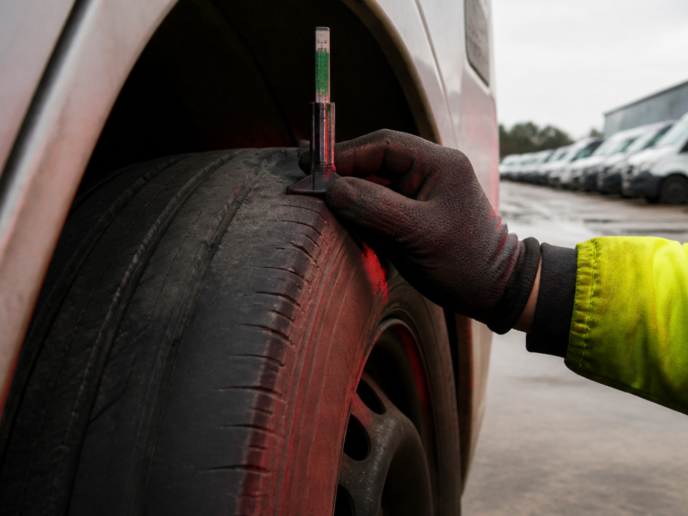
Tyre condition remains a critical part of vehicle safety, yet new figures suggest that routine checks may not be happening consistently across UK business fleets. Research from i247 Group found that 13.6% of tyres removed from fleet vehicles during a 12-month pilot were below the legal tread-depth limit.
The pilot covered 200,000 tyre removals, with the findings equating to an average of 74 illegal tyres being removed every day. The results raise concerns about how effectively businesses are monitoring vehicle condition and ensuring that tyre defects are identified before they become a safety risk.
For companies operating cars, vans and larger fleets, the findings are a reminder that vehicle maintenance needs to extend beyond scheduled servicing and MOT appointments. Regular inspections and clear driver responsibilities are important parts of keeping vehicles roadworthy.
The figures also reinforce concerns previously highlighted in our part-worn tyre safety article, particularly the importance of checking tyre condition rather than assuming that a vehicle is safe simply because it remains in regular use.
Routine Fleet Checks Could Be Falling Behind
David Legg, director of propositions and partnerships at i247 Group, warned that businesses could be overlooking basic maintenance checks, leaving them exposed to avoidable tyre safety risks.
He suggested that compliance checks have become less consistent since the Covid pandemic, partly because more employees work remotely and company vehicles are not necessarily brought back to the workplace as regularly as they once were.
This can make it harder for fleet managers to maintain oversight of vehicle condition, particularly when employees are responsible for taking their vehicles home or using them across different locations.
Where drivers are not routinely returning to a central depot or office, businesses may need alternative arrangements to make sure inspections are completed, and any defects are reported.
The issue is not limited to tyre tread. A tyre can also be unsafe because of damage, incorrect inflation or other visible defects. Businesses should therefore make sure drivers understand what to look for and know how to report concerns.
Defective Tyres Continue To Present A Serious Road Safety Risk
The i247 findings come alongside figures from tyre safety charity TyreSafe, which reported that 201 people were killed or seriously injured in incidents involving defective tyres during 2025.
This represented a 19% increase compared with 2024 and was 28% higher than the five-year average.
Tyres are the only part of a vehicle in direct contact with the road, making their condition particularly important for braking, steering and maintaining grip. Worn or damaged tyres can compromise a vehicle’s handling, especially in wet conditions, and increase the risk of an incident.
For businesses, the consequences can extend beyond the safety of the driver and other road users. Poor vehicle maintenance can also lead to unexpected downtime, disruption to operations and potential compliance issues.
Our guide to fleet compliance and the risks associated with faulty brakes and tyres explains why keeping vehicles in a safe and roadworthy condition should form part of an effective fleet management approach.
What Should Businesses Include In Their Tyre Checks?
A consistent inspection process can help businesses identify problems before they develop into more serious defects. Drivers should be given clear guidance on what to check, while fleet managers should have a process for recording issues and arranging repairs or replacements.
Checks should include:
- Tread depth: Make sure tyres remain above the applicable legal minimum and are not approaching the limit without a replacement being arranged.
- Tyre pressure: Check pressures regularly and follow the vehicle manufacturer’s recommendations.
- Visible damage: Look for cuts, bulges, cracks, exposed cords or other signs of damage.
- Uneven wear: Investigate unusual wear patterns, which may indicate problems with alignment, suspension or tyre pressure.
- Defect reporting: Give drivers a straightforward way to report tyre problems and make sure reported issues are followed up.
- Inspection records: Keep an appropriate record of checks, defects and maintenance work.
For cars and light vans, the minimum legal tread depth is 1.6mm across the central three-quarters of the tyre, around its entire circumference. Businesses should not treat this figure as a recommended replacement point: tyres approaching the legal limit should be monitored carefully and replaced where necessary.
These checks should complement, rather than replace, planned servicing and maintenance. More information is available in our guide to fleet vehicle servicing and maintenance.
Could Telematics Help Improve Tyre Safety?
The industry round-table discussions also highlighted the potential for businesses to make better use of vehicle data.
Telematics systems are commonly used to monitor mileage, vehicle location and driving behaviour, but they may provide additional information that could help fleet operators identify maintenance issues and manage vehicle condition.
Graham Mitchell, chief executive of Micheldever, suggested that businesses often rely on basic information from telematics without exploring what else their systems and providers can offer.
David Legg also highlighted the opportunity to make better use of available data to support more proactive maintenance.
For fleet operators, this could mean reviewing the information available through existing systems and discussing whether it can help identify patterns, recurring problems or vehicles that may need attention.
Technology is not a replacement for physical inspections, but it can form part of a wider approach to monitoring vehicle condition and ensuring that maintenance requirements are not overlooked.
Businesses reviewing their wider processes may also benefit from considering how fleet management solutions can support vehicle oversight, maintenance planning and compliance.
Euro 7 Will Bring Further Focus On Tyre Abrasion
The round table also considered the implications of Euro 7, the latest European vehicle emissions standard.
As well as addressing exhaust emissions, Euro 7 introduces requirements relating to tyre abrasion, with the aim of reducing particulate pollution caused by tyre wear.
The new requirements are due to apply to new type approvals for cars and light commercial vehicles from 29 November 2026. They will place additional attention on the relationship between tyre wear, safety and environmental performance.
Although the immediate focus is on vehicle manufacturers and tyre technology, the changes are relevant to the wider fleet sector. Tyre condition, durability and replacement requirements remain important considerations for businesses choosing and operating vehicles.
Grey Fleet Vehicles Also Need Attention
Tyre safety is not just a concern for businesses operating company-owned or leased vehicles. Employers also need to consider privately owned cars used by employees for work-related journeys.
This is commonly referred to as grey fleet use, and it can create additional challenges because vehicles are not necessarily maintained through the employer’s usual fleet processes.
Analysis of DVSA MOT data by TyreSafe highlighted the scale of the issue. Nearly seven million cars passed an MOT in 2025 with a tyre-related advisory.
The analysis also found that vehicles with a tyre advisory were almost twice as likely to have a dangerous tyre defect recorded at their next MOT compared with vehicles without an advisory. The figures were 7.4% and 3.8%, respectively.
More than a third (36.8%) of tyre failures had been preceded by an advisory at an earlier MOT. Where the advisory stated that tyres were worn close to the legal limit, the likelihood of a dangerous tyre defect at the next MOT was 8%.
Mileage was another factor. Cars covering more than 15,000 miles annually were 2.6 times more likely to have a dangerous tyre defect than those travelling fewer than 7,000 miles. The respective figures were 6.8% and 2.6%, even where no previous tyre advisory had been recorded.
The findings underline why businesses should not overlook vehicles that employees use for work simply because they are privately owned.
Employers have responsibilities to ensure that vehicles used for business purposes are safe. The Health and Safety Executive advises businesses to make sure privately owned vehicles used for work are maintained in a safe condition.
A suitable grey fleet policy should explain what is expected of employees and how vehicle condition will be checked. This could include requiring drivers to keep MOT and servicing information up to date, report tyre advisories, carry out regular visual inspections and arrange repairs when defects are identified.
Drivers should also understand their responsibilities when using a leased vehicle for work. Our guide to leased vehicle driver responsibilities provides further information.
 Call our expert team on