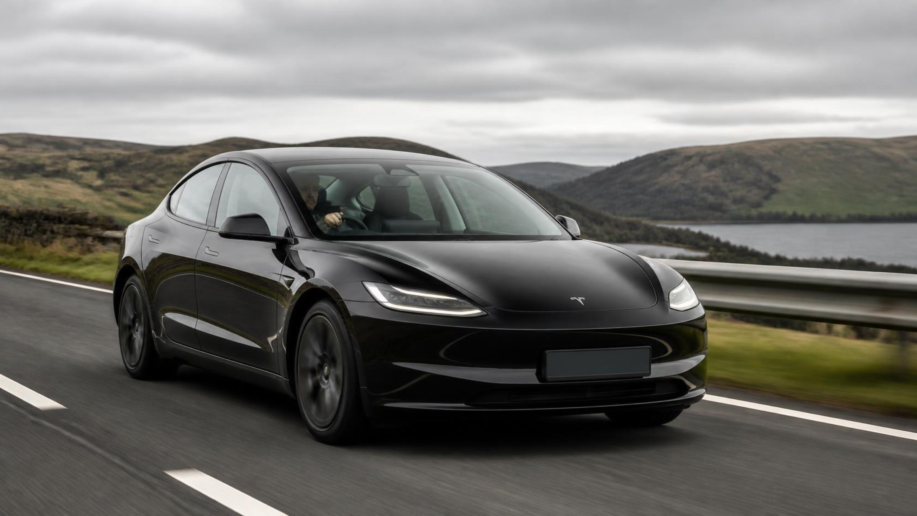
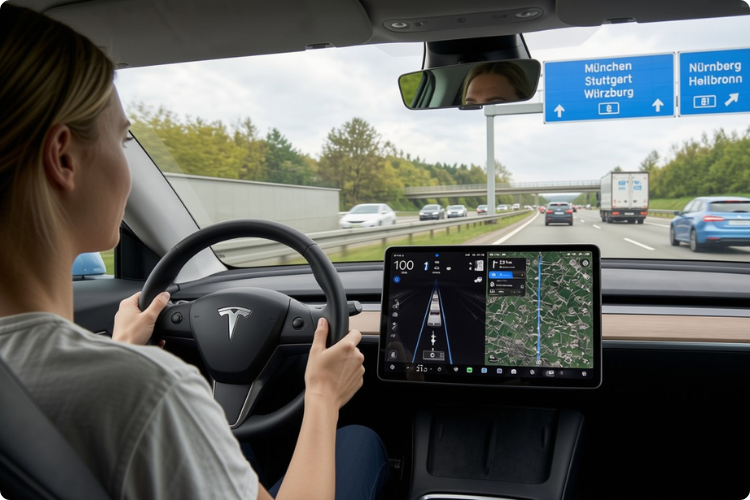
Tesla has changed the European branding of its Full Self-Driving technology to Assisted Driving, following criticism that the original name could give motorists an inaccurate impression of the system’s capabilities.
The change highlights an important distinction in modern motoring: technology that helps a vehicle steer, accelerate and brake is not necessarily the same as a system capable of driving without human supervision.
Although the reported rebranding concerns the European market, the issue is relevant to UK motorists and businesses considering vehicles equipped with increasingly sophisticated driver-assistance technology.
For fleet operators, understanding what these systems can and cannot do is particularly important. Advanced features can support the driving experience, but their capabilities, operating restrictions and legal status must be understood before they are relied upon.
Why Tesla Has Changed The Name Of Full Self-Driving
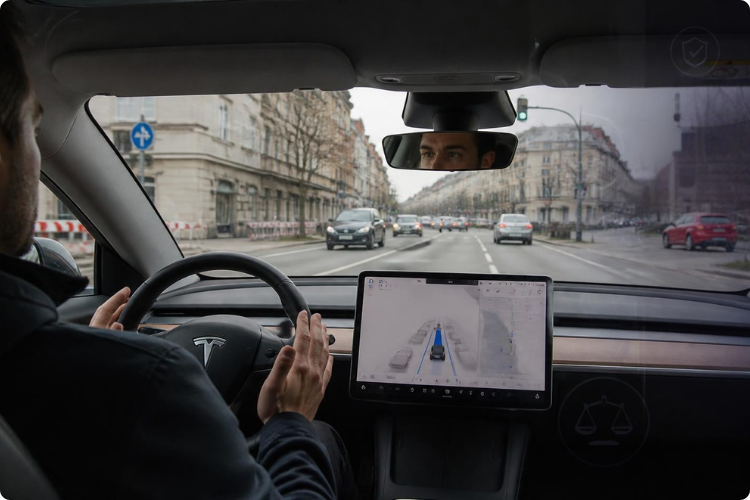
Tesla’s Full Self-Driving branding has attracted scrutiny because the wording can suggest that a vehicle is capable of managing an entire journey independently.
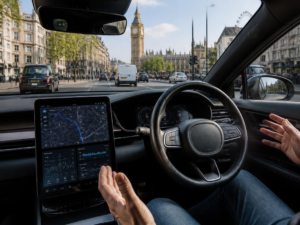
However, the system discussed in the European rebranding remains classified as Level 2 driver assistance. This means the technology can help with driving tasks, but the driver must continue supervising its operation and remain ready to intervene.
German regulators reportedly criticised the previous terminology as potentially misleading, arguing that the system does not take over the complete driving task. The revised Assisted Driving name more clearly reflects the driver’s continuing role.
The distinction matters because the names given to vehicle technologies can influence how motorists understand their capabilities. A feature marketed as self-driving could be interpreted differently from one explicitly described as providing assistance, even when the underlying system still requires human oversight.
Tesla’s branding change therefore raises a broader question for the automotive industry: how can manufacturers communicate increasingly advanced technology without creating unrealistic expectations?
What Does Level 2 Driver Assistance Actually Mean?
Automated driving capabilities are commonly described using levels ranging from Level 0 to Level 5. These classifications distinguish between systems that provide limited assistance and those designed to perform the entire driving task under specified conditions.
Level 2 systems can assist with both steering and speed control. Depending on the vehicle and system, this may include maintaining a lane, adjusting speed and keeping a distance from traffic ahead.
However, these functions do not remove the need for a driver to monitor the road and supervise the system.
The key distinction is that assistance with driving does not transfer responsibility for the entire driving task to the vehicle.
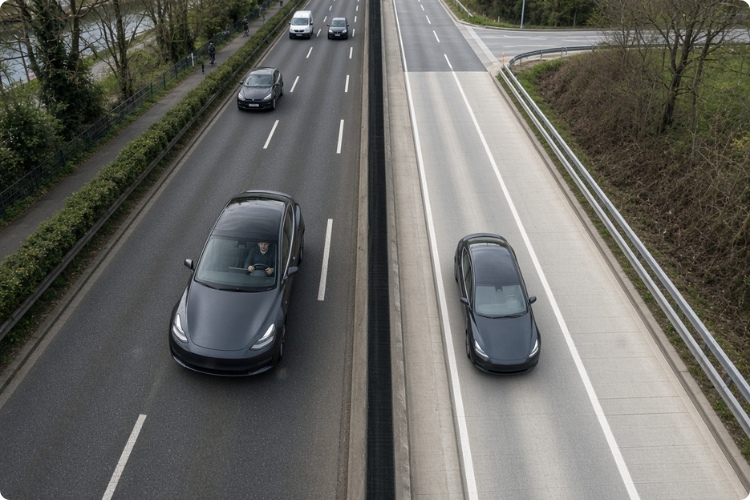
Drivers must follow the manufacturer’s instructions, remain alert and be prepared to take control whenever necessary. The way safety technology is assessed and presented to motorists is also evolving. CVC’s article on Euro NCAP safety tests and physical controls explores another aspect of how vehicle design and technology can affect the driving experience. They should never assume that the presence of advanced software means they can stop paying attention.
This is particularly relevant when comparing different systems. For example, Ford BlueCruise provides a useful UK reference point for understanding how hands-free driving technology operates within defined conditions and safeguards.
The precise capabilities and permitted use of any system depend on its design, approval and the applicable rules.
Why The Difference Between Assisted And Autonomous Driving Matters
The automotive industry is introducing more features designed to reduce the workload involved in driving. Adaptive cruise control, lane assistance, automated parking and more advanced driving functions are becoming increasingly common.
However, these technologies do not all offer the same level of automation.
A driver-assistance system supports a person who remains responsible for supervising the vehicle. A genuinely self-driving system, by contrast, must meet the relevant technical and legal requirements for performing the driving task without the person needing to supervise it in the same way.
The distinction is important when assessing developments elsewhere in the industry. CVC’s coverage of Waymo’s self-driving cars in the United States provides a useful comparison with the different approaches being taken to automated driving. Meanwhile, proposed changes to UK vehicle safety and type approval rules highlight the wider regulatory considerations surrounding modern vehicle technology.
Tesla’s system should not be treated as equivalent to every technology described as autonomous. The operating conditions, technical capabilities and regulatory permissions need to be considered individually.
For a wider look at what these developments could mean for the industry, see CVC’s guide to UK autonomous vehicles and their impact on fleet leasing.
What Does This Mean For UK Drivers?
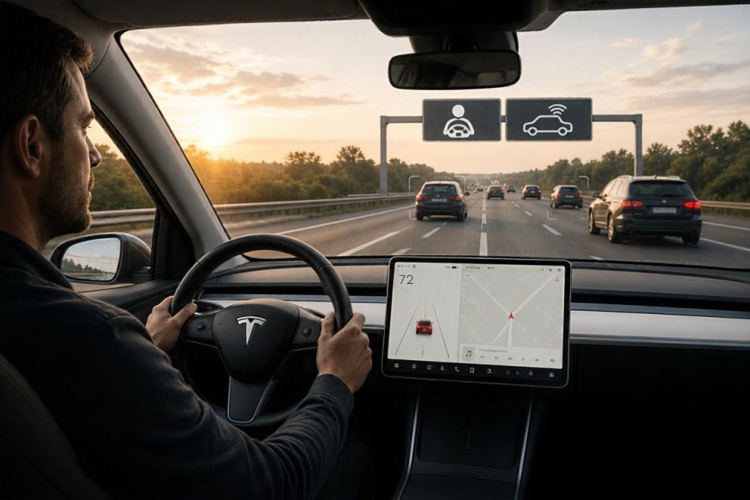
The reported European name change does not, by itself, establish that Tesla has been ordered to adopt the same branding in the UK. Nor does a change in terminology automatically alter the technical capabilities or legal classification of the underlying software.
Nevertheless, the issue has clear relevance for British motorists.
The UK has been developing a legal framework for authorised self-driving vehicles, distinguishing qualifying self-driving systems from conventional driving assistance. The existence of that framework does not mean every vehicle advertised with advanced automation features qualifies as self-driving under the law.
Drivers should therefore establish exactly what a vehicle’s systems can do, where they can be used and what supervision is required.
Anyone considering a Tesla should also distinguish between the features available on a particular vehicle, the software or package fitted to it, and the functions permitted in the country where it will be driven. Availability and capabilities can vary by model, software version and market.
CVC’s guide to Tesla vehicles and their features offers additional background for readers researching the manufacturer. Drivers considering a leased vehicle should also check the specification and understand which features are included, using CVC’s vehicle leasing FAQs for further guidance on common leasing questions.
Why Businesses And Fleet Operators Should Pay Attention
Driver-assistance technology is increasingly relevant to businesses choosing vehicles for employees and managing company fleets.
Features that help maintain speed, manage following distances or support lane positioning may be useful in particular driving situations. However, employers should not assume that these functions remove the need for driver training, appropriate policies or clear responsibilities.
Fleet managers should ensure drivers understand the limitations of the systems fitted to their vehicles. They should also make it clear that assistance features must be used in accordance with the manufacturer’s instructions and applicable road rules. These measures should complement existing safety procedures, including checks for faulty brakes and tyres in fleet vehicles, rather than being treated as a substitute for them.
This sits alongside the everyday obligations associated with operating a company vehicle, including keeping it roadworthy and driving safely.
Businesses can review CVC’s guidance on leased vehicle driver responsibilities for a broader overview of the obligations associated with driving a leased vehicle.
As vehicles become more software-dependent, fleet managers may also need to consider how manufacturers describe their features, how software updates affect functionality and how drivers are informed about changes.
CVC’s fleet management solutions explain how businesses can approach the wider task of managing their vehicles and fleet requirements. Businesses reviewing their vehicle policies and replacement plans can also consult CVC’s guide to fleet lifecycle management, which covers the broader considerations involved throughout a vehicle’s working life.
The Wider Issue Of Vehicle Technology And Consumer Expectations
Tesla’s decision also illustrates a challenge facing manufacturers as vehicle technology develops.
Marketing terminology needs to communicate what a system actually delivers. If a feature’s name creates expectations that exceed its real-world capabilities, motorists may misunderstand the extent to which they need to remain involved.
This is not simply a question of branding. Clear descriptions can help buyers compare vehicles, understand limitations and make informed decisions about optional technology.
Software is also becoming an increasingly important part of the ownership and driving experience. Features can depend on updates, subscriptions, regional permissions and vehicle specifications, making it important for buyers to understand precisely what is included.
For more on the legal considerations surrounding increasingly software-dependent vehicles, read CVC’s article on the Consumer Rights Act and vehicle software. The growing role of cameras, connected systems and vehicle data also raises questions about ownership, maintenance and access to technology, explored in CVC’s guide to modern cars, vans, cameras and data.
Ultimately, manufacturers, regulators and drivers all have a role in ensuring that advanced driving technology is understood and used appropriately.
 Call our expert team on