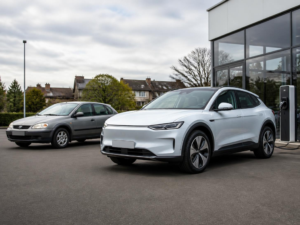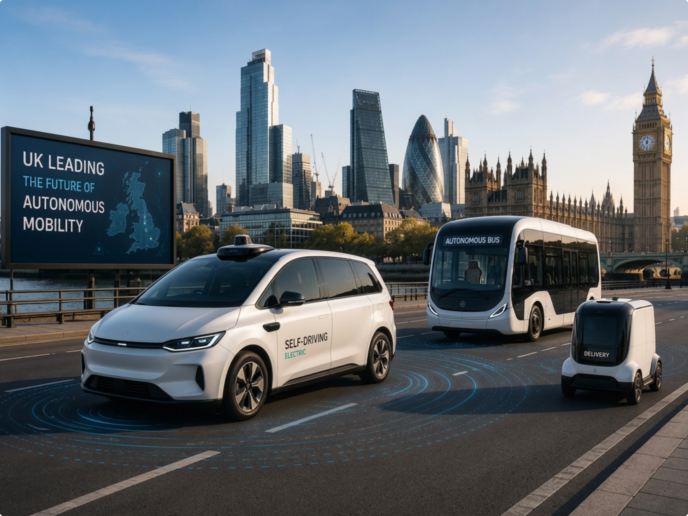
The UK aims to become the first European market for self-driving vehicles.
The UK Government is increasing its focus on autonomous mobility, with ministers positioning self-driving technology as a major future growth area for the British automotive sector.
Recent industry estimates suggest the autonomous vehicle market could contribute tens of billions of pounds to the UK economy over the next 15 years. In response, policymakers are accelerating investment, regulation, and commercial testing to help Britain become one of Europe’s leading markets for autonomous transport.
For fleet operators and vehicle leasing companies, the developments could eventually reshape how commercial vehicles are financed, deployed, and managed.
Government Backing for Autonomous Mobility
The Government has made it clear that autonomous transport forms part of its wider industrial and innovation strategy. Alongside new legislation, ministers are supporting research and development projects designed to help UK businesses commercialise self-driving technology faster.
One of the key steps is the rollout of the Automated Vehicles Act, which is expected to establish a clearer legal framework for companies developing autonomous systems. The legislation is designed to give manufacturers, technology firms, and investors greater confidence as commercial deployment moves closer. Full implementation is expected next year, with a permitting regime for automated passenger services due to launch in the coming months.
Autonomous mobility is also increasingly positioned as part of the UK’s wider industrial strategy, with a focus on strengthening supply chains, accelerating innovation, and supporting long-term export growth in high-value technology sectors.
Investment Increasing Across the Sector
Public and private investment into autonomous vehicle technology continues to grow across the UK.
The Government-backed programmes are also seeing strong oversubscription, with £74 million of bids received against £35 million of funding available under the CAM Pathfinder initiative, highlighting strong commercial demand from the sector.
The Government has committed funding through advanced manufacturing and innovation programmes aimed at supporting companies involved in next-generation mobility technologies. Demand for funding has reportedly exceeded available budgets, highlighting the growing number of businesses looking to move from testing phases into commercial production.
At the same time, major UK autonomous driving companies are attracting financial backing from public investment bodies and private investors.
Businesses such as Wayve and Oxa have become key players within the sector, helping position the UK as a growing hub for autonomous software development.
Early Fleet Applications Already Emerging
Although fully autonomous consumer vehicles are still developing, several commercial use cases are already appearing across the UK.
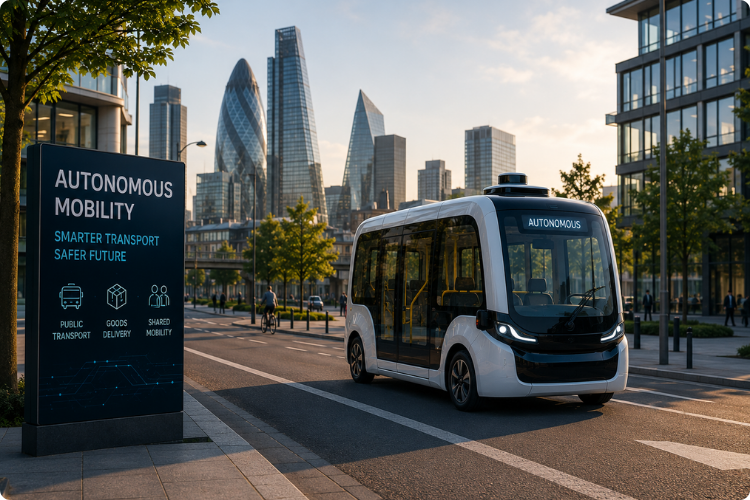
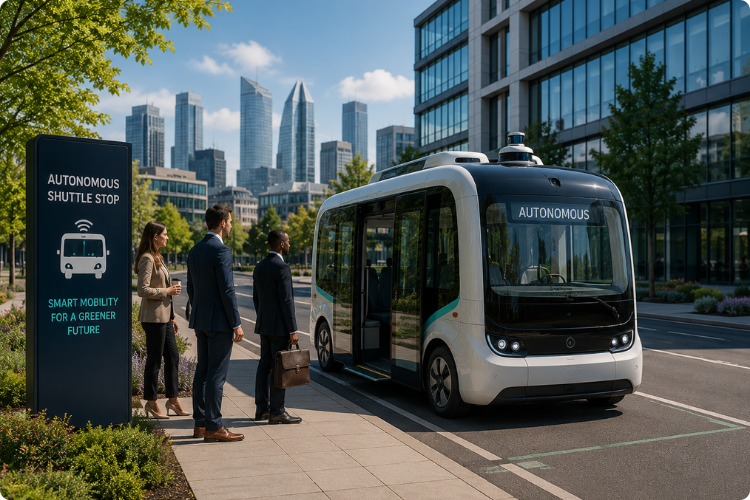
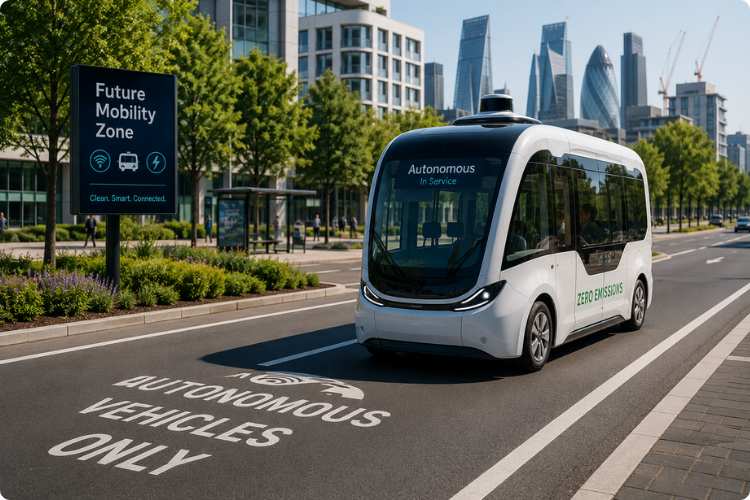
Autonomous electric buses are now operating in selected areas, demonstrating how self-driving technology could support public transport networks while complementing wider net-zero targets.
Meanwhile, companies including Aurrigo are expanding autonomous transport solutions within airports and controlled environments, where adoption can happen more quickly due to simpler operating conditions.
In Cambridge, autonomous electric buses are already operating passenger services, demonstrating how self-driving technology is beginning to integrate into real-world public transport networks.
For fleet operators, these early deployments offer a glimpse into how autonomous systems may first enter mainstream commercial use through:
- Airport shuttles
- Business parks
- Logistics hubs
- Public transport routes
- Last-mile delivery operations
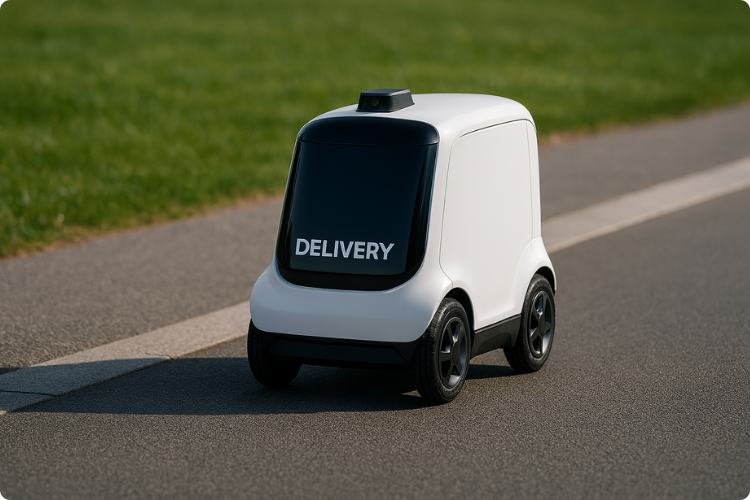
- Autonomous delivery robots support last-mile logistics in urban environments, particularly for short-distance deliveries in controlled areas such as campuses, business districts, retail zones, and residential developments.
What This Could Mean for Vehicle Leasing
The long-term impact on vehicle leasing could be significant.
As autonomous technology develops, leasing companies may need to adapt to:
- Higher vehicle utilisation rates, with assets in near-continuous operation
- Software-led fleet management and predictive maintenance models
- New insurance structures are expected to shift liability frameworks
- Increased demand for connected, data-driven fleet optimisation
- Shorter technology replacement cycles driven by rapid software evolution
These changes are expected to drive a shift toward subscription-style mobility services, as businesses move from ownership to usage-based access models.
Fleet operators are likely to pay close attention to how autonomous systems affect operational costs, downtime, safety performance, and residual vehicle values over the coming years.
Public Acceptance Remains a Major Challenge
However, industry leaders increasingly note that the biggest barrier is public acceptance rather than technological capability. Widespread adoption will require behavioural change, and is expected to unfold gradually over a generation as trust and familiarity with autonomous systems develop.
Regulation and funding can accelerate development, but consumer confidence, safety perception, and social acceptance will ultimately influence large-scale adoption.
As with many emerging technologies, education and gradual exposure are expected to be key factors in building confidence among both businesses and the wider public.
 Call our expert team on