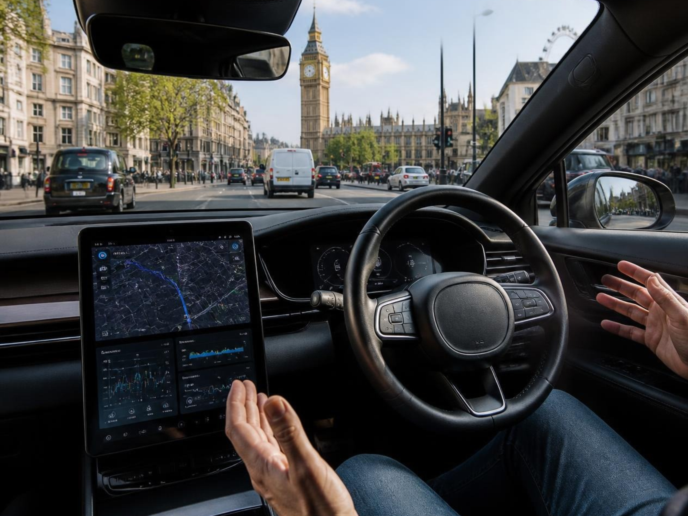
The London Assembly Transport Committee has called for tighter controls on driverless taxis, including powers for Transport for London (TfL) to cap autonomous passenger vehicle numbers, withdraw operating permits and impose additional safety requirements.
The recommendations follow an investigation into the future of autonomous transport in the capital. The committee’s report, Who’s Driving the Future of Autonomous Transport in London?, sets out 13 recommendations covering licensing, road safety, congestion, accessibility, passenger safeguarding and the potential impact on professional drivers.
Importantly, the committee questions whether sufficient evidence has been provided to justify welcoming autonomous passenger services to London without stronger safeguards. It is calling for a more cautious approach as the UK develops the detailed regulatory framework for self-driving vehicles.
The report also highlights public concern about the technology. A survey of 1,053 Londoners cited by the committee found that 42% opposed autonomous passenger vehicles being used in the capital, compared with 29% who supported their introduction. Only 29% said they were likely to use the services if they became available.
The recommendations do not introduce an immediate ban or fleet cap. However, they could influence how driverless taxis and other autonomous passenger services are approved and managed in London as the regulatory framework develops towards 2027.
For businesses monitoring developments in vehicle automation, the report also highlights wider questions about how autonomous technology could affect transport operations, vehicle utilisation and fleet management. Its immediate focus, however, is on passenger services rather than conventional company cars and vans.

TfL Could Gain Greater Control Over Driverless Fleets
Under the current framework, autonomous passenger services require an Automated Passenger Service (APS) permit under the national regulatory system. TfL must consent to applications covering London, but it does not have the same licensing powers over autonomous passenger services that it exercises over conventional taxis and private hire vehicles.
The committee believes this arrangement does not give London sufficient local control over the number of autonomous passenger vehicles operating in the capital or the conditions under which services can run.
It recommends that additional powers be devolved to TfL alongside the full regulations under the Automated Vehicles Act 2024, which are expected to form part of the regulatory framework planned for 2027.
The proposed powers would include the ability to:
- Issue and withdraw operating permits, giving TfL greater control over which autonomous passenger service operators can run in London.
- Set operating conditions, including requirements relating to road safety, passenger protection and the capital’s wider transport objectives.
- Cap autonomous passenger vehicle numbers, allowing fleet limits to reflect local transport conditions and the effects of new services.
- Respond more quickly to safety concerns, including through an interim mechanism allowing TfL to request the immediate suspension of a permit while a decision is considered.
- Refuse consent where appropriate standards are not met, rather than allowing services to proceed without sufficient evidence of their suitability.
The committee is also concerned about weaknesses in the interim approval process. Under the arrangements described in the report, TfL has six weeks to respond to a request for consent. If it does not respond within the required period, consent can be deemed to have been granted. The committee wants a formal mechanism through which TfL can seek immediate suspension of a permit while the relevant decision is pending.
The recommendations would therefore give TfL a more substantial role than simply commenting on applications made through the national system.
The proposed powers have not yet been implemented. Further government decisions and regulatory changes would be required before TfL could exercise them.
Stronger Safety Requirements and Incident Reporting Proposed
Road safety is one of the report’s central concerns. The committee argues that autonomous passenger services should not be approved solely because they meet a general benchmark based on the performance expected of a careful and competent human driver.
Instead, it recommends that TfL require evidence that proposed services and their deployment plans would support the Mayor’s Vision Zero strategy, which aims to eliminate deaths and serious injuries from London’s transport network.
The committee wants TfL to publish clear criteria for granting consent and to refuse applications that fail to meet the required safety and transport policy standards.
It also recommends stronger incident-reporting requirements for autonomous passenger vehicle operators. These would include:
- Reporting crashes and near misses within 24 hours.
- Providing information about automated driving system decisions leading up to an incident.
- Improving the consistency of incident monitoring, giving regulators a clearer picture of how vehicles respond to hazards.
- Supporting better coordination between operators and regulators when safety concerns arise.
The committee believes this information would help regulators investigate incidents, identify recurring risks and assess whether autonomous vehicles are behaving safely around passengers, pedestrians, cyclists and other road users.
Although the proposals focus on autonomous passenger services, they also underline the importance of structured safety management across vehicle operations more broadly. CVC’s guide to fleet management solutions explains how businesses can approach vehicle oversight, operational responsibilities and the day-to-day management of their fleets.
Businesses can also use fleet audits to review vehicle suitability, costs, utilisation and operational requirements, helping them identify areas where fleet practices may need to change.
Empty Running Could Increase Congestion
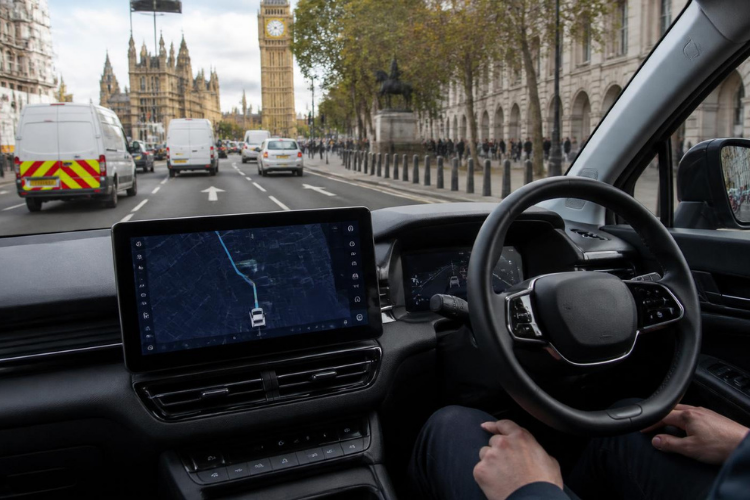
The report raises concerns that driverless taxis could add traffic to London’s roads if vehicles spend significant periods travelling without passengers.
Known as empty running, this can occur when a vehicle repositions itself between bookings, travels to collect a customer or moves elsewhere after dropping someone off without carrying another passenger.
The committee recommends making empty vehicle mileage a core reporting requirement for autonomous passenger service operators. TfL should monitor this alongside traffic levels and congestion to assess the wider effects of the services.
The report cites evidence that 46% of miles travelled by Waymo autonomous passenger vehicles were completed without a passenger on board. This figure relates to the Waymo evidence discussed in the report and should not be interpreted as a forecast for London.
The committee recommends that negative effects on congestion could provide grounds for withdrawing permission to operate if TfL receives the necessary regulatory powers. It also wants the impact of autonomous passenger services to be assessed against the Mayor’s Transport Strategy, rather than assuming that the commercial availability of the technology automatically makes its deployment beneficial.
The concern extends beyond congestion alone. Additional traffic could affect bus journey times and reliability, while services that encourage people to switch from walking, cycling or public transport could undermine wider transport objectives. The committee therefore wants the potential effects on active travel and public transport to be considered when decisions are made about whether services should be allowed to operate.
The actual impact will depend on how services are designed and managed, including how efficiently vehicles are matched with passengers. The report does not establish that autonomous vehicles will inevitably increase congestion in every situation.
Vehicle utilisation and energy use are also important considerations when assessing autonomous technology. CVC has previously examined autonomous vehicle energy consumption, which provides further context on the potential efficiency implications of driverless transport.
Accessibility and Passenger Safeguarding Under Scrutiny
The committee also raises concerns about whether autonomous passenger services will provide suitable access and protection for all passengers.
It notes that vehicles currently being tested are not wheelchair accessible and recommends that operators provide evidence that their proposed services have been developed with disabled passengers before TfL grants consent.
Accessibility is particularly important in London, where conventional taxi services have specific requirements intended to support passengers with mobility needs. The committee wants autonomous services to demonstrate that they can meet appropriate standards rather than leaving accessibility as a secondary consideration.
Passenger safeguarding is another concern. The report recommends that remote assistance staff undergo Disclosure and Barring Service (DBS) checks, receive safeguarding training and be based in the UK.
Remote assistance can help when an autonomous vehicle encounters a situation requiring additional support. However, the committee questions whether remote support alone would be sufficient in every circumstance, including situations where a passenger becomes unwell, faces coercion or needs urgent help inside a vehicle.
It therefore calls for clearer passenger-safety standards and appropriate protections for people using autonomous services.
Emergency response arrangements also need to be considered. The committee recommends that TfL coordinate with the Metropolitan Police Service, London Ambulance Service and London Fire Brigade to establish consistent procedures for incidents involving autonomous vehicles.
These could cover how emergency services access vehicles, obtain relevant information and manage situations in which a vehicle’s automated systems or remote support arrangements affect the response.
The recommendations highlight the need to consider the whole passenger journey, including accessibility, safeguarding and emergency assistance, rather than assessing autonomous technology solely on its ability to drive without a human driver.
What Could Driverless Taxis Mean for London’s Taxi and Private Hire Drivers?
The potential impact on employment is another significant part of the committee’s investigation.
Figures cited in the report indicate that London has approximately 16,000 licensed taxi drivers and 105,000 licensed private hire drivers. The committee recognises that the initial introduction of autonomous passenger services is expected to be gradual, with early deployments involving relatively small fleets.
The pace of expansion will depend on factors such as technology costs, regulatory approval, passenger demand and commercial viability. Nevertheless, the committee believes that autonomous passenger services could displace some conventional taxi and private hire work over the longer term.
It recommends that TfL work with drivers, trade representatives and autonomous vehicle operators to develop a transition plan for workers who could be affected.
Potential measures could include:
- Retraining and skills development to help drivers move into other roles.
- Redeployment opportunities within transport and related industries.
- Financial support arrangements for workers affected by changes to the sector.
- Engagement with driver representatives and operators to understand the likely effects of deployment and identify practical support.
The committee also acknowledges that autonomous transport could create employment opportunities in areas such as fleet maintenance, technical support and remote assistance. However, these roles may require different skills and may not provide equivalent opportunities for existing drivers.
The report does not establish a timetable for job losses or confirm how many roles could be affected. Its recommendation is for a plan to address the potential transition rather than a claim that large-scale displacement is already taking place.
How Does the Report Fit Into the UK’s Autonomous Vehicle Plans?
The report arrives as the UK develops the detailed rules governing the deployment of self-driving vehicles.
The Automated Vehicles Act 2024 provides the legislative foundation for the use of qualifying self-driving vehicles, but further regulations and implementation arrangements are needed to establish the requirements for deployment.
The London Assembly’s recommendations focus on how autonomous passenger services should be controlled locally, particularly where their introduction could affect road safety, congestion, accessibility, public transport and existing taxi and private hire services.
Different applications of autonomous technology will have different regulatory and operational requirements. Driverless taxis, automated public transport and autonomous commercial vehicles should not be treated as interchangeable categories.
CVC has already covered several developments in this area. Our article on autonomous vehicles and UK fleet leasing examines the potential implications of the technology for fleet operators.
We have also reported on Stellantis, Wayve and Uber’s robotaxi plans for UK fleets, while our coverage of Waymo’s self-driving cars in the US provides an international perspective on autonomous passenger transport.
Other developments illustrate how automation could extend beyond taxi services. For example, Stellantis’ autonomous electric van concept highlights a different potential application of driverless technology in commercial transport.
These developments provide context for businesses following the sector, although the London Assembly’s immediate proposals concern autonomous passenger services rather than ordinary commercial vehicle leasing.
For companies considering their longer-term vehicle requirements, CVC’s guides to fleet lifecycle management and fleet planning and leasing explain how operational needs, vehicle selection and replacement decisions fit into a wider fleet strategy.
What Happens Next?
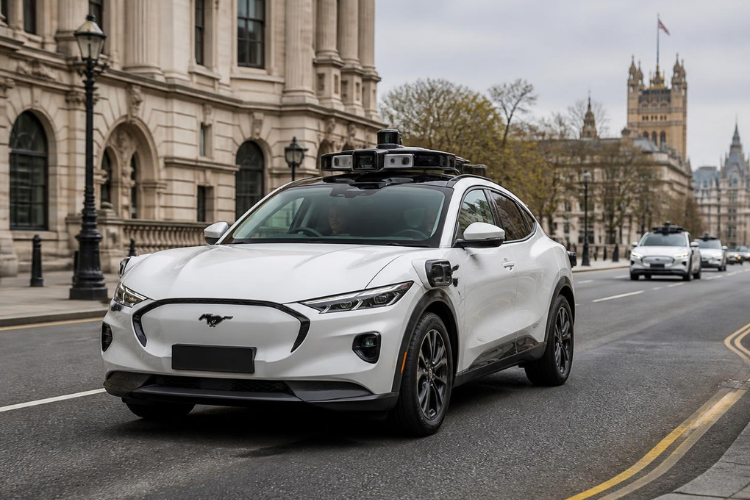
The London Assembly Transport Committee’s recommendations are not binding and do not introduce an immediate ban or cap on driverless taxis.
The next steps depend on the government’s development of the full regulatory framework and any decisions about devolving additional powers to TfL.
If the recommendations are adopted, London could introduce a more locally controlled approach to autonomous passenger services, with additional requirements covering fleet numbers, safety standards, incident reporting, empty mileage, congestion and passenger safeguarding.
For now, the report represents a call for stronger oversight rather than a confirmed change in operating rules. Its significance will depend on how the government and TfL respond as the planned 2027 regulatory framework takes shape.
 Call our expert team on