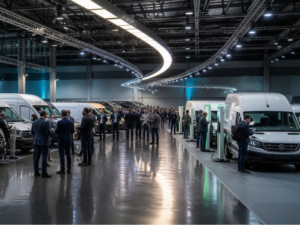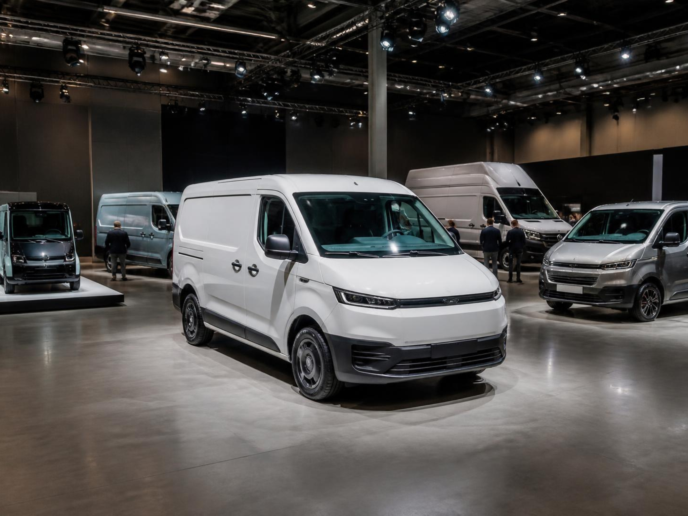
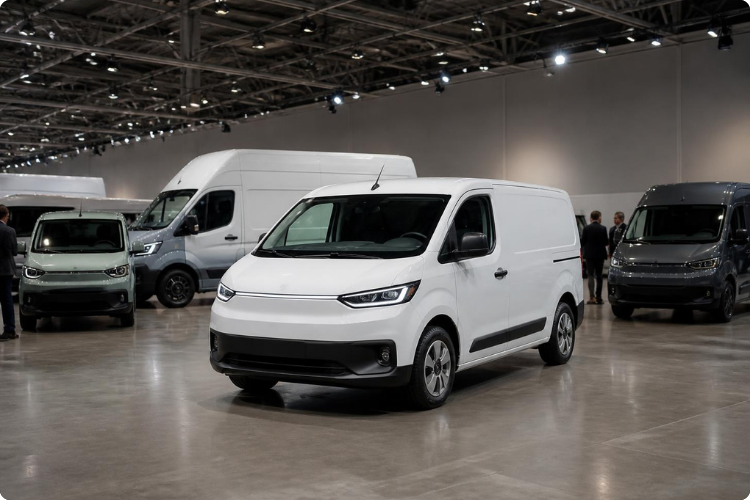
The Commercial Vehicle Show 2026 brought an unusually large number of new vans and commercial vehicle brands to Birmingham, with manufacturers using the event to showcase everything from new electric panel vans to innovative urban delivery vehicles.
Held at the NEC in Birmingham from 21–23 April 2026, the show highlighted just how quickly the UK van market is changing. Established manufacturers are expanding their electric ranges, while a growing number of Chinese manufacturers are entering the UK with new commercial vehicles aimed at businesses looking for value, technology and practicality.
Among the major highlights were new vehicles and developments from Kia, Ford, Maxus, Farizon, Foton and Fiat, alongside new names such as Delivan.
The show also provided a useful indication of where the commercial vehicle market could be heading over the next few years, with electric vans continuing to play an increasingly important role.
Here are some of the biggest van developments from the 2026 Commercial Vehicle Show.
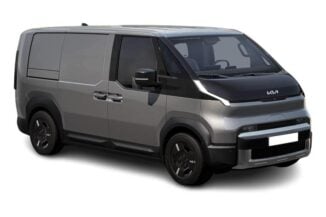
Kia Expands The PV5 Electric Van Range
The Kia PV5 was one of the standout electric vans at the 2026 Commercial Vehicle Show, and Kia used the event to demonstrate that the PV5 is intended to become much more than a single panel van.
The PV5 has already made a strong impression in the UK electric van market, with the Kia PV5 becoming the UK’s best-selling electric van in 2026.
Kia’s wider PBV strategy is designed to provide different body styles and configurations for businesses with varying requirements. At the CV Show, attention was particularly focused on the new L1H1 and L2H2 versions of the PV5 Cargo, which expanded the range beyond the configurations previously available.
The smaller L1H1 version provides businesses with a more compact option, making it potentially attractive to operators working in urban environments or those who do not need the dimensions of a traditional medium van.
At the other end of the range, the L2H2 provides additional space and height, giving businesses another option where greater load capacity is required.
The PV5 is also being developed with specialist commercial applications in mind. Kia demonstrated converted versions of the vehicle, including applications such as refrigerated transport and tipper bodies. The Kia PV5 Chassis Cab also provides a flexible base for specialist commercial vehicle conversions.
This is an important development because it shows that electric vans are increasingly being designed as flexible commercial platforms rather than simply electric replacements for conventional panel vans. For businesses requiring something beyond a standard panel van, commercial vehicle conversions can provide a way of adapting a vehicle to a specific application.
Kia’s PV5 Cargo also offers up to 4.9m³ of cargo space, depending on configuration, alongside business-focused technology and fleet management capabilities.
For UK businesses considering an electric van, the expanding PV5 range is therefore becoming increasingly difficult to ignore.
Delivan Brings Another New Chinese Van Brand To The UK
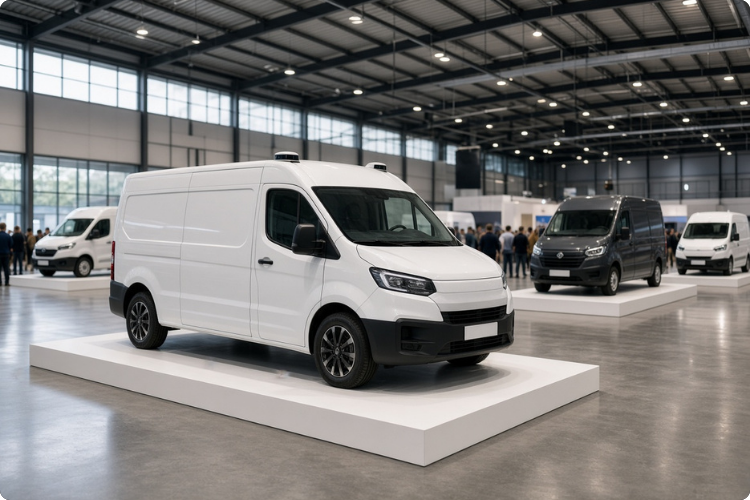
One of the more unusual developments at the CV Show was the arrival of Delivan, a new commercial vehicle brand being developed by Chinese automotive giant Chery.
Rather than launching under the Chery name, the company intends to establish Delivan as its dedicated van brand.
The first vehicles shown at Birmingham were presented as concepts, with the brand still in development and a European product launch planned for 2027. While detailed UK specifications were limited at the time of the show, Delivan’s appearance provided an early indication of Chery’s ambitions for the European commercial vehicle market.
The company has indicated that the range will eventually extend beyond the initial medium-sized vehicle, with smaller and larger commercial vehicles expected to follow.
This means UK businesses could soon have another manufacturer to consider when looking at electric commercial vehicles.
The arrival of Delivan also reinforces a wider trend that was impossible to ignore at the 2026 CV Show: Chinese car brands continue to strengthen their position in the UK market, with manufacturers increasingly targeting British buyers with new models.
More information about Delivan is expected as the brand continues its European development.
Fiat Shows Off The Tris Electric Three-Wheeler
Not every vehicle at the CV Show was a conventional van.
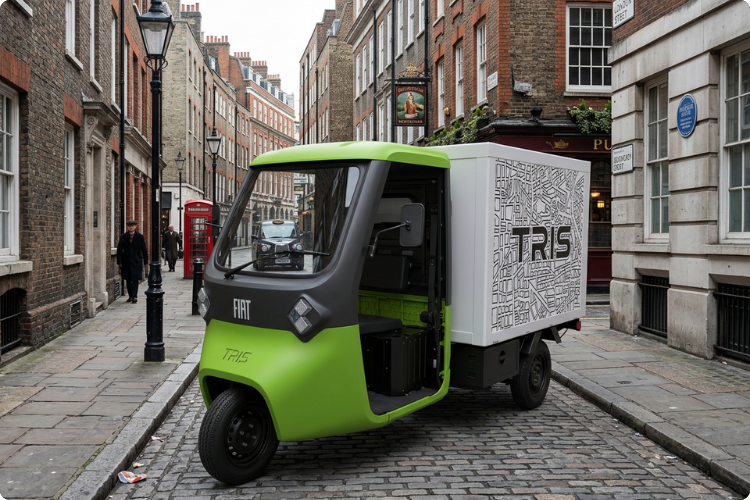
Fiat attracted attention with the Fiat Tris, an electric three-wheeled commercial vehicle designed primarily for short-distance and last-mile deliveries.
The concept is aimed at businesses operating in towns and cities where a traditional van may be unnecessarily large for the job.
The Tris features a compact cargo platform and has been designed around the requirements of urban delivery operators. Its small footprint could make it easier to manoeuvre through congested streets and access locations where larger commercial vehicles can struggle.
The vehicle displayed at the show featured an open-sided single-seat cabin, while the concept itself is aimed at providing a compact alternative for specific urban delivery applications.
A maximum speed of around 28mph and a relatively short driving range mean this is not intended to replace a conventional van for longer journeys.
Instead, the Tris is aimed at a very specific type of operation where goods are moved over short distances and vehicle size is more important than outright range. This could make the concept particularly interesting for courier and last-mile delivery businesses operating in busy urban areas.
Whether the Fiat Tris eventually becomes available to UK businesses will depend on the manufacturer’s plans and market response.
However, its appearance at the CV Show demonstrates how manufacturers are looking beyond conventional panel vans when developing solutions for urban logistics.
Ford Transit City Targets The Growing Electric Van Market
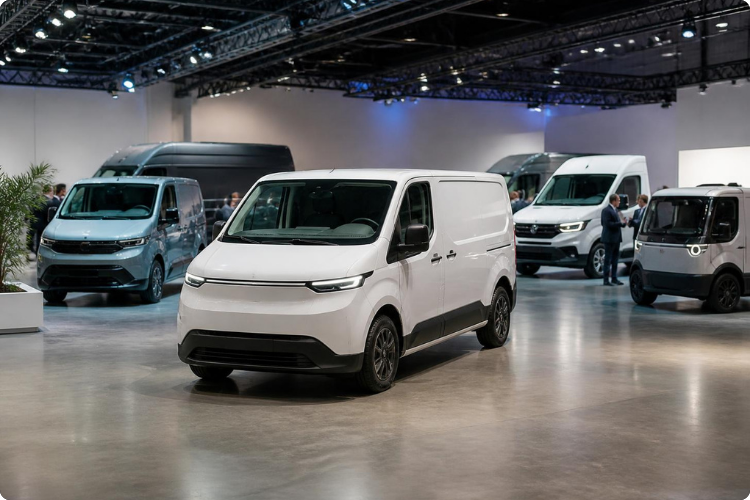
Ford’s biggest commercial vehicle development at the 2026 show was the Ford Transit City, a new electric van designed to sit alongside the established Transit Custom.
We take a closer look at the new model in our First Look: All-New Transit City guide.
The Transit City is particularly significant because Ford is targeting a part of the market where competition from newer manufacturers is becoming increasingly intense.
Rather than attempting to offer a huge number of specifications and optional extras, Ford has taken a relatively straightforward approach with the Transit City.
The van is available in different roof configurations and has been developed as a practical electric commercial vehicle for businesses that need straightforward transport rather than an extensive list of options. The model has been positioned below the E-Transit Custom and is particularly focused on urban commercial use.
Its arrival gives Ford another electric van to sit within its commercial vehicle range and provides businesses with an alternative to the larger and more established E-Transit Custom.
The Transit City is also notable because it is produced in China, highlighting how global commercial vehicle manufacturing is becoming increasingly interconnected.
This is particularly interesting when considering the number of Chinese manufacturers entering the UK market.
Ford is an established name in the UK van sector, but it is now competing in an electric van market where new manufacturers are using Chinese production facilities to offer competitively positioned vehicles.
For businesses, that increased competition should ultimately mean more choice.
Farizon V7E Adds Another Electric Medium Van
Farizon is another manufacturer looking to establish itself in the UK commercial vehicle market.
The company already offers the larger Farizon SV, and the new Farizon V7E provides a smaller alternative aimed at businesses operating in the medium van sector.
The V7E made its public appearance at the 2026 Commercial Vehicle Show and has been designed specifically around electric commercial vehicle use. Farizon positioned the vehicle as a city-focused medium electric van aimed at delivery work, service fleets and other urban applications.
With a focus on urban and last-mile operations, the V7E combines a relatively compact exterior with a sizeable cargo area.
Farizon has positioned the vehicle around practicality, with a substantial payload and cargo volume for its class. The V7E is also available with different battery options, allowing businesses to select a configuration more suited to their typical driving requirements.
The van also features technology designed to support commercial users, including vehicle-to-load functionality and onboard power capabilities that could be useful for businesses operating tools and equipment away from a conventional power supply.
Importantly, Farizon has simplified the V7E range compared with some of its larger models.
For businesses, that could make the vehicle easier to specify, while also keeping the focus on the features that matter most for day-to-day commercial use.
The V7E is likely to face strong competition from vehicles such as the Kia PV5 and Ford Transit City, as well as established electric medium vans already available in the UK.
Foton Prepares To Enter The UK Van Market
Another new name to appear at the CV Show was Foton.
The Chinese manufacturer is preparing to enter the UK electric van market with a range of commercial vehicles aimed at different sectors and applications. We look at the manufacturer’s plans in more detail in our guide to Foton electric vans coming to the UK.
At the show, Foton provided an early look at its Cavan electric van.
The manufacturer has indicated that the range will cover several body sizes, giving businesses different options depending on their cargo and operating requirements.
While full UK specifications were still being finalised, Foton has indicated that its electric vans will use a battery of around 66.9kWh, with a claimed range of approximately 205 miles.
The company is hoping to bring the vehicles to the UK market during 2026.
Foton’s arrival could be particularly interesting because the company already has experience producing commercial vehicles globally, including pickup trucks.
This means the company’s UK offering could eventually extend beyond electric panel vans.
For businesses, another new manufacturer entering the market creates even more competition — particularly at a time when electric van choice is expanding rapidly.
Maxus Adds Diesel To The Deliver 7 Range
While much of the attention at the 2026 CV Show was focused on electric vans, Maxus provided a reminder that diesel commercial vehicles are still very much part of the market.
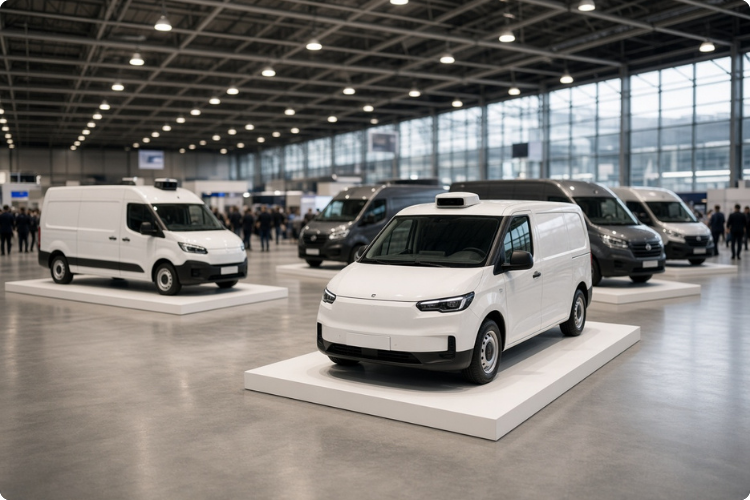
The Maxus Deliver 7 is already available as an electric van, but the manufacturer has expanded the range with a diesel-powered version.
The new diesel model uses a 2.0-litre engine and gives businesses another option where an electric van may not suit their operating requirements.
This is particularly relevant for companies covering longer distances, carrying heavier loads or operating in areas where access to convenient charging infrastructure remains limited.
Maxus has therefore taken a slightly different approach from some of the manufacturers at the show.
Rather than moving exclusively towards electric vehicles, the Deliver 7 range provides businesses with a choice between electric and diesel power.
That flexibility remains important in the UK commercial vehicle market, where businesses have very different operating requirements.
For companies considering electrification, having both powertrain options available can also make it easier to compare the practical benefits of each before making a decision.
View the Maxus Deliver 7 range
What The 2026 Commercial Vehicle Show Tells Us About The UK Van Market
Perhaps the biggest takeaway from the 2026 Commercial Vehicle Show was simply the sheer amount of choice now available to UK businesses.
Electric vans are no longer limited to a handful of manufacturers, with electric van sales surging as the choice of models expands.
Businesses can now choose from electric commercial vehicles offered by established manufacturers such as Ford, Mercedes-Benz, Renault, Volkswagen and Toyota, alongside newer entrants including Kia, Maxus and Farizon.
And the number of manufacturers entering the market continues to grow.
The presence of brands such as Delivan and Foton demonstrates that Chinese manufacturers are becoming an increasingly important part of the European commercial vehicle market.
That does not necessarily mean established manufacturers are being replaced.
Instead, traditional manufacturers are having to respond to increased competition by improving their electric offerings, introducing new models and finding ways to provide greater value to commercial customers.
Kia is a particularly good example of this change.
The company has entered the electric van market with a dedicated commercial vehicle platform and is already expanding the PV5 into different body styles and applications.
Ford, meanwhile, is adding another electric van to its range with the Transit City, while Maxus continues to provide businesses with both electric and diesel options.
For businesses looking to replace or expand their fleet, this increasing competition is good news.
There are now more choices across different van sizes, battery capacities, body styles and powertrains, giving businesses greater flexibility when selecting their next vehicle.
Are Chinese Electric Vans The Future?
The 2026 CV Show provided plenty of evidence that Chinese manufacturers are going to play a significant role in the future of the UK van market.
However, winning over commercial customers is about more than simply offering an attractive vehicle.
Businesses need confidence in areas such as reliability, aftersales support, servicing, parts availability, warranty provision and residual values.
Established manufacturers already have extensive dealer networks and years of experience supporting UK fleets.
New manufacturers therefore have to demonstrate that they can provide the same level of support.
This could become one of the most important battlegrounds in the commercial vehicle market over the coming years.
For businesses, however, the increasing competition remains positive.
More manufacturers means more choice, and more choice means businesses can select vehicles based on their individual requirements rather than simply choosing from the limited options that were previously available.
Choosing The Right Van For Your Business
The 2026 Commercial Vehicle Show demonstrated that there is no single direction for the UK van market.
Electric vehicles are becoming increasingly important, but diesel remains relevant for many businesses.
At the same time, manufacturers are introducing vehicles specifically designed for urban deliveries, specialist conversions and different types of commercial operation.
The right choice will ultimately depend on how your business uses its vans.
Factors such as annual mileage, typical journey length, payload, load volume, charging access and the type of work your drivers carry out should all be considered before choosing a vehicle.
Businesses can also compare different vehicle types in our guide to the best vans for tradespeople in 2026.
For businesses ready to move towards an electric van, the expanding range of models means there are now significantly more options to consider.
And with manufacturers continuing to launch new vehicles, that choice is only likely to increase.
Commercial Vehicle Leasing From Commercial Vehicle Contracts
At Commercial Vehicle Contracts, we provide van leasing solutions for UK businesses, with a wide selection of commercial vehicles available across different sizes, manufacturers and powertrains.
From established diesel vans to the latest electric commercial vehicles, we can help businesses compare their options and find a vehicle that suits their operational requirements, whether you’re replacing a single van or managing and expanding a larger fleet.
For businesses with more complex requirements, our One-Stop Fleet Solutions service brings vehicle supply, specialist conversions, maintenance and fleet support together under one roof.
If you’re considering replacing an existing van or adding an electric vehicle to your fleet, our team can help you assess the available options, while our guide to electric van leasing for UK businesses explains why more businesses are considering electric vehicles for their fleets.
View our latest van leasing offers
 Call our expert team on
  Drop us a message