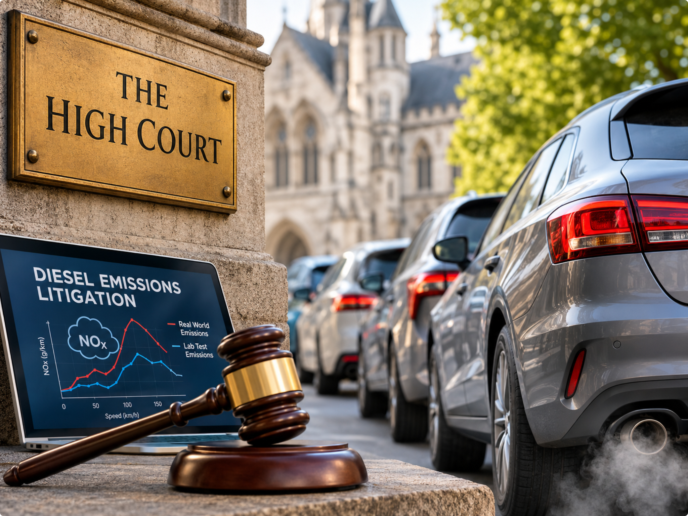
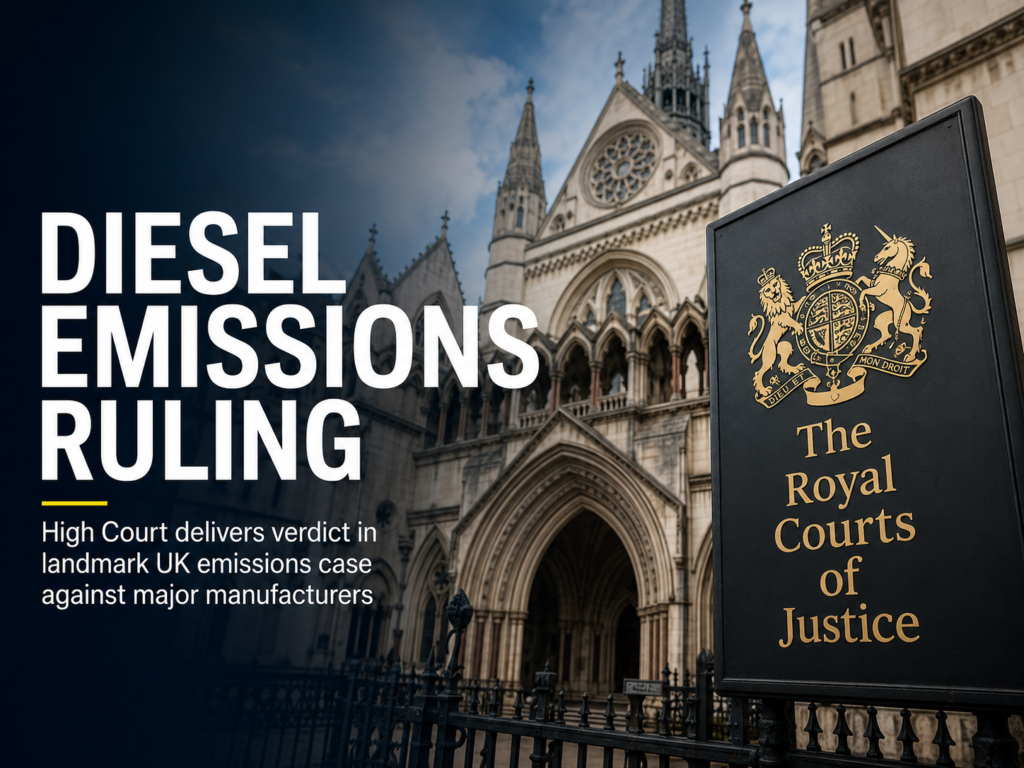
The High Court has issued its long-awaited judgment in one of the UK’s largest-ever group legal actions, largely ruling in favour of vehicle manufacturers while identifying specific emissions control strategies used by Mercedes-Benz and Peugeot-Citroën that breached regulations.
The Pan-NOx Diesel Emissions Group Litigation involves more than 1.6 million motorists and centres on allegations that a number of diesel vehicles were fitted with emissions software that reduced the effectiveness of pollution control systems during normal driving, while performing differently under laboratory testing conditions.
Claimants argued that these so-called defeat devices enabled vehicles to emit higher levels of nitrogen oxides (NOx) on the road than expected during official emissions testing. The manufacturers have consistently denied the allegations, maintaining that their vehicles complied with European emissions legislation.
Majority of Manufacturers Successfully Defend Claims
The initial trial focused on five lead manufacturers selected by the court: Mercedes-Benz, Ford, Renault, Nissan and Peugeot–Citroën. These cases were heard first to establish legal principles before claims involving other manufacturers continue.
In its written judgment, the High Court rejected the majority of the principal allegations, concluding that most of the emissions control strategies examined did not amount to unlawful defeat devices under the applicable legislation.
However, the court did identify two exceptions.
One involved a coolant temperature setpoint strategy used in certain Mercedes-Benz diesel vehicles before a software update introduced in December 2015. The second related to a split-injection emissions strategy fitted to some Euro 5 Peugeot-Citroën diesel models.
The judge also indicated that adopting a broader legal interpretation of what constitutes a defeat device could have resulted in a greater number of systems across all of the lead manufacturers being classified as unlawful.
Further Trial Scheduled
Although the judgment resolves many of the technical issues surrounding liability, it does not conclude the litigation.
A further High Court hearing is scheduled for October 2026 to determine the legal consequences of any breaches that have been established, including potential compensation, damages and any other remedies available to claimants.
Mercedes-Benz Responds
Mercedes-Benz welcomed the overall outcome, highlighting that the court found its vehicles compliant with emissions legislation following the installation of software updates.
The manufacturer noted that only one of four representative vehicles was found to contain a non-compliant emissions strategy before the update programme, adding that the issue had already been addressed through revised software.
Despite welcoming much of the ruling, Mercedes-Benz disagrees with the finding relating to the earlier software strategy and has confirmed it is considering all legal options, including a possible appeal.
Renault Welcomes Decision
Renault Group also described the judgment as consistent with its long-standing position that its vehicles were designed and manufactured in accordance with applicable regulations.
The company added that it intends to seek recovery of its legal costs from the institutional funders and insurers that financed the group litigation.
Claimants May Appeal
Law firms representing motorists say the case is far from over.
Leigh Day argued that while the court accepted certain emissions strategies were unlawful, it adopted a narrower interpretation of European law than courts elsewhere have applied. The firm believes this could leave the UK with a different legal standard from much of Europe and is considering seeking permission to appeal.
Pogust Goodhead, another firm representing claimants, also confirmed it is reviewing the judgment. It said the litigation remains ongoing and that it will continue pursuing claims on behalf of the 1.6 million motorists involved while assessing the court’s interpretation of the law and the available grounds for further legal action.
 Call our expert team on