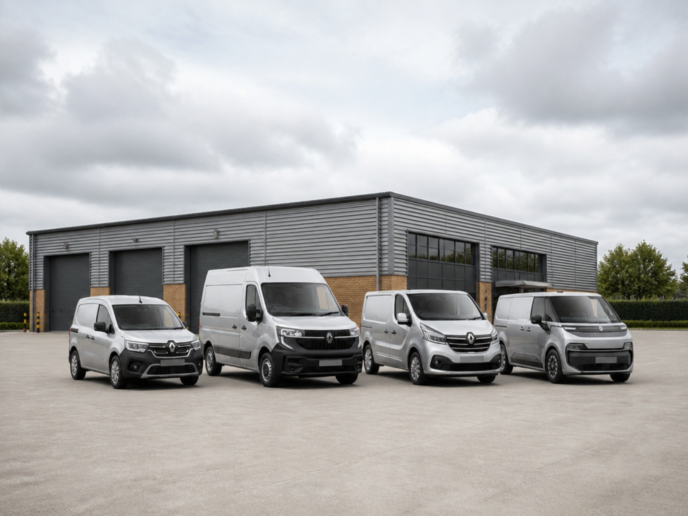
Renault is introducing a series of updates across its commercial vehicle range for the 2027 model year, covering the Kangoo, Trafic and Master. The changes include a larger battery and improved electric powertrains for the Kangoo E-Tech, a new infotainment system for the Kangoo and Trafic, and additional standard equipment for the Master.
The most significant development is the improvement to the all-electric Kangoo. Its revised battery, increased charging capability and new electric motor options are intended to make the compact van more capable, while additional technology aims to make electric driving easier for business users.
The wider updates also give businesses an opportunity to review the different powertrains, body styles and configurations available across Renault’s commercial vehicle range, from compact diesel and electric vans to larger vehicles and specialist conversions.
| Model range | 2027 updates | What it means for businesses |
|---|---|---|
| Renault Kangoo E-Tech | New 52kWh battery, up to 354km (220 miles) WLTP range (pending homologation), faster 100kW DC charging and new 135PS/155PS electric motors | More range, shorter charging stops and a choice of electric performance levels |
| Renault Kangoo diesel and petrol | Updated onboard technology, 10-inch OpenR Link infotainment and revised equipment | Improved connectivity and a more modern driving environment |
| Renault Trafic | New 10-inch OpenR Link infotainment system and updated onboard technology | Better in-cab connectivity for drivers and fleet operators |
| Renault Master | Additional standard equipment, including LED lighting across the range, plus selected upgrades for electric and automatic versions | More standard convenience, visibility and equipment, depending on trim and powertrain |
Renault Kangoo E-Tech Gets A Larger Battery And More Range
The Renault Kangoo E-Tech electric receives one of the most substantial updates for 2027, with a new-generation 52kWh NMC battery replacing the previous 45kWh battery specified in Renault’s announcement.
The larger battery increases the van’s quoted driving range to up to 354km (approximately 220 miles) WLTP, depending on the version and body style. Renault states that this figure is subject to homologation, so the final confirmed range may vary between configurations.
The battery upgrade is intended to give businesses greater flexibility when planning daily routes, particularly for operators covering regular local and regional journeys. Actual range will still depend on factors such as payload, driving conditions, temperature and vehicle configuration.
Faster Charging And Two New Electric Motor Options
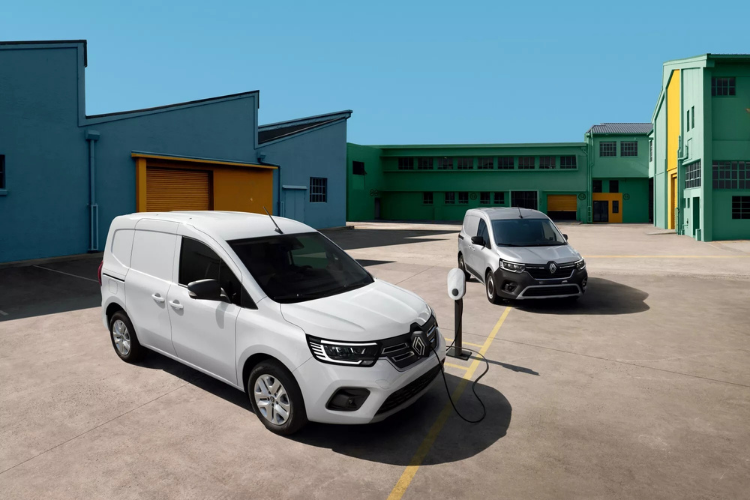
Charging performance has also been improved. Maximum DC rapid charging power increases from 80kW to 100kW, allowing the battery to charge from 15% to 80% in approximately 30 minutes, compared with around 40 minutes previously.
Renault says this can add up to 240km (approximately 149 miles) of driving range in 30 minutes under the stated conditions. The updated Kangoo E-Tech also retains flexibility for AC charging, with 11kW and 22kW options depending on the model.
Renault quotes the following AC charging times from 15% to 80%:
- 11kW AC charging: Approximately 3 hours and 30 minutes.
- 22kW AC charging: Approximately 1 hour and 45 minutes.
The electric powertrain is also available with two new output levels, replacing the previous 90kW (120hp) motor:
- 135PS (100kW): Produces 270Nm of torque and offers Eco and Normal driving modes.
- 155PS (115kW): Produces 300Nm of torque and adds a Perfo MySense mode, which Renault says is particularly useful when the vehicle is fully loaded.
The additional power and torque are intended to improve acceleration, overtaking and general driveability. The higher-output version’s additional driving mode gives drivers another option when carrying heavier loads.
Businesses considering an electric Kangoo can explore our Renault Kangoo leasing range. CVC currently lists the Renault Kangoo E-Tech ML19 and Renault Kangoo E-Tech LL21.
These individual listings provide examples of the existing electric Kangoo range. Businesses should check the latest model-year specifications and availability when requesting a quotation for the updated 52kWh version.
For operators who prefer a conventional powertrain, the Renault Kangoo ML19 Blue dCi 95 diesel van provides an alternative. The choice between diesel and electric will depend on daily mileage, charging arrangements, payload requirements and the type of work being undertaken.
Regenerative Braking And New Electric Driving Features
The updated Kangoo E-Tech gains four levels of regenerative braking, compared with three previously. Drivers can select the required level using paddles behind the steering wheel, adjusting the intensity of deceleration and the amount of energy recovered as the vehicle slows.
Renault has also replaced the previous gear lever with a more compact dashboard-mounted electronic shifter. This frees up space around the centre console and incorporates an Auto Hold function.
Further technology is intended to make electric driving and charging easier to manage:
- EV Route Planner: Helps drivers plan journeys around the vehicle’s charging requirements.
- Battery preconditioning: Prepares the battery ahead of charging, which can be activated automatically through journey planning or manually using a dashboard control.
- Cabin preconditioning: Allows the interior to be prepared ahead of a journey.
- Remote charging management: Enables drivers to manage and schedule charging remotely.
- Vehicle-to-Load (V2L): Allows compatible electrical equipment to draw power from the vehicle’s battery, including tools and equipment such as air compressors.
- Heat pump: Retained on the electric versions to support cabin comfort and energy management.
V2L could be particularly useful for tradespeople and businesses working at locations where a convenient mains electricity supply is not always available. It provides the ability to power compatible equipment from the van, although the suitability of the function will depend on the equipment being used and the vehicle’s available battery charge.
Businesses reviewing the practicalities of operating electric vans can read CVC’s guide to how EV charging works for businesses. Our EV charging time calculator can also help estimate charging durations for different battery and charger combinations.
New 10-Inch OpenR Link Infotainment System
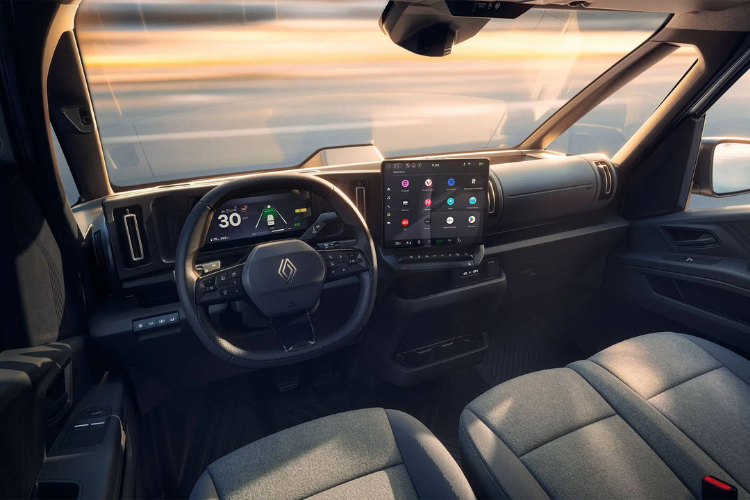
The Kangoo and Kangoo E-Tech also receive a redesigned multimedia system, with a new 10-inch touchscreen replacing the previous 8-inch display.
The system incorporates Renault’s OpenR Link interface and offers improved display quality. Renault says the screen is twice as responsive as the previous system, providing quicker access to vehicle and infotainment functions.
Two configurations are available, depending on specification. Both support smartphone mirroring through Apple CarPlay and Android Auto, while the higher configuration includes integrated navigation and access to apps. HERE mapping replaces the previous TomTom solution on versions with integrated navigation.
Other connectivity improvements include:
- USB-C connections: New USB-C ports are provided across the Kangoo range, with additional connections available depending on configuration.
- Wireless phone charging: The upgraded induction charger increases output from 15W to 25W and includes magnetic attachment and MagSafe compatibility.
- Emergency call system: A new emergency call button and communications unit compatible with 4G and 5G eCall are introduced.
The electric-specific functions, including the EV Route Planner, are also brought together within the new multimedia interface.
Petrol, Diesel And Electric Kangoo Configurations
The updated Kangoo range continues to offer petrol, diesel and electric powertrains, giving businesses a choice depending on their operating requirements.
The commercial Kangoo VAN range includes a TCe 130 petrol engine, Blue dCi 95 and Blue dCi 115 diesel engines, as well as the E-Tech electric version. Manual and automatic transmissions are available depending on the powertrain and configuration.
Two body lengths are offered, measuring approximately 4.49m and 4.91m. Kangoo VAN is available in different layouts, including two- and three-seat panel vans, five-seat crew cab versions and platform cab configurations.
The passenger-focused Renault Kangoo range is also available in petrol, diesel and electric versions depending on the model, with the longer Grand Kangoo capable of accommodating up to seven occupants.
Renault continues to manufacture the Kangoo in France. The vehicles are assembled at Maubeuge, with the new battery produced in Douai, electric motors manufactured in Cléon and running gear modules produced in Le Mans.
New 10-Inch Infotainment System For Renault Trafic
The Renault Trafic is also receiving the new 10-inch OpenR Link infotainment system for the 2027 model year.
The larger touchscreen replaces the previous 8-inch display and brings the Trafic into line with the updated Kangoo and Renault’s more recent cabin technology. The system provides access to multimedia functions, smartphone connectivity and, depending on configuration, integrated navigation.
For businesses where vans are used throughout the working day, improvements to the cabin environment and access to connected technology can be useful considerations. Drivers may spend considerable time travelling between customer sites, making deliveries or covering regular routes, so the usability of the vehicle’s controls and infotainment system remains relevant.
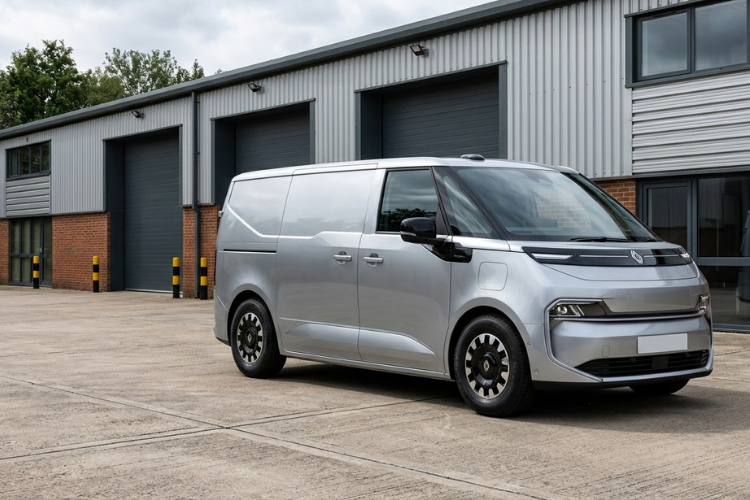
The Trafic continues to serve businesses with a range of load, passenger and specialist requirements. CVC’s Renault Trafic leasing options include diesel and electric models.
The electric offering currently listed by CVC includes the Renault Trafic E-Tech LWB 52kWh Advance.
Diesel remains an important option for operators who need to consider longer journeys, regular heavier loads or working patterns where access to charging is limited. CVC’s listings include the Renault Trafic SWB Blue dCi 130 Advance, the Renault Trafic LL30 Extra LWB Blue dCi 130 and the Renault Trafic LL30 Blue dCi 130 Business.
There are also more specialised configurations for businesses with particular operational needs. These include the Renault Trafic Crew Cab for carrying a working crew and equipment, and the refrigerated Renault Trafic LL30 Extra for temperature-controlled transport.
A passenger-carrying option is also available in the form of the Renault Trafic 9-Seater Passenger Minibus.
It is worth distinguishing these model-year infotainment changes from Renault’s separate next-generation Trafic E-Tech electric announcement. CVC has covered the newer electric model in its articles about UK prices and specifications for the new Renault Trafic E-Tech and its recognition as International Van of the Year 2027. These developments relate to the newer electric model rather than simply the touchscreen update to the existing Trafic range.
Renault Master Gains Additional Standard Equipment
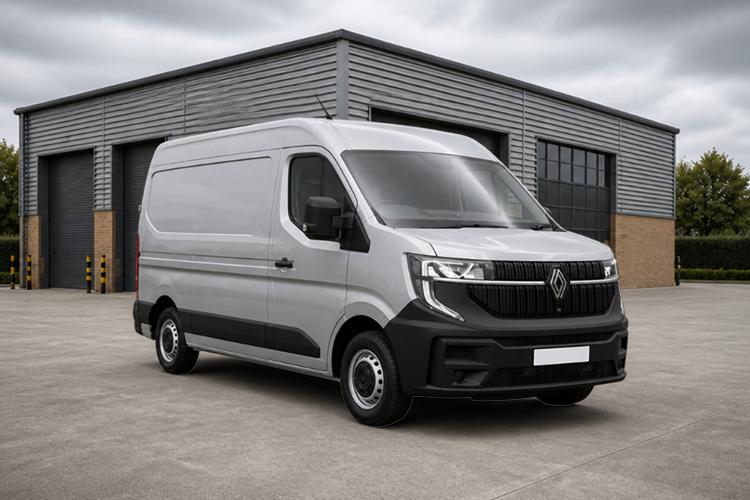
The Renault Master receives a number of equipment changes for the 2027 model year, with several features becoming standard across the range.
LED lighting for the cabin and load area will now be fitted as standard on all versions. This provides additional illumination for drivers and operators using the load compartment, particularly when loading or unloading in low-light conditions.
The electric Master E-Tech also gains an electric parking brake and heated windscreen as standard. The electric parking brake will additionally be fitted to all automatic Master models, extending the equipment change beyond the electric version.
Diesel models in the Extra trim receive a selection of additional equipment, including:
- Heated windscreen.
- Reversing camera.
- 360-degree parking sensors.
- Automatic air conditioning.
These additions are particularly relevant to businesses using larger vans in busy working environments. Parking assistance can be useful when manoeuvring in restricted spaces, while a heated windscreen and automatic climate control can make everyday operation more convenient.
Businesses interested in the electric version can read our guide to the Renault Master E-Tech Electric for business.
CVC’s Renault Master leasing range includes both diesel and electric models. Electric options include the Renault Master MM40 E-Tech 104kW 87kWh Advance, Renault Master LM35 E-Tech 87kWh Advance and Renault Master MM35 E-Tech 87kWh Advance.
For businesses requiring an electric vehicle with a specialist body, CVC also lists the Renault Master ML35 E-Tech electric tipper conversion.
For businesses comparing diesel alternatives, the range includes the Renault Master LM35 Blue dCi 130 and Renault Master MM35 Blue dCi 130. The Renault Master LH35 Blue dCi 130 Advance provides another diesel configuration.
Renault Master Specialist Body Styles And Conversions
The Master is also available in a number of specialist body styles, allowing businesses to choose a vehicle designed around particular working requirements.
Examples of CVC-listed models and conversions include:
- Renault Master Luton Box Van: A larger load body suited to businesses requiring additional enclosed carrying capacity.
- Renault Master curtainsider conversion: Provides side access to the load area for suitable loading and unloading operations.
- Renault Master dropside conversion: Designed for carrying materials and equipment where open load access is useful.
- Renault Master MWB diesel aluminium tipper: A specialist option for businesses transporting loose materials.
- Renault Master 12.3m cherry picker: A specialist vehicle for work at height.
These examples demonstrate the breadth of the Master range, from standard panel vans to conversions designed for particular industries and working environments. Businesses should check individual vehicle specifications, payloads and equipment when comparing different versions.
Renault also has its own commercial vehicle conversion programme. CVC has covered the manufacturer’s factory-approved commercial vehicle conversions, which provide further context on the specialist options available across its commercial range.
Specialist Chassis Conversions: More Than Just Renault
Renault’s Master range includes chassis cab models that can be adapted for specialist business requirements, but businesses needing a purpose-built commercial vehicle are not limited to one manufacturer.
Depending on the required body type, payload, dimensions and operating needs, other large van options available through CVC include the Ford Transit, Mercedes-Benz Sprinter, Volkswagen Crafter, Peugeot Boxer, Citroën Relay and Vauxhall Movano.
CVC provides access to specialist vehicle solutions, including tippers, dropsides, Luton vans, curtainsiders and flatbeds. Businesses can explore the available chassis cab conversion options when a standard panel van or factory-built model does not meet their requirements.
The most suitable base vehicle will depend on the conversion required, including the chassis configuration, wheelbase, gross vehicle weight, payload and intended use. These factors should be considered before choosing a vehicle or specifying a conversion.
What The 2027 Renault Updates Mean For Business Van Operators
The changes across Renault’s commercial vehicle range are evolutionary rather than a complete redesign. However, the Kangoo’s battery and powertrain improvements represent a significant development for businesses considering a compact electric van.
The new 52kWh battery, increased charging power, and two motor options give operators more choice when assessing whether the Kangoo E-Tech can meet their daily requirements. The EV Route Planner, battery preconditioning and V2L functionality also address practical aspects of using an electric van for work.
The updated infotainment system across the Kangoo and Trafic brings improved technology to both models, while the Master benefits from additional equipment designed to improve convenience and everyday usability.
For businesses choosing between electric and diesel vans, the right decision will still depend on how each vehicle is expected to be used. Daily mileage, payload requirements, charging access, journey patterns and the type of work being undertaken all need to be considered.
Our guide to electric van adoption among UK business fleets looks at how companies are approaching the transition, including why some are introducing electric vehicles gradually rather than replacing their entire fleet at once.
Businesses can also use CVC’s EV journey cost calculator and electric vehicle running cost calculator to help assess potential electricity costs. For a wider comparison of vehicle expenses, the total cost of ownership guide explains the costs businesses should consider beyond the headline lease payment.
Renault Van Leasing Options With Commercial Vehicle Contracts
Businesses looking to update their commercial vehicles can compare the available models and leasing options across the Renault range.
Commercial Vehicle Contracts provides access to Renault vans for business leasing, including compact models such as the Kangoo, medium vans such as the Trafic and larger vehicles such as the Master.
You can explore our Renault van leasing options to compare the range and find a vehicle suited to your business requirements. Our business van leasing guide also explains the main considerations when choosing a leasing arrangement.
The choice between diesel and electric will depend on the demands of each operation. Businesses with predictable routes and suitable charging facilities may find an electric van worth considering, while operators undertaking longer journeys, carrying heavier loads or working in locations without convenient charging may prefer to compare diesel alternatives.
The range of body styles available is another important consideration. A standard panel van may suit general deliveries and trades, while crew vans, refrigerated vehicles, minibuses and specialist conversions are designed for different tasks. Payload should also be considered carefully, and CVC’s van payload calculator can help businesses assess carrying capacity when comparing suitable models.
Choosing The Right Renault Van For Your Business
Renault’s 2027 updates give businesses several points to consider when reviewing their next commercial vehicle.
The Kangoo E-Tech’s larger battery, increased charging capability, and additional electric driving technology are the headline changes, potentially making the compact electric van suitable for more working patterns. The updated infotainment system across the Kangoo and Trafic brings improved technology to both models, while the Master receives additional standard equipment across its electric and diesel versions.
However, the latest specification is only one part of choosing a suitable van. Businesses should also consider load space, payload, vehicle dimensions, expected mileage and the availability of charging facilities where an electric model is being considered.
For operators reviewing their wider fleet, CVC’s fleet management guide provides further information on managing vehicle requirements and making decisions around business vehicles.
The 2027 changes provide an opportunity to compare Renault’s updated range against the requirements of each operation and assess whether an electric or conventional powertrain is the better fit.
 Call our expert team on